
Pharmaceutical Laboratory Equipment
制药实验室设备
CPLE · Pharmaceutical · 5 product types · 25 models
By Lab Manufacturers China Technical TeamLast reviewed
What are Pharmaceutical Laboratory Equipment?
Pharmaceutical laboratory equipment covers the analyzers, stability chambers, dissolution systems, tablet testers and sample preparation instruments used to test drug substances and finished dosage forms. It serves pharmaceutical quality control, research and development, and contract testing laboratories operating under pharmacopoeial and GMP requirements.
5 product types in Pharmaceutical Laboratory Equipment
The 5 product types below are grouped by the exact instrument you need.
- PHA5 models
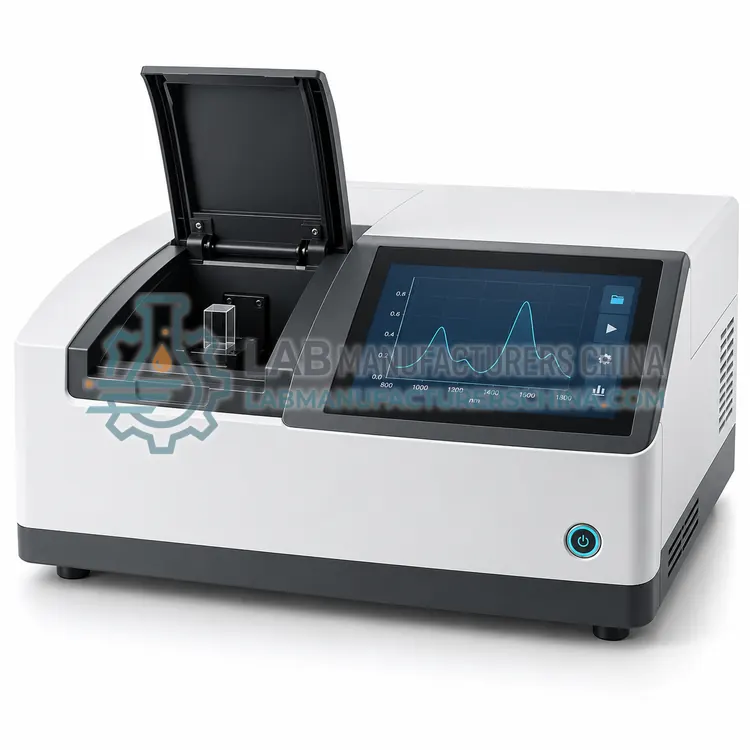
Pharmaceutical Analyzers
药物分析仪
Pharmaceutical analyzers are benchtop and portable instruments that identify and quantify drug substances, excipients and finished products. Quality control, incoming goods and development laboratories use them for raw material identification, assay, particle size and optical rotation testing.
- STC5 models
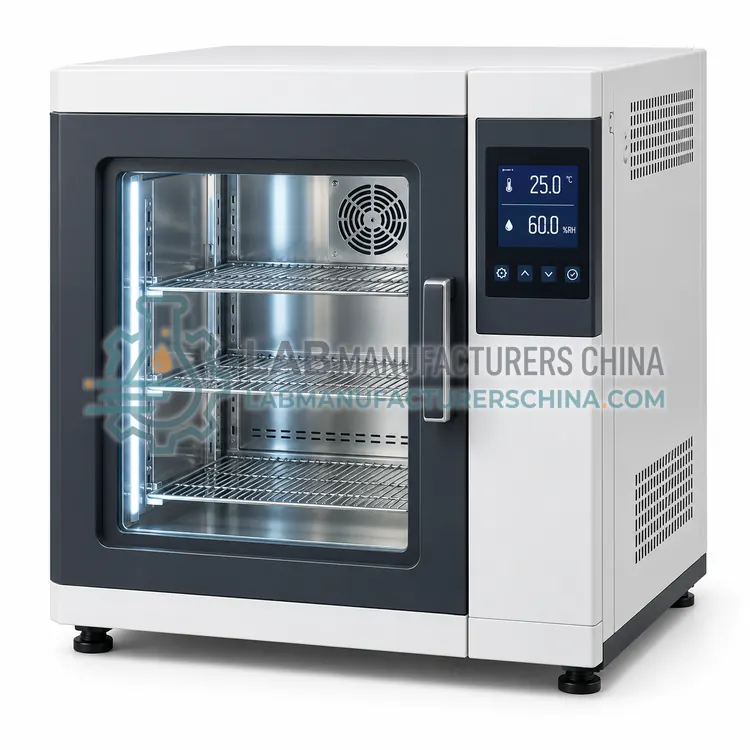
Stability Chambers
稳定性试验箱
Stability chambers hold defined temperature, humidity and sometimes light conditions so drug samples can be stored for months or years while their quality is monitored. Pharmaceutical manufacturers and contract laboratories use them for ICH long-term, intermediate and accelerated stability studies.
- DIS5 models
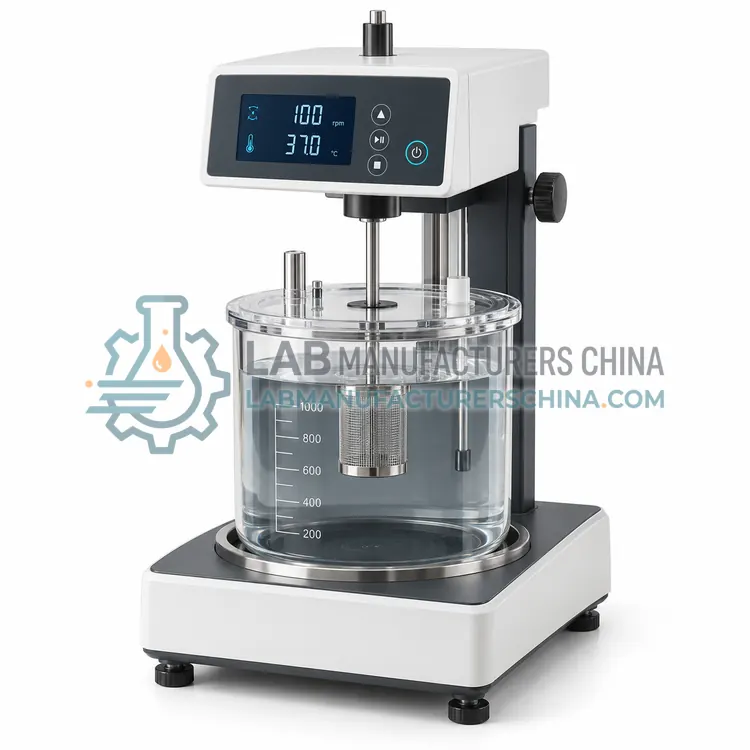
Dissolution Systems
溶出系统
Dissolution systems measure how quickly a drug is released from a solid dosage form into a thermostatted medium, using the standard USP or pharmacopoeial apparatus. Pharmaceutical quality control and development laboratories use them for release testing, profile comparison and bioequivalence support.
- TAA5 models
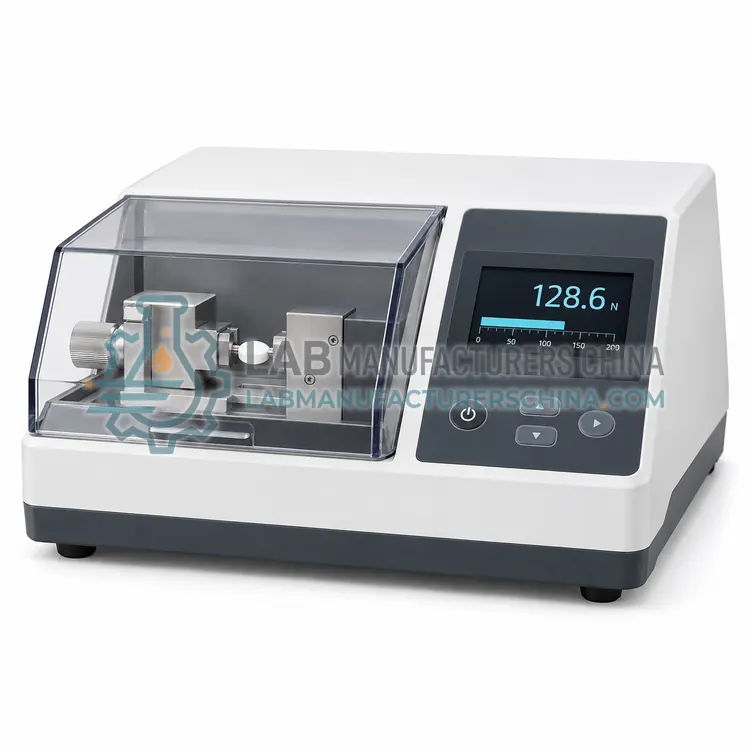
Tablet Analysis
片剂检测设备
Tablet analysis instruments measure the mechanical and physical properties of solid dosage forms, including hardness, friability, disintegration time, thickness and diameter. Pharmaceutical quality control and development laboratories use them to confirm that tablets and capsules meet specification and will handle, package and release as intended.
- SMP5 models
Sample Preparation
制药样品前处理
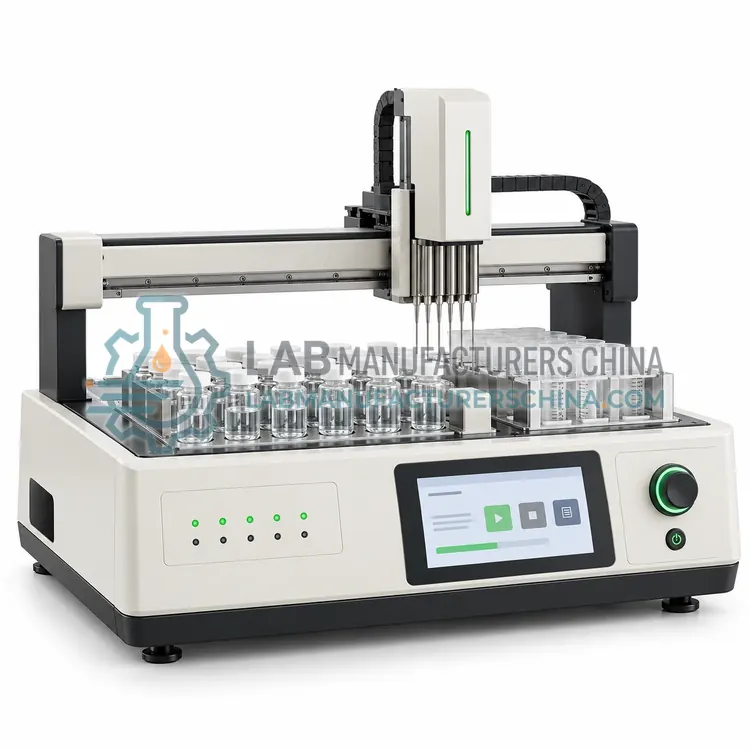
Sample preparation for pharmaceutical laboratories turns tablets, capsules, powders and blends into solutions or extracts that an analytical method can measure. Quality control, development and contract laboratories use it to prepare samples for assay, content uniformity, dissolution and cleaning validation.
What are Pharmaceutical Laboratory Equipment?
Pharmaceutical laboratory equipment is the group of instruments that generate the analytical and physical data supporting a drug's quality. It includes analyzers for identity and assay, stability chambers that hold defined temperature and humidity for shelf-life studies, dissolution systems that measure release from solid dosage forms, tablet testers for hardness, friability and disintegration, and sample preparation tools that turn tablets, capsules or powders into solutions a method can measure. Because results feed batch release and regulatory filings, instruments must be qualified, calibrated and used under written, validated methods, and the generated records must be attributable, legible, contemporaneous, original and accurate.
How do Pharmaceutical Laboratory Equipment work?
Each instrument family works on a different physical or chemical principle. Spectroscopic analyzers such as NIR and Raman probes excite molecular bonds and read the reflected or scattered spectrum to identify raw materials through packaging. Titrators add a reagent of known concentration until an equivalence point detected electrochemically marks the end point, and the volume consumed gives the content. Stability chambers use compressor or Peltier cooling, steam or resistive humidification and controlled airflow to hold ICH conditions such as 25 °C and 60 percent relative humidity. Dissolution systems rotate a basket, paddle or cell in a thermostatted vessel, withdrawing samples at set times. Tablet testers apply a calibrated load, tumbling action or reciprocating mesh to measure mechanical behaviour.
Where are Pharmaceutical Laboratory Equipment used?
Pharmaceutical laboratory equipment is used throughout the product lifecycle. Incoming goods testing identifies raw materials and excipients before release to production. Research and development laboratories use analyzers, dissolution systems and stability chambers to compare formulations and establish shelf life. Quality control laboratories release each batch using assay, content uniformity, dissolution and physical tests, and investigate out-of-specification results. Stability studies store samples under long-term, intermediate and accelerated conditions for months or years. Contract research and testing organisations run the same methods for multiple clients, while generic developers use dissolution profiling to demonstrate equivalence with reference products.
Which standards apply to Pharmaceutical Laboratory Equipment?
Pharmaceutical testing is governed by pharmacopoeial general chapters and GMP expectations. Relevant documents include USP general chapters such as <711> for dissolution, <905> for uniformity of dosage units, <921> for water determination and <1225> for validation, together with Ph. Eur. and JP equivalents, ICH Q1A for stability testing, ICH Q1B for photostability and ICH Q2 for analytical validation. Quality systems follow ICH Q7 and ICH Q10, with ISO 17025 for testing laboratories. Instrument safety follows IEC 61010-1 and IEC 61326-1 for EMC, and data integrity expectations come from 21 CFR Part 11 and EU GMP Annex 11 where electronic records are used.
How do I select the right pharmaceutical laboratory equipment?
Match the instrument to the test method and the pharmacopoeia cited in the dossier. Define the dosage form first, since tablets, capsules, liquids and powders need different sample preparation and different dissolution apparatus. Then fix the conditions, such as the ICH climatic zone for stability storage, the dissolution apparatus and volume, or the measurement range and resolution for assay. Compare temperature and humidity uniformity, recovery after door opening, qualification documentation and audit-trail capability. Check that software supports access control, electronic signatures and exportable raw data. Finally, evaluate consumable and service costs, calibration intervals and local service coverage, because these drive the validated lifetime cost of the instrument.
Pharmaceutical Laboratory Equipment comparison
| Subcategory | Principle | Typical use | Key spec |
|---|---|---|---|
| Pharmaceutical Analyzers | Spectroscopy, titration or light scattering for identity and assay | Raw material identification and content testing | Wavelength 400–2500 nm; resolution to 0.1 percent |
| Stability Chambers | Controlled temperature, humidity and light with forced airflow | ICH long-term and accelerated stability studies | 20–60 °C; 40–95 percent RH |
| Dissolution Systems | Basket, paddle or cell rotating in a thermostatted vessel | Dissolution and release testing of solid dosage forms | USP Apparatus 1–7; 37 ±0.5 °C |
| Tablet Analysis | Mechanical load, tumbling or reciprocating mesh | Hardness, friability, thickness and disintegration testing | Hardness 2–500 N; 100 revolutions for friability |
| Sample Preparation | Grinding, weighing, dilution, filtration and extraction | Preparing tablets, powders and solutions for analysis | Dilution ratio to 1:10000; particle size to 20 µm |
Frequently asked questions about Pharmaceutical Laboratory Equipment
A typical quality control laboratory needs analytical instruments for identity and assay, dissolution systems for solid dosage forms, tablet hardness, friability and disintegration testers, stability chambers for ongoing studies, and sample preparation equipment such as balances, mills and dilutors, all under qualification and calibration.
For general case long-term studies the usual conditions are 25 °C and 60 percent relative humidity or 30 °C and 65 percent relative humidity, with accelerated storage at 40 °C and 75 percent relative humidity. Intermediate and other zone-specific conditions apply depending on the ICH climatic zone.
Immediate-release tablets and capsules usually use USP Apparatus 2 paddles or Apparatus 1 baskets. Modified-release and special dosage forms may need Apparatus 3 reciprocating cylinders, Apparatus 4 flow-through cells or Apparatus 7 reciprocating holders. The choice comes from the pharmacopoeial monograph or the validated in-house method.
Long-term studies run for the proposed shelf life plus a margin, often 12 to 24 months or longer, with testing points such as 0, 3, 6, 9, 12, 18 and 24 months. Accelerated studies usually run six months with at least three time points including the initial and final measurement.
Instruments used under GMP should provide user access levels, audit trails with time stamps, electronic signatures, and the ability to export raw data in a readable format. This supports compliance with 21 CFR Part 11 and EU GMP Annex 11 expectations.
Yes. Equipment used in pharmaceutical testing normally needs design, installation, operational and performance qualification, plus scheduled calibration and maintenance. Records must be retained and be available for inspection by regulators and customers.
Related categories
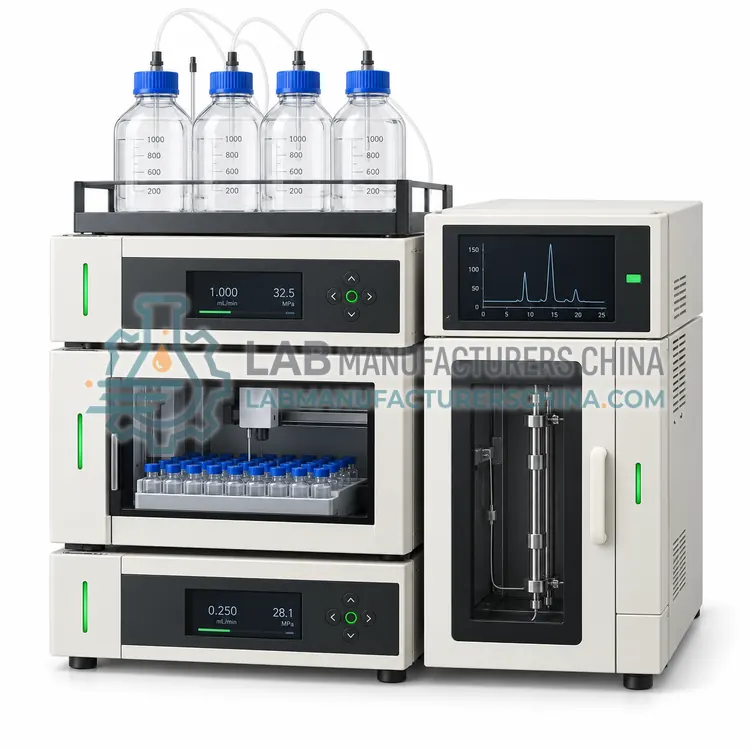 CPHA药物分析设备Pharmaceutical analysis equipment covers the instrumental techniques used to identify and quantify drug substances, impurities and residual water in pharmacopoeial testing. It serves quality control, research and development and contract laboratories that must demonstrate identity, assay, purity and compliance with monograph limits.
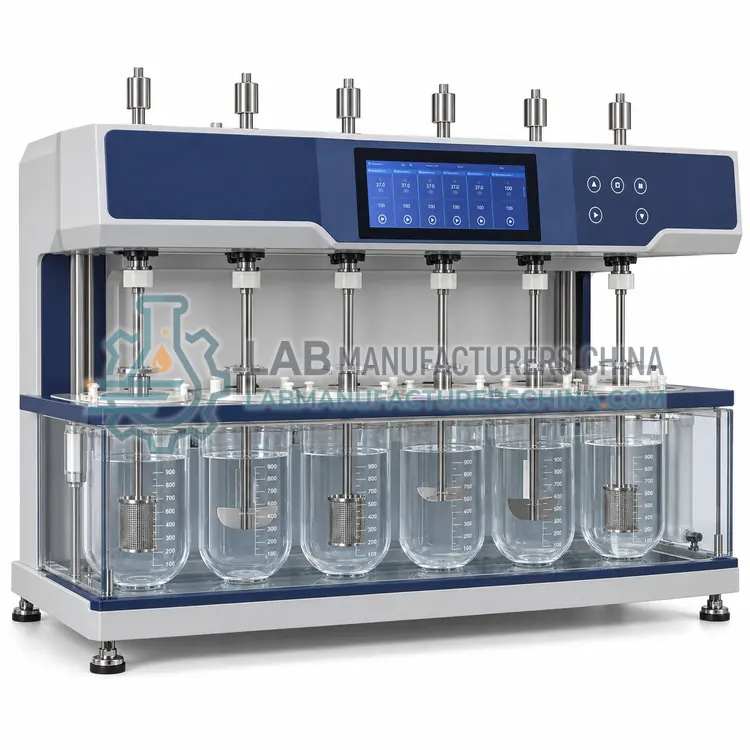 CDTE溶出度测试设备Dissolution testing equipment measures how quickly and completely the active ingredient of a tablet, capsule, patch or implant is released into a controlled medium. The category covers dissolution testers, flow-through systems, media preparation units and sampling systems used in pharmaceutical QC and development.
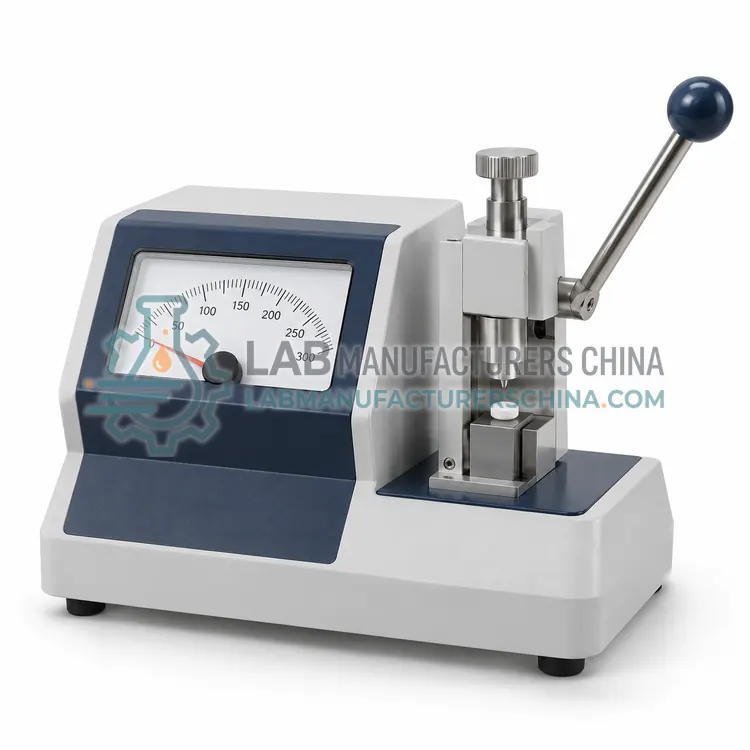 CTTE片剂测试设备Tablet testing equipment measures the physical quality attributes of compressed tablets and capsules: hardness, friability, disintegration time, thickness and visual appearance. The category covers hardness testers, friability testers, disintegration testers, thickness gauges and inspection systems used for batch release and in-process control.
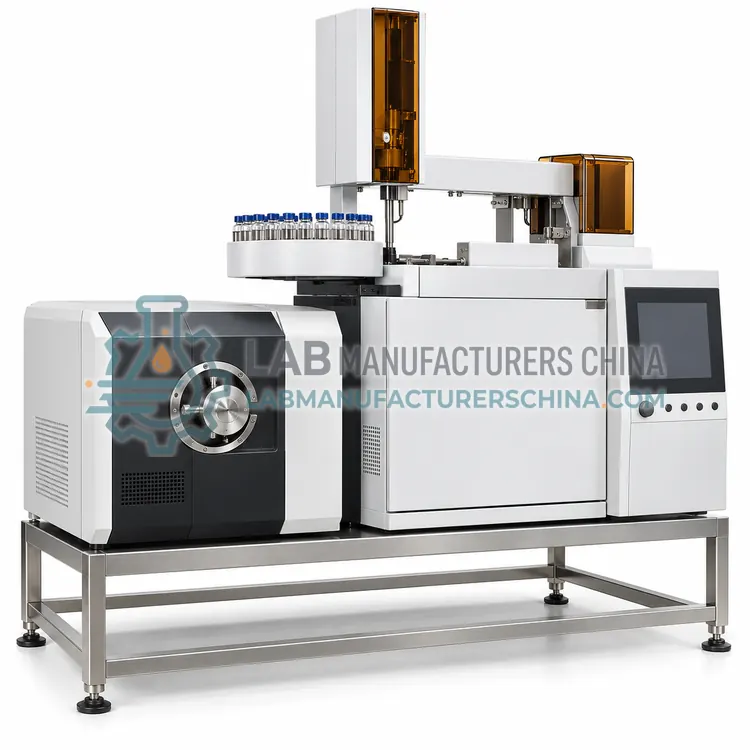 CDRU药物检测设备Drug testing equipment detects and quantifies drugs of abuse, therapeutic drugs and their metabolites in biological and seized samples. The category covers analytical confirmation systems, toxicology analyzers, screening platforms and the sample-preparation equipment used in forensic, clinical and workplace drug-testing laboratories.