Lab Manufacturers China

Pharmaceutical Analyzers

药物分析仪

PHA · Pharmaceutical Laboratory Equipment · 5 models

By Lab Manufacturers China Technical TeamLast reviewed Standards: USP <856>, USP <858>, USP <541>

Standards referenced

  • USP <856>
  • USP <858>
  • USP <541>
  • USP <429>
  • ICH Q2(R2)
  • IEC 61010-1

What are Pharmaceutical Analyzers?

Pharmaceutical analyzers are benchtop and portable instruments that identify and quantify drug substances, excipients and finished products. Quality control, incoming goods and development laboratories use them for raw material identification, assay, particle size and optical rotation testing.

5 models of Pharmaceutical Analyzers

The 5 models below are current configurations; specifications are confirmed on quotation.

Near-Infrared Pharmaceutical Analyzer

药品近红外分析仪

  • PHA-0001
  • Pharmaceutical Analyzers
  • CE (to be confirmed)
  • ISO 13485 manufacturing (to be confirmed)
  • IEC 61010-1 compliance (to be confirmed)
Wavelength range:
780–2500 nm
Wavelength accuracy:
about ±1 nm
Photometric noise:
about 0.05 mAU or better
Scan time:
about 5–30 s
Sample interface:
Reflectance probe or rotating cup
Library capacity:
hundreds of material models

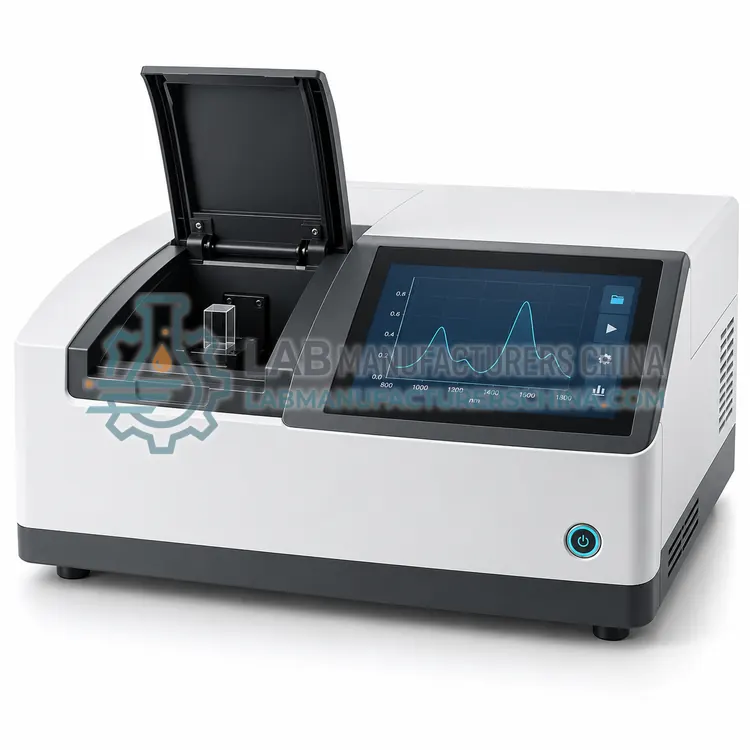
A near-infrared pharmaceutical analyzer identifies incoming raw materials by measuring their absorption spectrum, often through a plastic bag or container. It is chosen for rapid goods-in identification in pharmaceutical warehouses and quality control laboratories.

Request a quote
View details

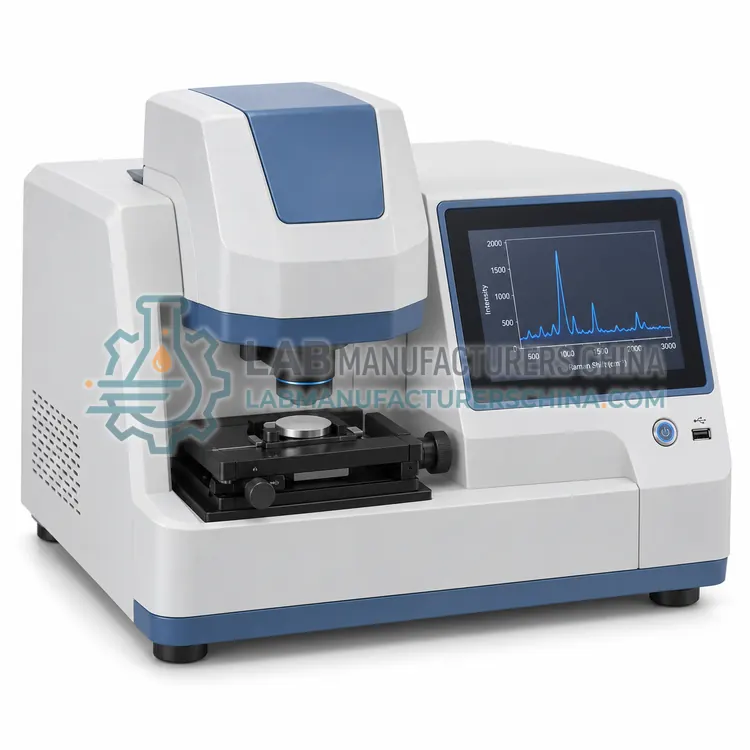
Raman Pharmaceutical Analyzer

药品拉曼分析仪

  • PHA-0002
  • Pharmaceutical Analyzers
  • CE (to be confirmed)
  • IEC 60825-1 laser safety (to be confirmed)
  • ISO 13485 manufacturing (to be confirmed)
Laser wavelength:
785 nm typical; 532 or 1064 nm options
Spectral range:
200–3200 cm-1
Spectral resolution:
about 4–8 cm-1
Acquisition time:
about 1–30 s
Calibration standard:
Polystyrene or silicon
Sample interface:
Probe, vial holder or microscope

A Raman pharmaceutical analyzer identifies materials and crystal forms by measuring inelastic light scattering, often through glass vials or blister packs. It is chosen for polymorph screening, container identification and portable in-process checks.

Request a quote
View details

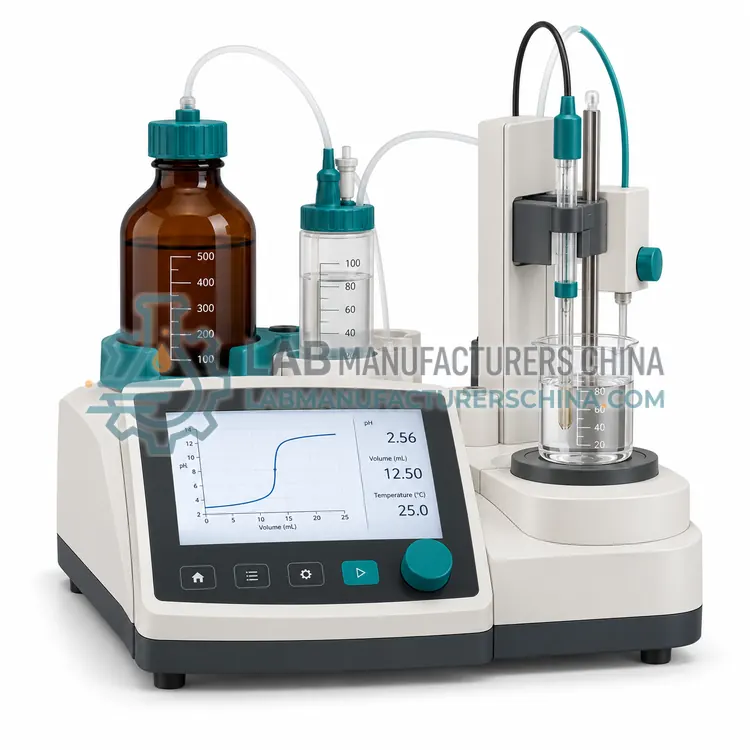
Automated Titration Analyzer for Pharmaceutical Assay

药品含量自动滴定分析仪

  • PHA-0003
  • Pharmaceutical Analyzers
  • CE (to be confirmed)
  • IEC 61010-1 compliance (to be confirmed)
  • ISO 13485 manufacturing (to be confirmed)
Burette volume:
10–25 mL
Volume resolution:
0.001 mL or better
Potentiometric accuracy:
about ±0.1 mV
Electrode types:
pH, redox, ion-selective, non-aqueous
Sample positions:
up to 16–36
End point detection:
Automatic with first or second derivative

An automated titration analyzer determines drug content by adding reagent to an equivalence point detected electrochemically. It is chosen for assay of acids, bases and salts in quality control and is a standard pharmacopoeial method.

Request a quote
View details

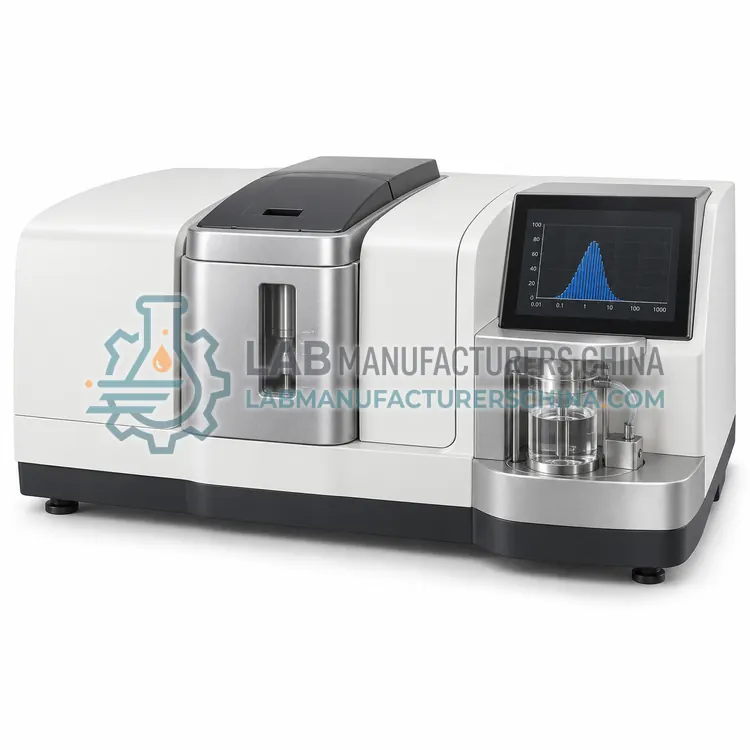
Laser Diffraction Particle Size Analyzer for Pharmaceuticals

药品激光衍射粒径分析仪

  • PHA-0004
  • Pharmaceutical Analyzers
  • CE (to be confirmed)
  • IEC 60825-1 laser safety (to be confirmed)
  • ISO 13485 manufacturing (to be confirmed)
Size range:
0.01–3500 µm
Measurement principle:
Laser diffraction, Mie or Fraunhofer
Dispersion:
Wet cell, dry jet or both
Reproducibility:
about ±1 percent on D50
Obscuration control:
Automated between 5 and 20 percent
Ultrasonic power:
Adjustable, 0–100 percent

A laser diffraction particle size analyzer measures the size distribution of drug powders, suspensions and emulsions by the angle of scattered laser light. It is chosen for particle size specification testing and development work.

Request a quote
View details

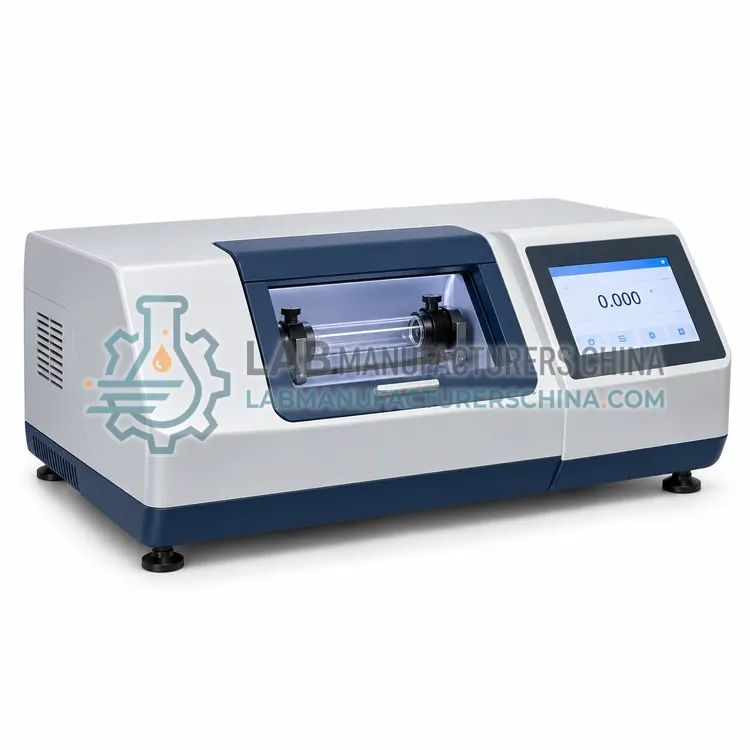
Automatic Polarimeter for Pharmaceutical Analysis

药品分析自动旋光仪

  • PHA-0005
  • Pharmaceutical Analyzers
  • CE (to be confirmed)
  • IEC 61010-1 compliance (to be confirmed)
  • ISO 13485 manufacturing (to be confirmed)
Measuring range:
±90°
Resolution:
0.001°
Accuracy:
about ±0.01°
Wavelength:
589 nm standard, others optional
Temperature control:
15–40 °C, ±0.2 °C
Cell path length:
100 mm or 200 mm

An automatic polarimeter measures optical rotation to identify and assay chiral drug substances, and is frequently used for sugars and optically active compounds. It provides a specific, pharmacopoeial measurement for identity and purity.

Request a quote
View details

Compare Pharmaceutical Analyzers models

ModelSample interfaceSoftwarePower supply
Near-Infrared Pharmaceutical AnalyzerPHA-0001Reflectance probe or rotating cupMethod storage and audit trail options220 V, 50 Hz or battery
Raman Pharmaceutical AnalyzerPHA-0002Probe, vial holder or microscope—220 V, 50 Hz or battery
Automated Titration Analyzer for Pharmaceutical AssayPHA-0003—Audit trail, method and report storage220 V, 50 Hz, about 0.2 kW
Laser Diffraction Particle Size Analyzer for PharmaceuticalsPHA-0004——220 V, 50 Hz, about 0.3 kW
Automatic Polarimeter for Pharmaceutical AnalysisPHA-0005——220 V, 50 Hz, about 0.1 kW

Indicative values for this product class. Final specifications are confirmed on the quotation and in the calibration documents supplied with the instrument.

How do Pharmaceutical Analyzers work?

Pharmaceutical analyzers apply spectroscopic, electrochemical or physical measurement principles to drug samples. Near-infrared instruments measure the absorption of light from about 780 to 2500 nm by overtone and combination vibrations of molecular bonds, which gives a fingerprint suitable for identification through packaging. Raman analyzers measure inelastic light scattering and are sensitive to molecular symmetry and crystal form. Potentiometric titrators add reagent until a sensor detects the equivalence point, so the consumed volume gives content. Laser diffraction measures the angular scatter of laser light as particles pass, which is converted to a size distribution. Polarimeters measure optical rotation, a specific property of chiral drug substances. Calibration or verification with reference standards is needed for each technique.

Which Pharmaceutical Analyzers variants are available?

  • Near-Infrared Pharmaceutical Analyzer — A near-infrared pharmaceutical analyzer identifies incoming raw materials by measuring their absorption spectrum, often through a plastic bag or container.
  • Raman Pharmaceutical Analyzer — A Raman pharmaceutical analyzer identifies materials and crystal forms by measuring inelastic light scattering, often through glass vials or blister packs.
  • Automated Titration Analyzer for Pharmaceutical Assay — An automated titration analyzer determines drug content by adding reagent to an equivalence point detected electrochemically.
  • Laser Diffraction Particle Size Analyzer for Pharmaceuticals — A laser diffraction particle size analyzer measures the size distribution of drug powders, suspensions and emulsions by the angle of scattered laser light.
  • Automatic Polarimeter for Pharmaceutical Analysis — An automatic polarimeter measures optical rotation to identify and assay chiral drug substances, and is frequently used for sugars and optically active compounds.

How do I choose the right variant?

Match the analyzer to the test in the pharmacopoeial monograph or validated method. For raw material identification at goods-in, choose near-infrared or Raman according to packaging, sample form and whether water or glass interferes. For content determination, a potentiometric titrator suits acids, bases and salts; an automatic polarimeter suits chiral substances. For particle size, laser diffraction covers suspensions, powders and aerosols, and the dispersion method must suit the product. Compare wavelength or measurement range, resolution, accuracy, throughput, sample handling and software features such as method storage and audit trail. Confirm that calibration standards, reference libraries and qualification documents are available.

Where are Pharmaceutical Analyzers used?

Pharmaceutical Analyzers are specified in raw material identification at goods-in, drug substance assay, excipient quality control, particle size testing of suspensions and powders, chiral drug optical rotation testing and in-process control.

Which standards and certifications apply?

Work with Pharmaceutical Analyzers is commonly governed by USP <856>, USP <858>, USP <541>, USP <429>, ICH Q2(R2) and IEC 61010-1. Instrument certifications such as CE marking are confirmed per configuration and never assumed.

What are the key considerations before purchase?

Install analyzers on a stable bench away from vibration, direct sun and strong draughts, and let them warm up before use. Verify performance with reference standards on a defined schedule, not only when a supplier service visit occurs, and record the results. Keep sample surfaces clean and use fresh consumables such as electrode filling solution and membranes. For near-infrared and Raman, maintain the reference library and re-qualify after any lamp or laser change. Operate under a validated procedure with trained staff, and retain raw spectra or titration curves because regulators may ask for them. Dispose of waste reagents according to local regulations.

Frequently asked questions about Pharmaceutical Analyzers

Common instruments include near-infrared and Raman analyzers for identification, potentiometric titrators for assay, laser diffraction particle size analyzers, polarimeters and spectrophotometers. The selection follows the tests defined in the pharmacopoeial monograph or validated in-house method.

Need help specifying Pharmaceutical Analyzers?

Request a quote