
Tablet Testing Equipment
片剂测试设备
CTTE · Pharmaceutical · 5 product types · 25 models
By Lab Manufacturers China Technical TeamLast reviewed
What are Tablet Testing Equipment?
Tablet testing equipment measures the physical quality attributes of compressed tablets and capsules: hardness, friability, disintegration time, thickness and visual appearance. The category covers hardness testers, friability testers, disintegration testers, thickness gauges and inspection systems used for batch release and in-process control.
5 product types in Tablet Testing Equipment
The 5 product types below are grouped by the exact instrument you need.
- HAT5 models
Hardness Testers
片剂硬度计
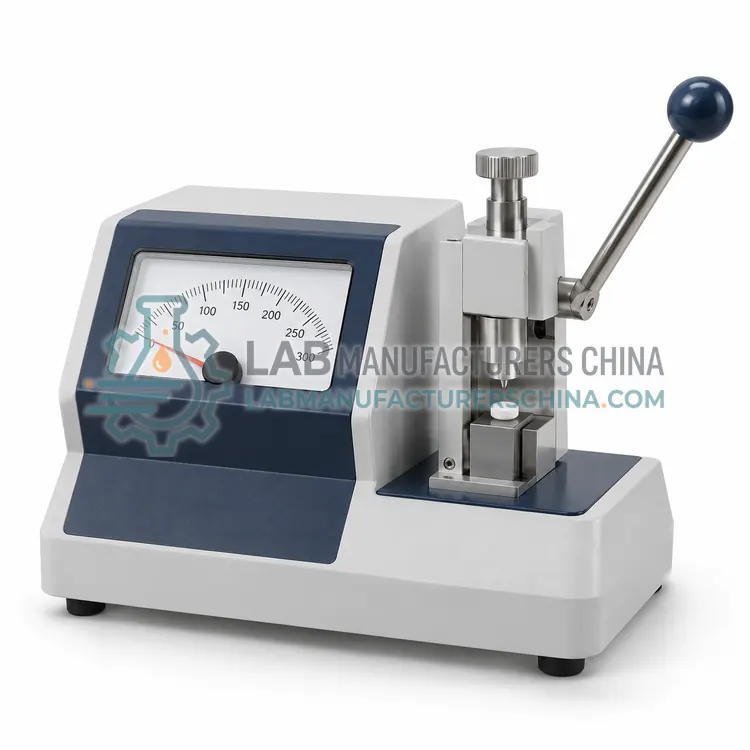
Tablet hardness testers measure the breaking force needed to fracture a tablet diametrically between two jaws. Pharmaceutical QC and formulation laboratories use them to control compression force, verify mechanical strength for handling and coating, and link tablet properties with friability and dissolution.
- FRT5 models
Friability Testers
脆碎度测试仪
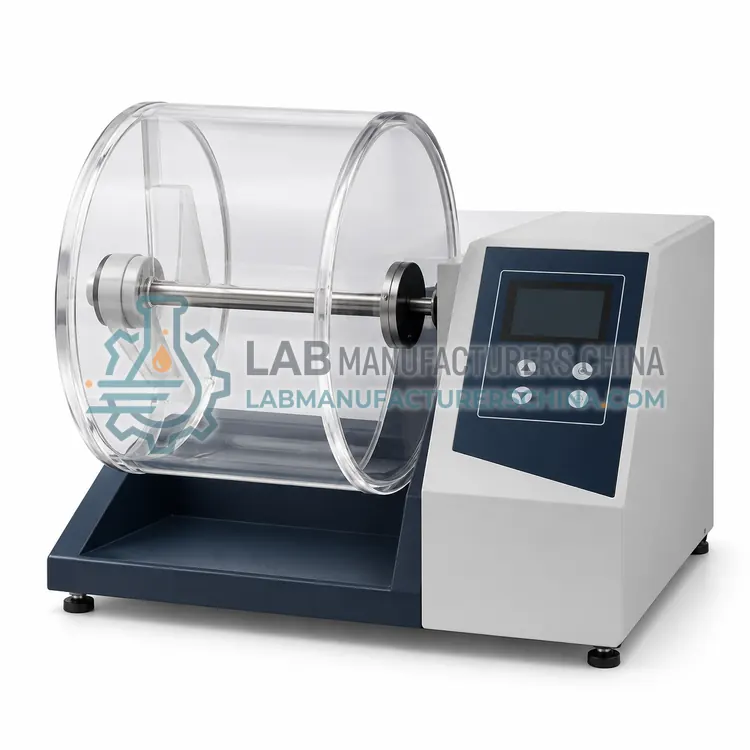
Friability testers tumble uncoated tablets in a rotating drum and measure the percentage of mass lost to chipping and abrasion. The result indicates whether tablets can survive packaging, shipping and handling. Pharmaceutical QC laboratories and formulation groups use them as a routine in-process and release test.
- DIT5 models
Disintegration Testers
崩解时限测试仪
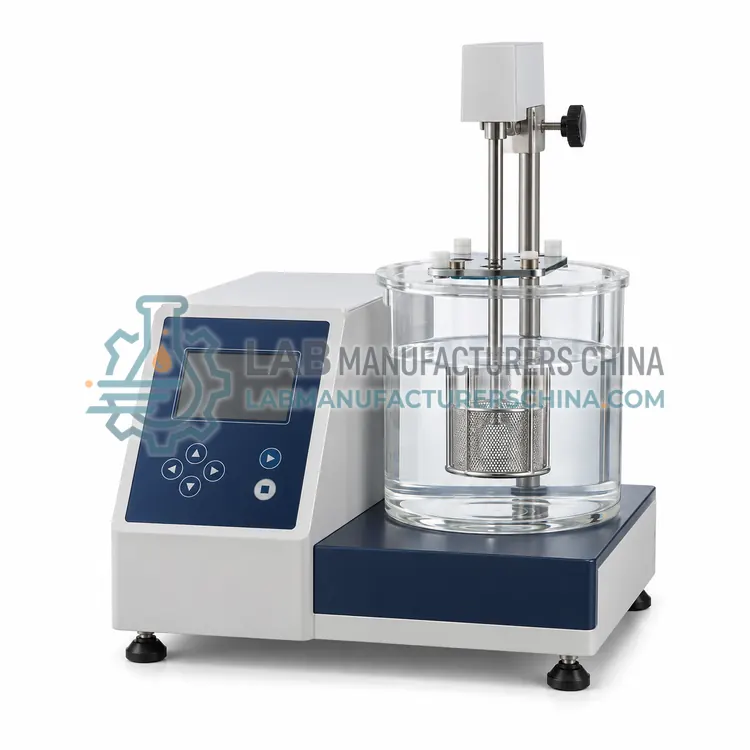
Disintegration testers raise and lower a basket of tablets or capsules in a temperature-controlled fluid and record the time needed for the dosage form to break into particles that pass through a mesh. Pharmaceutical QC and formulation laboratories use them as a fast indicator of release behavior.
- THT5 models
Thickness Testers
厚度测试仪
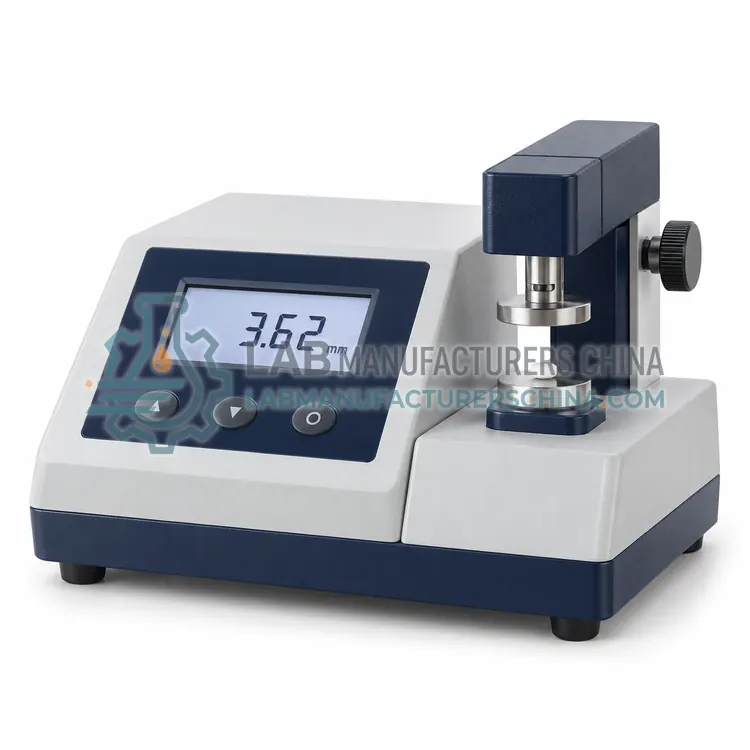
Tablet thickness testers measure the thickness and often the diameter of tablets and other solid dosage forms using a contact gauge or optical sensor. Pharmaceutical QC laboratories and production teams use them to monitor compression consistency and to check tablets against dimensional specifications.
- TAI5 models
Tablet Inspection
片剂检测设备
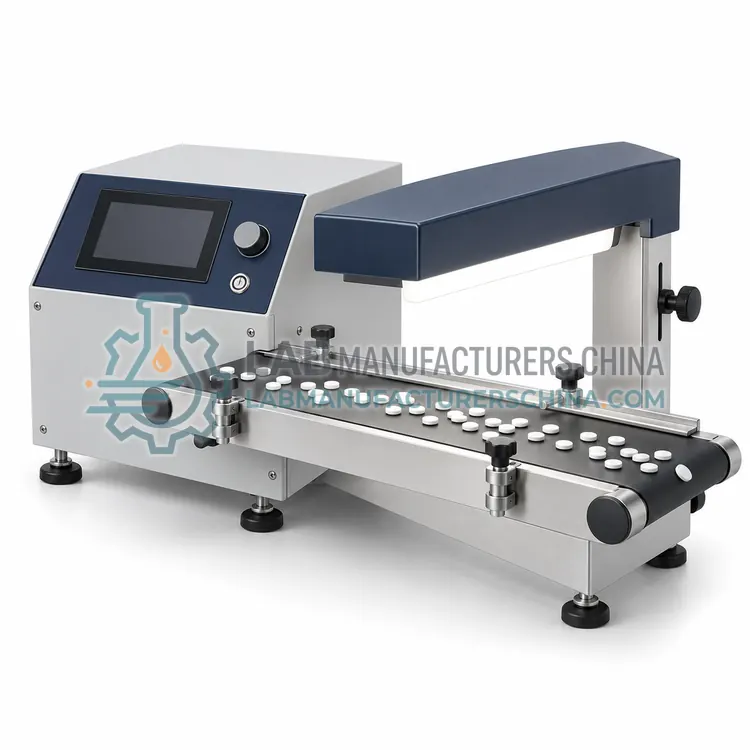
Tablet inspection equipment checks finished or in-process tablets for visual defects, foreign matter, weight errors and dimensional faults. It includes manual inspection tables, vision systems, metal detectors and checkweighers used by pharmaceutical and nutraceutical manufacturers to prevent defective units reaching packaging.
What are Tablet Testing Equipment?
Tablet testing covers the compendial and in-process tests that describe the mechanical and physical quality of solid dosage forms. Hardness reflects the force needed to fracture a tablet and correlates with handling strength and, indirectly, with disintegration and dissolution behavior. Friability measures mass loss after tumbling, indicating resistance to abrasion. Disintegration time shows how quickly a tablet breaks into particles under defined conditions. Thickness, diameter and weight control dosage uniformity and packaging fit, while visual inspection detects cracks, capping, colour variation and foreign matter. These attributes are monitored during compression, at batch release and in stability studies, and are defined in pharmacopoeial general chapters such as USP <1216>, USP <701> and Ph. Eur. 2.9.1.
How do Tablet Testing Equipment work?
Hardness is measured by applying a controlled diametral force to a tablet until it fractures; the peak force, in newtons or kiloponds, is recorded. Friability uses a drum that rotates at 25 rpm for 100 or 200 revolutions, and the percentage mass loss is calculated. Disintegration places tablets in a basket that moves with a defined stroke in a heated medium, and the time for particles to pass a mesh is recorded. Thickness and diameter are read by contact gauges or non-contact laser sensors, then combined with weight to compute parameters such as tensile strength. Automated systems feed tablets to test stations, log results and compare them with specifications, which reduces operator variability.
Where are Tablet Testing Equipment used?
Tablet testing is applied at every stage of solid-dosage production. During formulation development, it guides the choice of excipients, granulation parameters and compression force. On the production line, in-process checks of hardness, thickness and weight follow defined intervals to keep the press within a validated design space. At batch release, friability and disintegration data support the specification of the finished product. Stability programmes retest the same attributes after storage at defined temperature and humidity. Contract manufacturing organisations and generic developers apply the tests to compare reference and test products, while academic groups use them to study compaction behaviour and coating quality.
Which standards apply to Tablet Testing Equipment?
Relevant methods include USP <1216> Tablet Friability, USP <701> Disintegration, USP <711> Dissolution, Ph. Eur. 2.9.1 Disintegration of tablets and capsules, Ph. Eur. 2.9.7 Friability and Ph. Eur. 2.9.8 Resistance to crushing. USP <1217> covers tablet breaking force, and USP <905> Uniformity of Dosage Units relates weight and content uniformity. General equipment safety follows IEC 61010-1. Records from automated testers should meet 21 CFR Part 11 and ALCOA+ data-integrity expectations, and suppliers may offer CE and ISO 9001 documentation, to be confirmed per model.
How do I select the right tablet testing equipment?
Begin with the tests your monograph requires, then size the instrument to throughput. Manual hardness and thickness gauges suit low-volume QC and development, while motorised and multi-parameter testers reduce operator influence and combine several measurements at one station. Choose a separate friability drum where USP <1216> applies, and select basket type and medium heating for disintegration according to the dosage form. For high-throughput plants, automated systems that link to a balance and LIMS justify their cost through labour savings and traceability. Check measurement ranges against your largest and smallest tablets, confirm calibration services, and request IQ/OQ documentation and software audit-trail features in the RFQ.
Tablet Testing Equipment comparison
| Subcategory | Principle | Typical use | Key spec |
|---|---|---|---|
| Hardness Testers | Diametral compression until fracture, peak force recorded in N or kp | Batch release and in-process control of tablet strength | 0–500 N range, 0.01 N resolution, ±1 N accuracy |
| Friability Testers | Drum rotated at 25 rpm for 100 or 200 revolutions, mass loss measured | USP <1216> friability testing of uncoated tablets | Drum inner diameter 285 ± 10 mm, 25 ± 1 rpm |
| Disintegration Testers | Basket-rack assembly moved through heated medium, endpoint timed | Disintegration of tablets, capsules and coated forms | 6 tubes, 30–32 cycles/min, 37 ± 1 °C |
| Thickness Testers | Contact gauge or non-contact laser measurement of tablet thickness | Thickness and diameter control during compression | 0–30 mm range, 0.01 mm resolution, ±0.02 mm accuracy |
| Tablet Inspection | Optical vision, metal detection or 100 percent checkweighing | Defect detection and in-line inspection before packaging | Up to 300,000 tablets/h, camera resolution ≥ 5 MP |
Frequently asked questions about Tablet Testing Equipment
Common tests are hardness or breaking force, friability, disintegration time, thickness, diameter and weight, plus visual inspection for defects. Which tests apply to a product is defined by its pharmacopoeial monograph and the manufacturer's specification.
Hardness indicates how well a tablet resists handling, coating and packaging stresses. Very soft tablets crumble, while excessively hard tablets may disintegrate or dissolve slowly. Hardness is therefore controlled as an in-process parameter.
Hardness measures the force needed to fracture one tablet, while friability measures the percentage of mass lost when many tablets tumble in a drum. They describe different failure modes and are usually specified together.
Yes. Force, displacement, rotation speed, temperature and timer functions should be verified against traceable references at defined intervals. An electronic balance used with a multi-parameter tester also needs routine calibration checks.
Yes. Automatic systems feed tablets from a hopper to hardness, thickness and weight stations, log every result and compare it with limits. They improve traceability and reduce operator influence, but require method validation and data-integrity controls.
Related categories
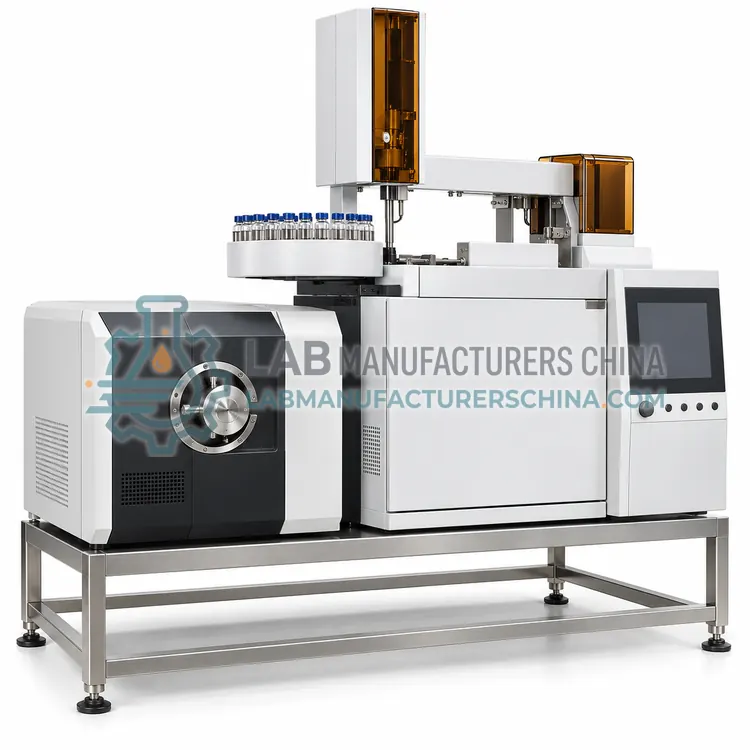 CDRU药物检测设备Drug testing equipment detects and quantifies drugs of abuse, therapeutic drugs and their metabolites in biological and seized samples. The category covers analytical confirmation systems, toxicology analyzers, screening platforms and the sample-preparation equipment used in forensic, clinical and workplace drug-testing laboratories.
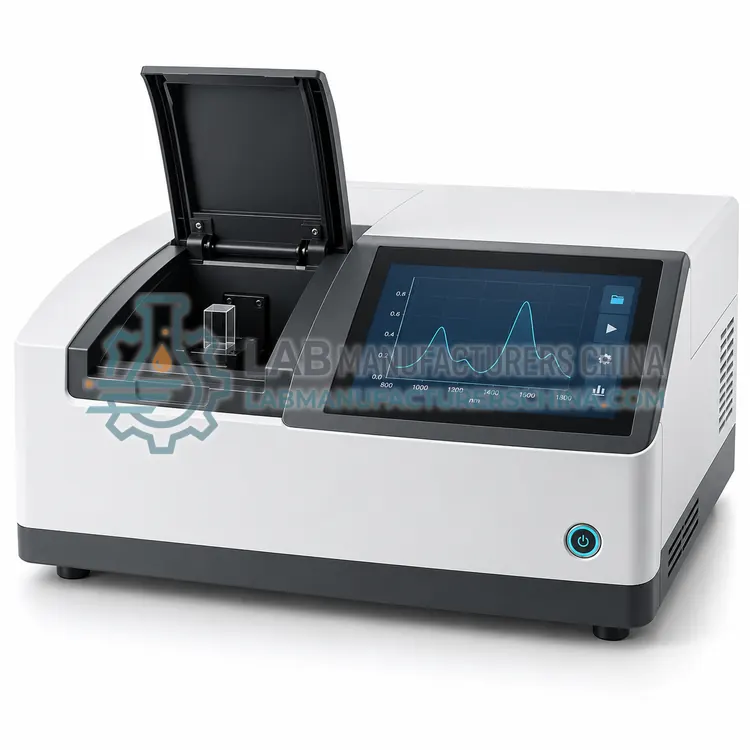 CPLE制药实验室设备Pharmaceutical laboratory equipment covers the analyzers, stability chambers, dissolution systems, tablet testers and sample preparation instruments used to test drug substances and finished dosage forms. It serves pharmaceutical quality control, research and development, and contract testing laboratories operating under pharmacopoeial and GMP requirements.
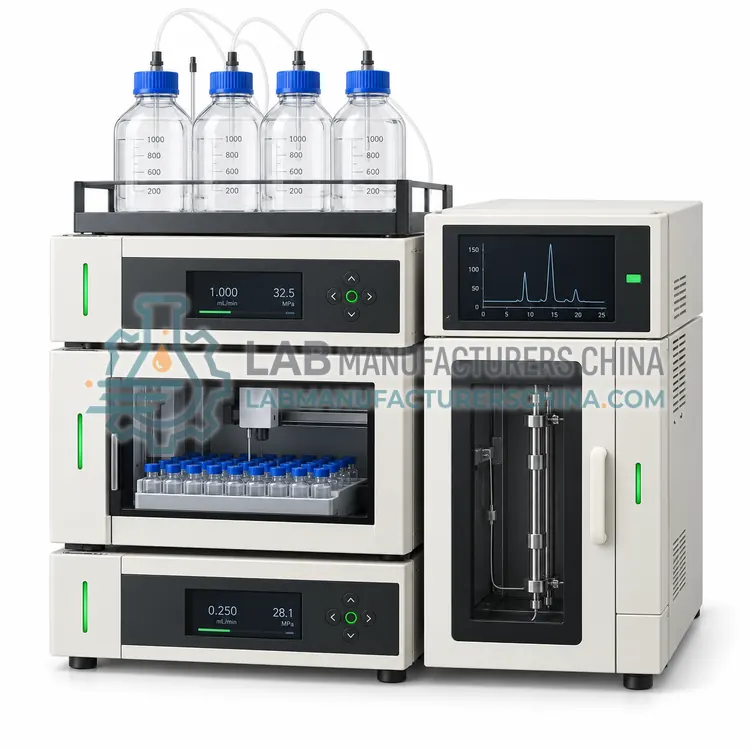 CPHA药物分析设备Pharmaceutical analysis equipment covers the instrumental techniques used to identify and quantify drug substances, impurities and residual water in pharmacopoeial testing. It serves quality control, research and development and contract laboratories that must demonstrate identity, assay, purity and compliance with monograph limits.
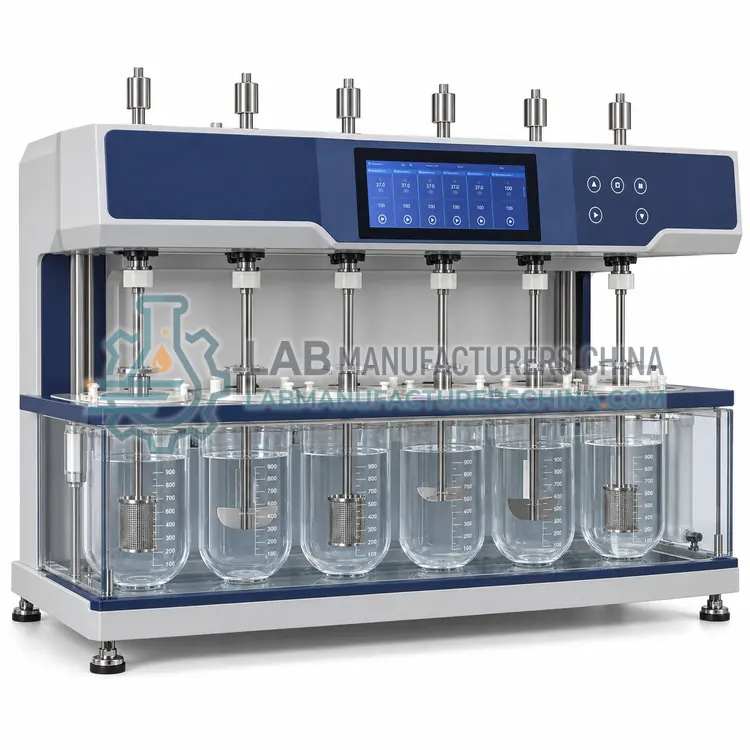 CDTE溶出度测试设备Dissolution testing equipment measures how quickly and completely the active ingredient of a tablet, capsule, patch or implant is released into a controlled medium. The category covers dissolution testers, flow-through systems, media preparation units and sampling systems used in pharmaceutical QC and development.