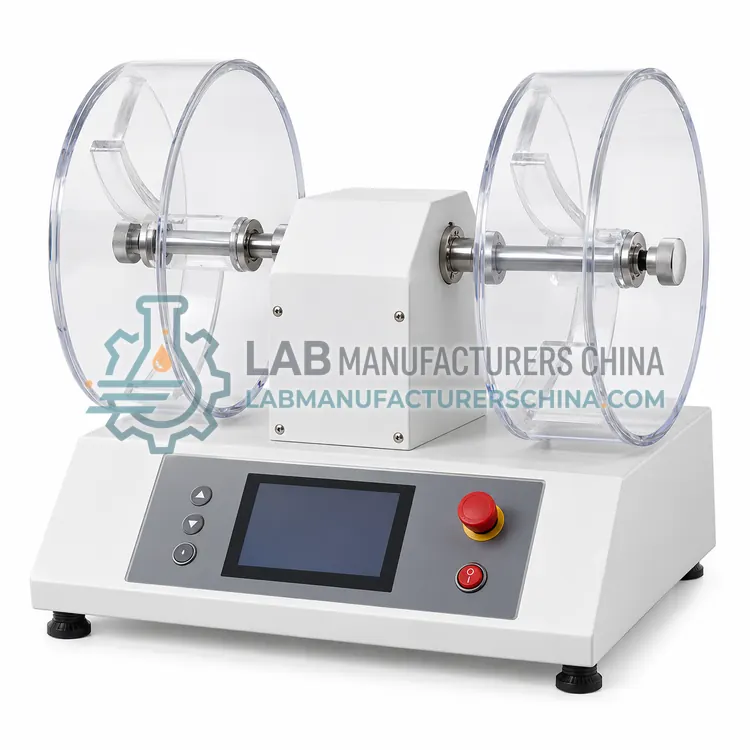
How do Friability Testers work?
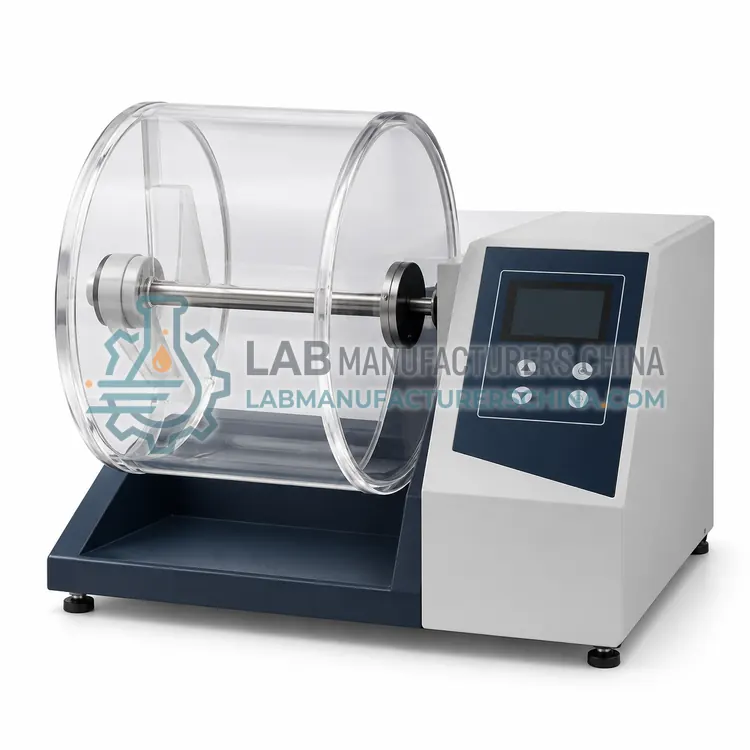
A friability tester holds a transparent drum, usually 287 mm in diameter, on a horizontal axis and rotates it at 25 rpm. A curved radial baffle inside the drum lifts the tablets and drops them from a height of about 156 mm on every turn, so each tablet falls repeatedly onto the drum wall and onto other tablets. A pre-weighed sample, normally 6.5 g or 10 tablets, is run for 100 revolutions (4 minutes). Loose dust is removed and the tablets are weighed again. Friability is the percentage loss of mass, and the pharmacopoeias accept a value not above 1.0 percent for most products. The main components are the drum, drive motor, revolution counter and timer, and a speed control. Advanced models add automatic tablet counting, dust removal and an integrated balance.
Which Friability Testers variants are available?
- Single-Drum Friability Tester — A single-drum friability tester rotates one standard drum at 25 rpm and counts revolutions to a preset value.
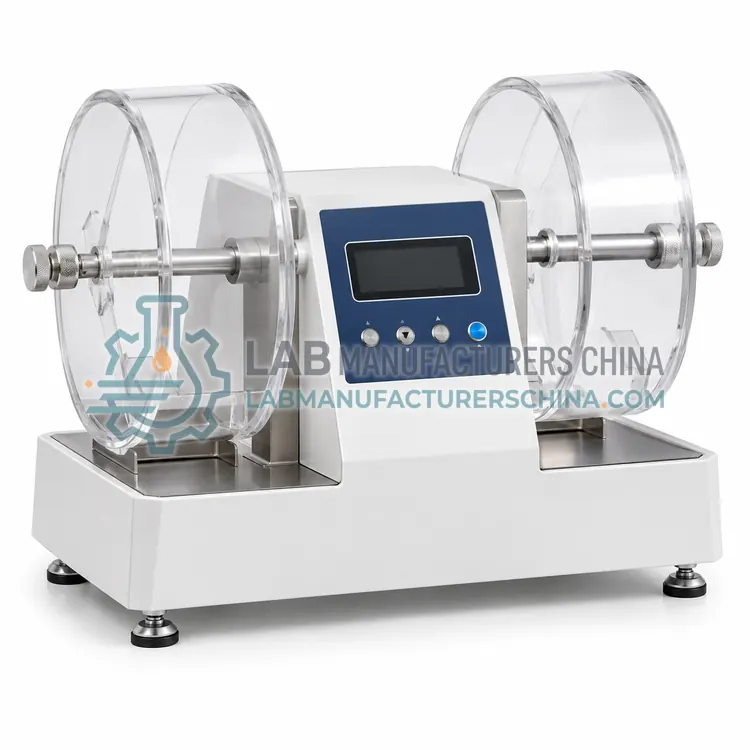
- Dual-Drum Friability Tester — A dual-drum friability tester turns two standard drums on one shaft at 25 rpm, so two samples are tested under identical conditions in one run.
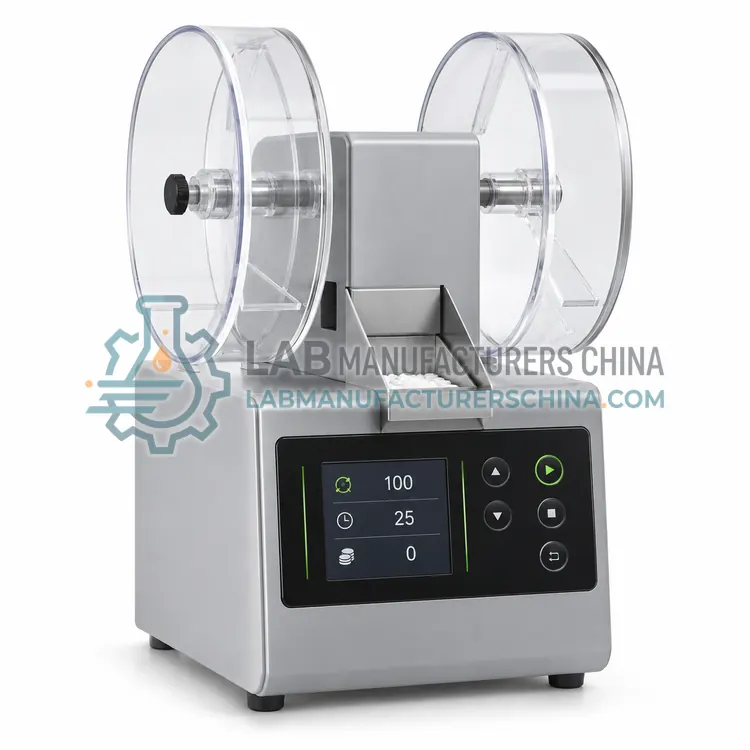
- Automatic Friability Tester with Tablet Counter — An automatic friability tester with tablet counter runs the drum test and then counts tablets and checks for breakage with optical sensors.
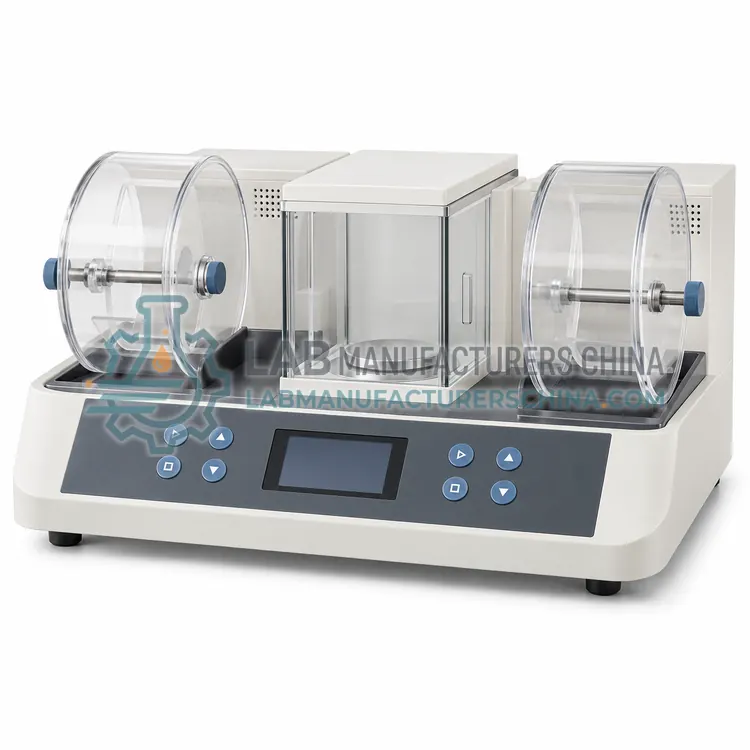
- Friability Tester with Integrated Balance and Dust Removal — A friability tester with integrated balance and dust removal combines the drum, a built-in analytical balance and an air or brush dedusting stage in one workflow.
- Friability Tester with Data-Integrity Software — A friability tester with data-integrity software records each test electronically with user login, audit trail and locked parameters.
How do I choose the right variant?
The decisive choice is throughput versus automation. A single-drum unit suits low-volume QC laboratories, while a dual-drum unit tests two samples in parallel, which also supports duplicate testing for development work. Check that drum dimensions and speed match the pharmacopoeial specification of the target market, and that the speed is verified by a revolution counter and not just a dial setting. If the laboratory handles many batches a day, automatic counting, dust removal and balance integration reduce handling errors and operator time. For regulated sites, confirm that electronic records, audit trails and user access levels are available. Also consider drum material, because antistatic or polished acrylic drums reduce dust adhesion on some granulations. Finally, confirm the tester can accept large or oddly shaped tablets if the portfolio contains them.
Where are Friability Testers used?
Friability Testers are specified in pharmaceutical QC release testing, tablet formulation development, in-process control during compression, stability study testing and nutraceutical tablet manufacturing.
Which standards and certifications apply?
Work with Friability Testers is commonly governed by USP <1216>, Ph. Eur. 2.9.7, JP 6.10 and IEC 61010-1. Instrument certifications such as CE marking are confirmed per configuration and never assumed.
What are the key considerations before purchase?
Place the tester on a level, vibration-free bench, because vibration and tilt change the tablet fall pattern. Verify drum speed and revolution count at installation and at defined intervals using a calibrated tachometer or stopwatch. Inspect the drum and baffle for scratches, cracks and residue, and clean with a non-abrasive cloth to avoid altering the surface. Keep tablets dedusted with a soft brush and weigh on a balance of at least 0.1 mg readability. Ambient humidity influences hygroscopic tablets, so record the conditions. For regulated laboratories, document the installation, operational and performance qualification and, where software is used, evidence of audit trails and access control.