How do FTIR work?
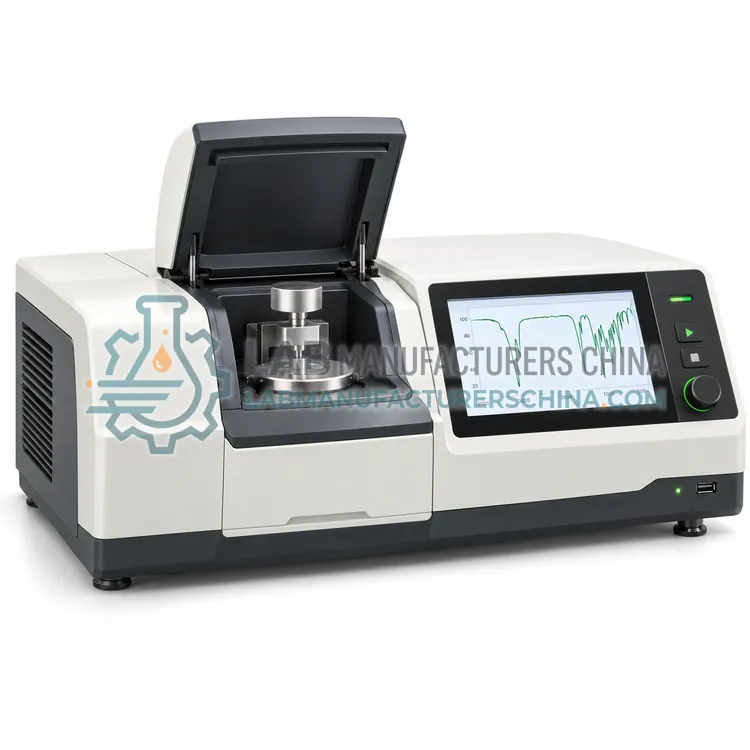
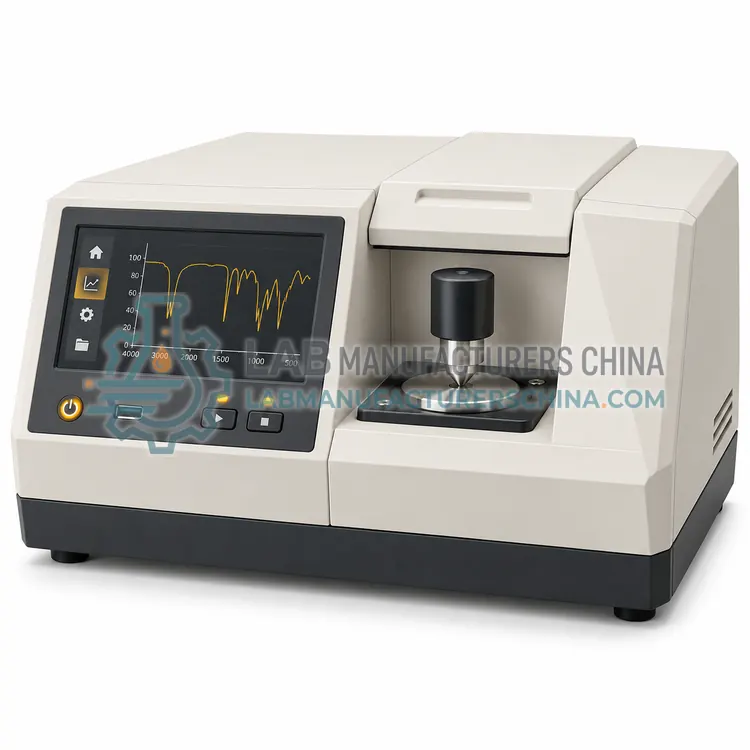
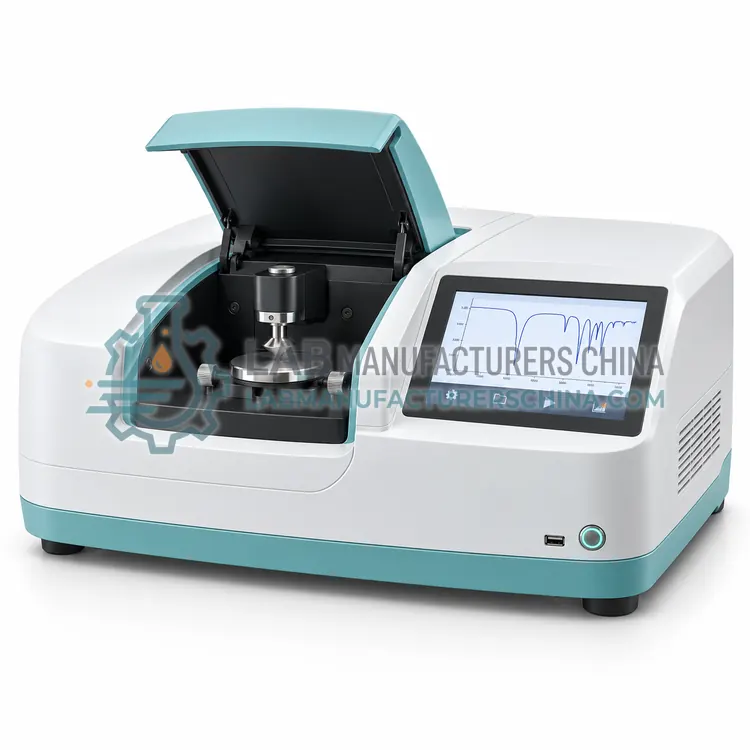
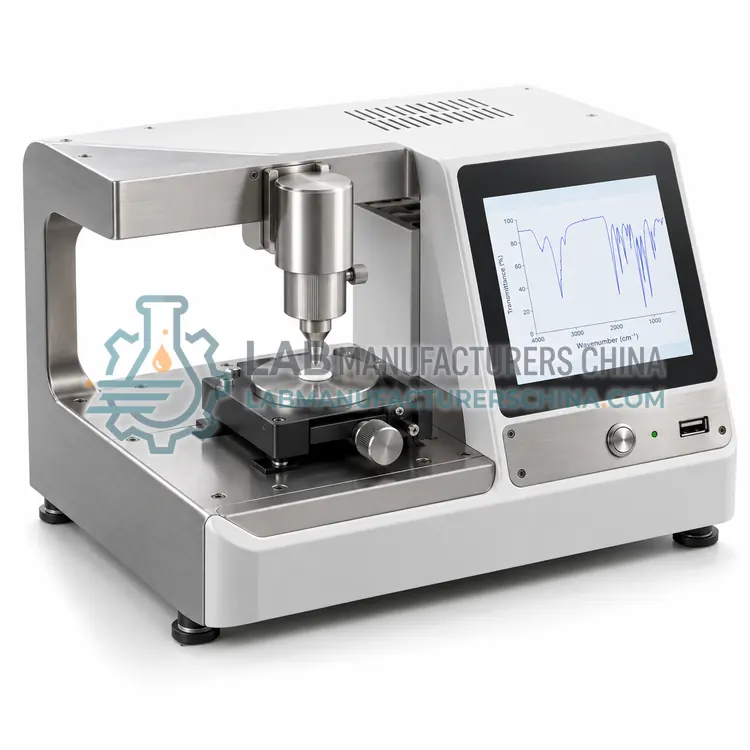
An FTIR spectrometer shines broadband infrared light through an interferometer, usually a Michelson type with a moving mirror, and then through or onto the sample. The detector records an interferogram, which a Fourier transform converts into an absorption spectrum from about 4000 to 400 cm-1. Molecular bonds absorb at characteristic frequencies, so the spectrum acts as a fingerprint of the material. Sampling accessories determine how the sample is presented: transmission through a potassium bromide pellet or a liquid cell, attenuated total reflectance for solids and pastes, diffuse reflectance for powders, or a microscope for small particles. Resolution, signal-to-noise ratio, wavenumber accuracy and the condition of the sampling accessory determine whether a spectrum matches the reference.
Which FTIR variants are available?
- FTIR Spectrometer for Raw Material Identification — An FTIR spectrometer for raw material identification compares sample spectra with reference libraries to confirm the identity of incoming materials.
- FTIR Spectrometer for Pharmaceutical Quality Control — An FTIR spectrometer for pharmaceutical quality control provides spectral confirmation of identity and form within a GMP workflow.
- ATR-FTIR Spectrometer for Pharmaceutical Analysis — An ATR-FTIR spectrometer measures samples in contact with a high-refractive-index crystal, needing little or no preparation.
- Portable FTIR Spectrometer for Raw Material Identification — A portable FTIR spectrometer brings identity testing to the warehouse or production floor rather than the laboratory.
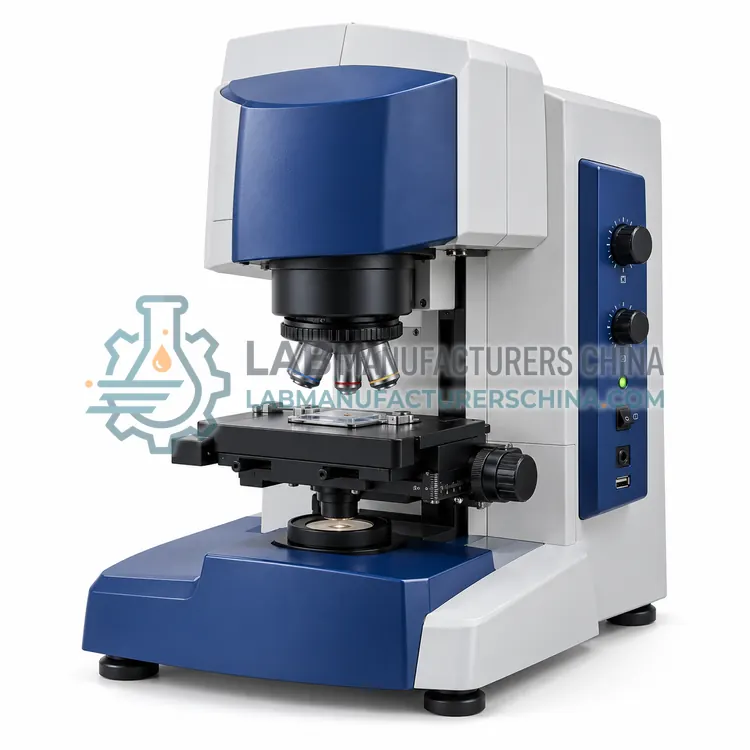
- FTIR Microscope for Pharmaceutical Particle Analysis — An FTIR microscope couples an infrared spectrometer to an optical microscope so individual particles and contaminants can be identified.
How do I choose the right variant?
Choose an FTIR system from the sample form and the test required. For raw material identity, an ATR accessory with a diamond or zinc selenide crystal is convenient because powders and pastes can be measured with minimal preparation, and a benchtop unit with a validated spectral library suits goods-in testing. For polymorph screening and structural confirmation, higher resolution and careful control of sample preparation are needed, and comparisons should use the same accessory and conditions as the reference. Portable or handheld FTIR instruments allow identification through packaging or at the point of sampling. FTIR microscopy is used for particle and contaminant identification. Compare spectral range, resolution, signal-to-noise ratio, accessory options and library software with audit trails.
Where are FTIR used?
FTIR are specified in raw material identification at goods-in, excipient identity confirmation, polymorph and crystal form screening, contaminant and particle identification, packaging material testing and method development.
Which standards and certifications apply?
Work with FTIR is commonly governed by USP <854>, USP <197>, USP <197M>, EP 2.2.24, ICH Q2(R2) and IEC 61010-1. Instrument certifications such as CE marking are confirmed per configuration and never assumed.
What are the key considerations before purchase?
Keep the instrument in a room with stable temperature and low humidity, and keep desiccant fresh, because water vapour and carbon dioxide produce sharp absorption bands that can obscure the fingerprint region. Align the interferometer and check wavenumber accuracy with a polystyrene film or other standard at defined intervals, and record the results. Clean ATR crystals carefully, since scratches and residues change the spectrum, and use a background scan at the same settings as the sample. Handle potassium bromide with a dry atmosphere because it is hygroscopic. Maintain the library and re-verify performance after any accessory or detector change, and retain raw spectra for inspection.