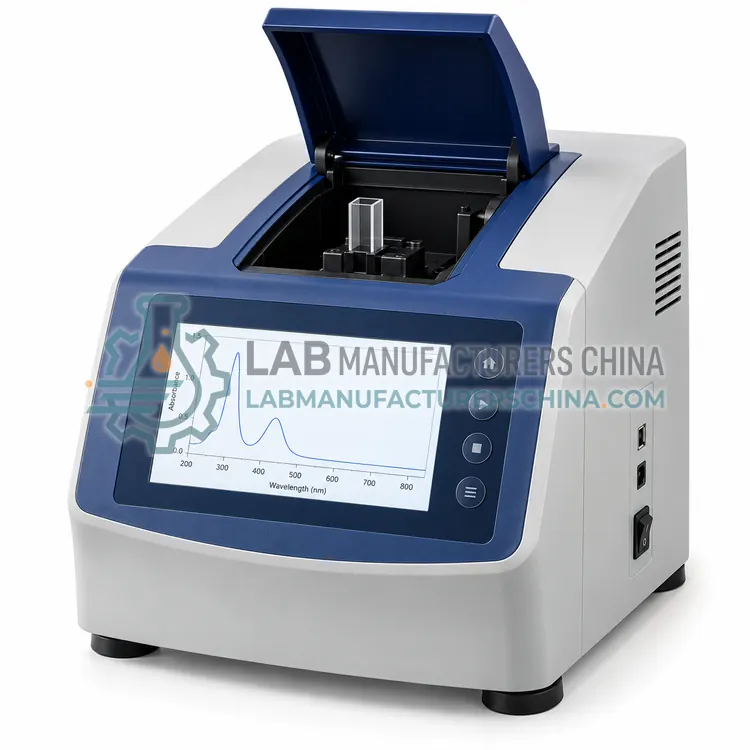
How do UV-Vis work?
A UV-Vis spectrophotometer passes light from a deuterium lamp, for ultraviolet, and a tungsten or halogen lamp, for visible, through a monochromator and then through a sample. Transmitted intensity is compared with that through a reference to give absorbance, which follows the Beer-Lambert relationship when the absorbing species, path length and wavelength are fixed. Concentration is calculated from absorbance using a calibration curve or an absorptivity value. In pharmaceutical work the sample is usually a diluted solution or a filtered dissolution aliquot held in a quartz or matched glass cell. Absorbance range, wavelength accuracy, stray light, spectral bandwidth and cell path length determine the usable range, and the method defines the wavelength, blank and standard procedure.
Which UV-Vis variants are available?
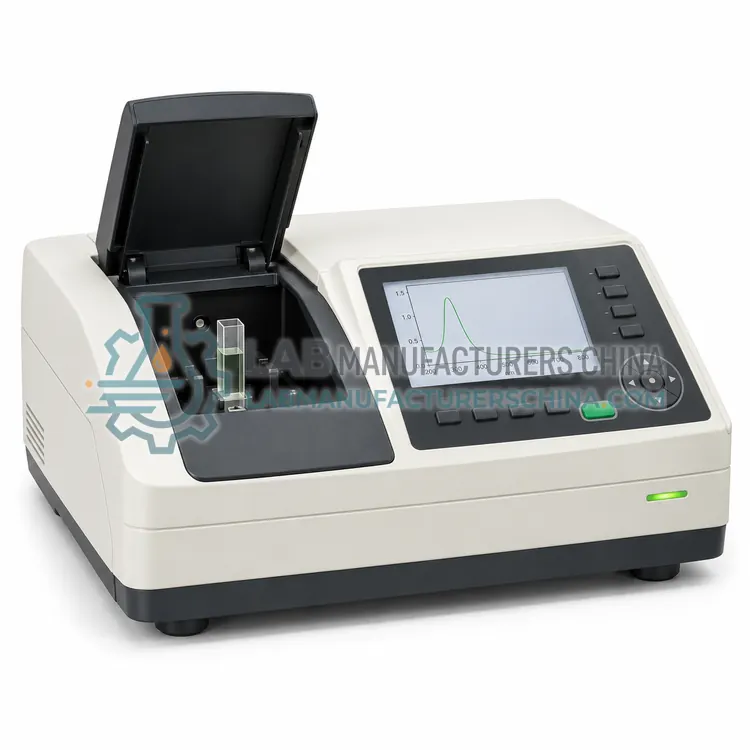
- UV-Vis Spectrophotometer for Pharmaceutical Assay — A UV-Vis spectrophotometer for pharmaceutical assay measures absorbance at a fixed wavelength and calculates content from a calibration curve or absorptivity value.
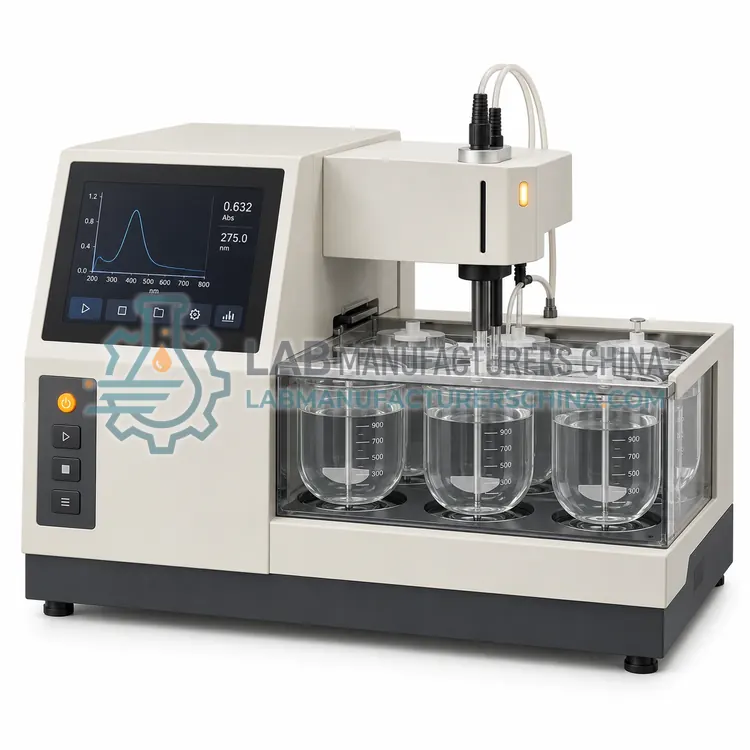
- UV-Vis Spectrophotometer for Dissolution Testing — A UV-Vis spectrophotometer for dissolution testing measures filtered aliquots or reads absorbance directly in the vessel with a fibre-optic probe.
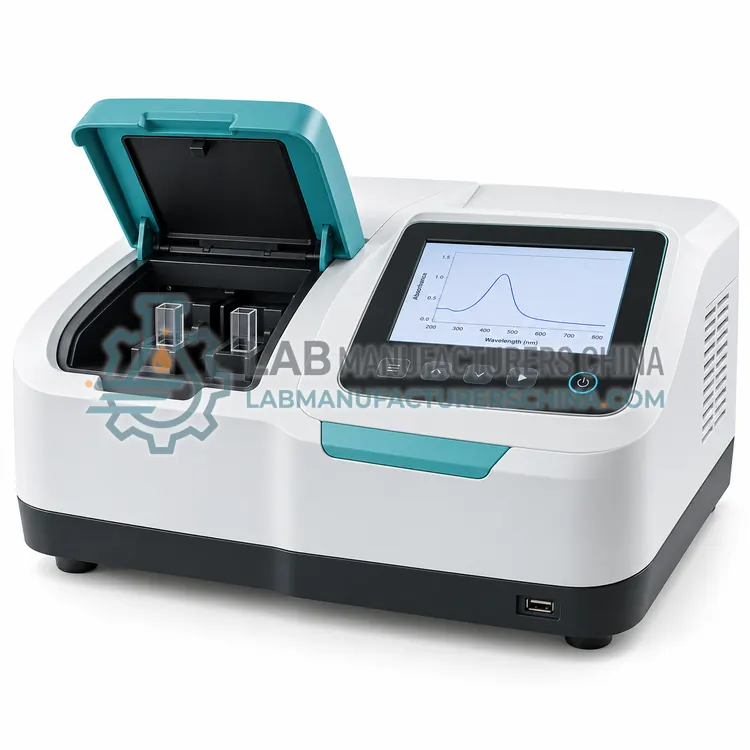
- Double-Beam UV-Vis Spectrophotometer for Pharmaceutical Quality Control — A double-beam UV-Vis spectrophotometer splits light between sample and reference channels to compensate for lamp drift.
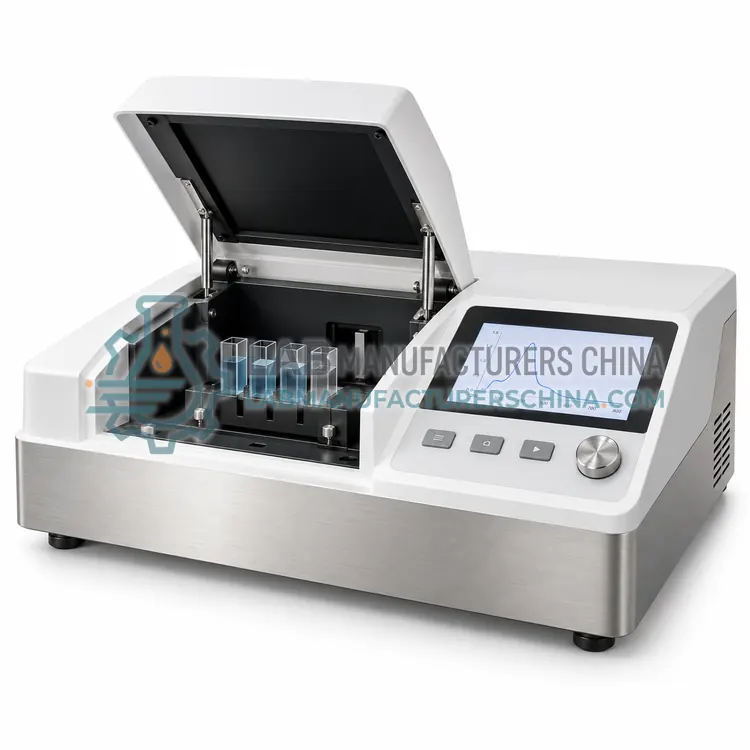
- UV-Vis Spectrophotometer for Content Uniformity Testing — A UV-Vis spectrophotometer for content uniformity testing measures individual dosage units after extraction and dilution.
- Diode-Array UV-Vis Spectrophotometer for Pharmaceutical Analysis — A diode-array UV-Vis spectrophotometer captures a complete spectrum in under a second without scanning.
How do I choose the right variant?
Choose the spectrophotometer from the method and the sample workload. Single-beam instruments suit routine assay at a fixed wavelength, where cost and simplicity matter. Double-beam optics compensate for lamp drift and are preferred for stability-indicating methods, wavelength scans and long runs. Diode-array instruments capture a full spectrum quickly, which helps method development and multi-wavelength work. For dissolution monitoring, dedicated fibre-optic systems measure absorbance directly in the vessel. Compare wavelength range and accuracy, photometric range and noise, cell changer capacity and warm-up stability. Confirm that the instrument can be qualified with standards such as potassium dichromate or holmium oxide filters, and that software supports audit trails.
Where are UV-Vis used?
UV-Vis are specified in pharmaceutical assay, content uniformity testing, dissolution monitoring, colorimetric limit tests, raw material identity checks and cleaning validation analysis.
Which standards and certifications apply?
Work with UV-Vis is commonly governed by USP <851>, USP <857>, USP <711>, USP <905>, ICH Q2(R2) and IEC 61010-1. Instrument certifications such as CE marking are confirmed per configuration and never assumed.
What are the key considerations before purchase?
Install the instrument on a stable bench away from direct sun and draughts, and allow the lamps to warm up and stabilise before measurement. Use matched cells of the specified path length and check them for scratches and contamination, because a mismatched cell introduces a constant error. Verify wavelength accuracy and photometric accuracy at defined intervals with certified reference materials, and record the results. Prepare solutions accurately and measure within the validated absorbance range, since high absorbance reduces linearity. Replace lamps when energy falls, and keep cells clean and stored properly. Retain raw spectra and calibration data for regulatory inspection.