UV-Vis Spectrophotometer for Dissolution Testing
溶出检测紫外可见分光光度计
- SKU UVI-0002
- UV-Vis
- CE (to be confirmed)
- IEC 61010-1 compliance (to be confirmed)
- ISO 13485 manufacturing (to be confirmed)
Price on request — FOB / CIF quoted per order
Prices depend on configuration, quantity and destination port.
Key specifications
| Wavelength range | 190–1100 nm |
|---|---|
| Cell positions | 6–8 with changer |
| Probe path length | 1, 2 or 5 mm |
| Photometric range | –0.3 to 3.0 AU |
| Photometric accuracy | about ±0.005 AU at 1 AU |
| Measurement time | about 1–5 s per sample |
Request a quote Download brochure · to be provided
By Lab Manufacturers China Technical TeamLast reviewed Standards: USP <851>, USP <857>, USP <711>
What is the UV-Vis Spectrophotometer for Dissolution Testing?
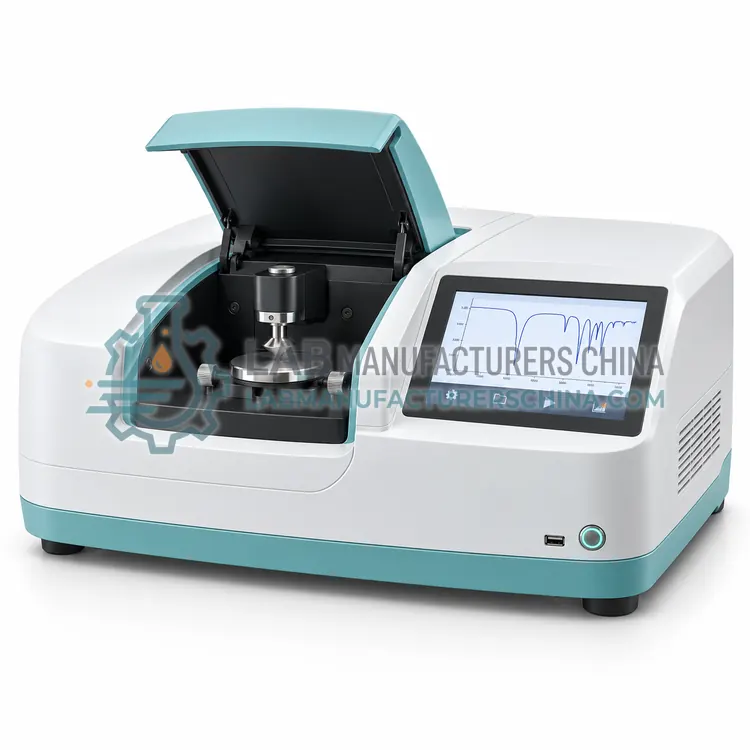
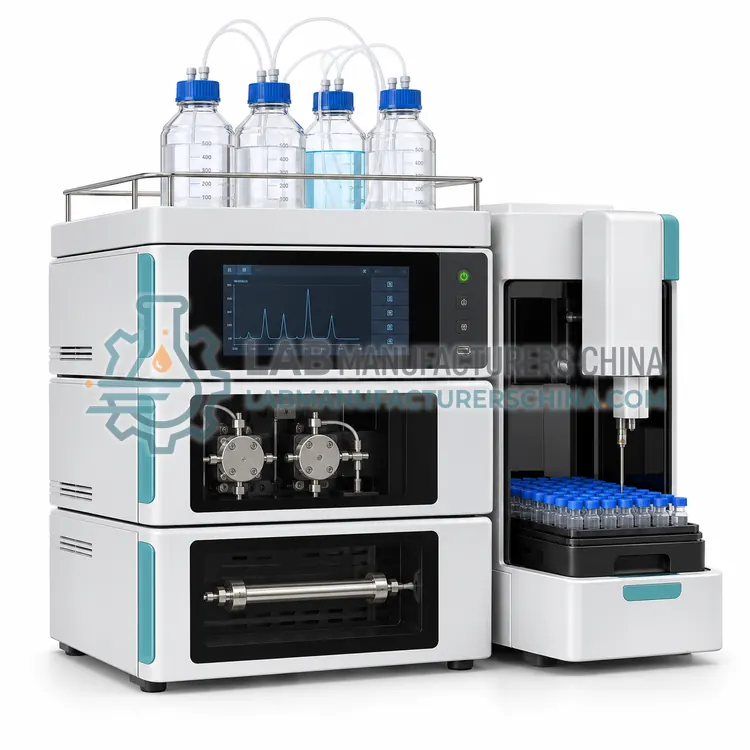
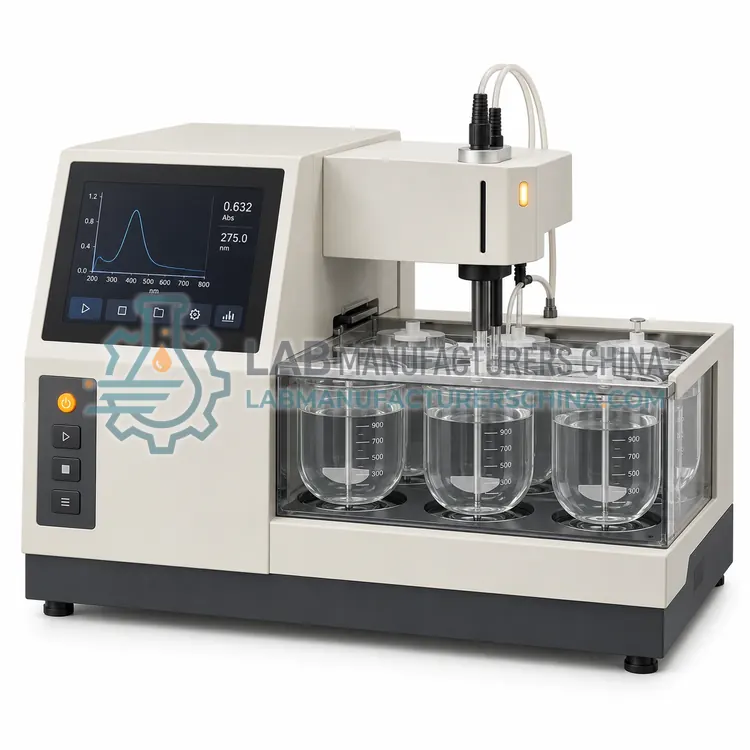
A UV-Vis spectrophotometer for dissolution testing measures filtered aliquots or reads absorbance directly in the vessel with a fibre-optic probe. It is chosen when many time points and vessels must be analysed quickly.
What is the UV-Vis Spectrophotometer for Dissolution Testing?
A UV-Vis spectrophotometer for dissolution testing measures filtered aliquots or reads absorbance directly in the vessel with a fibre-optic probe. It is chosen when many time points and vessels must be analysed quickly.
Overview
Dissolution testing produces many low-concentration samples, and UV-Vis is well suited because it is fast and needs no separation for simple formulations. Two configurations exist. In the off-line approach, samples are withdrawn, filtered and transferred to cells, often with a multi-cell changer that reads a rack automatically. In the in-situ approach, fibre-optic probes sit in each vessel and measure absorbance through a defined path, eliminating sampling and volume change but requiring correction for undissolved particles. Both need a calibration curve covering early low and late high concentrations. Multi-cell changers and multi-vessel probe systems reduce labour significantly, and the instrument should hold wavelength and photometric stability over long runs.
How does it work?
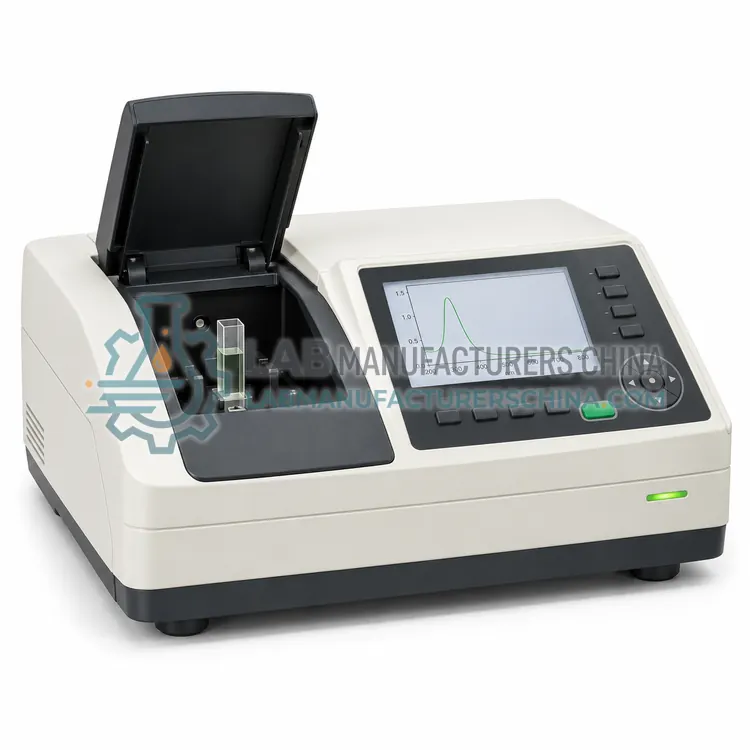
A UV-Vis spectrophotometer passes light from a deuterium lamp, for ultraviolet, and a tungsten or halogen lamp, for visible, through a monochromator and then through a sample. Transmitted intensity is compared with that through a reference to give absorbance, which follows the Beer-Lambert relationship when the absorbing species, path length and wavelength are fixed. Concentration is calculated from absorbance using a calibration curve or an absorptivity value. In pharmaceutical work the sample is usually a diluted solution or a filtered dissolution aliquot held in a quartz or matched glass cell. Absorbance range, wavelength accuracy, stray light, spectral bandwidth and cell path length determine the usable range, and the method defines the wavelength, blank and standard procedure.
What are the key features?
- Off-line measurement of filtered aliquots
- In-situ fibre-optic probes in each vessel
- Multi-cell changer or multi-vessel probe system
- Calibration covering low to high concentrations
- Long-run wavelength and photometric stability
- Reduced labour for many time points
What are the technical specifications?
A typical uv-vis spectrophotometer for dissolution testing configuration offers wavelength range of 190–1100 nm, cell positions of 6–8 with changer, probe path length of 1, 2 or 5 mm, photometric range of –0.3 to 3.0 AU, photometric accuracy of about ±0.005 AU at 1 AU and measurement time of about 1–5 s per sample. Values are indicative of the product class; the exact figures for each configuration are confirmed on the quotation and the calibration documents supplied with the instrument.
Which applications is it used for?
The UV-Vis Spectrophotometer for Dissolution Testing is used in dissolution profile measurement, multi-vessel dissolution monitoring, immediate-release release testing and quality control dissolution testing. Across the wider UV-Vis class, laboratories also deploy it for pharmaceutical assay, content uniformity testing and dissolution monitoring.
Which standards and certifications apply?
Relevant standards and methods include USP <851>, USP <857>, USP <711>, USP <905>, ICH Q2(R2) and IEC 61010-1. Certification candidates for this model are CE, IEC 61010-1 compliance and ISO 13485 manufacturing; each is to be confirmed for the specific configuration before shipment, and certificates are supplied only where they have been issued.
Install the instrument on a stable bench away from direct sun and draughts, and allow the lamps to warm up and stabilise before measurement. Use matched cells of the specified path length and check them for scratches and contamination, because a mismatched cell introduces a constant error. Verify wavelength accuracy and photometric accuracy at defined intervals with certified reference materials, and record the results. Prepare solutions accurately and measure within the validated absorbance range, since high absorbance reduces linearity. Replace lamps when energy falls, and keep cells clean and stored properly. Retain raw spectra and calibration data for regulatory inspection.
How do I select the right UV-Vis Spectrophotometer for Dissolution Testing?
Choose a dissolution spectrophotometer according to whether you sample off-line or monitor in situ. Confirm cell changer or probe capacity, path length options, measurement speed and long-run stability. For in-situ work, check how undissolved particles are handled and whether the probe path gives adequate sensitivity.
How does it compare with other UV-Vis variants?
Choose the spectrophotometer from the method and the sample workload. Single-beam instruments suit routine assay at a fixed wavelength, where cost and simplicity matter. Double-beam optics compensate for lamp drift and are preferred for stability-indicating methods, wavelength scans and long runs. Diode-array instruments capture a full spectrum quickly, which helps method development and multi-wavelength work. For dissolution monitoring, dedicated fibre-optic systems measure absorbance directly in the vessel. Compare wavelength range and accuracy, photometric range and noise, cell changer capacity and warm-up stability. Confirm that the instrument can be qualified with standards such as potassium dichromate or holmium oxide filters, and that software supports audit trails.
Full specifications
| Wavelength range | 190–1100 nm |
|---|---|
| Cell positions | 6–8 with changer |
| Probe path length | 1, 2 or 5 mm |
| Photometric range | –0.3 to 3.0 AU |
| Photometric accuracy | about ±0.005 AU at 1 AU |
| Measurement time | about 1–5 s per sample |
| Vessel interface | 6–8 vessels |
| Power supply | 220 V, 50 Hz, about 0.3 kW |
Indicative values for this product class. Final specifications are confirmed on the quotation and in the calibration documents supplied with the instrument.
Applications
- Dissolution profile measurement
- Multi-vessel dissolution monitoring
- Immediate-release release testing
- Quality control dissolution testing
Key features
- Off-line measurement of filtered aliquots
- In-situ fibre-optic probes in each vessel
- Multi-cell changer or multi-vessel probe system
- Calibration covering low to high concentrations
- Long-run wavelength and photometric stability
- Reduced labour for many time points
Frequently asked questions about UV-Vis Spectrophotometer for Dissolution Testing
It removes sampling, filtration and volume loss, so the vessel volume stays constant and more time points can be measured without manual work. The trade-off is that undissolved particles scatter light and the signal needs correction or careful probe placement.
Filtered samples are loaded into a rack of cells and the changer moves each cell into the light path in sequence, measuring all of them under the same conditions. This improves reproducibility and shortens the time between sampling and measurement.
Early time points have low concentration and later ones may approach complete release, so the range often spans two orders of magnitude. Linearity and accuracy must be validated across the whole range used for reporting.
Absorbance is proportional to the concentration of the absorbing species and the path length, at a fixed wavelength. This linear relationship allows concentration to be calculated from measured absorbance, provided the solution is dilute and no interfering species absorb.
Wavelength accuracy is checked with holmium oxide or didymium filters, photometric accuracy with potassium dichromate or neutral density filters, and noise and stray light are verified by the manufacturer's procedure. Checks are repeated at defined intervals and after service.
Absorbance depends on path length and the optical quality of the cell. Unmatched or scratched cells add a constant error to every reading, which can shift results even when the chemistry is correct, so cells should be paired and inspected regularly.
Related models
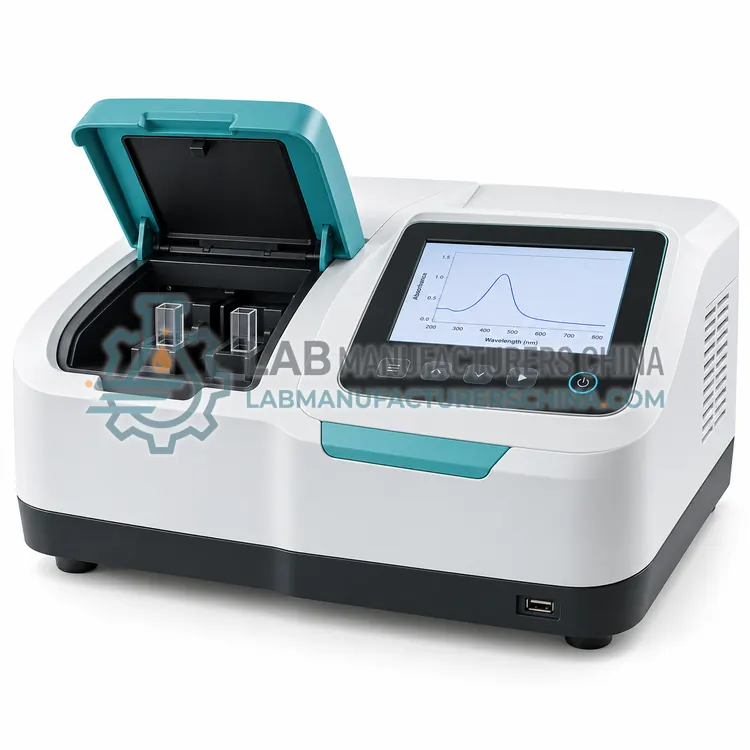
Double-Beam UV-Vis Spectrophotometer for Pharmaceutical Quality Control
制药质量控制双光束紫外可见分光光度计
- CE (to be confirmed)
- +2
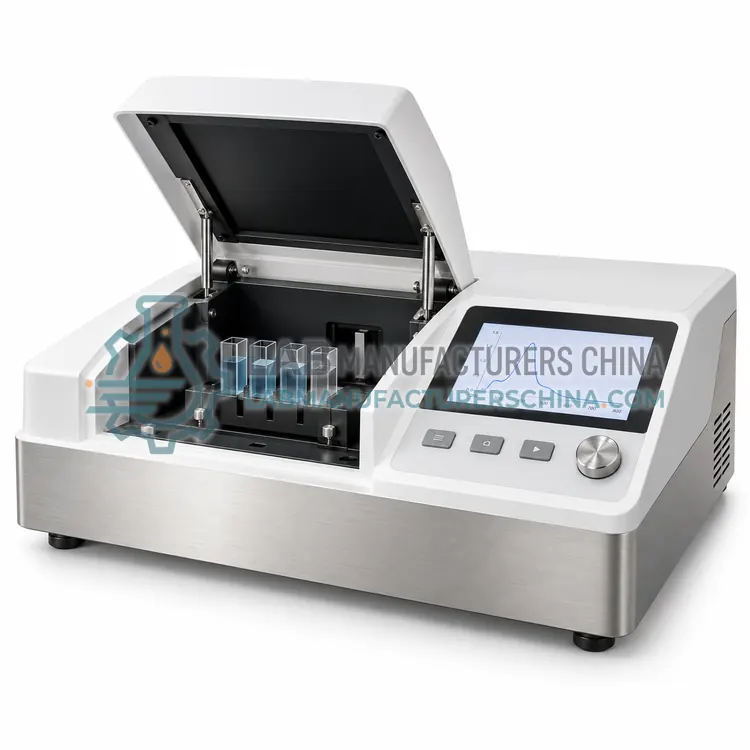
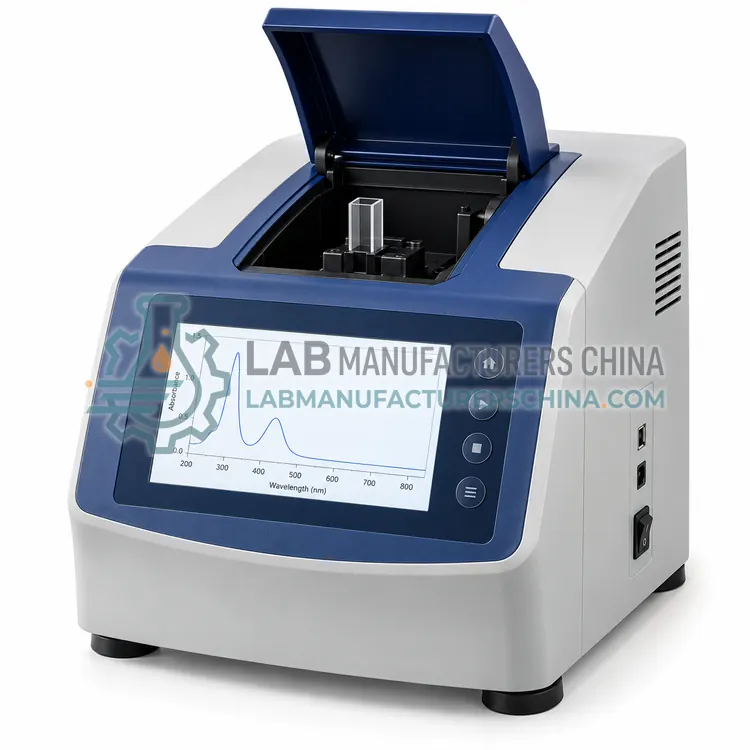
Diode-Array UV-Vis Spectrophotometer for Pharmaceutical Analysis
药品分析二极管阵列紫外可见分光光度计
- CE (to be confirmed)
- +2