
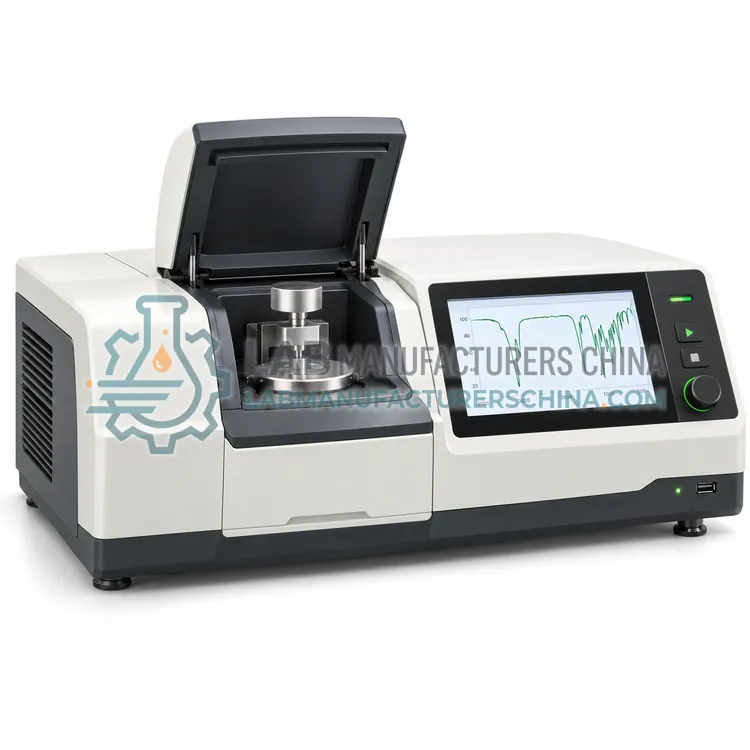
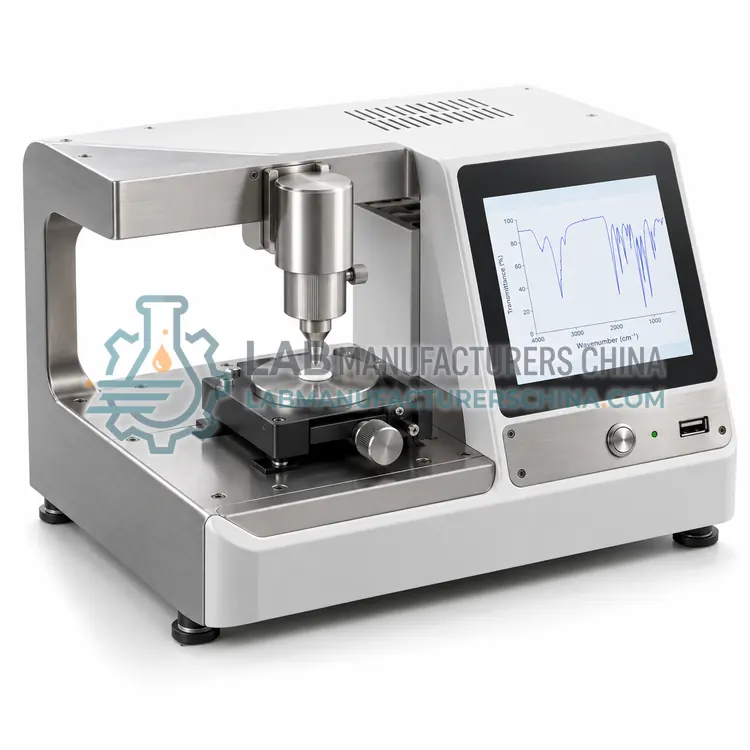
Portable FTIR Spectrometer for Raw Material Identification
便携式原料鉴别红外光谱仪
- SKU FTR-0004
- FTIR
- CE (to be confirmed)
- IEC 61010-1 compliance (to be confirmed)
- ISO 13485 manufacturing (to be confirmed)
Price on request — FOB / CIF quoted per order
Prices depend on configuration, quantity and destination port.
Key specifications
| Spectral range | about 4000–650 cm-1 |
|---|---|
| Resolution | 4–8 cm-1 |
| Sampling interface | Integrated ATR probe |
| Measurement time | about 10–60 s |
| Library | On-board, updatable |
| Display | Touchscreen with pass or fail |
Request a quote Download brochure · to be provided
By Lab Manufacturers China Technical TeamLast reviewed Standards: USP <854>, USP <197>, USP <197M>
What is the Portable FTIR Spectrometer for Raw Material Identification?
A portable FTIR spectrometer brings identity testing to the warehouse or production floor rather than the laboratory. It is chosen when containers must be verified in place without sampling, transport or any delay.
What is the Portable FTIR Spectrometer for Raw Material Identification?
A portable FTIR spectrometer brings identity testing to the warehouse or production floor rather than the laboratory. It is chosen when containers must be verified in place without sampling, transport or any delay.
Overview
A portable FTIR instrument is designed for use outside the laboratory. It is compact and often battery powered, with rugged construction, an integrated ATR probe or a sampling head that can be pressed against a material in a bag or drum, and an on-board library with an intuitive interface that gives a pass or fail result. The benefit is that containers can be verified at the point of receipt or dispensing, avoiding sampling, transport and queueing, and reducing the risk of mix-ups during material handling. Portable units trade some resolution, signal-to-noise ratio and accessory range for mobility, so methods should be validated for the configuration used. Users need training in sampling technique, and results should be transferred to the quality system for records.
How does it work?
An FTIR spectrometer shines broadband infrared light through an interferometer, usually a Michelson type with a moving mirror, and then through or onto the sample. The detector records an interferogram, which a Fourier transform converts into an absorption spectrum from about 4000 to 400 cm-1. Molecular bonds absorb at characteristic frequencies, so the spectrum acts as a fingerprint of the material. Sampling accessories determine how the sample is presented: transmission through a potassium bromide pellet or a liquid cell, attenuated total reflectance for solids and pastes, diffuse reflectance for powders, or a microscope for small particles. Resolution, signal-to-noise ratio, wavenumber accuracy and the condition of the sampling accessory determine whether a spectrum matches the reference.
What are the key features?
- Compact rugged housing with battery option
- Integrated ATR probe or sampling head
- On-board library with pass or fail result
- Use at the point of receipt or dispensing
- No sampling or transport delay
- User training and result transfer to quality system
What are the technical specifications?
A typical portable ftir spectrometer for raw material identification configuration offers spectral range of about 4000–650 cm-1, resolution of 4–8 cm-1, sampling interface of Integrated ATR probe, measurement time of about 10–60 s, library of On-board, updatable and display of Touchscreen with pass or fail. Values are indicative of the product class; the exact figures for each configuration are confirmed on the quotation and the calibration documents supplied with the instrument.
Which applications is it used for?
The Portable FTIR Spectrometer for Raw Material Identification is used in warehouse container verification, point-of-dispensing identity checks, field and remote testing and in-process material confirmation. Across the wider FTIR class, laboratories also deploy it for raw material identification at goods-in, excipient identity confirmation and polymorph and crystal form screening.
Which standards and certifications apply?
Relevant standards and methods include USP <854>, USP <197>, USP <197M>, EP 2.2.24, ICH Q2(R2) and IEC 61010-1. Certification candidates for this model are CE, IEC 61010-1 compliance and ISO 13485 manufacturing; each is to be confirmed for the specific configuration before shipment, and certificates are supplied only where they have been issued.
Keep the instrument in a room with stable temperature and low humidity, and keep desiccant fresh, because water vapour and carbon dioxide produce sharp absorption bands that can obscure the fingerprint region. Align the interferometer and check wavenumber accuracy with a polystyrene film or other standard at defined intervals, and record the results. Clean ATR crystals carefully, since scratches and residues change the spectrum, and use a background scan at the same settings as the sample. Handle potassium bromide with a dry atmosphere because it is hygroscopic. Maintain the library and re-verify performance after any accessory or detector change, and retain raw spectra for inspection.
How do I select the right Portable FTIR Spectrometer for Raw Material Identification?
Choose a portable FTIR when materials should be verified where they are stored or dispensed, and when avoiding sampling improves speed or safety. Confirm spectral range and resolution, probe design, library updatability, data transfer and battery life. Validate the method for the portable configuration.
How does it compare with other FTIR variants?
Choose an FTIR system from the sample form and the test required. For raw material identity, an ATR accessory with a diamond or zinc selenide crystal is convenient because powders and pastes can be measured with minimal preparation, and a benchtop unit with a validated spectral library suits goods-in testing. For polymorph screening and structural confirmation, higher resolution and careful control of sample preparation are needed, and comparisons should use the same accessory and conditions as the reference. Portable or handheld FTIR instruments allow identification through packaging or at the point of sampling. FTIR microscopy is used for particle and contaminant identification. Compare spectral range, resolution, signal-to-noise ratio, accessory options and library software with audit trails.
Full specifications
| Spectral range | about 4000–650 cm-1 |
|---|---|
| Resolution | 4–8 cm-1 |
| Sampling interface | Integrated ATR probe |
| Measurement time | about 10–60 s |
| Library | On-board, updatable |
| Display | Touchscreen with pass or fail |
| Power supply | Battery or 220 V, 50 Hz |
| Data transfer | Wi-Fi, USB or LIMS link |
Indicative values for this product class. Final specifications are confirmed on the quotation and in the calibration documents supplied with the instrument.
Applications
- Warehouse container verification
- Point-of-dispensing identity checks
- Field and remote testing
- In-process material confirmation
Key features
- Compact rugged housing with battery option
- Integrated ATR probe or sampling head
- On-board library with pass or fail result
- Use at the point of receipt or dispensing
- No sampling or transport delay
- User training and result transfer to quality system
Frequently asked questions about Portable FTIR Spectrometer for Raw Material Identification
For identity confirmation, usually yes, provided the method is validated for that configuration. Resolution and signal-to-noise ratio are lower, so fine spectral detail and subtle polymorph differences may not be resolved, and detailed structural work should use a benchtop system.
The sampling head is pressed against a clear area of the bag or the material itself, and an internal reflectance measurement is taken. Opaque or heavily printed packaging may not allow measurement, so the sample may need to be exposed or transferred.
The instrument stores each measurement with time, operator and result, and transfers data by Wi-Fi or USB to the quality system or laboratory information management system. Records should include the method and library version used.
The infrared spectrum of the sample is compared with a reference spectrum, a pharmacopoeial reference standard or a library entry. A match across the characteristic absorption bands confirms the molecular identity of the material under the defined sampling conditions.
ATR uses a crystal of high refractive index that the sample contacts. Infrared light undergoes total internal reflection inside the crystal and the evanescent wave probes a thin surface layer, so solids, pastes and liquids can be measured with little or no preparation.
Water and carbon dioxide absorb strongly in the infrared and create sharp rotational bands that can overlap the analyte spectrum, especially in the fingerprint region. Stable humidity, fresh desiccant and an appropriate background scan reduce this interference.
Related models
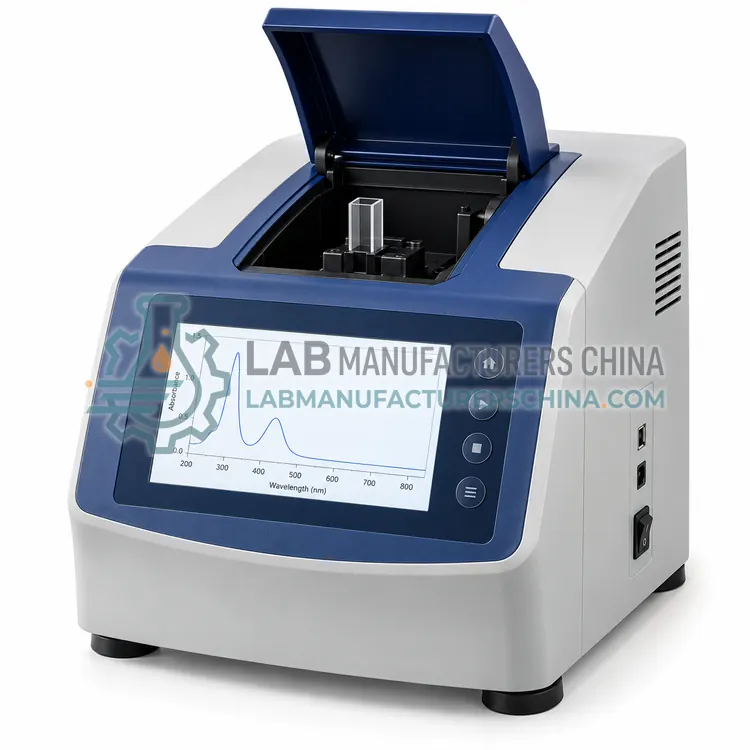
Diode-Array UV-Vis Spectrophotometer for Pharmaceutical Analysis
药品分析二极管阵列紫外可见分光光度计
- CE (to be confirmed)
- +2