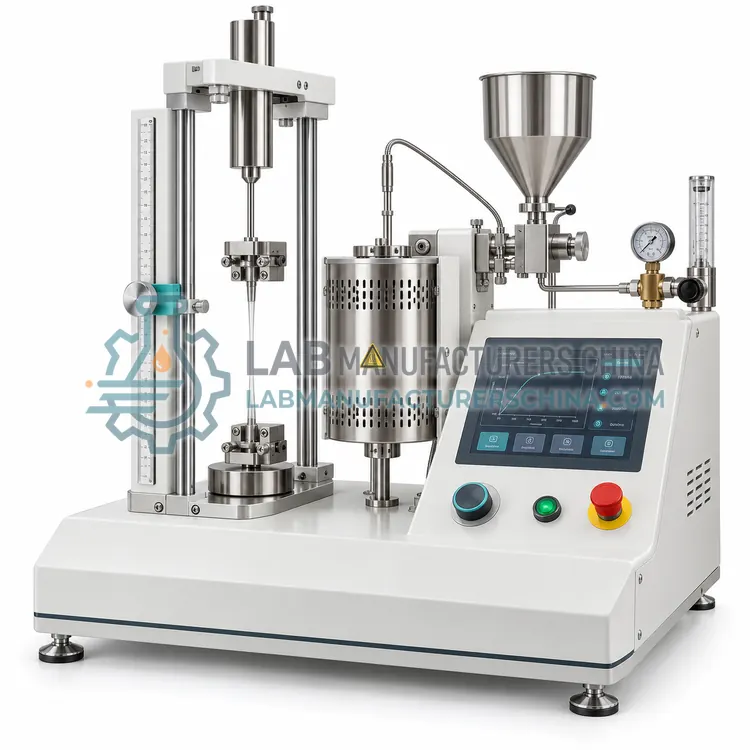
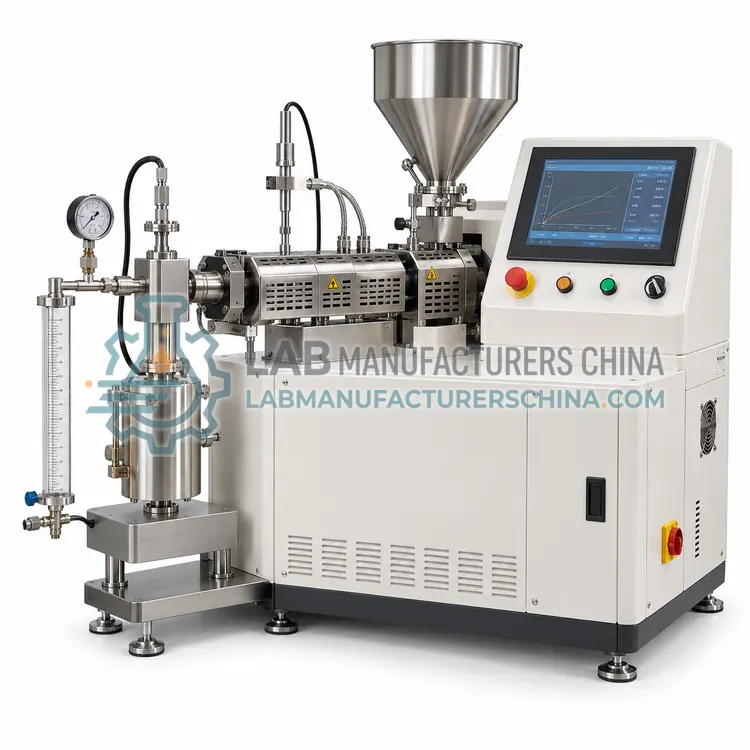
How do Rheometers work?
A rheometer applies a controlled deformation to a polymer sample and measures the resulting force or torque. Rotational instruments use parallel plates, cones or concentric cylinders and can work in steady shear, giving shear viscosity against shear rate, or in oscillation, giving storage and loss moduli against frequency. Capillary instruments force melt through a die of known diameter and length at a controlled piston speed, measuring pressure to calculate apparent shear viscosity at shear rates that reach those of real extrusion. Torque rheometers mix material in a heated chamber and record the torque needed to turn the rotors, which tracks gelation, fusion and degradation in a compounding context. The choice depends on the shear rate range, the sample form and whether elasticity or only viscosity is required.
Which Rheometers variants are available?
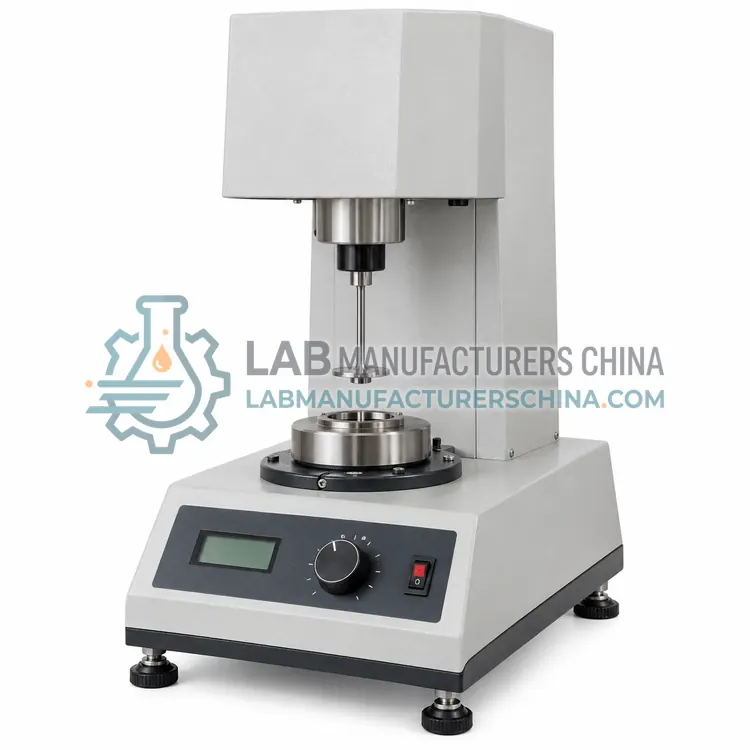
- Rotational Rheometer for Polymer Melts — A rotational rheometer applies controlled shear or oscillation to a polymer melt between parallel plates, cones or cylinders, measuring viscosity and viscoelastic moduli.
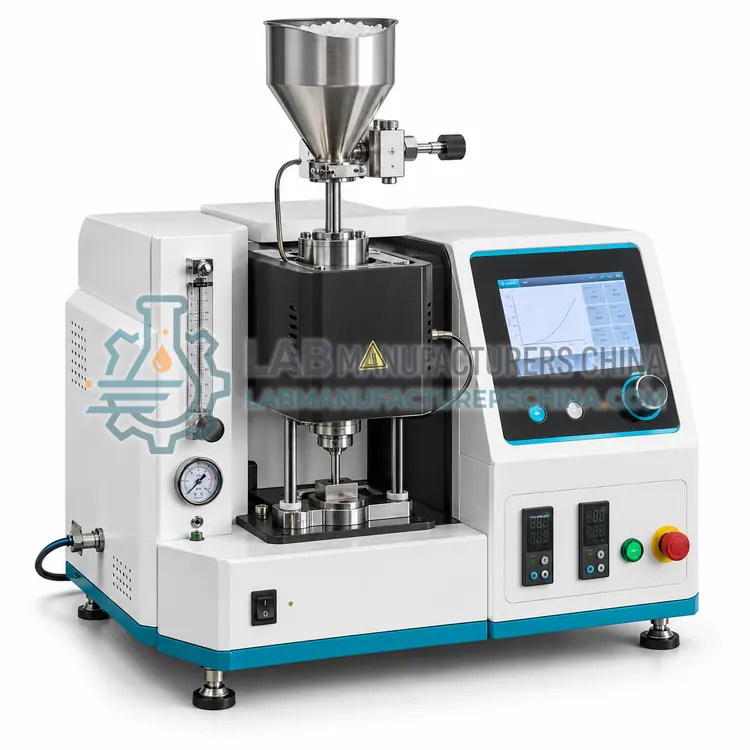
- Capillary Rheometer for Polymer Processing — A capillary rheometer forces molten polymer through a die at controlled piston speed and measures the pressure required, giving viscosity at shear rates that match extrusion and injection moulding.
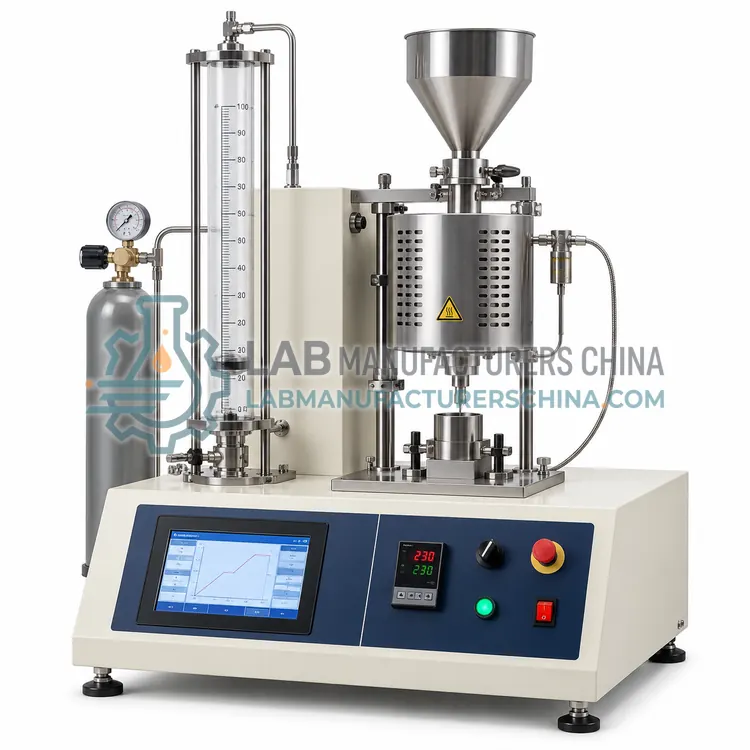
- High-Pressure Capillary Rheometer for Polymer Extrusion — A high-pressure capillary rheometer operates to about 2000 bar and covers the very high shear rates found in extrusion dies, spinnerets and thin-wall moulding.
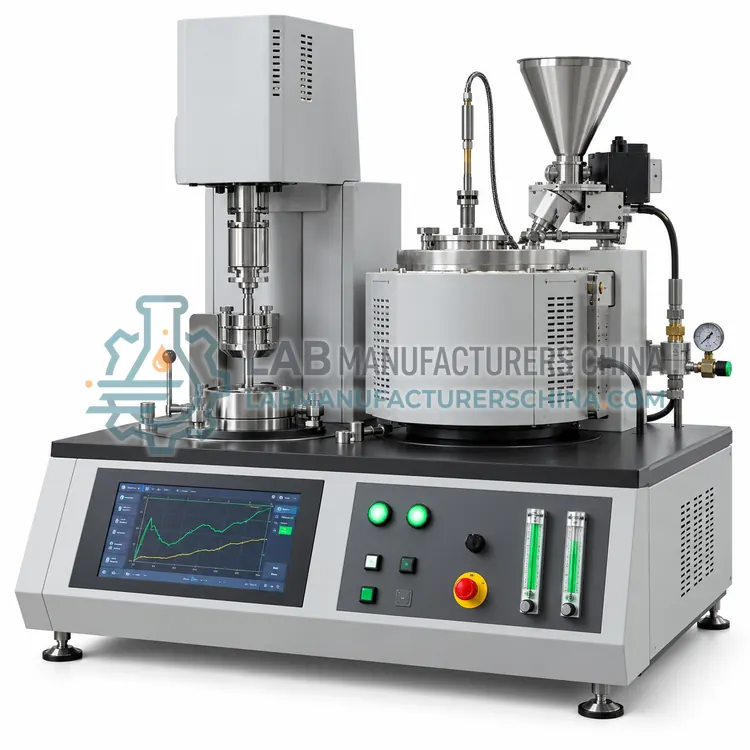
- Torque Rheometer for Polymer Compounding — A torque rheometer mixes polymer compounds in a heated chamber with rotating rotors and records the torque needed to keep them turning.
- Extensional Rheometer for Polymer Melt Elongation — An extensional rheometer stretches a polymer melt sample between rotating or moving fixtures to measure elongational viscosity and strain hardening.
- Inline Rheometer for Polymer Extrusion Monitoring — An inline rheometer measures melt viscosity directly in an extruder flow stream, giving continuous or sampled data for closed-loop process control.
How do I choose the right variant?
Match the instrument to the shear rate range that governs your process. Rotational rheometers cover low shear rates and are the only option when viscoelastic data, yield stress or normal force are required, making them suitable for molecular weight comparisons and additive studies. Capillary rheometers reach the high shear rates of extrusion and injection moulding and are more tolerant of filled and highly viscous materials. Torque rheometers are used when the question concerns compounding behaviour, gelation or thermal stability under shear rather than a fundamental viscosity value. Inline instruments are selected for continuous process monitoring and never replace laboratory characterisation, because they see only one fixed measurement point.
Where are Rheometers used?
Rheometers are specified in molecular weight and molecular weight distribution comparison, processing behaviour prediction for extrusion and moulding, filler and additive effect on melt viscosity, compounding gelation and fusion studies, recycled polymer quality assessment and inline viscosity monitoring of extrusion lines.
Which standards and certifications apply?
Work with Rheometers is commonly governed by ISO 3219, ISO 11443, ISO 6721-10, ASTM D3835, ASTM D4440, ASTM D2538 and IEC 61010-1. Instrument certifications such as CE marking are confirmed per configuration and never assumed.
What are the key considerations before purchase?
Sample preparation dominates repeatability: dry hygroscopic polymers, compression-mould discs of defined thickness for rotational testing, and ensure filled samples are homogeneous. Set the gap and check it with a zero-gap routine before each series, because a small gap error changes the calculated viscosity. In capillary work, verify piston speed and pressure transducer calibration, and apply the Bagley and Rabinowitsch corrections when true viscosity is required. Purge the oven with nitrogen for high-temperature or oxidation-sensitive polymers. Clean dies and plates thoroughly, since degraded residue changes the surface and the measured torque, and record temperature, geometry and gap with every result.