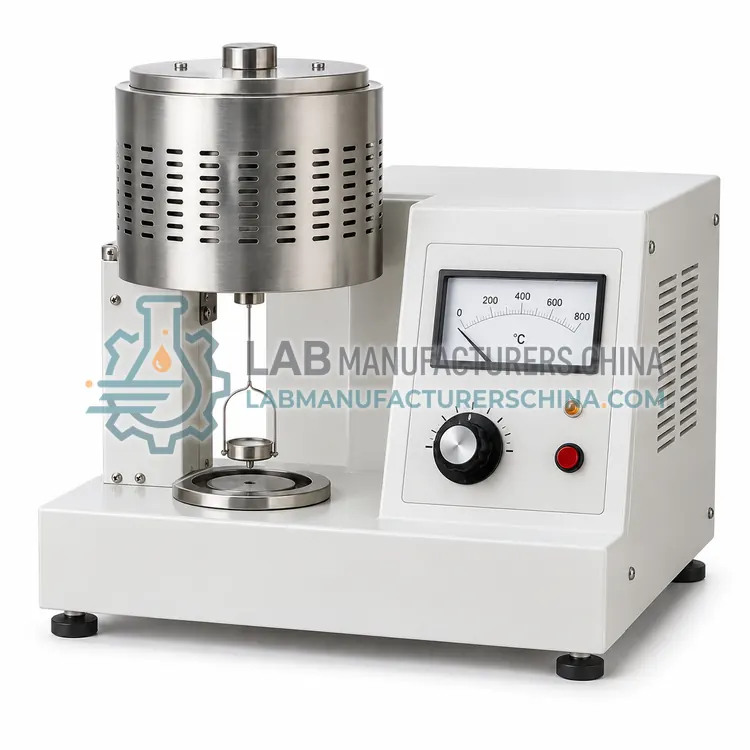
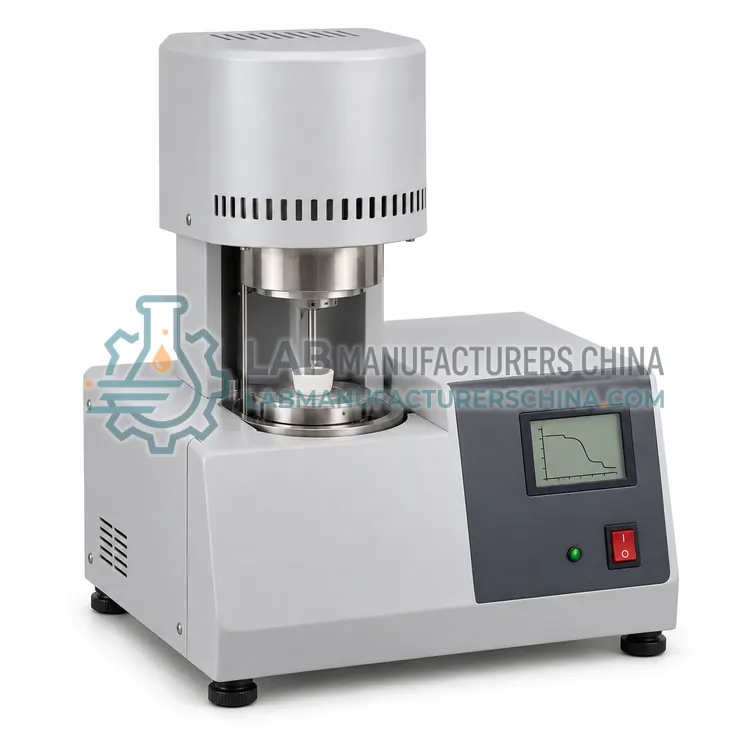
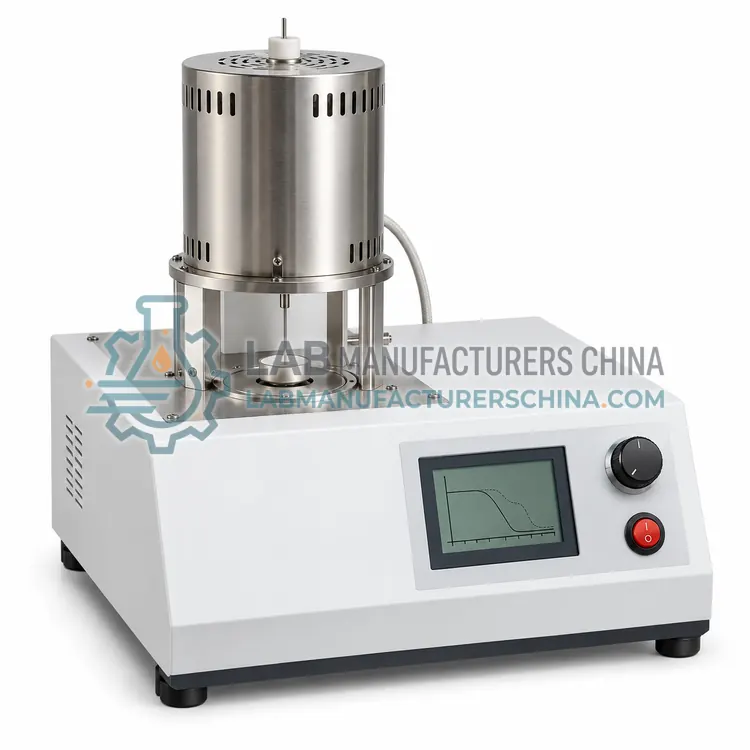
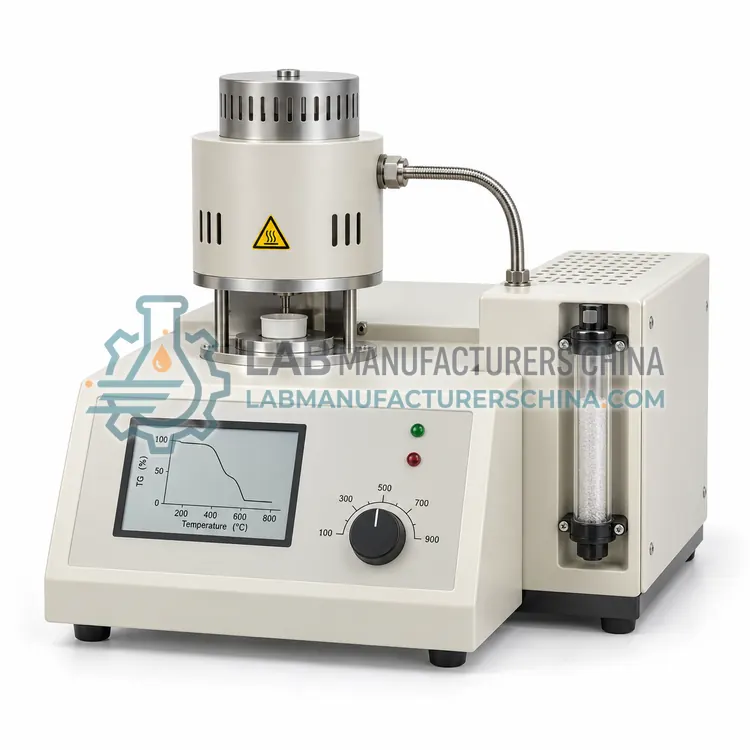
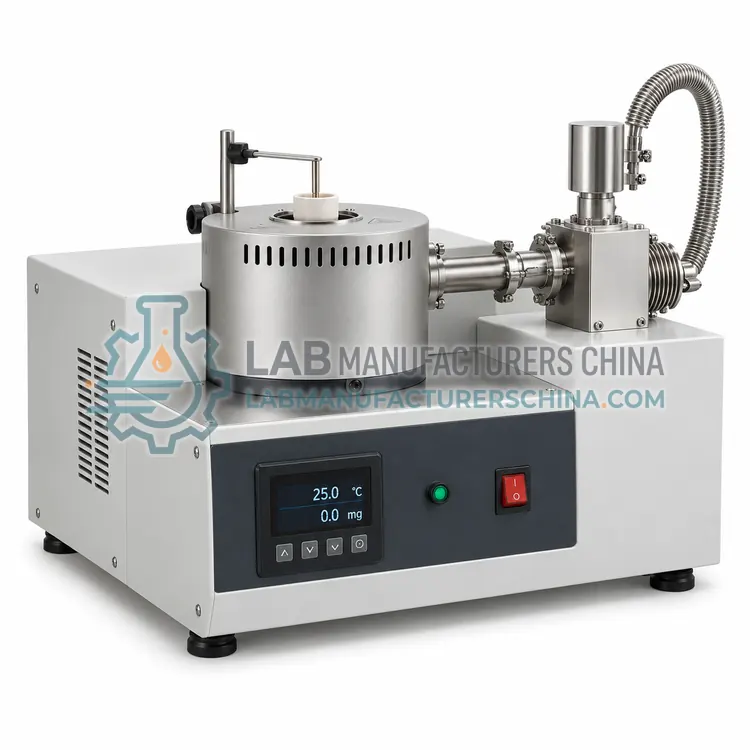
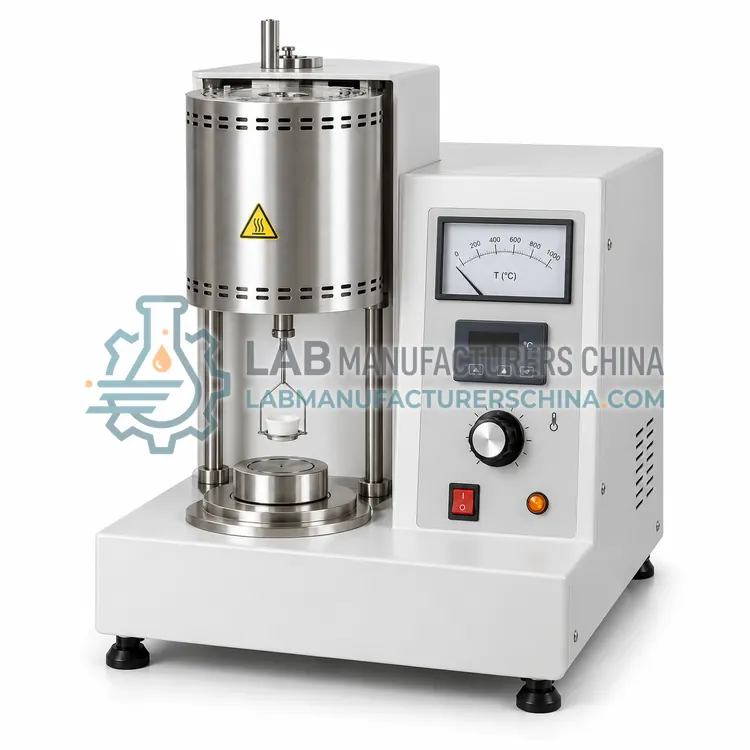
How do TGA work?
A thermogravimetric analyzer suspends the sample from a sensitive balance inside a furnace whose temperature is programmed. The balance continuously records mass, and the derivative curve shows the rate of change, which makes overlapping steps easier to resolve. Atmosphere, heating rate, purge flow and crucible type determine the temperature at which a step occurs, so standards fix these conditions. In an inert atmosphere the polymer matrix decomposes and leaves a residue of filler, ash or carbon black; switching to air or oxygen then burns off the carbon and leaves the inorganic ash. A TGA can also be coupled to an infrared spectrometer or a mass spectrometer through a heated transfer line, so the gases released at each step are identified, which turns a mass-loss curve into evidence about the chemical structure of the sample.
Which TGA variants are available?
- Thermogravimetric Analyzer for Polymer Thermal Stability — A general-purpose thermogravimetric analyzer records mass loss of polymer samples in inert or oxidising atmospheres, giving decomposition onset and residual mass.
- TGA with Autosampler for Polymer Composition Analysis — A TGA with an automatic sample changer runs series of composition analyses unattended, typically determining filler, carbon black, moisture and ash in polymer compounds.
- Simultaneous TGA-DSC Analyzer for Polymer Analysis — A simultaneous TGA-DSC analyzer records mass change and heat flow from one polymer sample in a single run, so endotherms and exotherms can be classified as mass-changing or mass-neutral.
- TGA-FTIR Coupled Analyzer for Polymer Decomposition — A TGA-FTIR system passes the gases released during thermal decomposition through a heated infrared gas cell, identifying functional groups of the evolved products.
- TGA-MS Coupled Analyzer for Polymer Analysis — A TGA-MS system transfers evolved gases into a mass spectrometer, identifying individual species by mass-to-charge ratio with high sensitivity.
- High-Temperature TGA for Polymer Composites — A high-temperature TGA reaches about 1500 to 1600 °C so that polymer composites with glass, mineral, carbon or ceramic fillers can be analysed to complete burn-off and residues characterised.
How do I choose the right variant?
First define the question. For thermal stability ranking, a standard thermobalance with inert and oxidative gas switching is enough. For filler and carbon black content in filled compounds, choose an instrument with a wide temperature range, precise balance and a staged atmosphere programme, and add an autosampler if many samples are run. When the identity of evolved products matters, for example in failure analysis or in verifying flame-retardant mechanisms, select a coupled TGA-FTIR or TGA-MS system, noting that coupling reduces sample throughput and requires a heated interface. For composites that contain glass, mineral or ceramic fillers, confirm the furnace reaches the temperature needed to fully burn off the matrix.
Where are TGA used?
TGA are specified in thermal stability ranking of polymer grades, filler, glass fibre and ash content determination, carbon black content in crosslinked compounds, moisture and residual solvent quantification, decomposition mechanism studies with evolved gas analysis and quality control of flame-retarded compounds.
Which standards and certifications apply?
Work with TGA is commonly governed by ISO 11358-1, ISO 11358-2, ASTM E1131, ASTM E2550, ASTM D6370 and IEC 61010-1. Instrument certifications such as CE marking are confirmed per configuration and never assumed.
What are the key considerations before purchase?
Calibrate the balance with certified masses and verify the temperature scale with a Curie-point or melting-point standard, since a temperature offset shifts every step. Use a purge flow high enough to remove volatiles but stable enough not to disturb the balance, and buoyancy-corrected blank runs for accurate small mass changes. Crucibles must be matched to the sample: platinum for oxidative work, alumina for most polymer programmes, and open crucibles for combustion steps. Crucibles must be cleaned or replaced because residue from a previous run adds mass. Finally, record heating rate, atmosphere and sample mass with every result, since the same polymer can give quite different decomposition temperatures under other conditions.