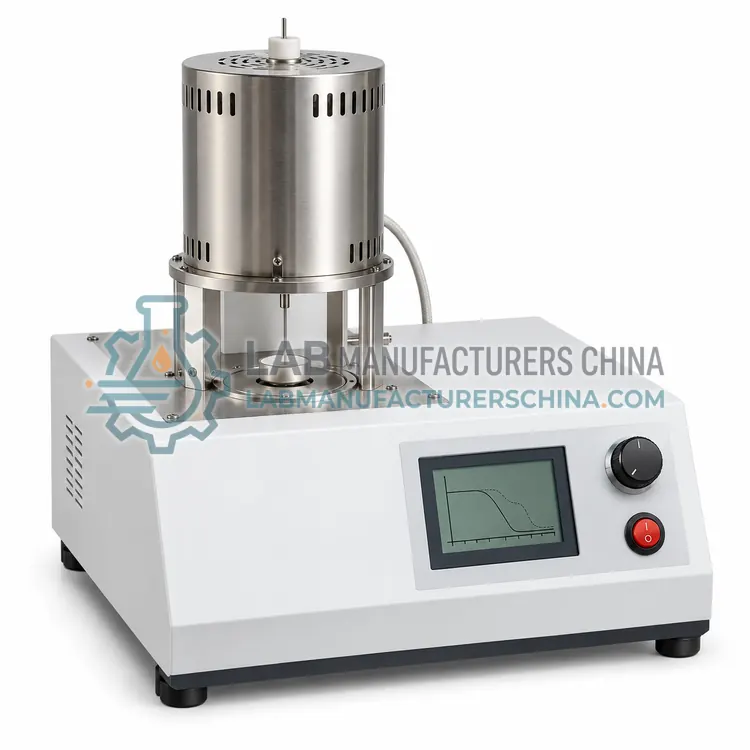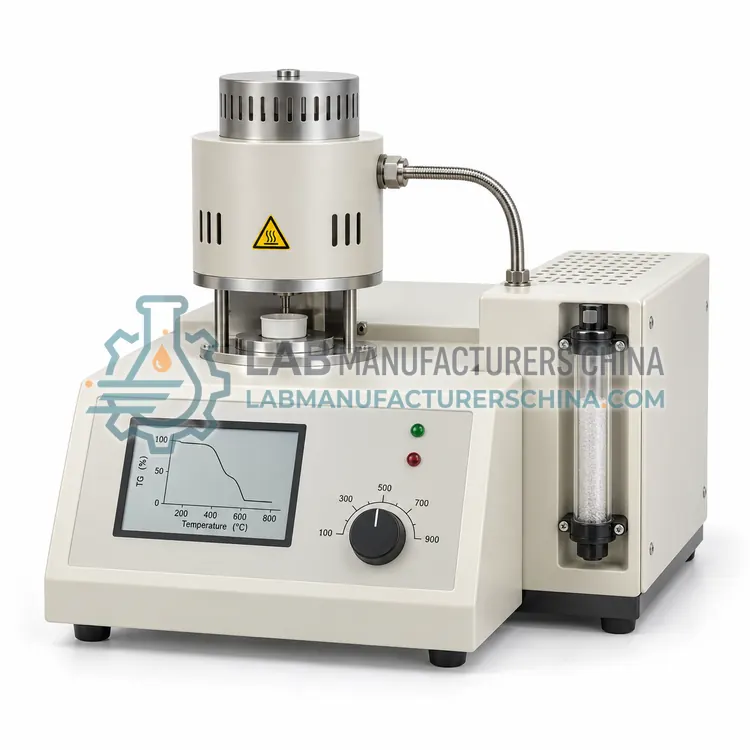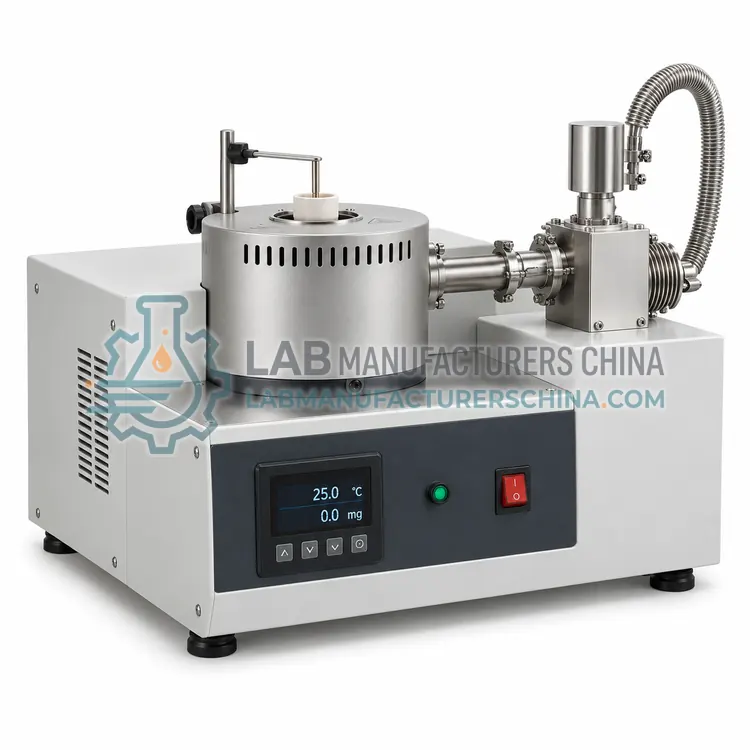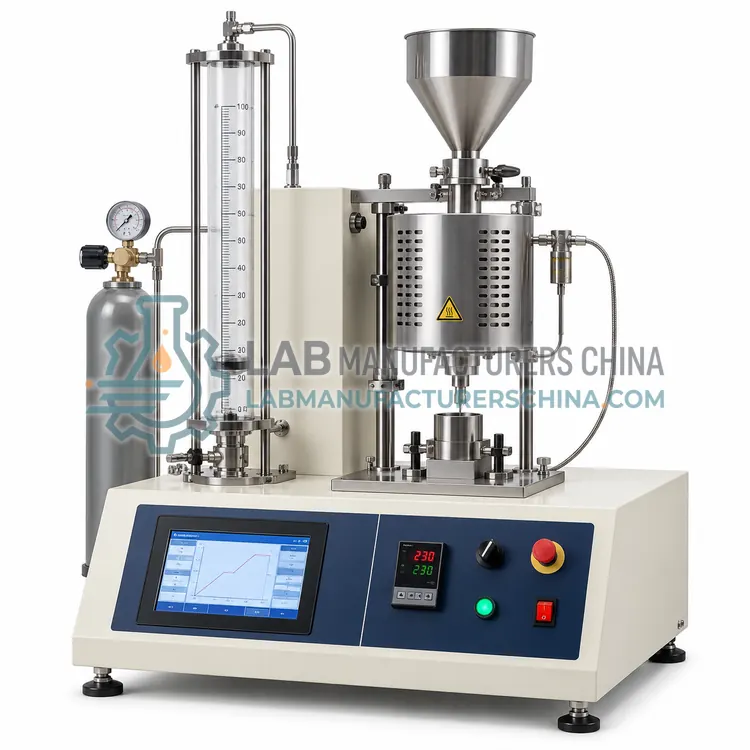
TGA with Autosampler for Polymer Composition Analysis
聚合物组成分析用自动进样热重分析仪
- SKU TGAA-0002
- TGA
- CE (to be confirmed)
- ISO 9001 manufacturing (to be confirmed)
Price on request — FOB / CIF quoted per order
Prices depend on configuration, quantity and destination port.
Key specifications
| Autosampler capacity | 20–50 crucibles |
|---|---|
| Temperature range | Ambient to 1000 °C |
| Heating rate | 0.1–50 °C/min |
| Balance resolution | 0.1 µg |
| Weighing accuracy | ±0.1% |
| Typical cycle time | 45–90 min per sample |
Request a quote Download brochure · to be provided
By Lab Manufacturers China Technical TeamLast reviewed Standards: ISO 11358-1, ISO 11358-2, ASTM E1131
What is the TGA with Autosampler for Polymer Composition Analysis?
A TGA with an automatic sample changer runs series of composition analyses unattended, typically determining filler, carbon black, moisture and ash in polymer compounds. It is chosen where the same staged atmosphere programme is repeated across many production samples each day.
What is the TGA with Autosampler for Polymer Composition Analysis?
A TGA with an automatic sample changer runs series of composition analyses unattended, typically determining filler, carbon black, moisture and ash in polymer compounds. It is chosen where the same staged atmosphere programme is repeated across many production samples each day.
Overview
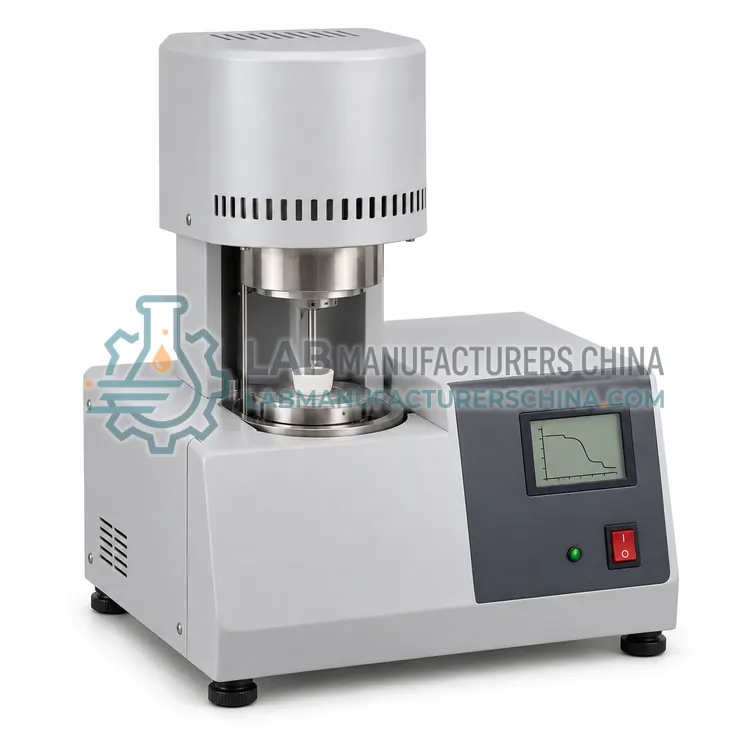
The sample changer is a carousel or tray of 20 to 50 positions served by a robot arm that places each crucible on the balance and lowers it into the furnace. Software assigns a method and a sample identity to every position, runs the programmed nitrogen stage followed by the oxidative stage where required, evaluates residual mass, and writes results to a report or a laboratory information system. Because the sequence runs overnight, laboratories processing incoming raw material and finished compound samples gain capacity without extra shifts. Throughput is limited by the longest programme in the sequence, so methods should be grouped by temperature profile. The main practical requirements are consistent crucible and sample mass, balance calibration at the start of each sequence, and a check that the changer places crucibles reproducibly, since a mis-seated crucible produces a distorted baseline.
How does it work?
A thermogravimetric analyzer suspends the sample from a sensitive balance inside a furnace whose temperature is programmed. The balance continuously records mass, and the derivative curve shows the rate of change, which makes overlapping steps easier to resolve. Atmosphere, heating rate, purge flow and crucible type determine the temperature at which a step occurs, so standards fix these conditions. In an inert atmosphere the polymer matrix decomposes and leaves a residue of filler, ash or carbon black; switching to air or oxygen then burns off the carbon and leaves the inorganic ash. A TGA can also be coupled to an infrared spectrometer or a mass spectrometer through a heated transfer line, so the gases released at each step are identified, which turns a mass-loss curve into evidence about the chemical structure of the sample.
What are the key features?
- Carousel for 20 to 50 crucibles
- Position-based method and sample identification
- Staged nitrogen and oxygen programmes
- Automatic residual mass and filler content calculation
- Overnight unattended operation
- Result export to laboratory information systems
What are the technical specifications?
A typical tga with autosampler for polymer composition analysis configuration offers autosampler capacity of 20–50 crucibles, temperature range of Ambient to 1000 °C, heating rate of 0.1–50 °C/min, balance resolution of 0.1 µg, weighing accuracy of ±0.1% and typical cycle time of 45–90 min per sample. Values are indicative of the product class; the exact figures for each configuration are confirmed on the quotation and the calibration documents supplied with the instrument.
Which applications is it used for?
The TGA with Autosampler for Polymer Composition Analysis is used in glass fibre and mineral filler content in compounds, carbon black content of crosslinked rubber and plastic, ash content verification of filled thermoplastics and incoming inspection of masterbatch and compounds. Across the wider TGA class, laboratories also deploy it for thermal stability ranking of polymer grades, filler, glass fibre and ash content determination and carbon black content in crosslinked compounds.
Which standards and certifications apply?
Relevant standards and methods include ISO 11358-1, ISO 11358-2, ASTM E1131, ASTM E2550, ASTM D6370 and IEC 61010-1. Certification candidates for this model are CE and ISO 9001 manufacturing; each is to be confirmed for the specific configuration before shipment, and certificates are supplied only where they have been issued.
Calibrate the balance with certified masses and verify the temperature scale with a Curie-point or melting-point standard, since a temperature offset shifts every step. Use a purge flow high enough to remove volatiles but stable enough not to disturb the balance, and buoyancy-corrected blank runs for accurate small mass changes. Crucibles must be matched to the sample: platinum for oxidative work, alumina for most polymer programmes, and open crucibles for combustion steps. Crucibles must be cleaned or replaced because residue from a previous run adds mass. Finally, record heating rate, atmosphere and sample mass with every result, since the same polymer can give quite different decomposition temperatures under other conditions.
How do I select the right TGA with Autosampler for Polymer Composition Analysis?
Choose an automated system when more than about fifteen composition analyses per day are required and the same temperature programme is used repeatedly. Confirm crucible position count against one overnight sequence, and verify that the software assigns sample identity automatically, because manual entry of many positions is a common source of reporting errors. Ask about crucible handling repeatability and lid options.
How does it compare with other TGA variants?
First define the question. For thermal stability ranking, a standard thermobalance with inert and oxidative gas switching is enough. For filler and carbon black content in filled compounds, choose an instrument with a wide temperature range, precise balance and a staged atmosphere programme, and add an autosampler if many samples are run. When the identity of evolved products matters, for example in failure analysis or in verifying flame-retardant mechanisms, select a coupled TGA-FTIR or TGA-MS system, noting that coupling reduces sample throughput and requires a heated interface. For composites that contain glass, mineral or ceramic fillers, confirm the furnace reaches the temperature needed to fully burn off the matrix.
Full specifications
| Autosampler capacity | 20–50 crucibles |
|---|---|
| Temperature range | Ambient to 1000 °C |
| Heating rate | 0.1–50 °C/min |
| Balance resolution | 0.1 µg |
| Weighing accuracy | ±0.1% |
| Typical cycle time | 45–90 min per sample |
| Atmosphere control | Nitrogen to oxygen switching |
| Crucible material | Alumina or platinum |
| Data output | CSV, PDF, network export |
| Power supply | 220 V, 50/60 Hz |
Indicative values for this product class. Final specifications are confirmed on the quotation and in the calibration documents supplied with the instrument.
Applications
- Glass fibre and mineral filler content in compounds
- Carbon black content of crosslinked rubber and plastic
- Ash content verification of filled thermoplastics
- Incoming inspection of masterbatch and compounds
Key features
- Carousel for 20 to 50 crucibles
- Position-based method and sample identification
- Staged nitrogen and oxygen programmes
- Automatic residual mass and filler content calculation
- Overnight unattended operation
- Result export to laboratory information systems
Frequently asked questions about TGA with Autosampler for Polymer Composition Analysis
A typical programme heats to about 600 °C in nitrogen to decompose the polymer, then switches to air or oxygen and continues to 800 or 900 °C to burn off carbon, followed by cooling. Total time is usually 45 to 90 minutes depending on heating rate and crucible size, so an overnight sequence typically completes ten to fifteen samples.
It can, but volatile loss before the programme starts is a risk, and a burst of solvent can disturb the balance. Laboratories should pre-dry or seal such samples where the method allows, and place them later in the sequence. Strongly exothermic or foaming samples are better run singly with supervision.
Non-representative sampling from a heterogeneous compound, inconsistent sample mass, contaminated crucibles and incomplete burning of carbon are the usual causes. Grinding or cryo-milling the sample before weighing, using the same sample mass each time, and confirming a stable final mass at the end of the oxidative stage all improve repeatability.
The sample is heated in nitrogen so the polymer matrix decomposes and leaves the filler, then the atmosphere is switched to air or oxygen to burn off any carbon black or char. The residue after the oxidative stage is the inorganic filler or ash, and its mass percentage is reported against the initial sample mass, with a blank crucible run subtracted.
Heat transfer through the sample and the kinetics of bond scission both need time, so a faster heating rate shifts decomposition to higher temperature and can merge two steps into one. Standards therefore fix a heating rate, commonly 10 °C per minute, and results should only be compared when the rate and atmosphere are identical.
Coupling is justified when the identity of the evolved species matters, for example to confirm that a flame retardant acts in the gas phase, to identify a plasticiser or solvent, or to determine which component of a blend decomposes first. Coupling needs a heated transfer line and reduces sample throughput, so routine composition testing does not require it.
Related models