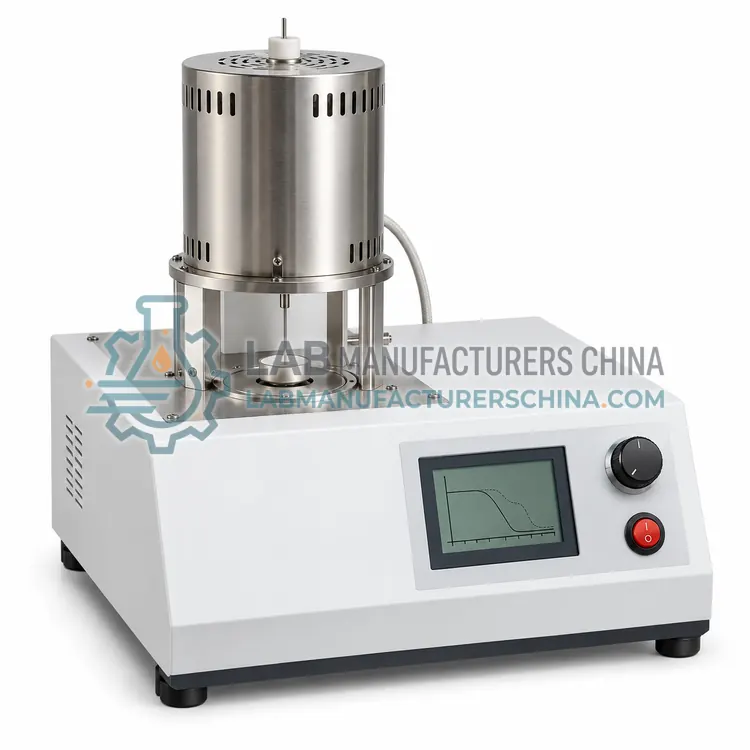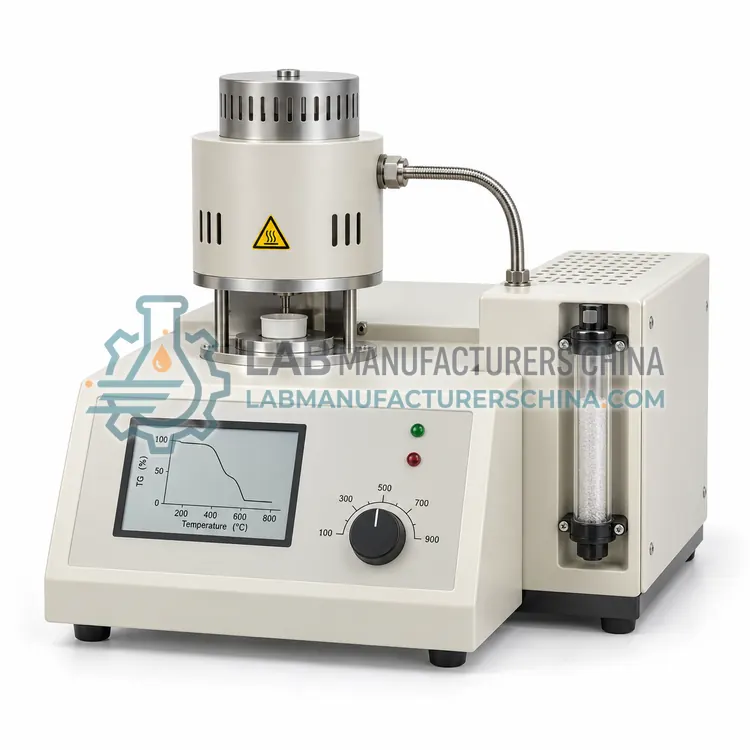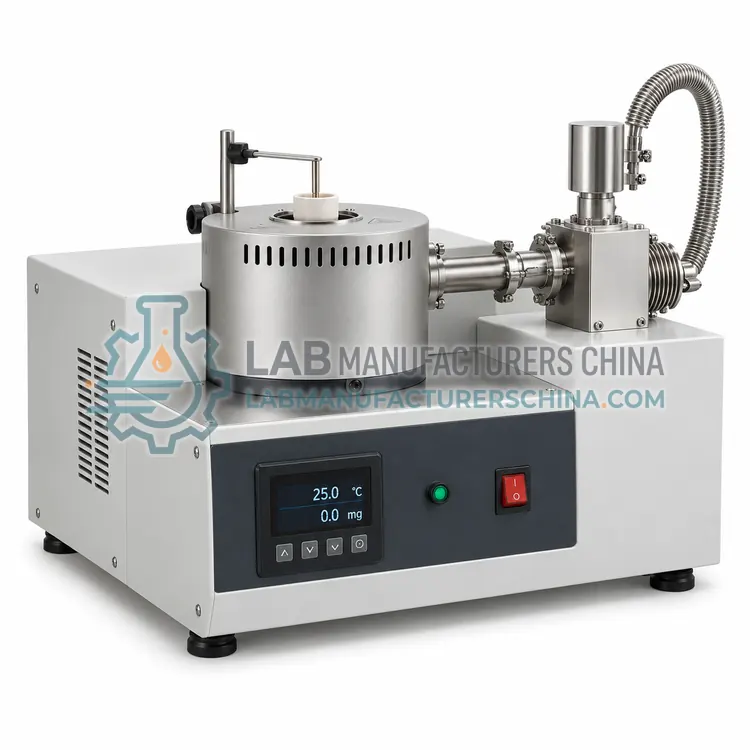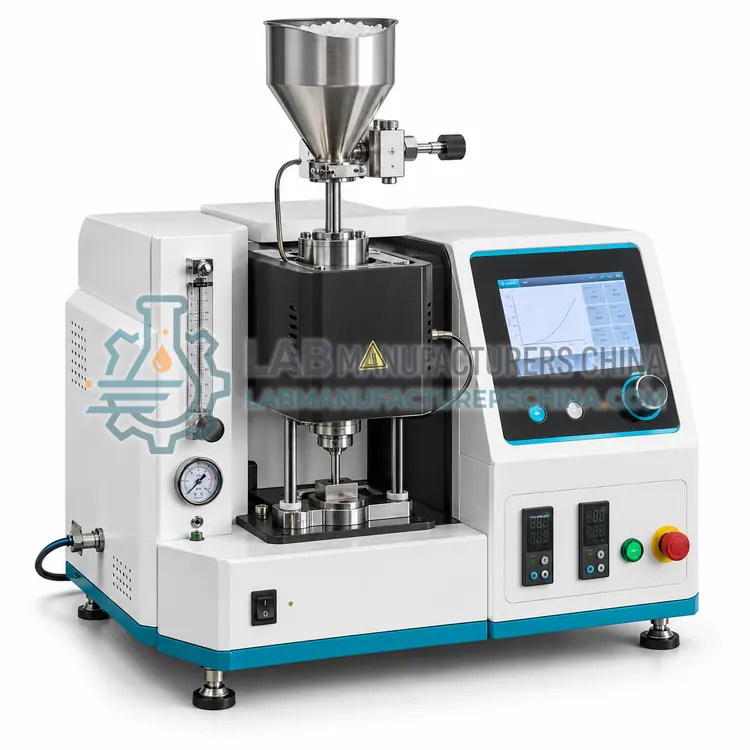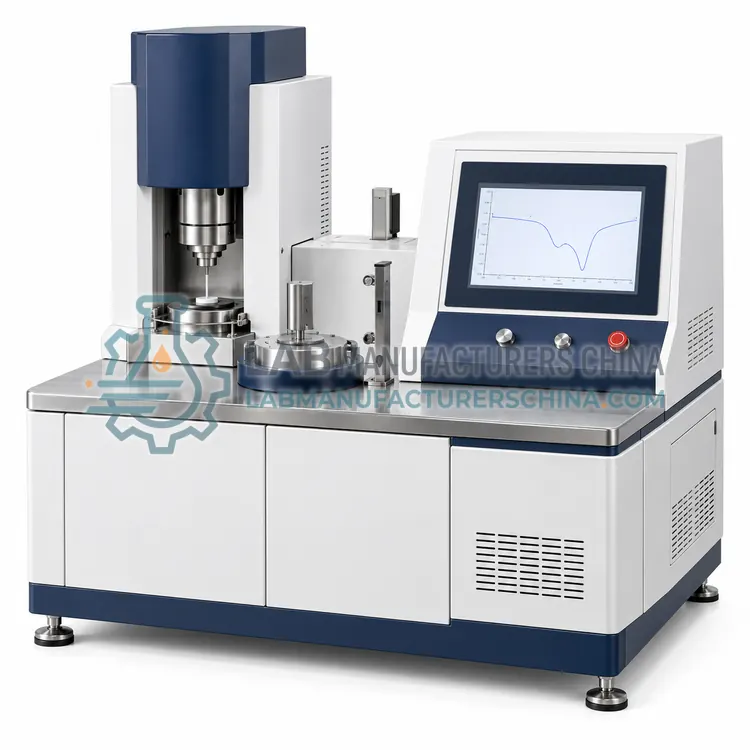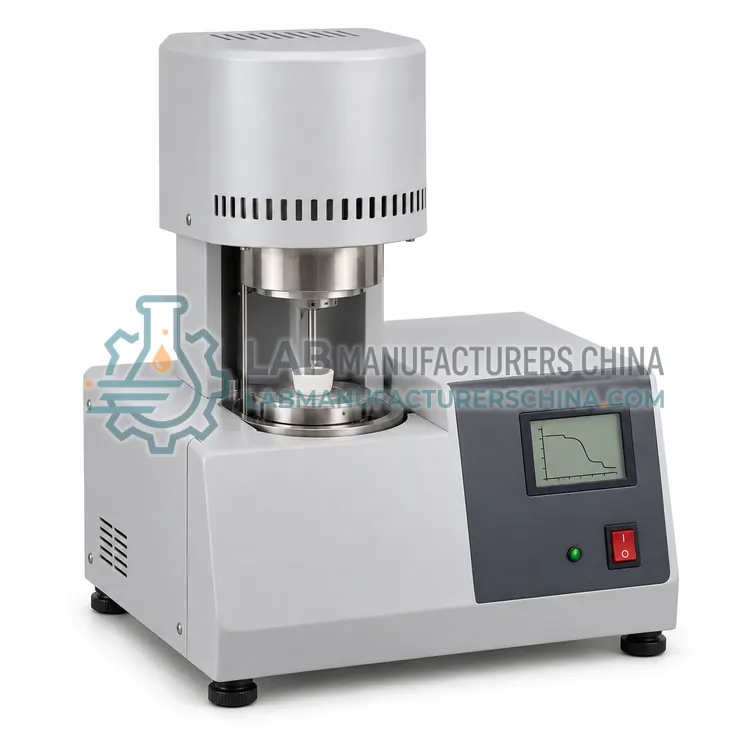
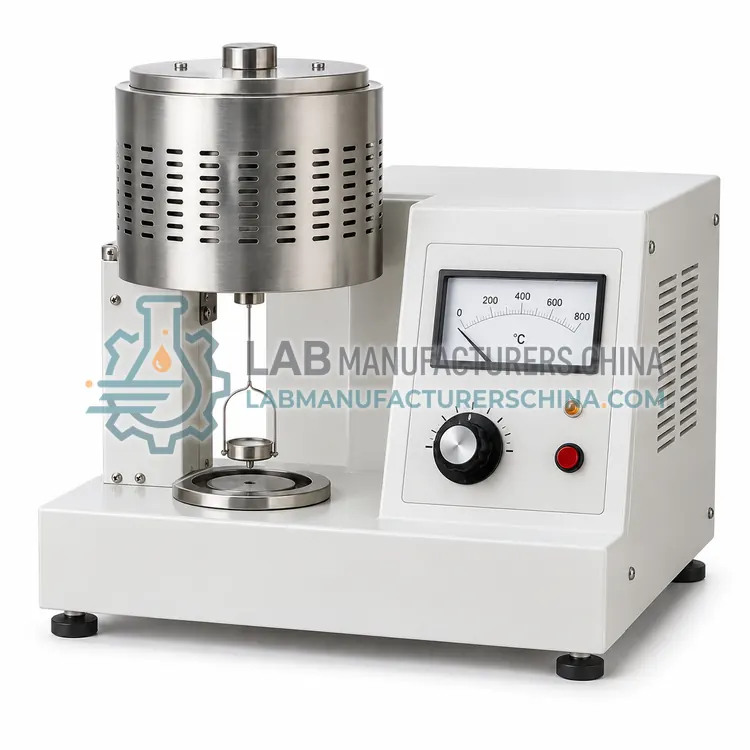
Thermogravimetric Analyzer for Polymer Thermal Stability
聚合物热稳定性分析用热重分析仪
- SKU TGAA-0001
- TGA
- CE (to be confirmed)
- ISO 9001 manufacturing (to be confirmed)
Price on request — FOB / CIF quoted per order
Prices depend on configuration, quantity and destination port.
Key specifications
| Temperature range | Ambient to 1200 °C |
|---|---|
| Heating rate | 0.1–100 °C/min |
| Balance resolution | 0.1 µg |
| Weighing accuracy | ±0.1% |
| Typical sample mass | 5–20 mg |
| Atmosphere control | Nitrogen, argon, air, oxygen, switchable |
Request a quote Download brochure · to be provided
By Lab Manufacturers China Technical TeamLast reviewed Standards: ISO 11358-1, ISO 11358-2, ASTM E1131
What is the Thermogravimetric Analyzer for Polymer Thermal Stability?
A general-purpose thermogravimetric analyzer records mass loss of polymer samples in inert or oxidising atmospheres, giving decomposition onset and residual mass. It is the standard instrument for ranking thermal stability and for routine composition checks in polymer laboratories.
What is the Thermogravimetric Analyzer for Polymer Thermal Stability?
A general-purpose thermogravimetric analyzer records mass loss of polymer samples in inert or oxidising atmospheres, giving decomposition onset and residual mass. It is the standard instrument for ranking thermal stability and for routine composition checks in polymer laboratories.
Overview
The core of the instrument is a hang-down or top-loading thermobalance that measures sample mass inside a furnace, usually covering ambient to 1000 or 1200 °C at heating rates from 0.1 to 100 °C per minute. The furnace is purged with nitrogen, argon, air or oxygen, and gas switching during a run allows a polymer to decompose in an inert stage and the residual carbon to burn off in an oxidising stage. Typical balance resolution is 0.1 µg with a weighing accuracy around 0.1% for the mass range used in polymer work, so changes of a few tenths of a percent, such as moisture or residual monomer, can be resolved. Autosamplers, vacuum capability and crucibles in alumina, platinum or quartz are common options, and the software normally reports onset, peak and residual mass values against stored methods.
How does it work?
A thermogravimetric analyzer suspends the sample from a sensitive balance inside a furnace whose temperature is programmed. The balance continuously records mass, and the derivative curve shows the rate of change, which makes overlapping steps easier to resolve. Atmosphere, heating rate, purge flow and crucible type determine the temperature at which a step occurs, so standards fix these conditions. In an inert atmosphere the polymer matrix decomposes and leaves a residue of filler, ash or carbon black; switching to air or oxygen then burns off the carbon and leaves the inorganic ash. A TGA can also be coupled to an infrared spectrometer or a mass spectrometer through a heated transfer line, so the gases released at each step are identified, which turns a mass-loss curve into evidence about the chemical structure of the sample.
What are the key features?
- Thermobalance with 0.1 µg resolution
- Furnace to 1200 °C with programmable ramps
- Inert, air and oxygen purge with mid-run switching
- Derivative and residual mass evaluation in software
- Crucibles in alumina, platinum, quartz and aluminium
- Vacuum and inert glove-box options
What are the technical specifications?
A typical thermogravimetric analyzer for polymer thermal stability configuration offers temperature range of Ambient to 1200 °C, heating rate of 0.1–100 °C/min, balance resolution of 0.1 µg, weighing accuracy of ±0.1%, typical sample mass of 5–20 mg and atmosphere control of Nitrogen, argon, air, oxygen, switchable. Values are indicative of the product class; the exact figures for each configuration are confirmed on the quotation and the calibration documents supplied with the instrument.
Which applications is it used for?
The Thermogravimetric Analyzer for Polymer Thermal Stability is used in thermal stability comparison of polymer grades, decomposition onset temperature determination, moisture and volatile content measurement and verification of flame-retardant addition effects. Across the wider TGA class, laboratories also deploy it for thermal stability ranking of polymer grades, filler, glass fibre and ash content determination and carbon black content in crosslinked compounds.
Which standards and certifications apply?
Relevant standards and methods include ISO 11358-1, ISO 11358-2, ASTM E1131, ASTM E2550, ASTM D6370 and IEC 61010-1. Certification candidates for this model are CE and ISO 9001 manufacturing; each is to be confirmed for the specific configuration before shipment, and certificates are supplied only where they have been issued.
Calibrate the balance with certified masses and verify the temperature scale with a Curie-point or melting-point standard, since a temperature offset shifts every step. Use a purge flow high enough to remove volatiles but stable enough not to disturb the balance, and buoyancy-corrected blank runs for accurate small mass changes. Crucibles must be matched to the sample: platinum for oxidative work, alumina for most polymer programmes, and open crucibles for combustion steps. Crucibles must be cleaned or replaced because residue from a previous run adds mass. Finally, record heating rate, atmosphere and sample mass with every result, since the same polymer can give quite different decomposition temperatures under other conditions.
How do I select the right Thermogravimetric Analyzer for Polymer Thermal Stability?
Select this class of instrument when the required answers are onset temperature, residual mass and weight-loss steps, without a need to identify evolved gases. Confirm the maximum temperature against your filler or ash work, and specify whether gas switching during a run is needed, since that determines the mass-flow control package. A certified Curie-point set should be ordered with the instrument.
How does it compare with other TGA variants?
First define the question. For thermal stability ranking, a standard thermobalance with inert and oxidative gas switching is enough. For filler and carbon black content in filled compounds, choose an instrument with a wide temperature range, precise balance and a staged atmosphere programme, and add an autosampler if many samples are run. When the identity of evolved products matters, for example in failure analysis or in verifying flame-retardant mechanisms, select a coupled TGA-FTIR or TGA-MS system, noting that coupling reduces sample throughput and requires a heated interface. For composites that contain glass, mineral or ceramic fillers, confirm the furnace reaches the temperature needed to fully burn off the matrix.
Full specifications
| Temperature range | Ambient to 1200 °C |
|---|---|
| Heating rate | 0.1–100 °C/min |
| Balance resolution | 0.1 µg |
| Weighing accuracy | ±0.1% |
| Typical sample mass | 5–20 mg |
| Atmosphere control | Nitrogen, argon, air, oxygen, switchable |
| Purge gas flow | 20–100 mL/min |
| Crucible volume | 70–150 µL |
| Temperature calibration | Curie point standards |
| Power supply | 220 V, 50/60 Hz |
Indicative values for this product class. Final specifications are confirmed on the quotation and in the calibration documents supplied with the instrument.
Applications
- Thermal stability comparison of polymer grades
- Decomposition onset temperature determination
- Moisture and volatile content measurement
- Verification of flame-retardant addition effects
Key features
- Thermobalance with 0.1 µg resolution
- Furnace to 1200 °C with programmable ramps
- Inert, air and oxygen purge with mid-run switching
- Derivative and residual mass evaluation in software
- Crucibles in alumina, platinum, quartz and aluminium
- Vacuum and inert glove-box options
Frequently asked questions about Thermogravimetric Analyzer for Polymer Thermal Stability
TGA measures mass change, so it detects processes that release or absorb volatiles such as decomposition, vaporisation and combustion. DSC and DTA measure heat flow or temperature difference and detect melting, crystallisation, glass transition and curing, which may involve no mass change. Simultaneous instruments record both signals on one sample.
Curie-point standards such as nickel, cobalt or an alloy with a known magnetic transition are heated in sequence, and the temperature readout is corrected to the certified transition point. Alternatives include melting-point standards inside sealed crucibles. The calibration should cover the working range, and the certificate and raw data should be retained.
Platinum catalyses some oxidation and decomposition reactions, alumina is inert for most polymer programmes, and aluminium cannot be used above about 600 °C. Residues can also react with the crucible, so the same crucible type must be used for comparable results and cleaned or discarded after combustion steps.
The sample is heated in nitrogen so the polymer matrix decomposes and leaves the filler, then the atmosphere is switched to air or oxygen to burn off any carbon black or char. The residue after the oxidative stage is the inorganic filler or ash, and its mass percentage is reported against the initial sample mass, with a blank crucible run subtracted.
Heat transfer through the sample and the kinetics of bond scission both need time, so a faster heating rate shifts decomposition to higher temperature and can merge two steps into one. Standards therefore fix a heating rate, commonly 10 °C per minute, and results should only be compared when the rate and atmosphere are identical.
Coupling is justified when the identity of the evolved species matters, for example to confirm that a flame retardant acts in the gas phase, to identify a plasticiser or solvent, or to determine which component of a blend decomposes first. Coupling needs a heated transfer line and reduces sample throughput, so routine composition testing does not require it.
Related models