How do Melt Flow Testers work?
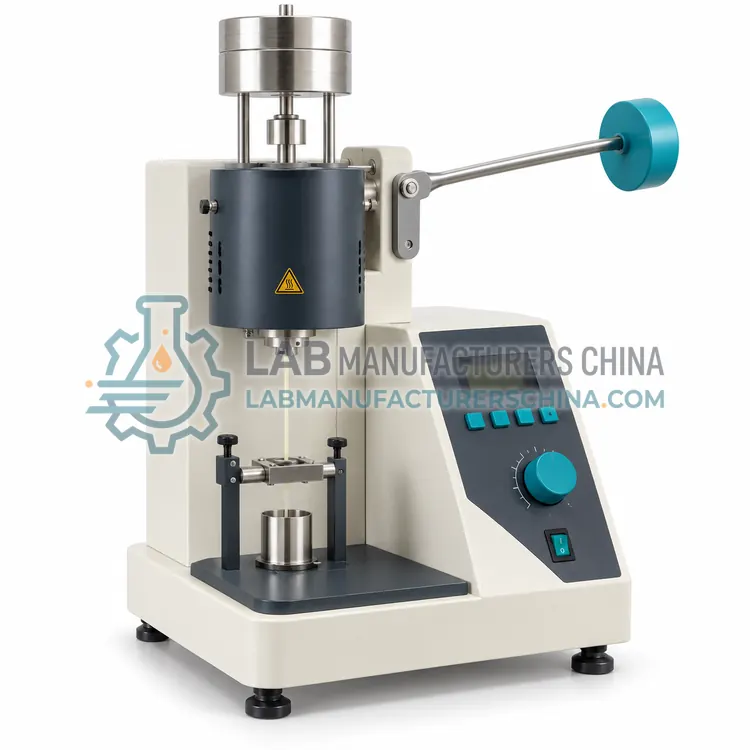
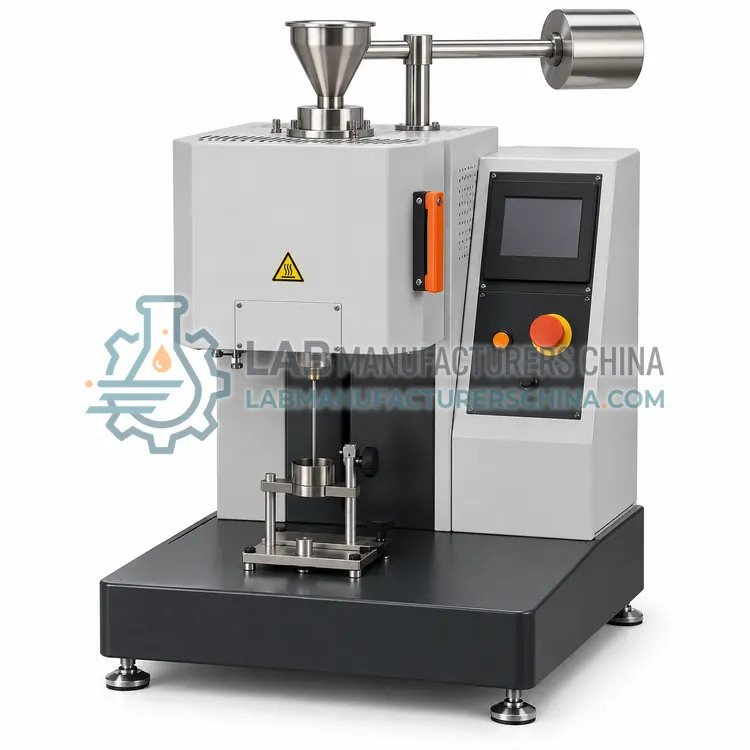
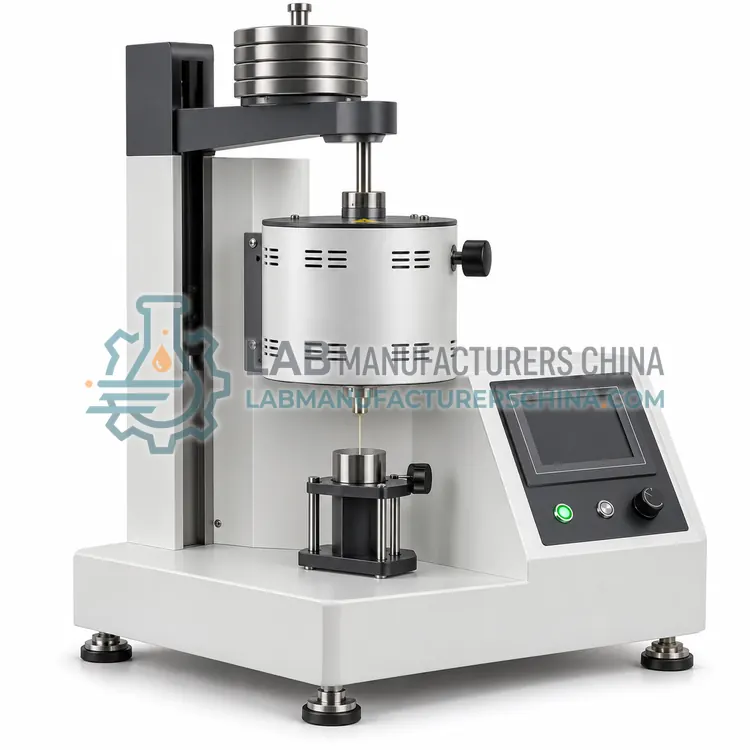
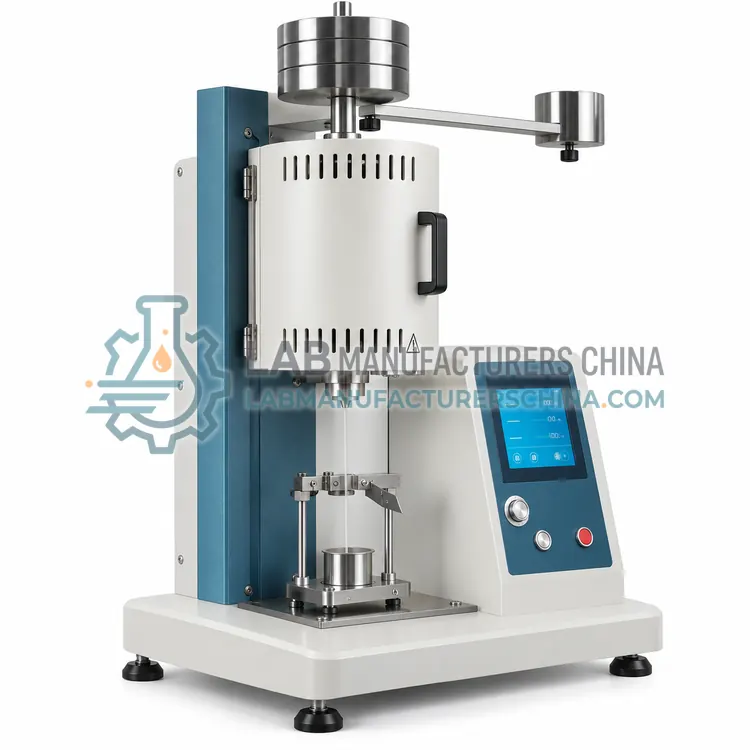
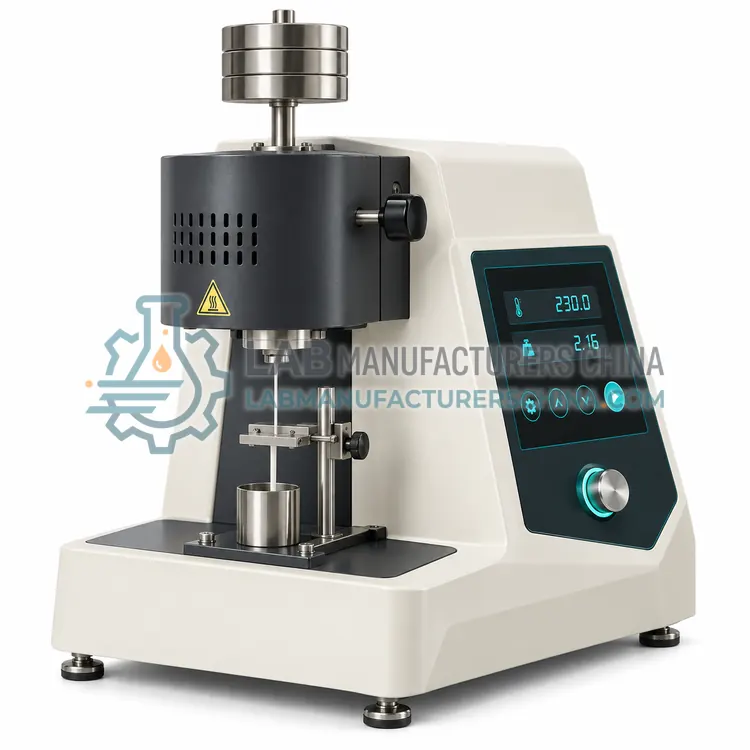
A melt flow tester consists of a heated vertical barrel with a defined bore, a hardened steel die at the bottom, a piston and a set of certified weights. Polymer granules are loaded, compacted and held at the test temperature, then extruded through the die under a specified load. In method A, timed portions of extrudate are cut and weighed, and the result is expressed in grams per ten minutes. In method B, an encoder records piston displacement against time and the melt volume-flow rate is calculated in cubic centimetres per ten minutes, which can be converted to mass flow using the melt density. Temperature, load, die geometry and thermal equilibration time are all fixed by the method, because melt viscosity depends steeply on temperature and shear rate.
Which Melt Flow Testers variants are available?
- Manual Melt Flow Index Tester — A manual melt flow index tester uses operator-placed weights and hand-timed cuts to determine how much polymer extrudes from a heated barrel in ten minutes.
- Automatic Melt Flow Index Tester — An automatic melt flow index tester performs piston displacement measurement, timed cutting and weight handling under program control, so results no longer depend on operator timing.
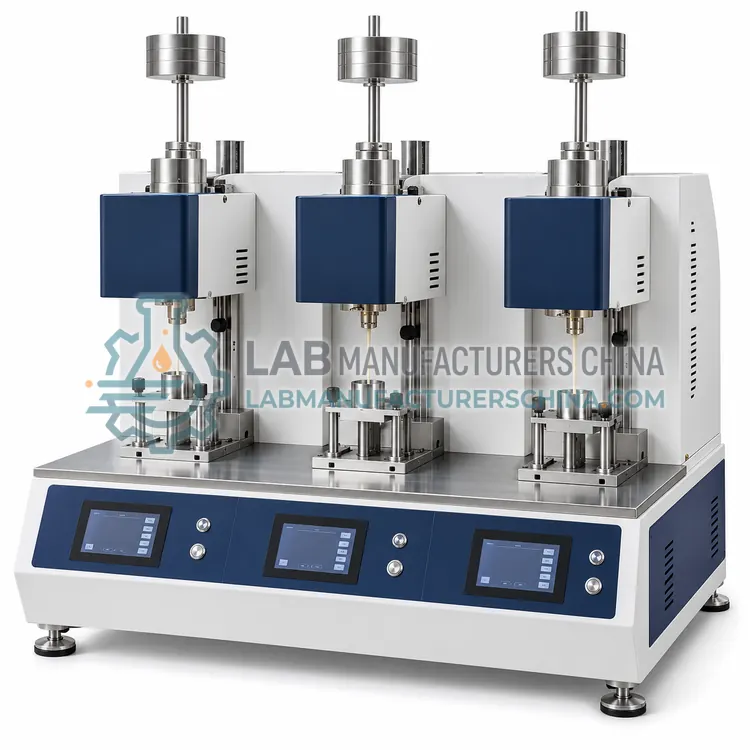
- Multi-Station Melt Flow Index Tester — A multi-station melt flow index tester holds two to four independent barrels so several samples or grades can be conditioned and measured in one run.
- High-Temperature Melt Flow Rate Tester — A high-temperature melt flow rate tester extends the barrel range to about 450 °C with inert gas purging, so engineering polymers such as polyamide, polysulfone and polyether ether ketone can be measured without oxidative degradation.
- Melt Volume-Flow Rate Tester — A melt volume-flow rate tester measures piston displacement with a high-resolution encoder instead of weighing cut extrudate, giving a fast, automated result in cubic centimetres per ten minutes.
- Corrosion-Resistant Melt Flow Index Tester — A corrosion-resistant melt flow index tester uses an alloy barrel and die, and usually inert gas purging, to test polymers that release aggressive vapours when melted.
How do I choose the right variant?
Start from the standard your customer or specification cites, because ISO 1133 and ASTM D1238 fix different loads and procedures. Method A is sufficient for routine resin grading, while method B is preferable when the laboratory needs a fast result or the material is difficult to cut cleanly. Choose a high-temperature barrel when the scope includes engineering polymers such as polyamide, polysulfone or polyether ether ketone, and a corrosion-resistant barrel for PVC and fluoropolymers. Automatic units pay back where more than about ten tests per day are run, and multi-station units suit polyolefin plants that compare several production lines in one shift. Specify the load set, temperature range, data export format and cleaning accessories.
Where are Melt Flow Testers used?
Melt Flow Testers are specified in polyolefin resin production and grade certification, incoming inspection of polyethylene and polypropylene, recycled plastics quality screening, masterbatch and filled compound consistency, extrusion and injection moulding process verification and comparison of polymer batches before moulding trials.
Which standards and certifications apply?
Work with Melt Flow Testers is commonly governed by ISO 1133-1, ISO 1133-2, ASTM D1238, GB/T 3682.1, GB/T 3682.2 and IEC 61010-1. Instrument certifications such as CE marking are confirmed per configuration and never assumed.
What are the key considerations before purchase?
Install the tester on a level, vibration-free bench away from draughts, and allow the barrel to reach thermal equilibrium before the first test, which usually takes 15 to 30 minutes. Clean the barrel and die after every test or every material change, using purging compound for degraded polymer; never scrape the barrel bore with hardened tools. Verify temperature with an external thermometer in the bore at defined intervals, check die dimensions against the method tolerance, and keep weights traceable. Dry hygroscopic polymers before testing, discard any extrudate containing bubbles or voids, and repeat the test when a single cut deviates strongly from the others.