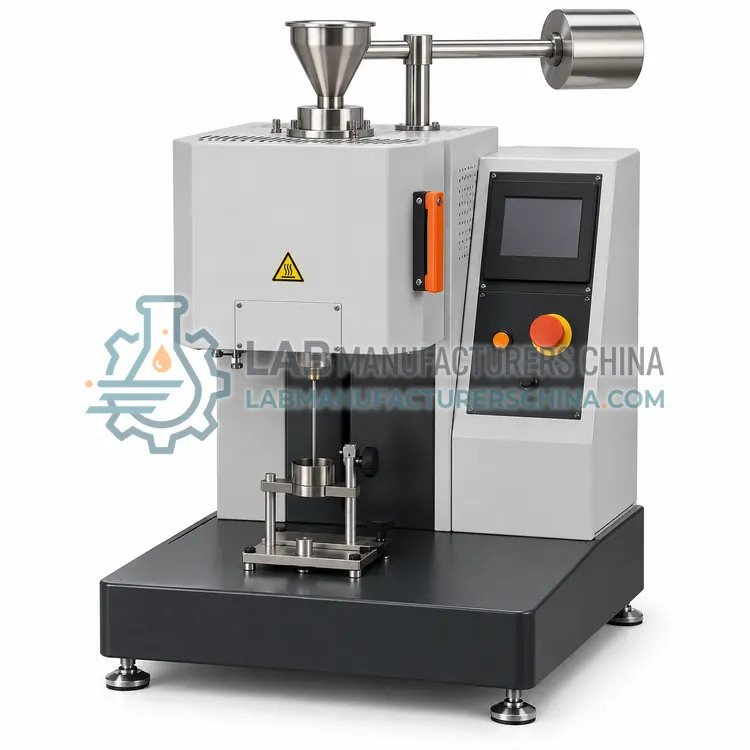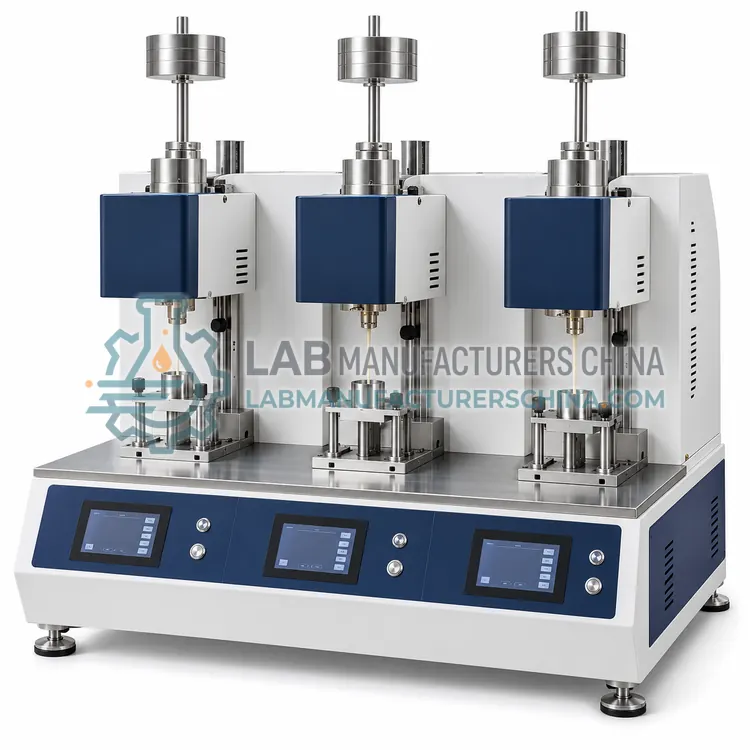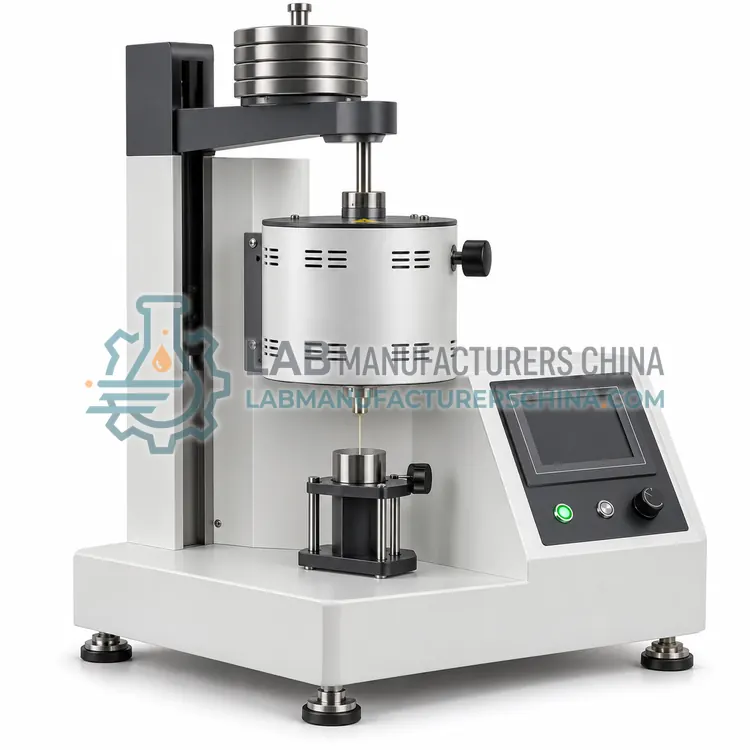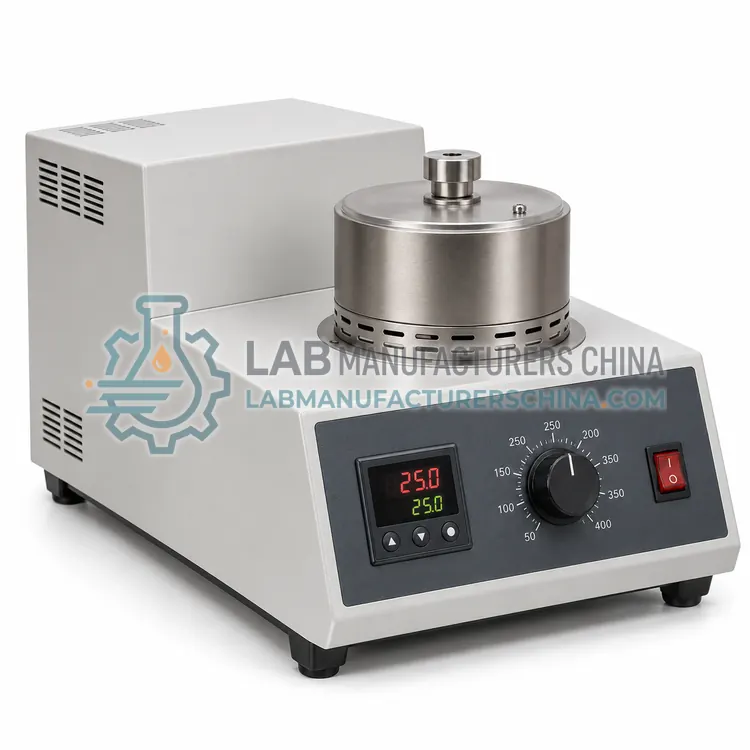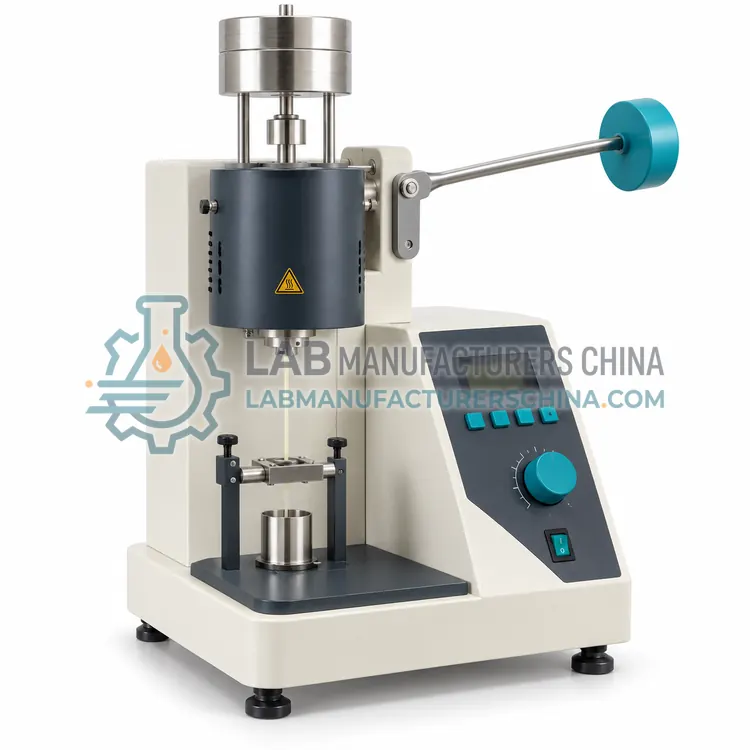
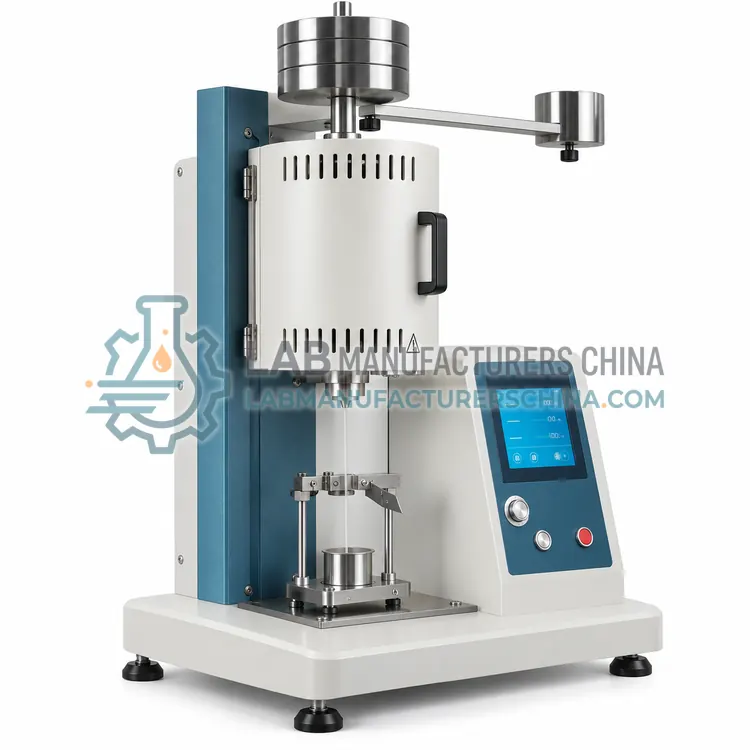
Melt Volume-Flow Rate Tester
熔体体积流动速率测定仪
- SKU MFT-0005
- Melt Flow Testers
- CE (to be confirmed)
- ISO 9001 manufacturing (to be confirmed)
Price on request — FOB / CIF quoted per order
Prices depend on configuration, quantity and destination port.
Key specifications
| Measuring principle | Piston displacement, ISO 1133 method B |
|---|---|
| Displacement resolution | 0.01 mm |
| MVR range | 0.1–2000 cm³/10 min |
| Temperature range | 50–400 °C |
| Temperature accuracy | ±0.2 °C |
| Load weights | 1.2 / 2.16 / 5 / 10 / 21.6 kg |
Request a quote Download brochure · to be provided
By Lab Manufacturers China Technical TeamLast reviewed Standards: ISO 1133-1, ISO 1133-2, ASTM D1238
What is the Melt Volume-Flow Rate Tester?
A melt volume-flow rate tester measures piston displacement with a high-resolution encoder instead of weighing cut extrudate, giving a fast, automated result in cubic centimetres per ten minutes. It is preferred when the material is difficult to cut cleanly or when results are needed quickly.
What is the Melt Volume-Flow Rate Tester?
A melt volume-flow rate tester measures piston displacement with a high-resolution encoder instead of weighing cut extrudate, giving a fast, automated result in cubic centimetres per ten minutes. It is preferred when the material is difficult to cut cleanly or when results are needed quickly.
Overview
Method B of ISO 1133 determines flow from the distance the piston travels in a known time once steady flow is established, for example 0.25 in or 6.35 mm. A high-resolution encoder registers that distance, the software applies the barrel cross-section and time base and reports MVR directly. Because the measurement needs no cutting and weighing, it removes operator timing error and reduces test duration to a few minutes of steady flow after the preheat. The same data can be converted to MFR using the melt density at the test temperature, and instrument software typically stores density values per material so both numbers are reported together. The result is more sensitive to piston friction, temperature uniformity and correct die seating than the gravimetric method.
How does it work?
A melt flow tester consists of a heated vertical barrel with a defined bore, a hardened steel die at the bottom, a piston and a set of certified weights. Polymer granules are loaded, compacted and held at the test temperature, then extruded through the die under a specified load. In method A, timed portions of extrudate are cut and weighed, and the result is expressed in grams per ten minutes. In method B, an encoder records piston displacement against time and the melt volume-flow rate is calculated in cubic centimetres per ten minutes, which can be converted to mass flow using the melt density. Temperature, load, die geometry and thermal equilibration time are all fixed by the method, because melt viscosity depends steeply on temperature and shear rate.
What are the key features?
- Encoder-based piston displacement measurement
- Direct MVR output in cm³/10 min
- MFR calculation from stored melt density
- No cutting or weighing required
- Raw displacement curves saved with each result
- Repeatability verified with reference polymers
What are the technical specifications?
A typical melt volume-flow rate tester configuration offers measuring principle of Piston displacement, ISO 1133 method B, displacement resolution of 0.01 mm, MVR range of 0.1–2000 cm³/10 min, temperature range of 50–400 °C, temperature accuracy of ±0.2 °C and load weights of 1.2 / 2.16 / 5 / 10 / 21.6 kg. Values are indicative of the product class; the exact figures for each configuration are confirmed on the quotation and the calibration documents supplied with the instrument.
Which applications is it used for?
The Melt Volume-Flow Rate Tester is used in rapid QC of polyolefin production lots, materials that tear or curl when cut, comparison of uncoloured base resins and automated testing lines with data export. Across the wider Melt Flow Testers class, laboratories also deploy it for polyolefin resin production and grade certification, incoming inspection of polyethylene and polypropylene and recycled plastics quality screening.
Which standards and certifications apply?
Relevant standards and methods include ISO 1133-1, ISO 1133-2, ASTM D1238, GB/T 3682.1, GB/T 3682.2 and IEC 61010-1. Certification candidates for this model are CE and ISO 9001 manufacturing; each is to be confirmed for the specific configuration before shipment, and certificates are supplied only where they have been issued.
Install the tester on a level, vibration-free bench away from draughts, and allow the barrel to reach thermal equilibrium before the first test, which usually takes 15 to 30 minutes. Clean the barrel and die after every test or every material change, using purging compound for degraded polymer; never scrape the barrel bore with hardened tools. Verify temperature with an external thermometer in the bore at defined intervals, check die dimensions against the method tolerance, and keep weights traceable. Dry hygroscopic polymers before testing, discard any extrudate containing bubbles or voids, and repeat the test when a single cut deviates strongly from the others.
How do I select the right Melt Volume-Flow Rate Tester?
Choose method B when cutting is unreliable or when the laboratory reports results into a digital QC system and wants minimal manual steps. Confirm that the software supports your melt densities and can recalculate between MVR and MFR, because customers often specify one of the two. Verifying piston friction and die seating should be written into the procedure, since these are the most common reasons for disagreement between method A and method B results.
How does it compare with other Melt Flow Testers variants?
Start from the standard your customer or specification cites, because ISO 1133 and ASTM D1238 fix different loads and procedures. Method A is sufficient for routine resin grading, while method B is preferable when the laboratory needs a fast result or the material is difficult to cut cleanly. Choose a high-temperature barrel when the scope includes engineering polymers such as polyamide, polysulfone or polyether ether ketone, and a corrosion-resistant barrel for PVC and fluoropolymers. Automatic units pay back where more than about ten tests per day are run, and multi-station units suit polyolefin plants that compare several production lines in one shift. Specify the load set, temperature range, data export format and cleaning accessories.
Full specifications
| Measuring principle | Piston displacement, ISO 1133 method B |
|---|---|
| Displacement resolution | 0.01 mm |
| MVR range | 0.1–2000 cm³/10 min |
| Temperature range | 50–400 °C |
| Temperature accuracy | ±0.2 °C |
| Load weights | 1.2 / 2.16 / 5 / 10 / 21.6 kg |
| Measurement distance option | 6.35 mm or 25.4 mm |
| Result repeatability | Within 2% with homogeneous material |
| Data output | USB, RS232, CSV |
| Power | 700 W |
Indicative values for this product class. Final specifications are confirmed on the quotation and in the calibration documents supplied with the instrument.
Applications
- Rapid QC of polyolefin production lots
- Materials that tear or curl when cut
- Comparison of uncoloured base resins
- Automated testing lines with data export
Key features
- Encoder-based piston displacement measurement
- Direct MVR output in cm³/10 min
- MFR calculation from stored melt density
- No cutting or weighing required
- Raw displacement curves saved with each result
- Repeatability verified with reference polymers
Frequently asked questions about Melt Volume-Flow Rate Tester
They measure the same flow property in different units. MVR is volume per ten minutes and MFR is mass per ten minutes, related by the melt density at the test temperature. Since melt density is close to but not equal to room-temperature solid density, converting requires a melt density value measured at the test condition.
The most common causes are piston friction and die seating, since method B reads the piston motion directly while method A depends on the mass that actually extrudes. A worn die, a poorly seated die, an unlevelled barrel or a temperature offset can all create a systematic difference. Both methods should therefore be verified against a reference polymer.
After the standard preheat of four to six minutes, steady flow is normally measured over a piston travel of 6.35 mm, which takes from seconds for high-flow grades to several minutes for low-flow grades. Total test time is usually shorter than a gravimetric test because no cutting, weighing or extrudate handling is involved.
MFR is the melt mass-flow rate in grams per ten minutes, obtained by weighing timed cuts of extrudate. MVR is the melt volume-flow rate in cubic centimetres per ten minutes, obtained from piston displacement and time. The two are related through melt density, so a laboratory can report MFR from method B data if it knows the melt density at test temperature.
Melt viscosity changes steeply with temperature, so a sample that has not reached the barrel temperature extrudes faster or slower than the specified condition. Methods therefore require a defined preheat time, typically four to six minutes, after the sample is compacted. Checking the barrel with an external probe at intervals confirms that the controller reading is accurate.
Clean the die and barrel after each test or whenever the material changes, because residual polymer degrades at test temperature and alters the next result. Disassemble the die while warm, wipe it with a soft cloth and approved solvent, and never use abrasive tools. For heavily degraded or crosslinked residues, run purging compound before manual cleaning.
Related models