Lab Manufacturers China

Thermal Analysis

塑料热分析仪

THA · Plastic Analysis Equipment · 5 models

By Lab Manufacturers China Technical TeamLast reviewed Standards: ISO 11357-1, ISO 11358-1, ISO 11359-1

Standards referenced

  • ISO 11357-1
  • ISO 11358-1
  • ISO 11359-1
  • ISO 6721-1
  • ISO 306
  • ISO 75-1
  • ASTM D648
  • ASTM D1525
  • ASTM D4065
  • IEC 61010-1

What are Thermal Analysis?

Thermal analysis of plastics measures how a material responds to controlled temperature change, giving transitions, decomposition, expansion, mechanical damping and softening temperatures. These results define the usable temperature range of a plastic part and are used for grade selection, specification testing and failure analysis.

5 models of Thermal Analysis

The 5 models below are current configurations; specifications are confirmed on quotation.

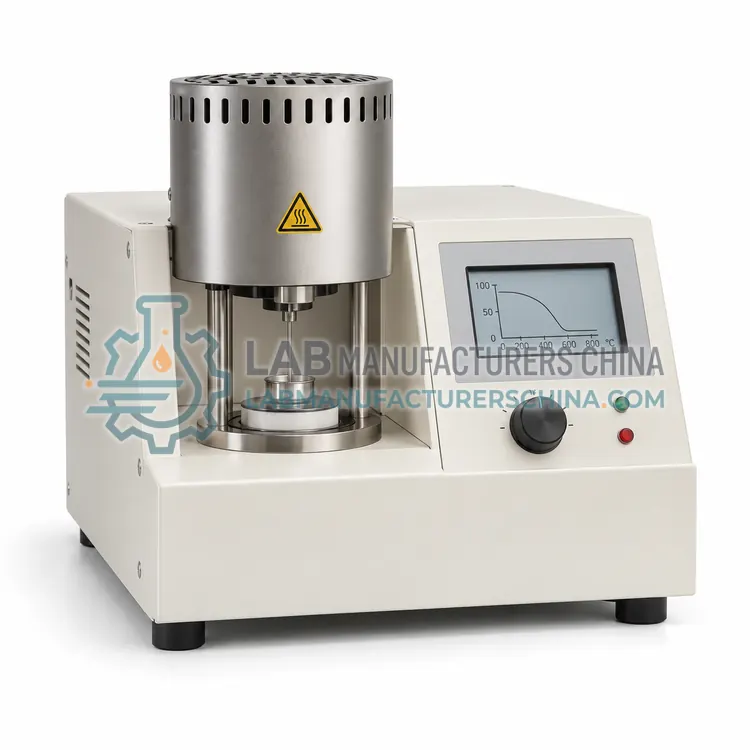
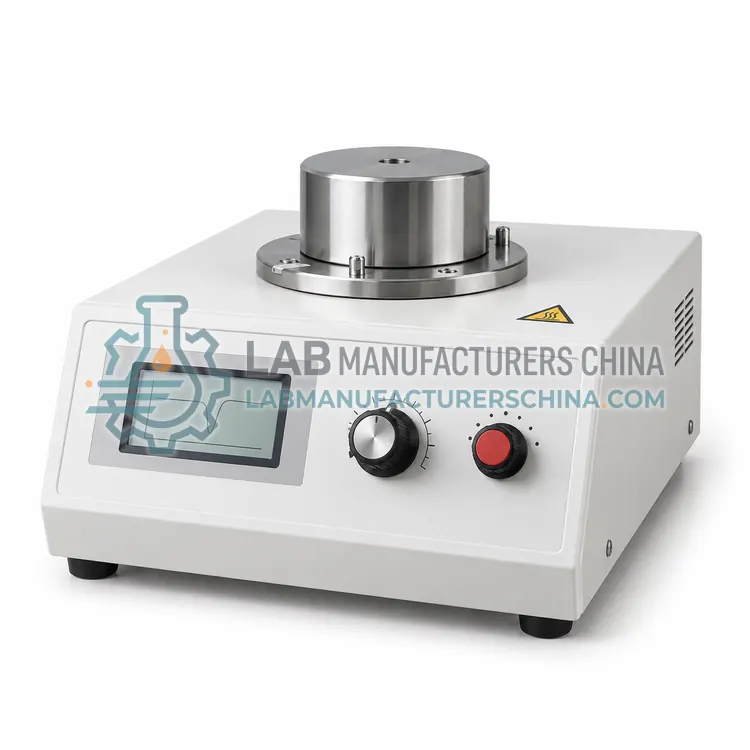
Differential Scanning Calorimeter for Plastics

塑料差示扫描量热仪

  • THA-0001
  • Thermal Analysis
  • CE (to be confirmed)
  • ISO 9001 manufacturing (to be confirmed)
Temperature range:
−90 to 600 °C with cooling accessory
Heating rate:
0.1–100 °C/min
Temperature accuracy:
±0.2 °C (indium)
Calorimetric accuracy:
±1% (indium)
Crucible volume:
40 µL standard, 100 µL optional
Purge gas flow:
20–50 mL/min

A plastics DSC measures heat flow into and out of a specimen through a controlled temperature programme, giving melting, crystallisation and glass transition temperatures plus degree of crystallinity. It is the standard technique for grade verification and process troubleshooting.

Request a quote
View details

Thermogravimetric Analyzer for Plastics

塑料热重分析仪

  • THA-0002
  • Thermal Analysis
  • CE (to be confirmed)
  • ISO 9001 manufacturing (to be confirmed)
Temperature range:
Ambient to 1200 °C
Heating rate:
0.1–100 °C/min
Balance resolution:
0.1 µg
Weighing accuracy:
±0.1%
Typical sample mass:
5–20 mg
Atmosphere control:
Nitrogen, air and oxygen with switching

A plastics thermogravimetric analyzer records specimen mass against temperature in a controlled atmosphere, quantifying decomposition, filler, carbon black, moisture and volatile content. It is used for composition checks and thermal stability ranking of compounds.

Request a quote
View details

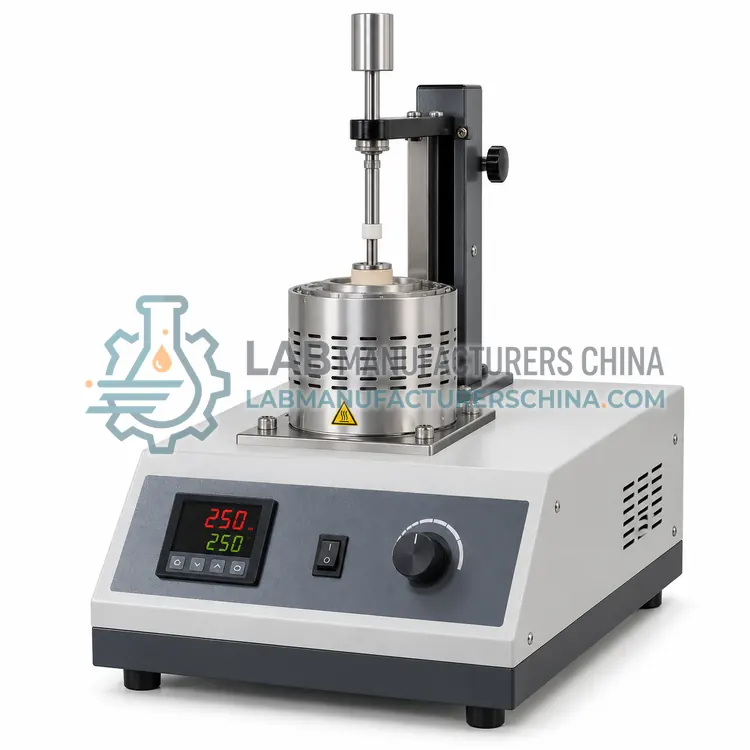
Thermomechanical Analyzer for Plastics

塑料热机械分析仪

  • THA-0003
  • Thermal Analysis
  • CE (to be confirmed)
  • ISO 9001 manufacturing (to be confirmed)
Temperature range:
−150 to 600 °C with cooling accessory
Heating rate:
0.1–50 °C/min
Displacement resolution:
15 nm
Force range:
0.001–2 N
Probe types:
Expansion, penetration, tension, flexure
Specimen length:
3–10 mm typical

A thermomechanical analyzer measures dimensional change of a plastic specimen under a defined probe, load and temperature programme. It gives the coefficient of linear thermal expansion, softening behaviour and, in some modes, shrinkage after moulding.

Request a quote
View details

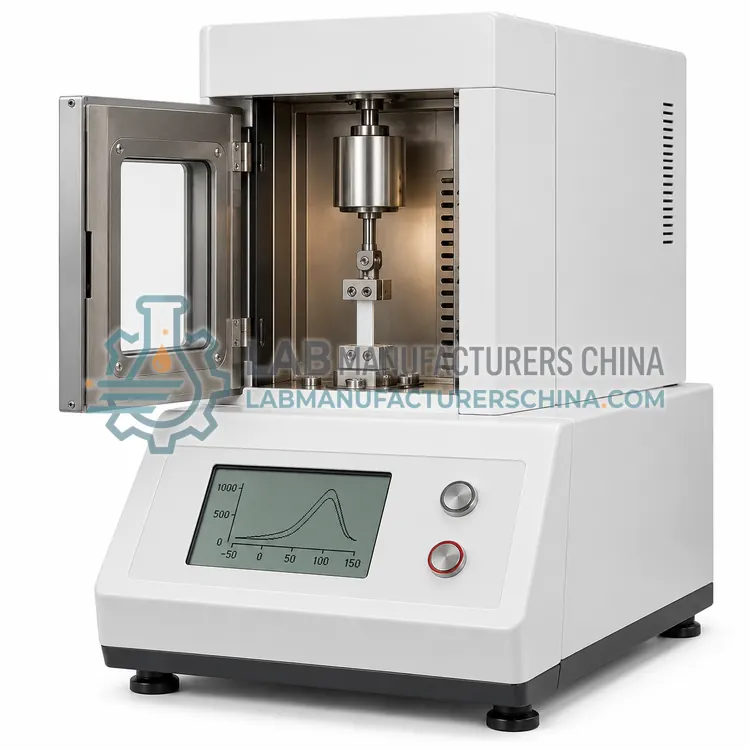
Dynamic Mechanical Analyzer for Plastics

塑料动态力学分析仪

  • THA-0004
  • Thermal Analysis
  • CE (to be confirmed)
  • ISO 9001 manufacturing (to be confirmed)
Temperature range:
−150 to 600 °C with cooling accessory
Frequency range:
0.001–200 Hz
Heating rate:
0.1–20 °C/min
Force range:
0.001–18 N
Strain resolution:
About 1 nm
Deformation modes:
3-point bending, dual cantilever, tension, compression, shear

A dynamic mechanical analyzer applies an oscillating deformation to a plastic specimen and records storage modulus, loss modulus and damping against temperature or frequency. It detects the glass transition with the highest sensitivity of any thermal technique.

Request a quote
View details

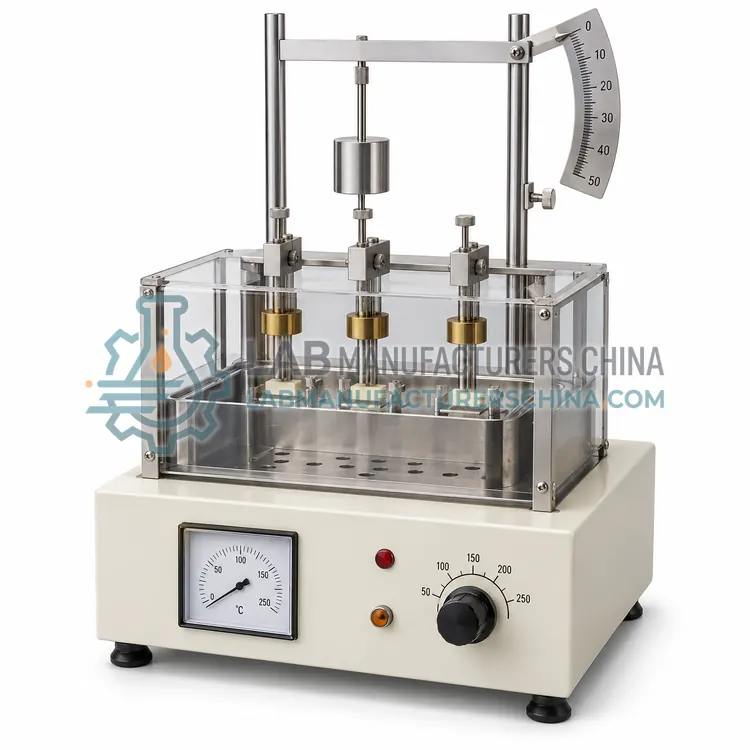
Heat Distortion and Vicat Softening Point Tester

热变形与维卡软化温度测定仪

  • THA-0005
  • Thermal Analysis
  • CE (to be confirmed)
  • ISO 9001 manufacturing (to be confirmed)
Temperature range:
Ambient to 300 °C
Heating rates:
50 ± 5 °C/h and 120 ± 10 °C/h
Heat deflection loads:
0.45 MPa and 1.80 MPa
Deflection limit:
0.32 mm (edgewise) per ISO 75
Vicat needle area:
1 mm², flat ended
Vicat loads:
10 N and 50 N

A combined HDT and Vicat tester heats specimens in a controlled oil bath under a defined load and records the temperature at which a specified deflection or penetration occurs. It provides the two softening temperatures most often quoted in plastic specifications.

Request a quote
View details

Compare Thermal Analysis models

ModelTemperature rangeHeating rateTemperature accuracyCrucible volumePurge gas flow
Differential Scanning Calorimeter for PlasticsTHA-0001−90 to 600 °C with cooling accessory0.1–100 °C/min±0.2 °C (indium)40 µL standard, 100 µL optional20–50 mL/min
Thermogravimetric Analyzer for PlasticsTHA-0002Ambient to 1200 °C0.1–100 °C/min—70–150 µL20–100 mL/min
Thermomechanical Analyzer for PlasticsTHA-0003−150 to 600 °C with cooling accessory0.1–50 °C/min±0.5 °C——
Dynamic Mechanical Analyzer for PlasticsTHA-0004−150 to 600 °C with cooling accessory0.1–20 °C/min———
Heat Distortion and Vicat Softening Point TesterTHA-0005Ambient to 300 °C————

Indicative values for this product class. Final specifications are confirmed on the quotation and in the calibration documents supplied with the instrument.

How do Thermal Analysis work?

Each thermal analysis technique monitors a different physical property as temperature changes. Differential scanning calorimetry records heat flow and reveals glass transition, melting, crystallisation and cure. Thermogravimetry records mass and reveals decomposition and filler content. Thermomechanical analysis records dimensional change under a defined probe and load, giving the coefficient of linear thermal expansion and softening behaviour. Dynamic mechanical analysis applies an oscillating deformation and records storage modulus, loss modulus and damping, which are the most sensitive indicators of glass transition in composites. Heat deflection and Vicat instruments apply a defined load with a standard indenter and record the temperature at which a specified deflection is reached. Thermal conductivity methods measure steady-state or transient heat flow through the specimen.

Which Thermal Analysis variants are available?

  • Differential Scanning Calorimeter for Plastics — A plastics DSC measures heat flow into and out of a specimen through a controlled temperature programme, giving melting, crystallisation and glass transition temperatures plus degree of crystallinity.
  • Thermogravimetric Analyzer for Plastics — A plastics thermogravimetric analyzer records specimen mass against temperature in a controlled atmosphere, quantifying decomposition, filler, carbon black, moisture and volatile content.
  • Thermomechanical Analyzer for Plastics — A thermomechanical analyzer measures dimensional change of a plastic specimen under a defined probe, load and temperature programme.
  • Dynamic Mechanical Analyzer for Plastics — A dynamic mechanical analyzer applies an oscillating deformation to a plastic specimen and records storage modulus, loss modulus and damping against temperature or frequency.
  • Heat Distortion and Vicat Softening Point Tester — A combined HDT and Vicat tester heats specimens in a controlled oil bath under a defined load and records the temperature at which a specified deflection or penetration occurs.

How do I choose the right variant?

Start from the property the specification names. If the requirement is a glass transition or a melting point, differential scanning calorimetry is the usual method, while thermomechanical analysis is preferred when the transition must be expressed as a dimensional change or when the coefficient of thermal expansion is also needed. For composites, filled compounds and damping behaviour, dynamic mechanical analysis gives the clearest glass transition and is the standard reference for automotive and structural applications. Decomposition temperature, filler content and thermal stability require thermogravimetry. Heat deflection and Vicat temperatures are short-term, load-dependent indicators widely used in material specifications. Thermal conductivity is measured separately by transient or steady-state methods, and the technique chosen must match the conductivity range and specimen form.

Where are Thermal Analysis used?

Thermal Analysis are specified in glass transition and melting point determination, heat deflection and Vicat softening temperature testing, thermal expansion and coefficient of linear expansion, decomposition and filler content by thermogravimetry, damping and stiffness behaviour of composites and thermal conductivity of insulation and structural foam.

Which standards and certifications apply?

Work with Thermal Analysis is commonly governed by ISO 11357-1, ISO 11358-1, ISO 11359-1, ISO 6721-1, ISO 306, ISO 75-1, ASTM D648, ASTM D1525, ASTM D4065 and IEC 61010-1. Instrument certifications such as CE marking are confirmed per configuration and never assumed.

What are the key considerations before purchase?

Calibrate the temperature and the property scale with certified standards at the start of a series, and record heating and cooling rates because thermal history changes crystallinity and transitions for every technique. Condition specimens according to the product standard, usually 23 °C and 50% relative humidity, since absorbed moisture shifts results in polyamides and other hygroscopic plastics. Use specimens with parallel faces and uniform thickness, and avoid machining damage on the measuring surfaces. Purge gas protects against oxidation in calorimetry and thermogravimetry, while heat deflection and Vicat tests need a stable silicone oil bath and correct indenter geometry. Keep calibration certificates, raw curves and instrument logs for traceability.

Frequently asked questions about Thermal Analysis

Both use a defined load and a heated bath. The heat deflection test measures the temperature at which a loaded, supported bar deflects by a specified amount, so it reflects stiffness in bending. The Vicat test measures the temperature at which a needle penetrates a defined depth into a flat specimen, so it reflects softening rather than flexural stiffness.

Need help specifying Thermal Analysis?

Request a quote