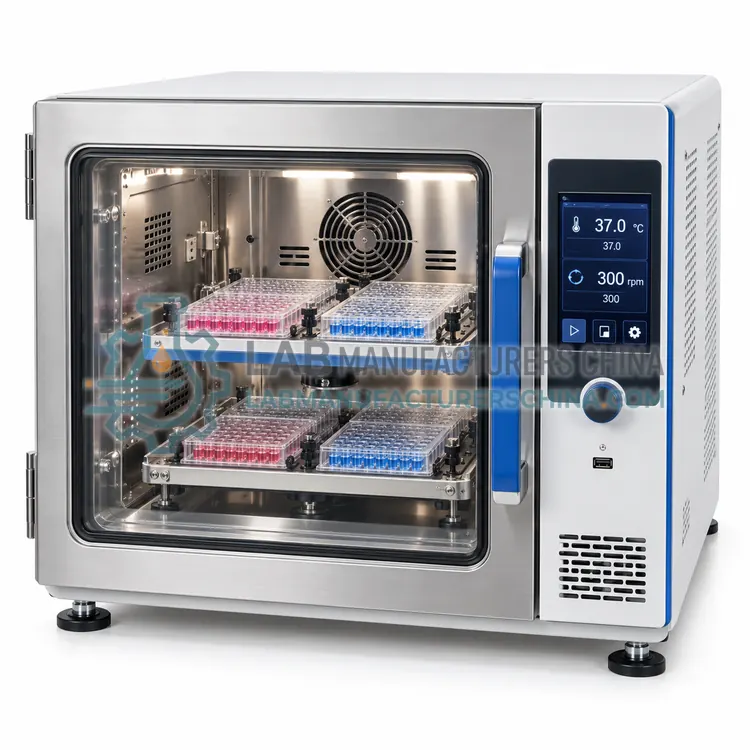
How do Microplate Incubators work?
Microplate incubators maintain a uniform thermal environment around plates. Forced-air designs circulate heated air through the chamber with a fan, heater and a platinum resistance sensor feeding a PID controller, giving uniformity within about plus or minus 0.5 degrees Celsius. Dry-block designs conduct heat from an aluminum block that contacts the plate base, with Peltier elements for heating and cooling. Humidity is generated by a water reservoir or ultrasonic humidifier and monitored by a sensor, preventing evaporation from wells. CO2 incubators add infrared or thermal conductivity sensors and gas solenoid valves to hold 5 percent carbon dioxide for bicarbonate-buffered media. Shaking incubators combine these conditions with orbital motion. Door seals, insulation and heated lids limit gradients and condensation, which otherwise produce edge effects between outer and inner wells.
Which Microplate Incubators variants are available?
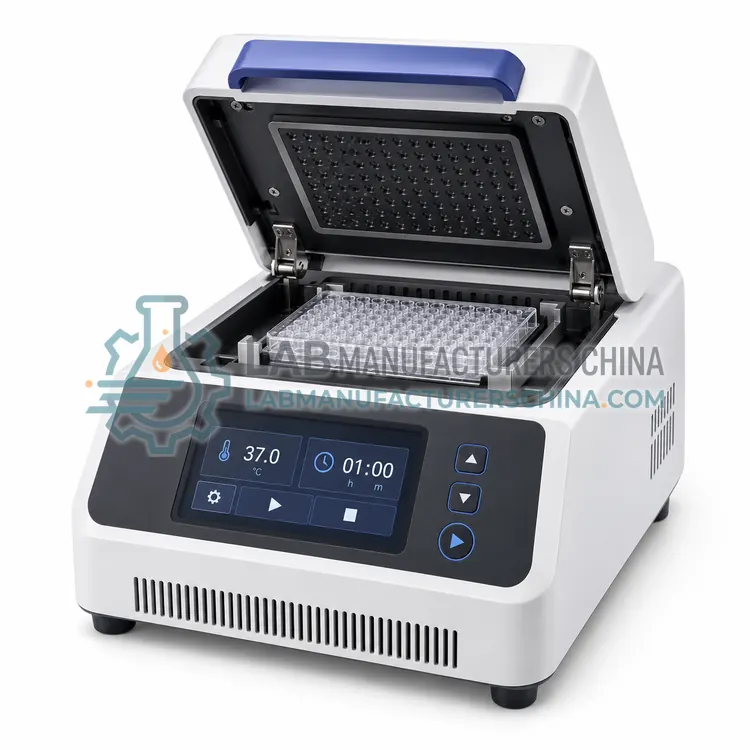
- Dry-Block Microplate Incubator — A dry-block microplate incubator heats plates through direct contact with a thermostatted aluminum block, usually from ambient plus 5 to 80 degrees Celsius.
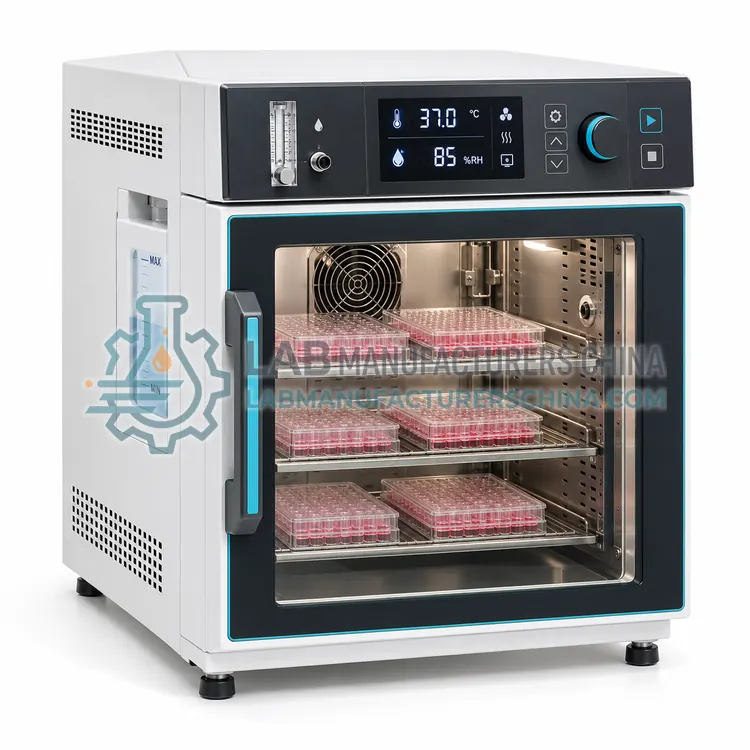
- Forced-Air Microplate Incubator with Humidity Control — A forced-air microplate incubator circulates heated, humidified air around stacked plates, holding 37 degrees Celsius with relative humidity above 80 percent for long ELISA and assay incubations.
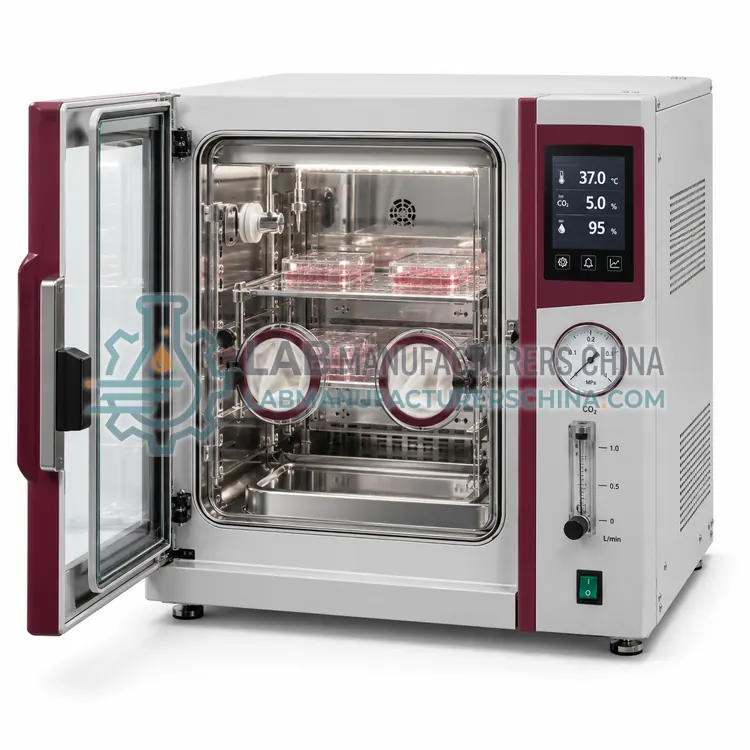
- CO2 Microplate Incubator for Cell-Based Assays — A CO2 microplate incubator holds plates at 37 degrees Celsius, 5 percent carbon dioxide and high humidity, the standard culture environment for mammalian cells.
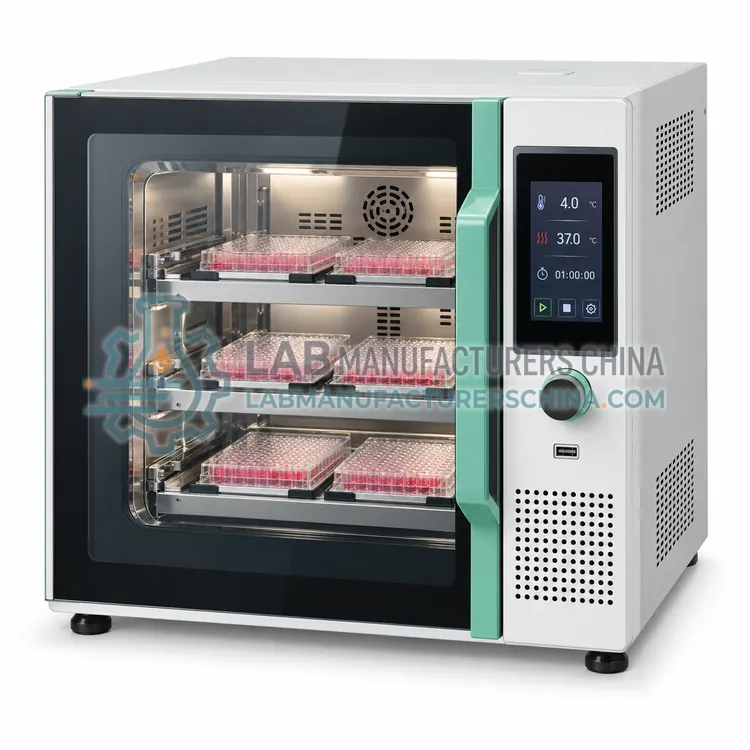
- Refrigerated Microplate Incubator — A refrigerated microplate incubator controls temperature both below and above ambient, typically from 4 to 60 degrees Celsius, to hold plates for cold binding steps, enzyme kinetics and temperature-sensitive assays.
- Shaking Microplate Incubator for Bacterial Culture — A shaking microplate incubator for bacterial culture combines controlled temperature, often 25 to 60 degrees Celsius, with orbital shaking of 500 to 1,200 revolutions per minute to aerate cultures in 96- and deep-well plates.
How do I choose the right variant?
Match the incubator to assay temperature, duration and atmosphere. Dry-block or forced-air models are enough for ELISA and binding steps at 25 to 37 degrees. Use a humidified chamber for long incubations to limit evaporation. Mammalian cell assays need CO2 and humidity control, while bacterial growth may need shaking and temperatures up to 60 degrees. Check capacity in plates, uniformity and recovery time after door opening, plus cooling below ambient for refrigerated incubations. Consider footprint, compatibility with stackers and readers, contamination control features such as HEPA filtration or copper surfaces, data logging and alarms. For regulated laboratories, verify temperature mapping documentation, calibration certificates and audit trail capabilities.
Where are Microplate Incubators used?
Microplate Incubators are specified in ELISA and immunoassay incubation, bacterial growth and susceptibility testing, mammalian cell culture in plates, enzymatic and hybridization incubations, cold incubation of sensitive assays and long-term kinetic incubation.
Which standards and certifications apply?
Work with Microplate Incubators is commonly governed by IEC 61010-1, IEC 61010-2-010, IEC 61326-1, ANSI/SLAS 1-2004 to 4-2004, ISO 13485 (IVD workflows) and EN 12469 (for biosafety-related enclosures, where applicable). Instrument certifications such as CE marking are confirmed per configuration and never assumed.
What are the key considerations before purchase?
Install on a level surface away from drafts, direct sunlight and heat sources, with clearance for ventilation. Map temperature with calibrated probes in loaded and empty conditions at installation and periodically, and record set point drift. Use distilled or deionized water in humidity reservoirs and clean them regularly to prevent microbial growth. Clean interior surfaces with disinfectants compatible with the chamber material, and run sterilization cycles where available. Avoid frequent door openings, and allow recovery time for temperature and CO2. Calibrate CO2 sensors against a reference analyzer, and keep alarms active for unattended runs.