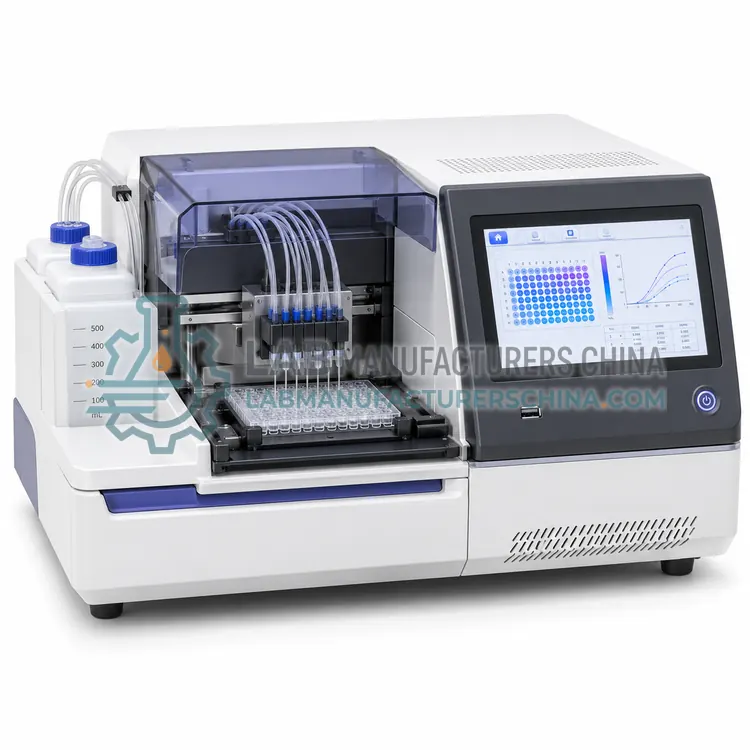
How do Microplate Readers work?
A microplate reader illuminates each well and measures the light that returns. In absorbance mode, a lamp such as a xenon flash source passes light through a filter or monochromator and the well, and a photodiode measures transmitted intensity. Absorbance follows the Beer–Lambert law, so concentration is proportional to optical density. In fluorescence mode, excitation light is directed at the sample and a photomultiplier tube or photodiode measures emission at a longer wavelength through a separate filter path, from the top or bottom of the plate. Luminescence mode uses no excitation and counts photons from chemical or biological light emission. Time-resolved fluorescence adds a delay after excitation to remove short-lived background. Precise plate carriers, path length correction, shaking and temperature control complete the system.
Which Microplate Readers variants are available?
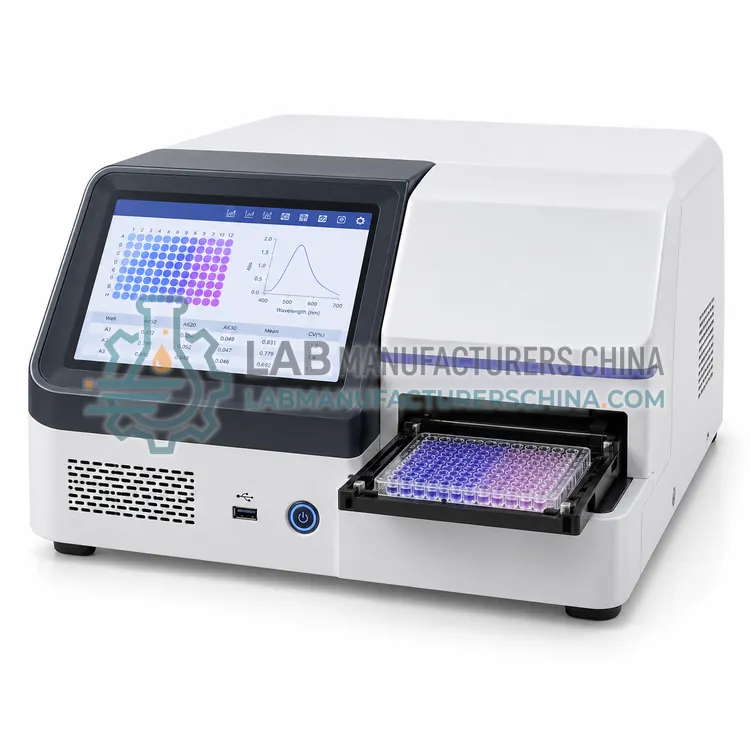
- Absorbance Microplate Reader (ELISA Reader) — An absorbance microplate reader measures optical density in each well at selected wavelengths, usually with interference filters.
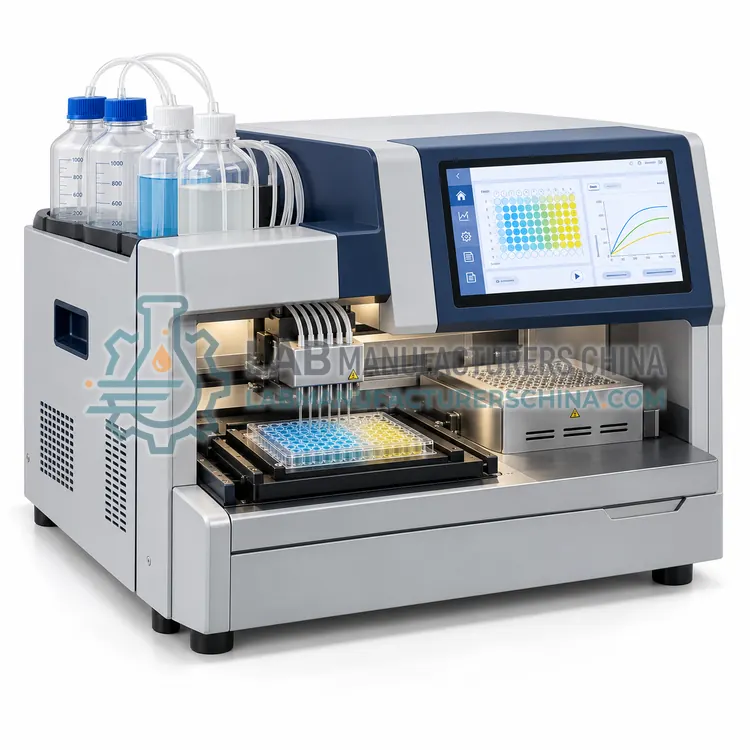
- Filter-Based Multimode Microplate Reader — A filter-based multimode microplate reader combines absorbance, fluorescence intensity and luminescence detection using interchangeable optical filters.
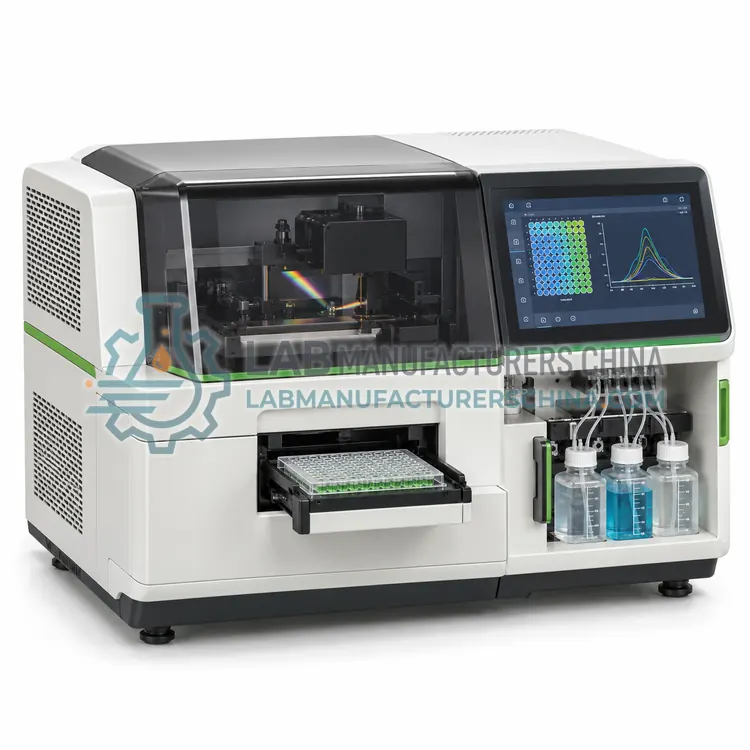
- Monochromator-Based Multimode Microplate Reader — A monochromator-based multimode microplate reader selects excitation and emission wavelengths with gratings rather than fixed filters, allowing spectral scans and any wavelength within range.
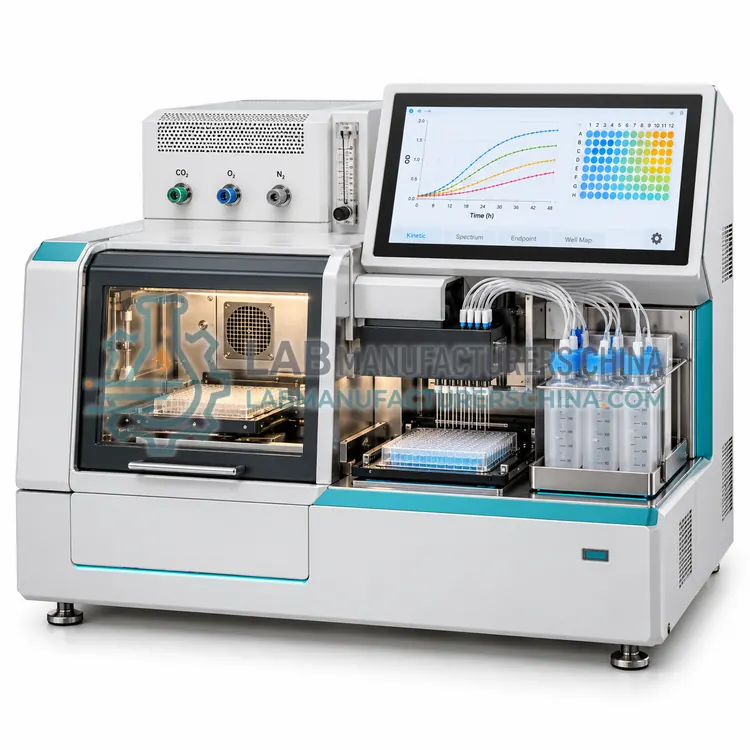
- Microplate Reader with Incubation and Gas Control for Live-Cell Kinetics — A microplate reader with incubation and gas control maintains temperature, carbon dioxide and sometimes oxygen during extended kinetic reads of live cells or growing cultures.
- Microvolume Microplate Reader with Low-Volume Plates — A microvolume microplate reader uses specialized low-volume plates or spot plates to measure absorbance of 2 microliter samples, often from 230 to 750 nanometers.
How do I choose the right variant?
Select a reader by the detection modes you need today and in the next few years. Absorbance-only readers suit routine ELISA and protein assays. Multimode readers add fluorescence, luminescence, time-resolved fluorescence or fluorescence polarization for cell-based and screening assays. Compare sensitivity (for example fluorescein detection limit), dynamic range, and wavelength flexibility between filters and monochromators. Check supported plate formats up to 384 or 1536 wells, read speed per plate, temperature control and shaking for kinetic work, and gas control for live-cell reading. For regulated laboratories, verify software with user management and audit trails. Consider injectors for flash luminescence, imaging readers for cell counting, and whether a stacker interface is needed for automation.
Where are Microplate Readers used?
Microplate Readers are specified in ELISA quantification, cell viability and cytotoxicity assays, enzyme kinetics, nucleic acid and protein quantification, high-throughput compound screening and reporter gene assays.
Which standards and certifications apply?
Work with Microplate Readers is commonly governed by ANSI/SLAS 1-2004 to 4-2004, IEC 61010-1, IEC 61010-2-081, IEC 61326-1, ISO 13485 (IVD use) and 21 CFR Part 11. Instrument certifications such as CE marking are confirmed per configuration and never assumed.
What are the key considerations before purchase?
Place the reader on a vibration-free bench away from direct sunlight and strong electromagnetic sources, and allow the lamp and optics to warm up as specified. Verify absorbance accuracy and linearity with certified filters or standard solutions at installation and at least annually, and check fluorescence sensitivity with a fluorescein dilution series. Keep the plate carrier and optics clean, and replace flash lamps according to flash count. Use plates matched to the mode, for example clear for absorbance, black for fluorescence and white for luminescence. Apply software access control and data integrity features where regulated.