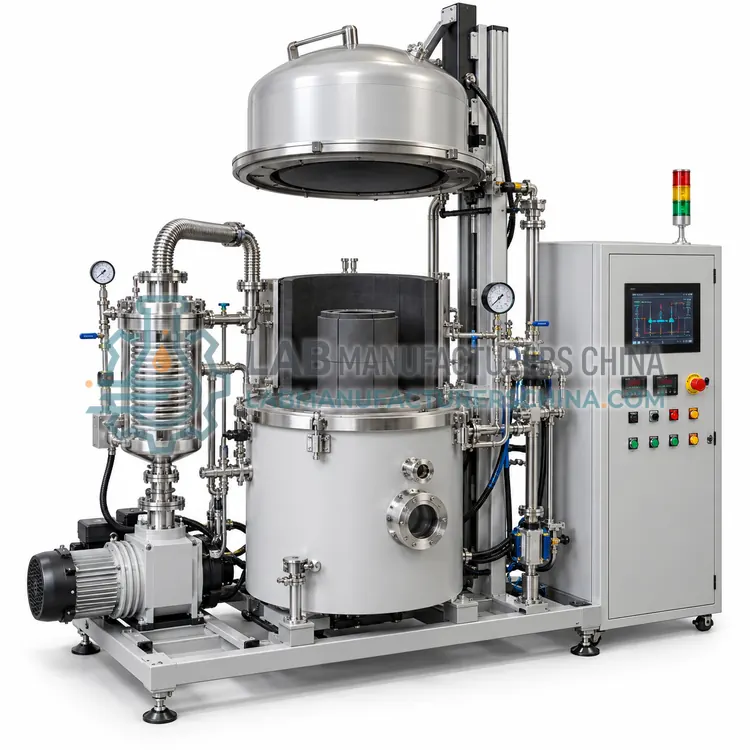
How do Vacuum Furnaces work?
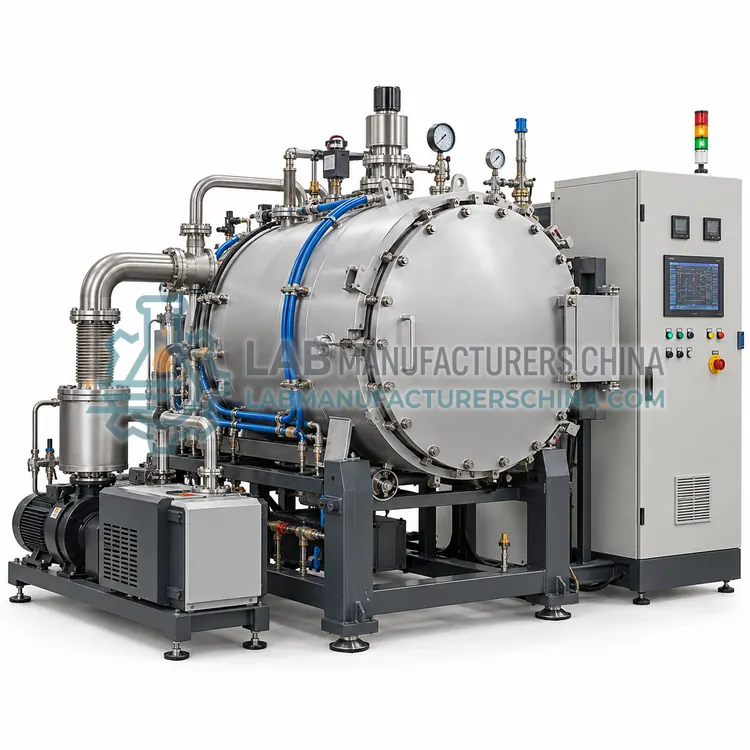
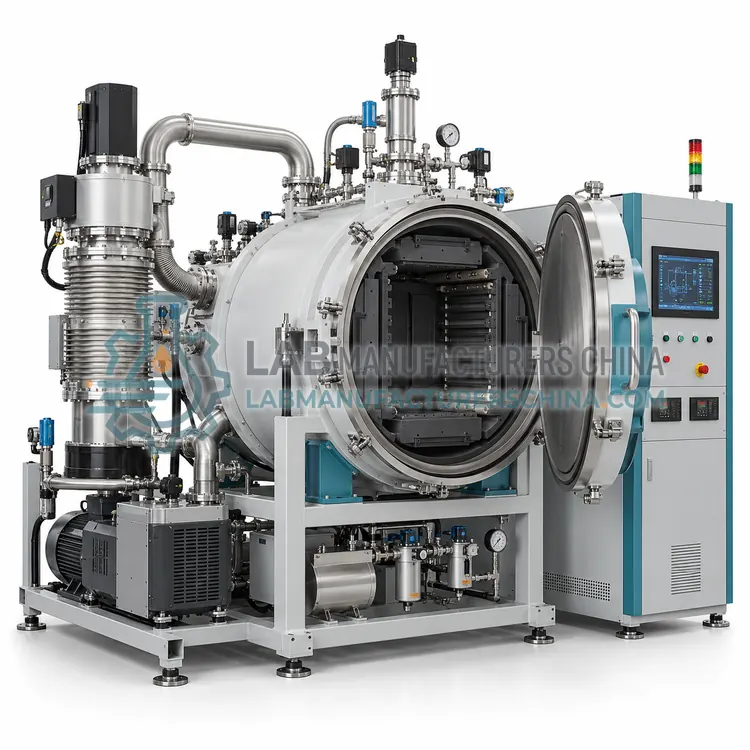
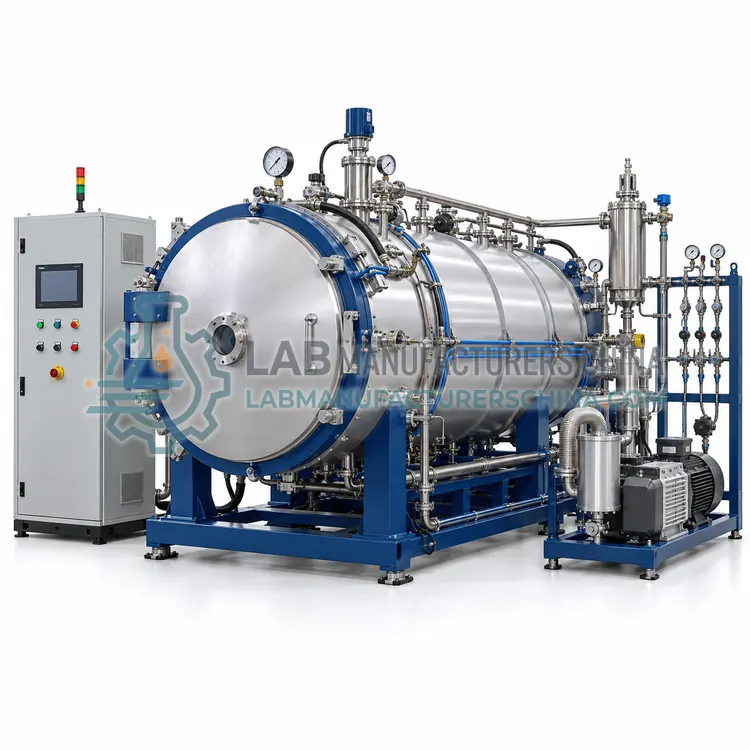
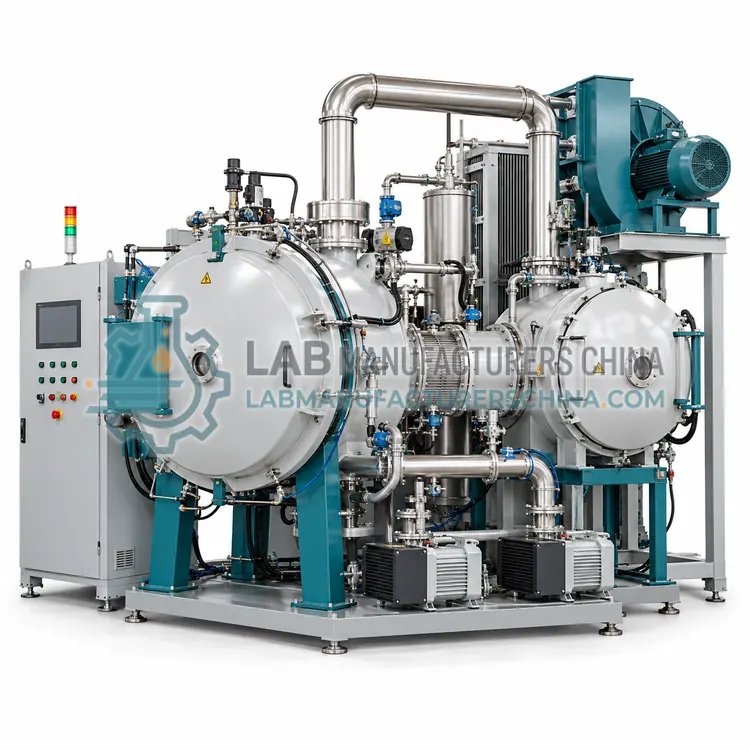
A vacuum furnace removes the chamber atmosphere with a pump system, typically a rotary-vane or dry pump backed by a roots or diffusion pump, down to rough or high vacuum. With oxygen and nitrogen largely removed, heated materials resist oxidation and outgassing, and volatile species leave the surface. Heating comes from graphite, molybdenum or tungsten elements, or from induction coils, arranged around a hot zone insulated with graphite felt or rigid insulation. Radiation is the dominant heat-transfer mode, so loads must have a clear line of sight to the elements. Type C, N or K thermocouples or optical pyrometers measure temperature, and a programmable controller follows the cycle. Gas quenching or backfill ports allow rapid, controlled cooling after the hold.
Which Vacuum Furnaces variants are available?
- Vacuum Heat Treatment Furnace — A vacuum heat treatment furnace hardens, tempers, anneals and solution-treats metals without oxidation, preserving bright surfaces.
- Vacuum Sintering Furnace — A vacuum sintering furnace densifies metal and ceramic powders without oxidation, reaching 1600 to 2200 C in a graphite hot zone.
- Vacuum Brazing Furnace — A vacuum brazing furnace joins metal assemblies with filler metal at 800 to 1200 C without flux.
- Vacuum Quenching Furnace — A vacuum quenching furnace hardens metal and cools it rapidly with high-pressure inert gas instead of oil or water.
- Vacuum Degassing Furnace — A vacuum degassing furnace removes dissolved gases, moisture and volatile impurities from metals and powders.
How do I choose the right variant?
Choose a vacuum furnace when oxidation, contamination or outgassing rules out atmosphere processing, or when surface quality and purity matter. Define the process first: heat treatment, sintering, brazing or degassing, since each sets the temperature, vacuum level and cooling method. Set the hot zone size from load dimensions and weight, and confirm the maximum temperature against the element and insulation materials. Decide on cooling, choosing between gas quenching, backfill with inert gas or slow cooling. Specify pumping stages, leak rate, partial-pressure control and safety features. For regulated heat treatment, require pyrometry compliance and uniformity surveys, and confirm three-phase power and cooling-water supply.
Where are Vacuum Furnaces used?
Vacuum Furnaces are specified in vacuum heat treatment of tool steels, brazing of aerospace components, sintering of hard metals and ceramics, degassing of metals and powders, annealing of reactive metals and additive-manufactured part processing.
Which standards and certifications apply?
Work with Vacuum Furnaces is commonly governed by IEC 61010-1, IEC 60519-1, AMS 2750, AMS 2769 and ISO 9001. Instrument certifications such as CE marking are confirmed per configuration and never assumed.
What are the key considerations before purchase?
Install on a level, rigid floor with services for power, cooling water, compressed gas and compressed air, and provide ventilation for any exhaust and gas relief. Keep cooling water clean and temperature-controlled to protect seals and pumps. Check the furnace for leaks after every opening and before critical runs, since even small leaks oxidize surfaces and spoil vacuum. Clean hot-zone insulation and elements when contamination appears, and replace graphite parts before erosion becomes severe. Maintain pump service records, verify pyrometry and uniformity surveys on schedule, and never bypass over-temperature, water-flow or door interlocks.