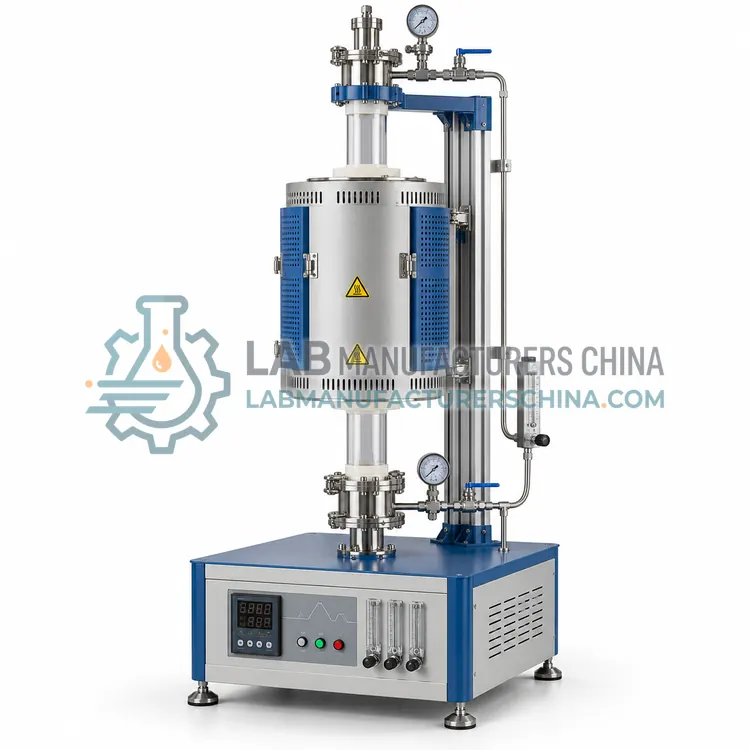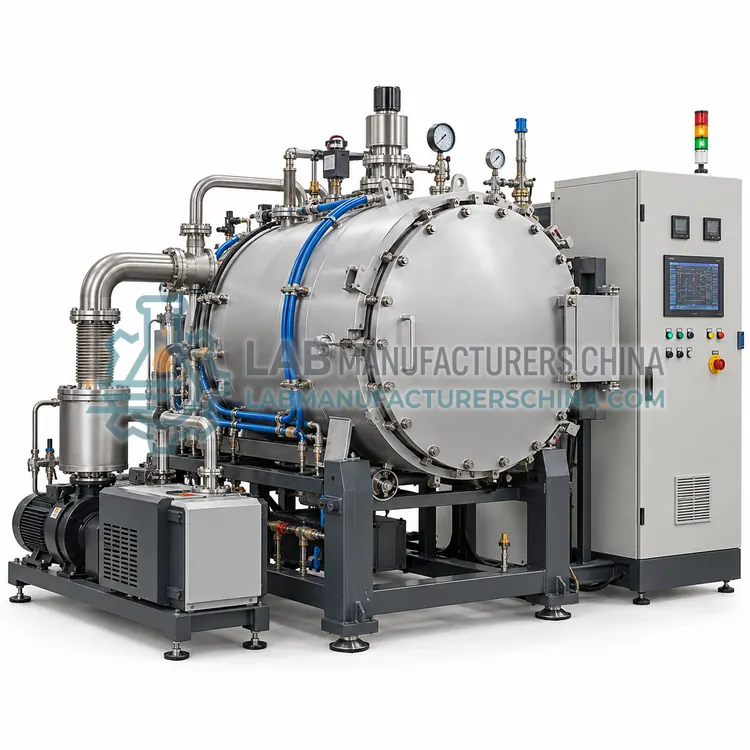
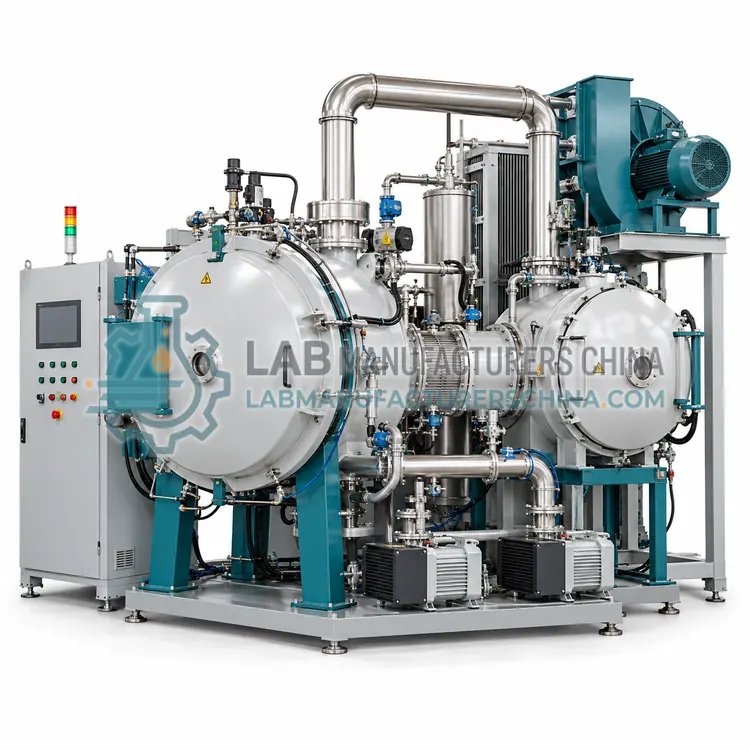
Vacuum Quenching Furnace
真空淬火炉
- SKU VAF-0004
- Vacuum Furnaces
- CE (to be confirmed)
- ISO 9001 manufacturing (to be confirmed)
- RoHS (to be confirmed)
Price on request — FOB / CIF quoted per order
Prices depend on configuration, quantity and destination port.
Key specifications
| Hot zone size | 300×300×450 to 900×900×1200 mm |
|---|---|
| Maximum temperature | 1200–1350 C |
| Working vacuum | 1–100 Pa |
| Quench pressure | 2–20 bar |
| Quench gas | Nitrogen, argon or helium |
| Blower power | 30–200 kW |
Request a quote Download brochure · to be provided
By Lab Manufacturers China Technical TeamLast reviewed Standards: IEC 61010-1, IEC 60519-1, AMS 2750
What is the Vacuum Quenching Furnace?
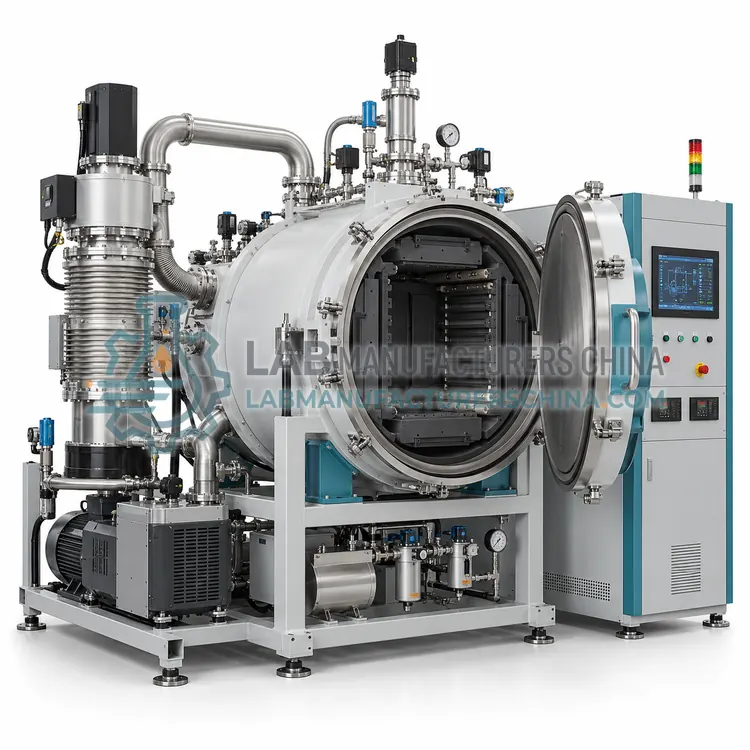
A vacuum quenching furnace hardens metal and cools it rapidly with high-pressure inert gas instead of oil or water. It is chosen for parts that must be hardened without distortion or surface contamination.
What is the Vacuum Quenching Furnace?
A vacuum quenching furnace hardens metal and cools it rapidly with high-pressure inert gas instead of oil or water. It is chosen for parts that must be hardened without distortion or surface contamination.
Overview
The vacuum quenching furnace combines a graphite hot zone and programmable heating with high-pressure gas quenching, typically 2 to 20 bar of nitrogen, argon or helium. After the hold, gas is circulated by a high-speed blower through a water-cooled heat exchanger and back over the load, cooling it at a rate set by pressure and blower speed. Compared with oil quenching, gas quenching leaves no residue, avoids fire risk and reduces distortion, though it may need higher alloy content for full hardness. Vacuum of 1 to 100 Pa is used during heating, with partial pressure to protect elements. Temperature reaches 1200 to 1350 C. It serves gears, dies, bearings and aerospace parts where clean, low-distortion hardening is required.
How does it work?
A vacuum furnace removes the chamber atmosphere with a pump system, typically a rotary-vane or dry pump backed by a roots or diffusion pump, down to rough or high vacuum. With oxygen and nitrogen largely removed, heated materials resist oxidation and outgassing, and volatile species leave the surface. Heating comes from graphite, molybdenum or tungsten elements, or from induction coils, arranged around a hot zone insulated with graphite felt or rigid insulation. Radiation is the dominant heat-transfer mode, so loads must have a clear line of sight to the elements. Type C, N or K thermocouples or optical pyrometers measure temperature, and a programmable controller follows the cycle. Gas quenching or backfill ports allow rapid, controlled cooling after the hold.
What are the key features?
- High-pressure gas quenching from 2 to 20 bar
- Water-cooled heat exchanger in the gas circuit
- Graphite hot zone with programmable control
- Partial-pressure control during heating
- No oil residue or fire risk
- Low distortion compared with liquid quenching
What are the technical specifications?
A typical vacuum quenching furnace configuration offers hot zone size of 300×300×450 to 900×900×1200 mm, maximum temperature of 1200–1350 C, working vacuum of 1–100 Pa, quench pressure of 2–20 bar, quench gas of Nitrogen, argon or helium and blower power of 30–200 kW. Values are indicative of the product class; the exact figures for each configuration are confirmed on the quotation and the calibration documents supplied with the instrument.
Which applications is it used for?
The Vacuum Quenching Furnace is used in gear and shaft hardening, die and mold hardening, bearing component hardening, aerospace component hardening and low-distortion tooling. Across the wider Vacuum Furnaces class, laboratories also deploy it for vacuum heat treatment of tool steels, brazing of aerospace components and sintering of hard metals and ceramics.
Which standards and certifications apply?
Relevant standards and methods include IEC 61010-1, IEC 60519-1, AMS 2750, AMS 2769 and ISO 9001. Certification candidates for this model are CE, ISO 9001 manufacturing and RoHS; each is to be confirmed for the specific configuration before shipment, and certificates are supplied only where they have been issued.
Install on a level, rigid floor with services for power, cooling water, compressed gas and compressed air, and provide ventilation for any exhaust and gas relief. Keep cooling water clean and temperature-controlled to protect seals and pumps. Check the furnace for leaks after every opening and before critical runs, since even small leaks oxidize surfaces and spoil vacuum. Clean hot-zone insulation and elements when contamination appears, and replace graphite parts before erosion becomes severe. Maintain pump service records, verify pyrometry and uniformity surveys on schedule, and never bypass over-temperature, water-flow or door interlocks.
How do I select the right Vacuum Quenching Furnace?
Select the vacuum quenching furnace when parts must be hardened without oil residue or excessive distortion, and when cooling rate can be matched by gas pressure. Oil quenching remains cheaper where very fast cooling is essential. In the RFQ, specify load mass and geometry, quench pressure, gas type, cooling-rate target and uniformity needs.
How does it compare with other Vacuum Furnaces variants?
Choose a vacuum furnace when oxidation, contamination or outgassing rules out atmosphere processing, or when surface quality and purity matter. Define the process first: heat treatment, sintering, brazing or degassing, since each sets the temperature, vacuum level and cooling method. Set the hot zone size from load dimensions and weight, and confirm the maximum temperature against the element and insulation materials. Decide on cooling, choosing between gas quenching, backfill with inert gas or slow cooling. Specify pumping stages, leak rate, partial-pressure control and safety features. For regulated heat treatment, require pyrometry compliance and uniformity surveys, and confirm three-phase power and cooling-water supply.
Full specifications
| Hot zone size | 300×300×450 to 900×900×1200 mm |
|---|---|
| Maximum temperature | 1200–1350 C |
| Working vacuum | 1–100 Pa |
| Quench pressure | 2–20 bar |
| Quench gas | Nitrogen, argon or helium |
| Blower power | 30–200 kW |
| Temperature uniformity | ±5–10 C |
| Cooling rate | Up to 15 C/s depending on load |
| Heating power | 40–180 kW |
| Power supply | 380 V, 3-phase, 50/60 Hz |
Indicative values for this product class. Final specifications are confirmed on the quotation and in the calibration documents supplied with the instrument.
Applications
- Gear and shaft hardening
- Die and mold hardening
- Bearing component hardening
- Aerospace component hardening
- Low-distortion tooling
Key features
- High-pressure gas quenching from 2 to 20 bar
- Water-cooled heat exchanger in the gas circuit
- Graphite hot zone with programmable control
- Partial-pressure control during heating
- No oil residue or fire risk
- Low distortion compared with liquid quenching
Frequently asked questions about Vacuum Quenching Furnace
Gas quenching with inert gas under pressure leaves no residue, eliminates fire and fume risk, and reduces distortion, but cools more slowly than oil. Faster-hardening alloys may be needed, and pressure and blower speed control the achievable rate.
The quench-gas pressure, its heat capacity and velocity over the load, and the blower and heat-exchanger capacity. Helium cools faster than nitrogen, and higher pressure with faster circulation increases the rate, but load mass and geometry also strongly affect results.
Not all. Steels with high hardenability respond well, while low-hardenability grades may need liquid quenching to reach full hardness. The material's continuous-cooling diagram should be compared with the furnace's achievable cooling rate before selecting it.
It heat-treats, sinters, brazes and degasses metals and ceramics in a sealed chamber at low pressure, avoiding oxidation and contamination. It is used for tool steels, aerospace components, hard metals and reactive metals where clean surfaces and controlled atmospheres are essential.
Rough vacuum of about 1 to 100 Pa suits many heat treatments, while sintering and brazing may use 0.001 to 0.1 Pa. Partial-pressure control with inert gas is often used to limit element evaporation and alloying-element loss at high temperature.
After the hold, inert gas such as argon or nitrogen is admitted and circulated by a high-speed blower through a heat exchanger, cooling the load at a controlled rate. The available quenching pressure, often 2 to 10 bar, sets the maximum cooling rate.
Related models