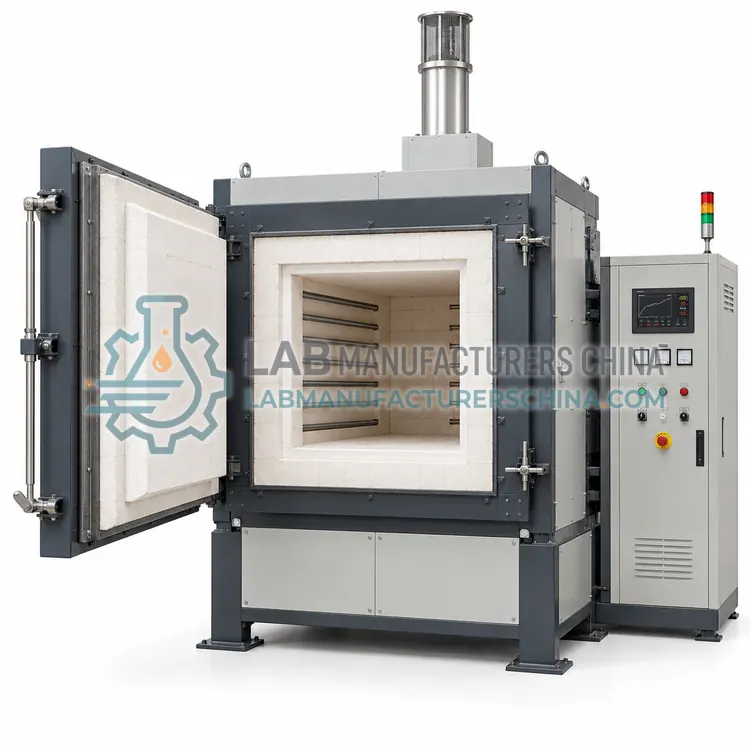
How do Muffle Furnaces work?
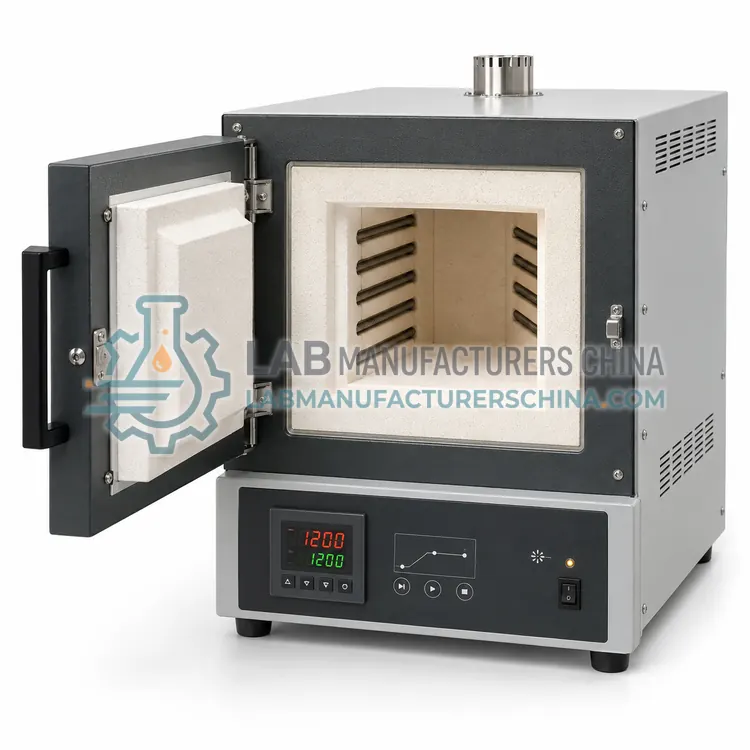
A muffle furnace places the sample in an insulated box chamber while heating elements, usually resistance wire, silicon carbide rods or molybdenum disilicide, are mounted in the walls or surrounds. Heat reaches the crucible mainly by radiation and conduction, and the muffle isolates the sample from direct element contact and from combustion products. Ceramic fiber or insulating firebrick lines the chamber, and a thermocouple, commonly type K, S or B, measures temperature. A PID or SCR controller follows a setpoint or a programmed ramp and soak profile, and an over-temperature protector guards the elements and chamber. A hinged or vertical-lift door with a heat-resistant gasket limits heat loss. Some models add gas inlets or exhaust ports for combustion products.
Which Muffle Furnaces variants are available?
- Benchtop Muffle Furnace — A benchtop muffle furnace is a compact box chamber of one to eight liters for small ashing, ignition and heat-treatment jobs.
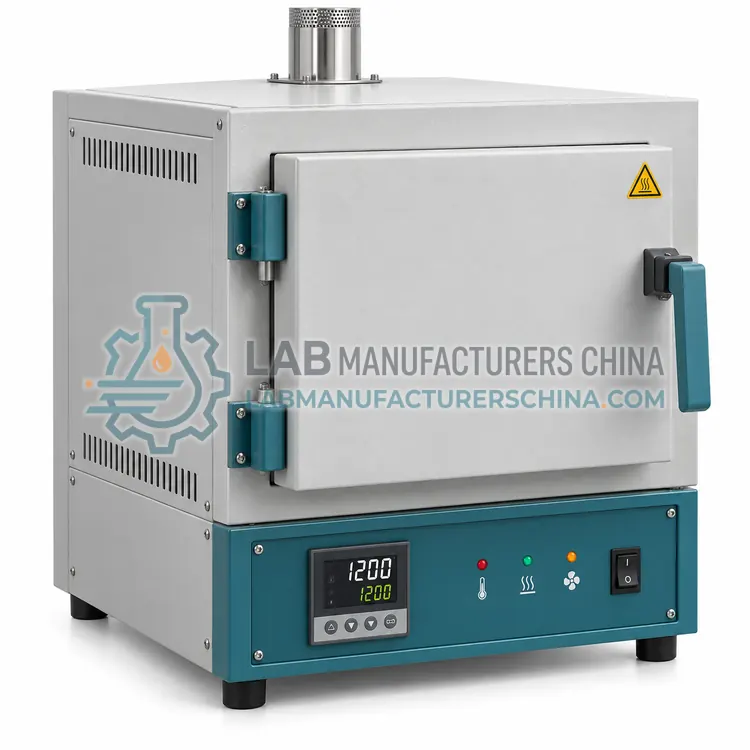
- Box-Type Muffle Furnace — A box-type muffle furnace is a larger rectangular chamber of eight to thirty liters that holds multiple crucibles or trays.
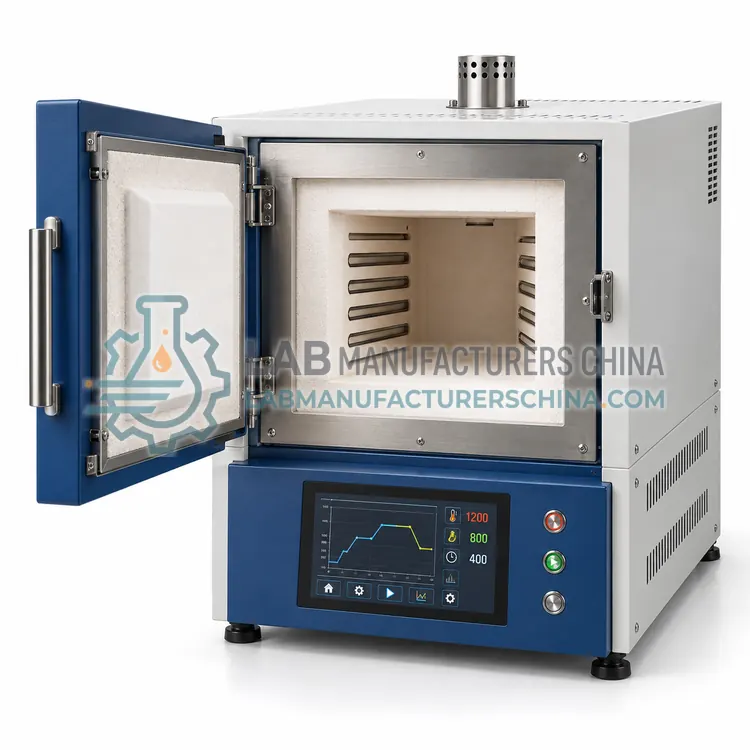
- Programmable Muffle Furnace — A programmable muffle furnace follows stored ramp and soak profiles so heating cycles can be repeated and documented.
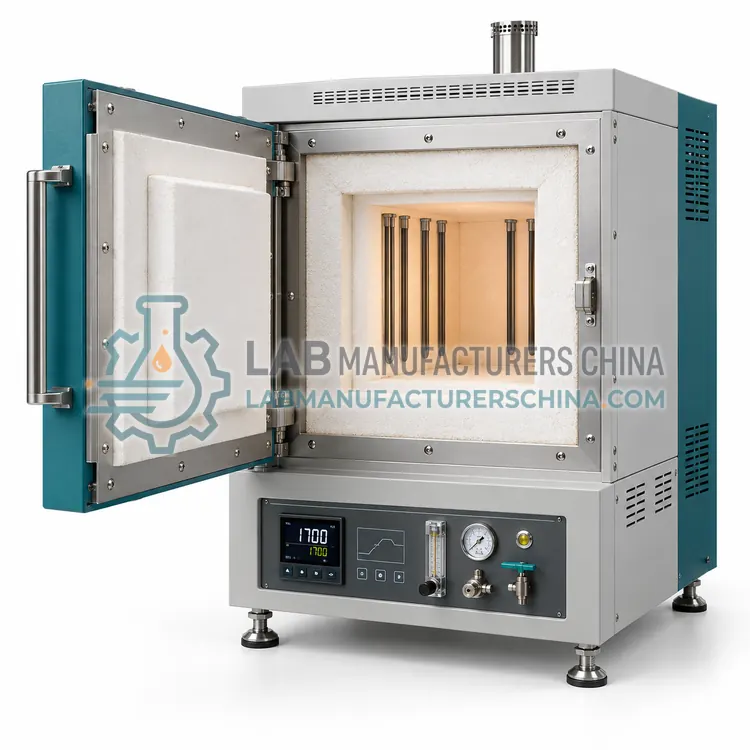
- High-Temperature Muffle Furnace — A high-temperature muffle furnace reaches 1600 to 1800 C using molybdenum disilicide elements and dense insulation.
- Large-Capacity Muffle Furnace — A large-capacity muffle furnace offers a box chamber of 30 to 100 liters for bulk ashing, multiple trays and production support.
How do I choose the right variant?
Choose a muffle furnace for box-shaped loads, crucibles and routine ashing or heat treatment. Set the maximum temperature with margin above the working setpoint, because element and insulation cost rise steeply with temperature. Match chamber volume to crucible count and sample size, and confirm that the door opening accepts your largest crucible. Decide between a fixed-setpoint and a programmable controller, and choose the thermocouple type for the range. Specify insulation grade, heating-element material, ramp rate and safety protection. For regulated ashing, require uniformity data and calibration ports. Confirm power supply, bench or floor placement and any gas or exhaust connection.
Where are Muffle Furnaces used?
Muffle Furnaces are specified in ash content determination, residue on ignition, loss on ignition of minerals, sintering of ceramics and powders, heat treatment of metals and glass and catalyst calcination.
Which standards and certifications apply?
Work with Muffle Furnaces is commonly governed by IEC 61010-1, IEC 61010-2-010, DIN 17052-1, ASTM D3174, USP <281> and ISO 9001. Instrument certifications such as CE marking are confirmed per configuration and never assumed.
What are the key considerations before purchase?
Place the furnace on a heat-resistant, non-combustible surface with at least 30 cm clearance, and provide extraction for combustion gases. Never open the door at full temperature, since thermal shock damages the lining and can eject hot material. Use crucibles rated for the temperature and avoid overloading, which reduces uniformity. Allow a slow, programmed warm-up, especially after a new lining is installed, and replace thermocouples and elements on condition or schedule. Calibrate with a reference thermocouple at defined intervals and record results. Keep the chamber free of spills, which attack the lining, and store the furnace dry to protect insulation.