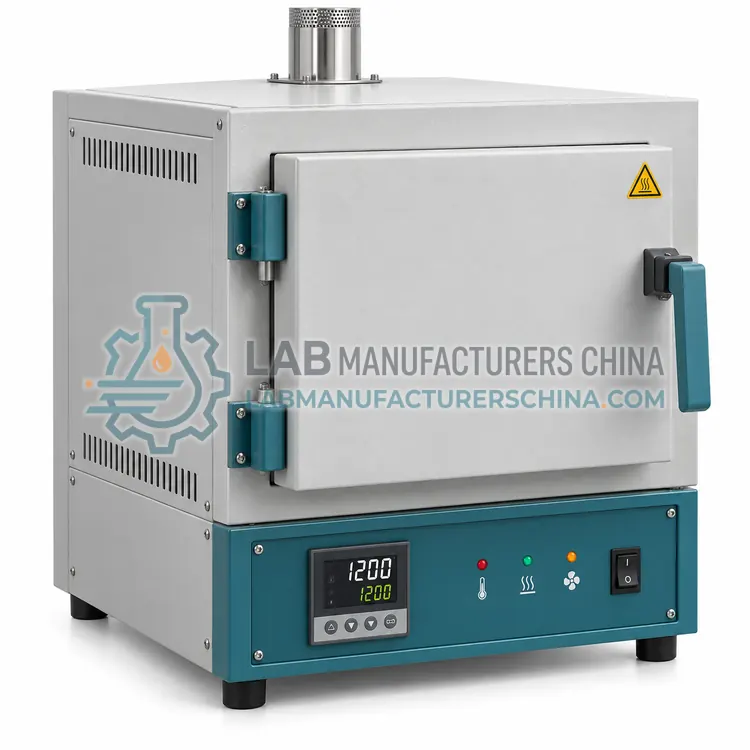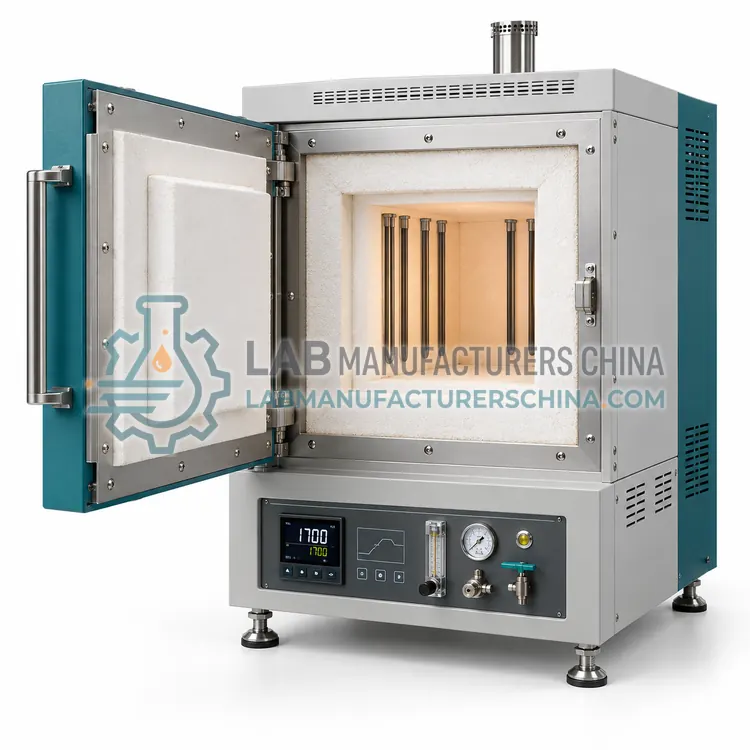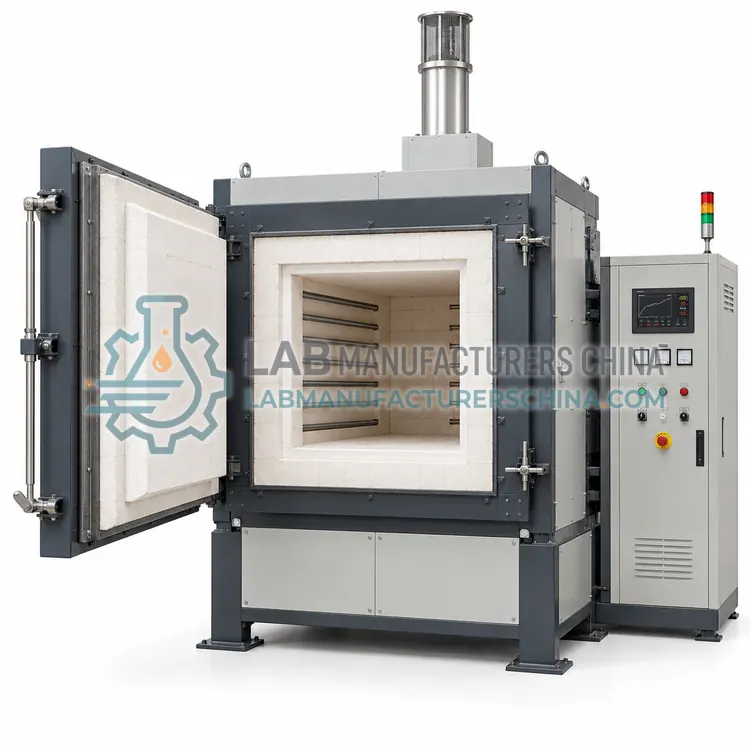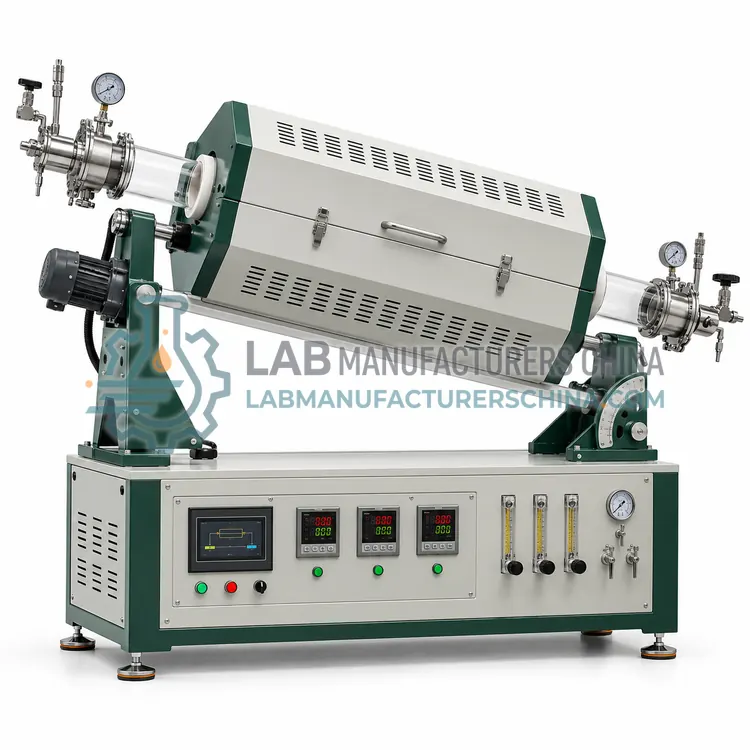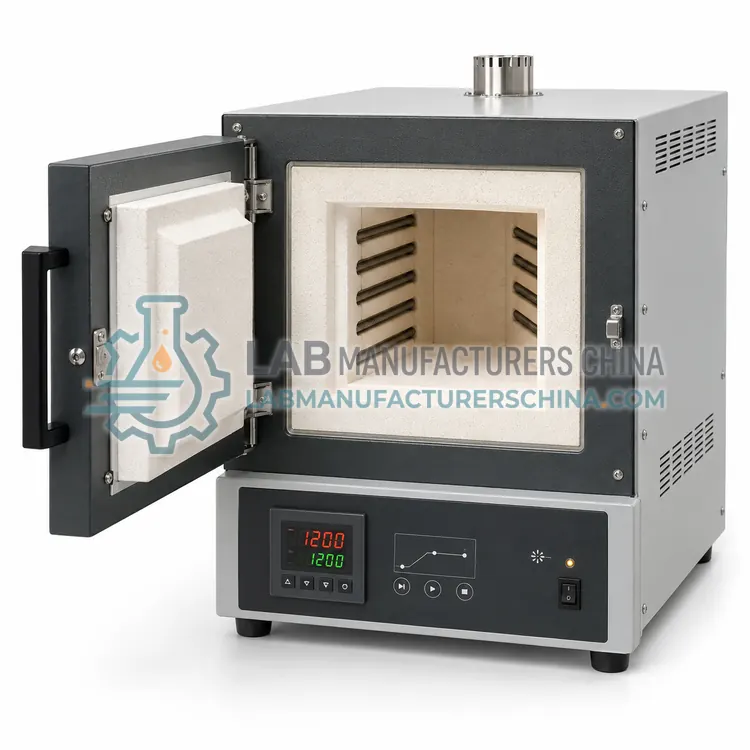
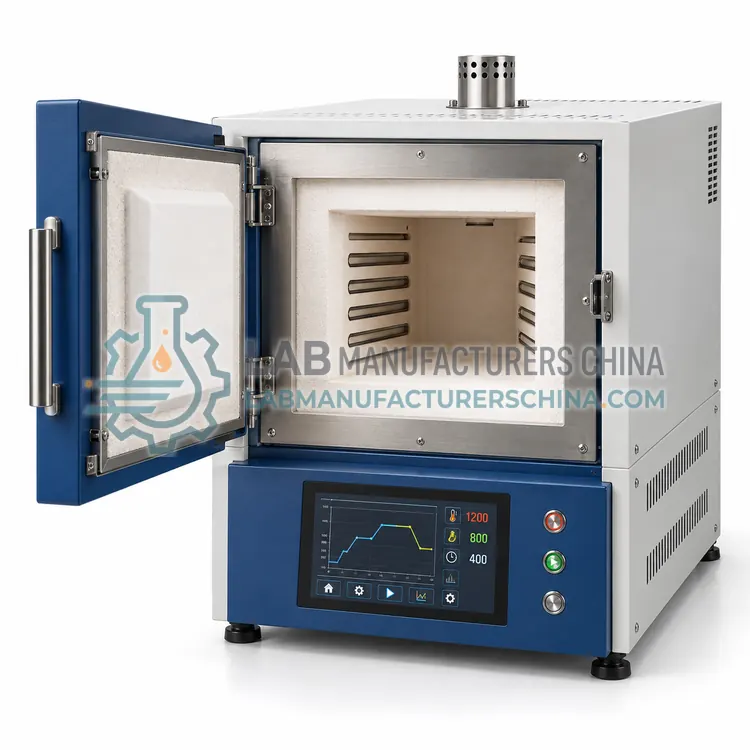
Programmable Muffle Furnace
可编程马弗炉
- SKU MUF-0003
- Muffle Furnaces
- CE (to be confirmed)
- ISO 9001 manufacturing (to be confirmed)
- RoHS (to be confirmed)
Price on request — FOB / CIF quoted per order
Prices depend on configuration, quantity and destination port.
Key specifications
| Chamber volume | 3–30 L |
|---|---|
| Temperature range | RT to 1400 C |
| Programs | 10–30 |
| Segments per program | Up to 30 |
| Ramp rate | 0.1–10 C/min |
| Temperature uniformity | ±5–8 C |
Request a quote Download brochure · to be provided
By Lab Manufacturers China Technical TeamLast reviewed Standards: IEC 61010-1, IEC 61010-2-010, DIN 17052-1
What is the Programmable Muffle Furnace?
A programmable muffle furnace follows stored ramp and soak profiles so heating cycles can be repeated and documented. It is chosen when a defined ashing or sintering program must be reproduced across samples and operators.
What is the Programmable Muffle Furnace?
A programmable muffle furnace follows stored ramp and soak profiles so heating cycles can be repeated and documented. It is chosen when a defined ashing or sintering program must be reproduced across samples and operators.
Overview
This furnace adds a multi-segment controller to the muffle chamber, storing 10 to 30 programs of ramp, soak and cool steps with individual setpoints and durations. Controlled heating rates protect elements and lining from thermal shock and make results comparable between runs. Data logging records the profile with timestamps through RS-485, USB or Ethernet for validation and traceability, and real-time curves appear on the display. Chambers run 3 to 30 liters, reaching 1200 to 1400 C with uniformity of plus or minus 5 to 8 C. The controller can hold a stage until a set time elapses, and some models switch cooling fans. It suits regulated ashing methods, sintering schedules and research work needing reproducibility.
How does it work?
A muffle furnace places the sample in an insulated box chamber while heating elements, usually resistance wire, silicon carbide rods or molybdenum disilicide, are mounted in the walls or surrounds. Heat reaches the crucible mainly by radiation and conduction, and the muffle isolates the sample from direct element contact and from combustion products. Ceramic fiber or insulating firebrick lines the chamber, and a thermocouple, commonly type K, S or B, measures temperature. A PID or SCR controller follows a setpoint or a programmed ramp and soak profile, and an over-temperature protector guards the elements and chamber. A hinged or vertical-lift door with a heat-resistant gasket limits heat loss. Some models add gas inlets or exhaust ports for combustion products.
What are the key features?
- Multi-segment controller with 10 to 30 programs
- Controlled ramp, soak and cool steps
- Data logging with RS-485, USB or Ethernet
- Real-time and historical curve display
- Type K or S thermocouple with over-temperature limit
- Switchable cooling fan on some models
What are the technical specifications?
A typical programmable muffle furnace configuration offers chamber volume of 3–30 L, temperature range of RT to 1400 C, programs of 10–30, segments per program of Up to 30, ramp rate of 0.1–10 C/min and temperature uniformity of ±5–8 C. Values are indicative of the product class; the exact figures for each configuration are confirmed on the quotation and the calibration documents supplied with the instrument.
Which applications is it used for?
The Programmable Muffle Furnace is used in regulated ashing methods, programmed sintering schedules, loss on ignition procedures and materials research heat cycles. Across the wider Muffle Furnaces class, laboratories also deploy it for ash content determination, residue on ignition and loss on ignition of minerals.
Which standards and certifications apply?
Relevant standards and methods include IEC 61010-1, IEC 61010-2-010, DIN 17052-1, ASTM D3174, USP <281> and ISO 9001. Certification candidates for this model are CE, ISO 9001 manufacturing and RoHS; each is to be confirmed for the specific configuration before shipment, and certificates are supplied only where they have been issued.
Place the furnace on a heat-resistant, non-combustible surface with at least 30 cm clearance, and provide extraction for combustion gases. Never open the door at full temperature, since thermal shock damages the lining and can eject hot material. Use crucibles rated for the temperature and avoid overloading, which reduces uniformity. Allow a slow, programmed warm-up, especially after a new lining is installed, and replace thermocouples and elements on condition or schedule. Calibrate with a reference thermocouple at defined intervals and record results. Keep the chamber free of spills, which attack the lining, and store the furnace dry to protect insulation.
How do I select the right Programmable Muffle Furnace?
Select the programmable furnace when methods define heating rates and hold times that must be reproduced and recorded. Fixed-setpoint furnaces suffice for steady ashing. In the RFQ, specify programs and segments, ramp range, data interface, record format and thermocouple type.
How does it compare with other Muffle Furnaces variants?
Choose a muffle furnace for box-shaped loads, crucibles and routine ashing or heat treatment. Set the maximum temperature with margin above the working setpoint, because element and insulation cost rise steeply with temperature. Match chamber volume to crucible count and sample size, and confirm that the door opening accepts your largest crucible. Decide between a fixed-setpoint and a programmable controller, and choose the thermocouple type for the range. Specify insulation grade, heating-element material, ramp rate and safety protection. For regulated ashing, require uniformity data and calibration ports. Confirm power supply, bench or floor placement and any gas or exhaust connection.
Full specifications
| Chamber volume | 3–30 L |
|---|---|
| Temperature range | RT to 1400 C |
| Programs | 10–30 |
| Segments per program | Up to 30 |
| Ramp rate | 0.1–10 C/min |
| Temperature uniformity | ±5–8 C |
| Data interface | RS-485, USB or Ethernet |
| Heating power | 2–12 kW |
| Thermocouple type | Type K or S |
| Power supply | 220/380 V, 50/60 Hz |
Indicative values for this product class. Final specifications are confirmed on the quotation and in the calibration documents supplied with the instrument.
Applications
- Regulated ashing methods
- Programmed sintering schedules
- Loss on ignition procedures
- Materials research heat cycles
Key features
- Multi-segment controller with 10 to 30 programs
- Controlled ramp, soak and cool steps
- Data logging with RS-485, USB or Ethernet
- Real-time and historical curve display
- Type K or S thermocouple with over-temperature limit
- Switchable cooling fan on some models
Frequently asked questions about Programmable Muffle Furnace
It reproduces a defined heating history, prevents thermal shock and removes operator-to-operator variation. Methods can specify ramp rates and hold times, and the furnace executes them identically each run, which supports validation and troubleshooting.
Yes. Most models record setpoint and actual temperature with timestamps and export CSV or text through RS-485, USB or Ethernet. These records support validation and traceability but the logging system itself must be controlled where data integrity rules apply.
Not usually. A fixed-setpoint furnace with an over-temperature limiter is cheaper and adequate for constant-temperature ashing. Programmable control matters when the method specifies ramp rates or when records are required.
It heats samples in a box chamber to 1000 to 1800 C for ash and residue determination, ignition tests, sintering, calcination and heat treatment. The muffle keeps samples separated from heating elements, protecting both the sample and the elements.
Typically 30 to 60 minutes from room temperature depending on chamber volume and element power. Larger and higher-temperature furnaces take longer. A programmed ramp is recommended to protect elements and lining from thermal stress.
Use porcelain or quartz crucibles for general ashing and ignition, alumina crucibles above about 1200 C, and platinum crucibles for demanding fusion work. The crucible must tolerate the working temperature and not react with the sample or atmosphere.
Related models