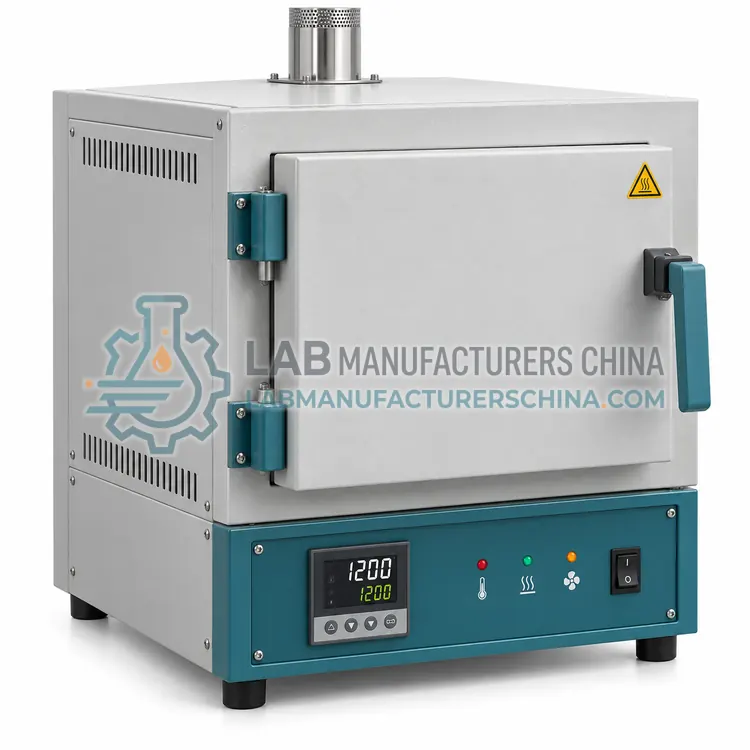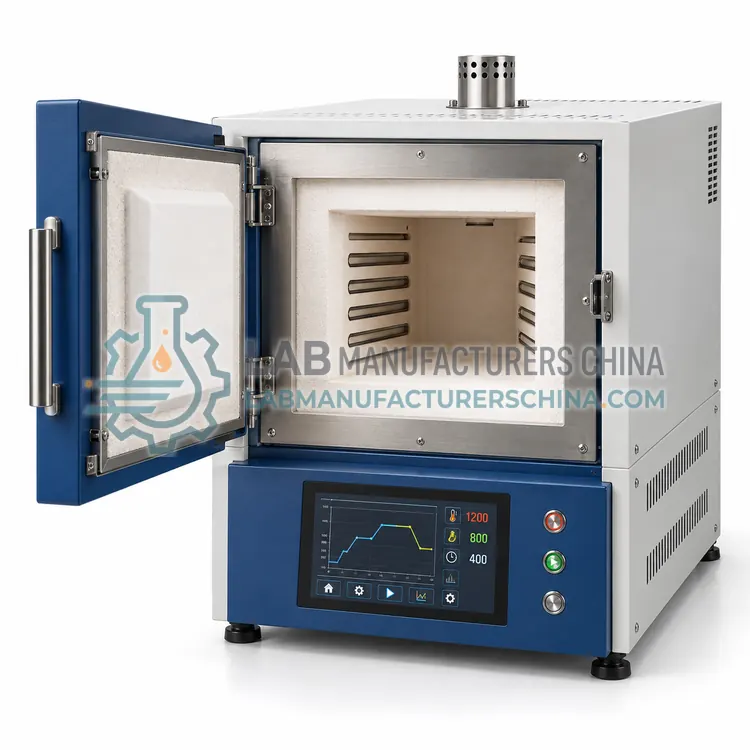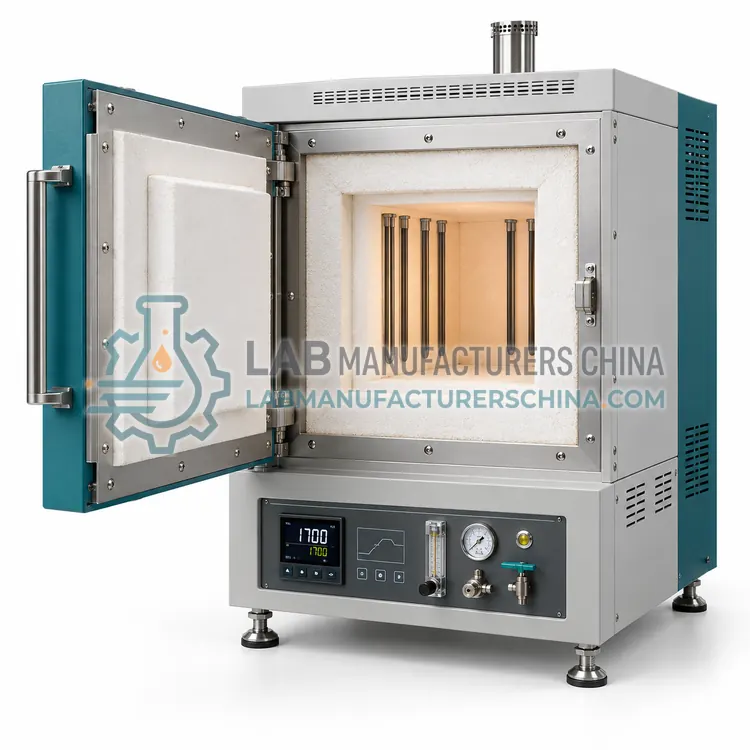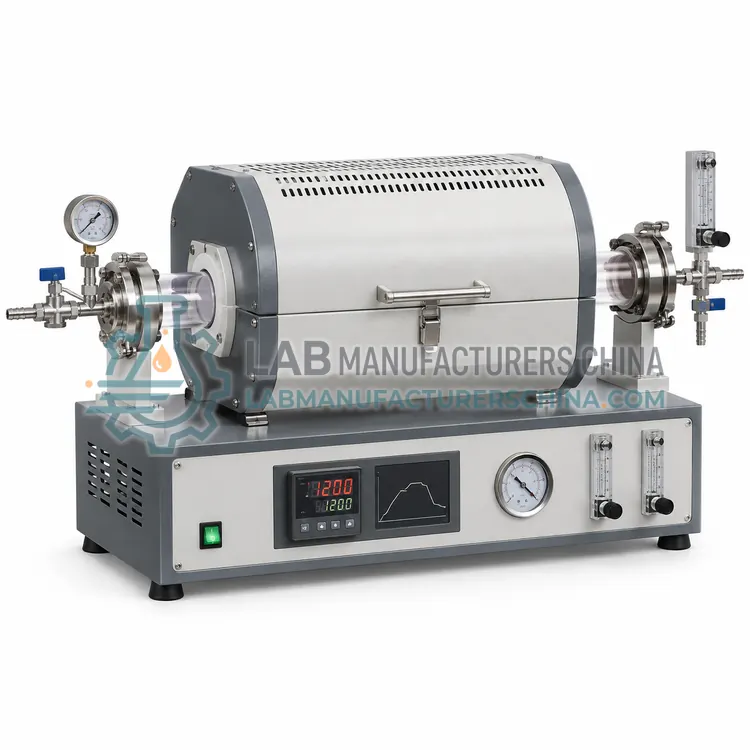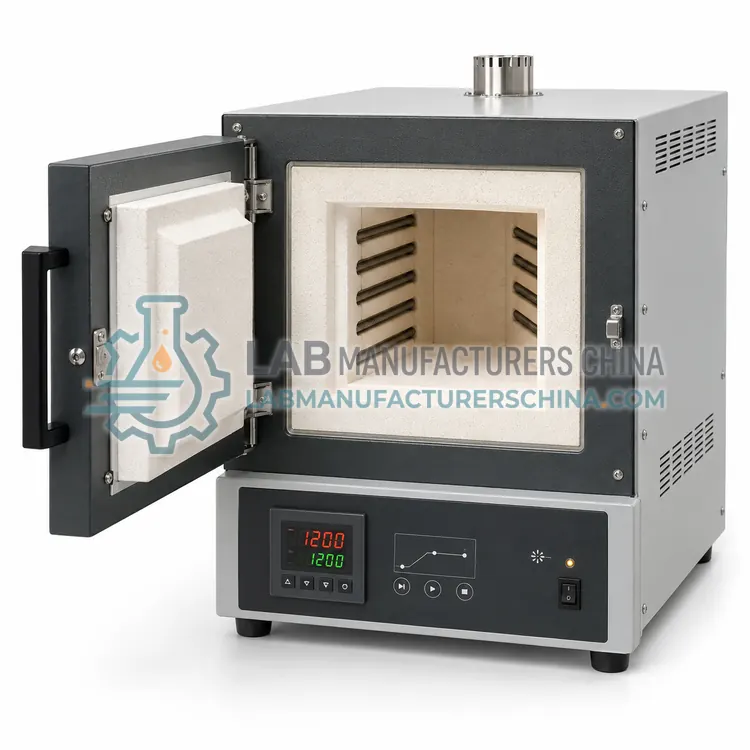
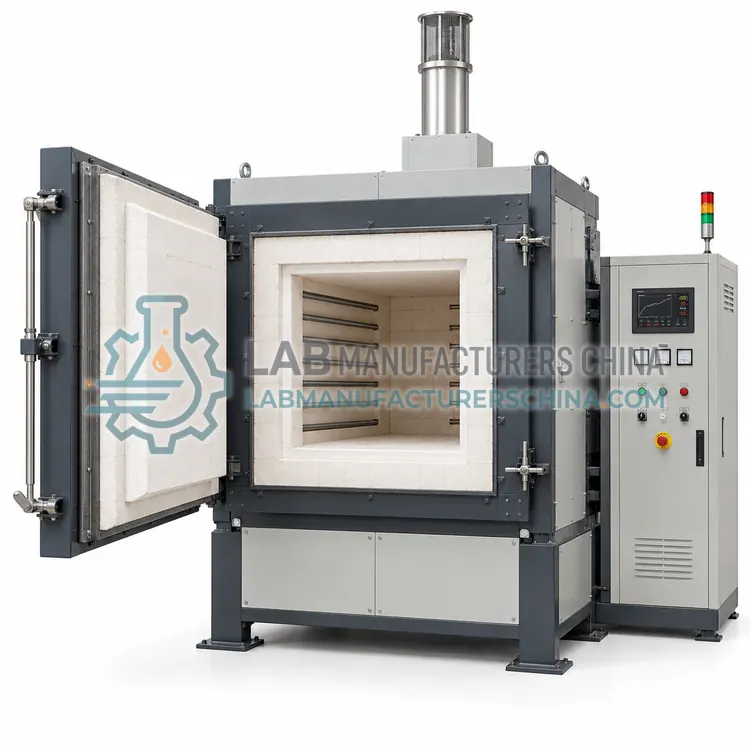
Large-Capacity Muffle Furnace
大容量马弗炉
- SKU MUF-0005
- Muffle Furnaces
- CE (to be confirmed)
- ISO 9001 manufacturing (to be confirmed)
- RoHS (to be confirmed)
Price on request — FOB / CIF quoted per order
Prices depend on configuration, quantity and destination port.
Key specifications
| Chamber volume | 30–100+ L |
|---|---|
| Temperature range | RT to 1400 C |
| Temperature uniformity | ±8–15 C |
| Zone control | 1–3 zones |
| Heating element | Silicon carbide or resistance wire |
| Heating power | 12–40 kW |
Request a quote Download brochure · to be provided
By Lab Manufacturers China Technical TeamLast reviewed Standards: IEC 61010-1, IEC 61010-2-010, DIN 17052-1
What is the Large-Capacity Muffle Furnace?
A large-capacity muffle furnace offers a box chamber of 30 to 100 liters for bulk ashing, multiple trays and production support. It is chosen when high throughput outweighs the cost of size and power.
What is the Large-Capacity Muffle Furnace?
A large-capacity muffle furnace offers a box chamber of 30 to 100 liters for bulk ashing, multiple trays and production support. It is chosen when high throughput outweighs the cost of size and power.
Overview
This furnace scales the box chamber to 30 to 100 liters or more, often floor standing with a wide door and a hearth that accepts trays or carts. Multiple element banks and zones with separate thermocouples hold uniformity across the large volume, though gradients widen near the walls and door. Temperature typically reaches 1200 to 1400 C, and heating power runs 12 to 40 kW on three-phase supply. A programmable controller handles ramp and soak profiles, and extraction removes combustion gases. Load handling may use trolleys or refractory shelves. It serves analytical laboratories processing many samples, ceramics and refractories work, and pilot-scale heat treatment where a small furnace would need too many cycles.
How does it work?
A muffle furnace places the sample in an insulated box chamber while heating elements, usually resistance wire, silicon carbide rods or molybdenum disilicide, are mounted in the walls or surrounds. Heat reaches the crucible mainly by radiation and conduction, and the muffle isolates the sample from direct element contact and from combustion products. Ceramic fiber or insulating firebrick lines the chamber, and a thermocouple, commonly type K, S or B, measures temperature. A PID or SCR controller follows a setpoint or a programmed ramp and soak profile, and an over-temperature protector guards the elements and chamber. A hinged or vertical-lift door with a heat-resistant gasket limits heat loss. Some models add gas inlets or exhaust ports for combustion products.
What are the key features?
- Box chamber of 30 to 100 liters or more
- Floor-standing with wide door and hearth
- Multi-zone elements with separate thermocouples
- Working range 1200 to 1400 C
- Programmable ramp and soak control
- Trolley or refractory shelf loading
What are the technical specifications?
A typical large-capacity muffle furnace configuration offers chamber volume of 30–100+ L, temperature range of RT to 1400 C, temperature uniformity of ±8–15 C, zone control of 1–3 zones, heating element of Silicon carbide or resistance wire and heating power of 12–40 kW. Values are indicative of the product class; the exact figures for each configuration are confirmed on the quotation and the calibration documents supplied with the instrument.
Which applications is it used for?
The Large-Capacity Muffle Furnace is used in bulk ash determination, ceramic and refractory processing, pilot-scale sintering, large-batch ignition tests and production support heat treatment. Across the wider Muffle Furnaces class, laboratories also deploy it for ash content determination, residue on ignition and loss on ignition of minerals.
Which standards and certifications apply?
Relevant standards and methods include IEC 61010-1, IEC 61010-2-010, DIN 17052-1, ASTM D3174, USP <281> and ISO 9001. Certification candidates for this model are CE, ISO 9001 manufacturing and RoHS; each is to be confirmed for the specific configuration before shipment, and certificates are supplied only where they have been issued.
Place the furnace on a heat-resistant, non-combustible surface with at least 30 cm clearance, and provide extraction for combustion gases. Never open the door at full temperature, since thermal shock damages the lining and can eject hot material. Use crucibles rated for the temperature and avoid overloading, which reduces uniformity. Allow a slow, programmed warm-up, especially after a new lining is installed, and replace thermocouples and elements on condition or schedule. Calibrate with a reference thermocouple at defined intervals and record results. Keep the chamber free of spills, which attack the lining, and store the furnace dry to protect insulation.
How do I select the right Large-Capacity Muffle Furnace?
Select a large-capacity muffle furnace when a single run must hold many crucibles or large trays, and small furnaces would demand repeated cycles. Confirm floor loading, door access, three-phase power and extraction. In the RFQ, specify volume, load layout, uniformity target, zones, ramp rates and controller features.
How does it compare with other Muffle Furnaces variants?
Choose a muffle furnace for box-shaped loads, crucibles and routine ashing or heat treatment. Set the maximum temperature with margin above the working setpoint, because element and insulation cost rise steeply with temperature. Match chamber volume to crucible count and sample size, and confirm that the door opening accepts your largest crucible. Decide between a fixed-setpoint and a programmable controller, and choose the thermocouple type for the range. Specify insulation grade, heating-element material, ramp rate and safety protection. For regulated ashing, require uniformity data and calibration ports. Confirm power supply, bench or floor placement and any gas or exhaust connection.
Full specifications
| Chamber volume | 30–100+ L |
|---|---|
| Temperature range | RT to 1400 C |
| Temperature uniformity | ±8–15 C |
| Zone control | 1–3 zones |
| Heating element | Silicon carbide or resistance wire |
| Heating power | 12–40 kW |
| Heat-up time to 1200 C | 60–120 min |
| Loading | Refractory shelf or trolley |
| Interior material | Ceramic fiber or firebrick |
| Power supply | 380 V, 3-phase, 50/60 Hz |
Indicative values for this product class. Final specifications are confirmed on the quotation and in the calibration documents supplied with the instrument.
Applications
- Bulk ash determination
- Ceramic and refractory processing
- Pilot-scale sintering
- Large-batch ignition tests
- Production support heat treatment
Key features
- Box chamber of 30 to 100 liters or more
- Floor-standing with wide door and hearth
- Multi-zone elements with separate thermocouples
- Working range 1200 to 1400 C
- Programmable ramp and soak control
- Trolley or refractory shelf loading
Frequently asked questions about Large-Capacity Muffle Furnace
It is looser than in small furnaces, typically plus or minus 8 to 15 C, because heat loss through the larger walls, hearth and door is greater. Multi-zone control and mapping tests define the usable zone, and operators should keep loads inside it.
A trolley lets the batch be prepared and unloaded outside the furnace, shortening door-open time and reducing exposure to heat. It also avoids reaching into a large hot chamber, which is safer for operators handling heavy trays.
Between about 12 and 40 kW, which requires 380 V three-phase supply, dedicated protection and correctly sized cabling. Confirm the available supply, earthing and ventilation, since high power and long run times affect installation cost.
It heats samples in a box chamber to 1000 to 1800 C for ash and residue determination, ignition tests, sintering, calcination and heat treatment. The muffle keeps samples separated from heating elements, protecting both the sample and the elements.
Typically 30 to 60 minutes from room temperature depending on chamber volume and element power. Larger and higher-temperature furnaces take longer. A programmed ramp is recommended to protect elements and lining from thermal stress.
Use porcelain or quartz crucibles for general ashing and ignition, alumina crucibles above about 1200 C, and platinum crucibles for demanding fusion work. The crucible must tolerate the working temperature and not react with the sample or atmosphere.
Related models