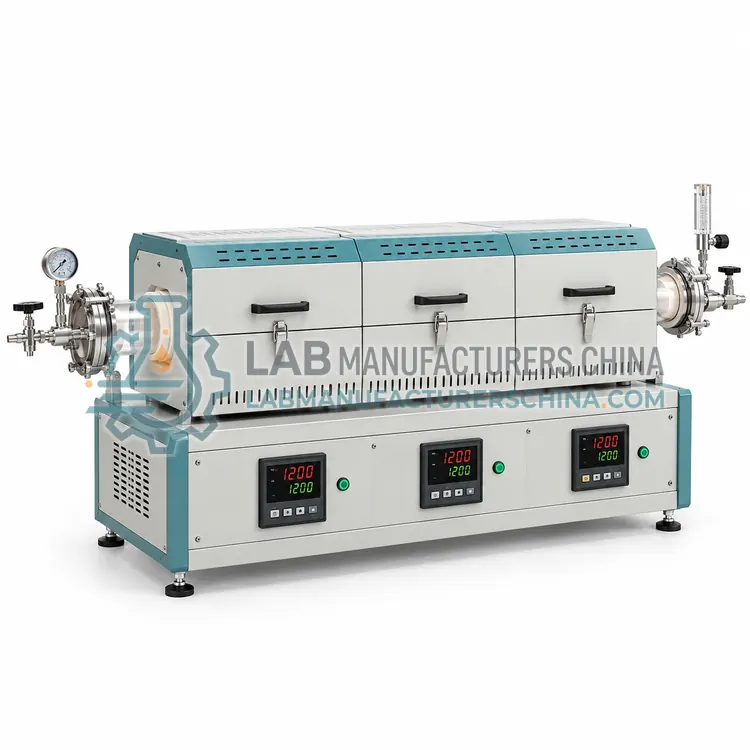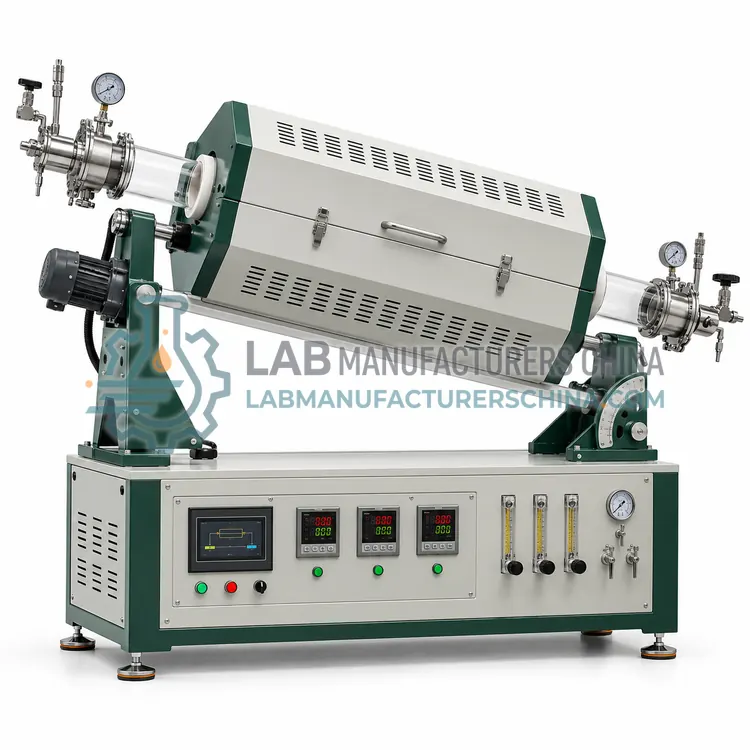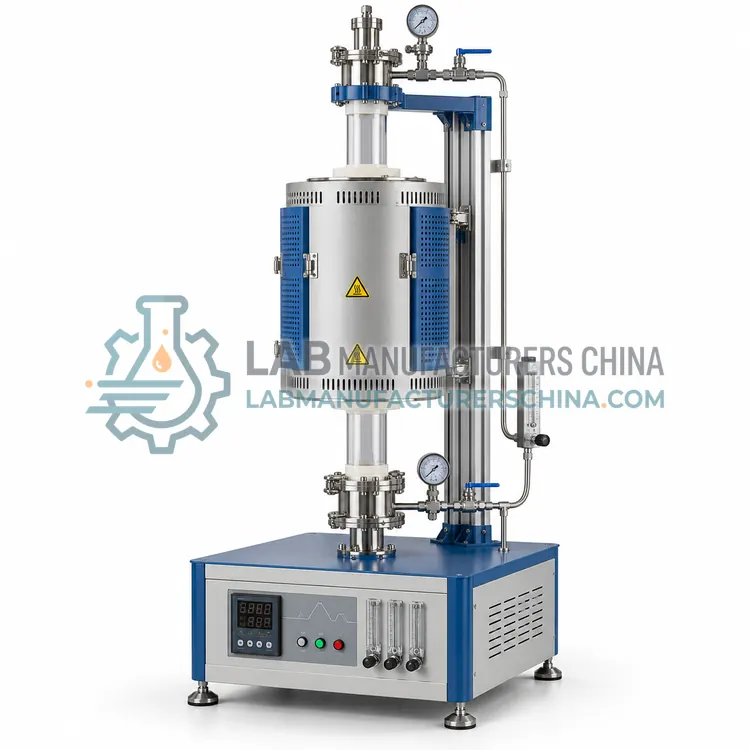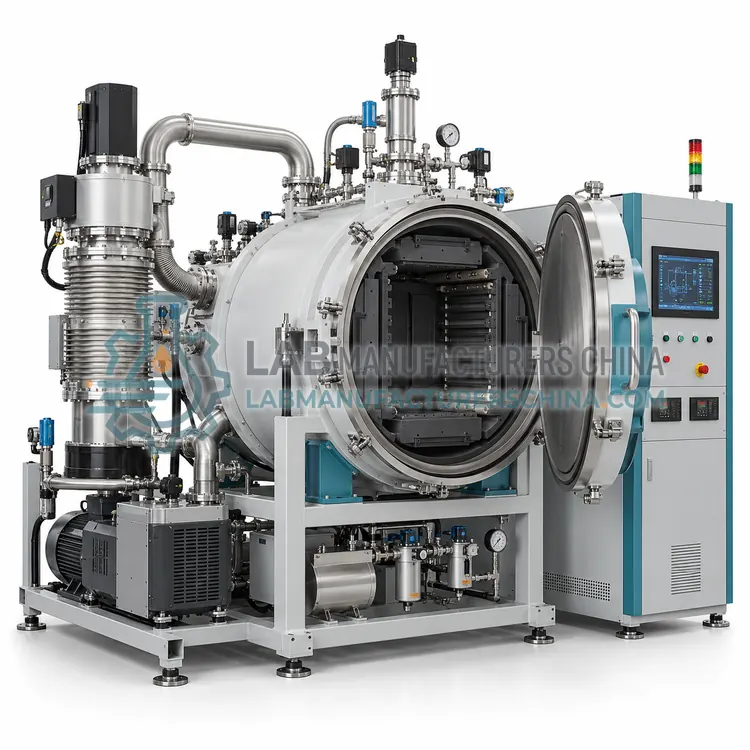
Single-Zone Tube Furnace
单区管式炉
- SKU TUF-0001
- Tube Furnaces
- CE (to be confirmed)
- ISO 9001 manufacturing (to be confirmed)
- RoHS (to be confirmed)
Price on request — FOB / CIF quoted per order
Prices depend on configuration, quantity and destination port.
Key specifications
| Work tube diameter | 25–80 mm |
|---|---|
| Hot zone length | 200–400 mm |
| Temperature range | RT to 1400 C |
| Temperature uniformity | ±1–5 C |
| Tube material | Quartz or alumina |
| Thermocouple type | Type K |
Request a quote Download brochure · to be provided
By Lab Manufacturers China Technical TeamLast reviewed Standards: IEC 61010-1, IEC 61010-2-010, IEC 60519-1
What is the Single-Zone Tube Furnace?
A single-zone tube furnace heats one defined length of work tube for uniform calcination, annealing and catalyst work. It is the simplest and most economical option when a flat hot zone is sufficient.
What is the Single-Zone Tube Furnace?
A single-zone tube furnace heats one defined length of work tube for uniform calcination, annealing and catalyst work. It is the simplest and most economical option when a flat hot zone is sufficient.
Overview
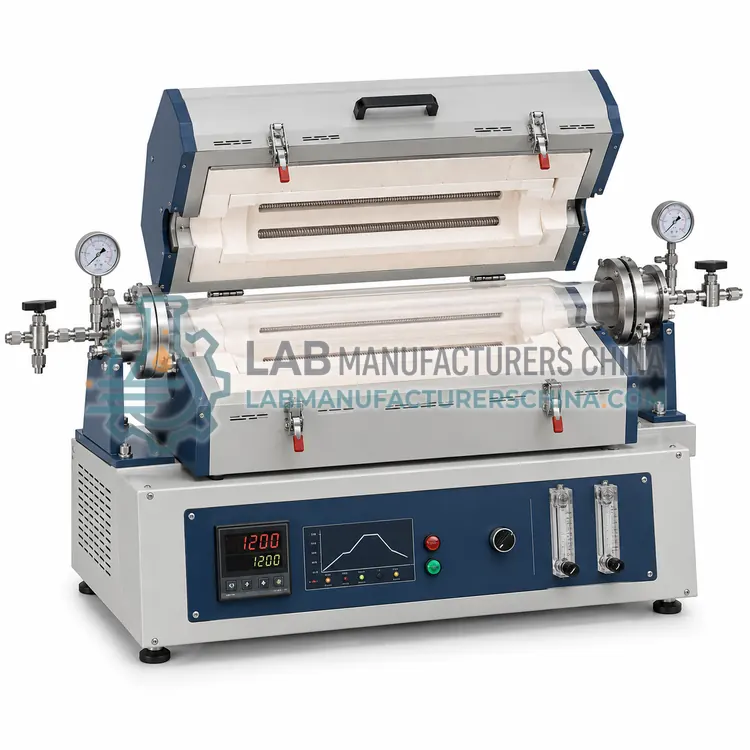
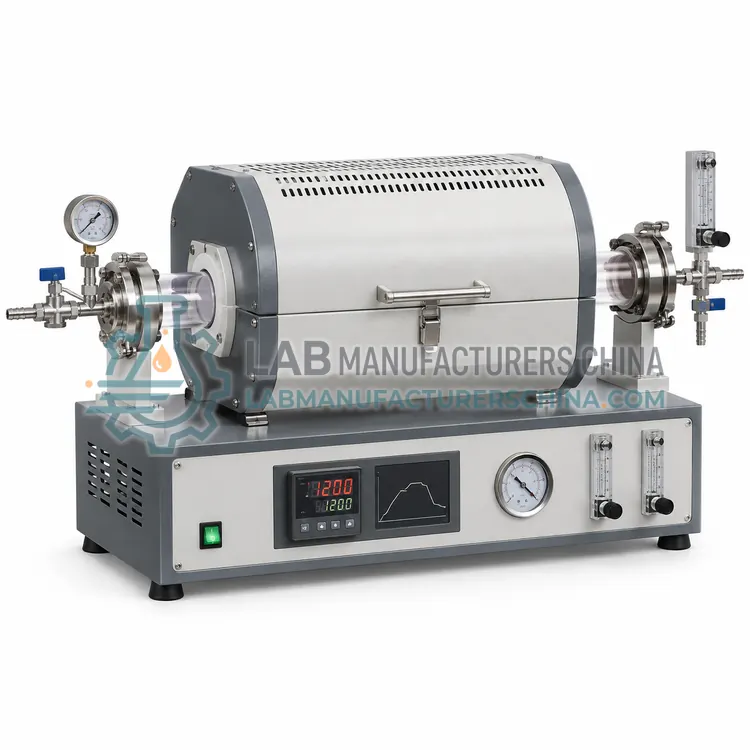
The single-zone tube furnace places one heating winding around a work tube of 25 to 80 mm diameter, giving a hot zone of 200 to 400 mm with uniformity of plus or minus 1 to 5 C over its central length. Temperature reaches 1200 to 1400 C with resistance wire or silicon carbide elements, and a type K thermocouple with PID control holds the setpoint or a programmed profile. Gas enters through an end flange, flows over the sample boat and exits to a bubbler or vent. Vacuum can be applied with an end seal and pump. It is deliberately simple: one setpoint, one zone, no gradient. It suits routine calcination, reduction and annealing where a uniform hot zone and moderate throughput are enough.
How does it work?
A tube furnace surrounds a cylindrical work tube with heating elements embedded in ceramic fiber or refractory, so the sample is heated inside a controlled environment separate from the elements. The tube, usually quartz, alumina or a high-temperature alloy, passes through one or more heating zones. Gas enters one end, flows over the sample and exits the other, or a pump pulls vacuum for anaerobic work. Thermocouples measure each zone, and a PID or SCR controller holds setpoints or programmed profiles. Split designs open to place the tube without threading it, while multi-zone designs create a controlled temperature gradient. End seals, flanges and gas manifolds keep the atmosphere clean and safe, and exhaust may pass through a scrubber or bubbler.
What are the key features?
- Single heating zone around a work tube
- Hot zone of 200 to 400 mm
- Temperature range to 1200 to 1400 C
- End flanges for gas flow or vacuum
- Type K thermocouple with PID control
- Bubbler or vent for exhaust gases
What are the technical specifications?
A typical single-zone tube furnace configuration offers work tube diameter of 25–80 mm, hot zone length of 200–400 mm, temperature range of RT to 1400 C, temperature uniformity of ±1–5 C, tube material of Quartz or alumina and thermocouple type of Type K. Values are indicative of the product class; the exact figures for each configuration are confirmed on the quotation and the calibration documents supplied with the instrument.
Which applications is it used for?
The Single-Zone Tube Furnace is used in routine calcination, catalyst reduction, annealing under inert gas and small-batch pyrolysis. Across the wider Tube Furnaces class, laboratories also deploy it for controlled-atmosphere calcination, chemical vapor deposition and catalyst reduction and activation.
Which standards and certifications apply?
Relevant standards and methods include IEC 61010-1, IEC 61010-2-010, IEC 60519-1, DIN 17052-1 and ISO 9001. Certification candidates for this model are CE, ISO 9001 manufacturing and RoHS; each is to be confirmed for the specific configuration before shipment, and certificates are supplied only where they have been issued.
Install with clearance for the hot tube ends and route exhaust gases to a safe vent, using a scrubber or bubbler for toxic or corrosive species. Use only tubes rated for the temperature and atmosphere, and never exceed the manufacturer limit, since quartz softens and alumina can crack under thermal shock. Support long tubes and avoid mechanical stress at the seals. Purge the tube before heating when air must be excluded, and check for leaks after each assembly. Calibrate the control thermocouple and profile the hot zone, and replace tubes showing cracks, devitrification or sag before failure.
How do I select the right Single-Zone Tube Furnace?
Select the single-zone furnace when one uniform hot zone covers the sample and gas flow or vacuum is required. Multi-zone or rotary designs suit gradients and powder movement. In the RFQ, specify tube diameter, hot zone length, top temperature, tube material, gas and vacuum requirements.
How does it compare with other Tube Furnaces variants?
Choose a tube furnace when the process needs gas flow, vacuum or a sealed environment, or when the sample must be a powder in a boat rather than a crucible in a box. Set the maximum temperature with margin above the working setpoint, and select the tube material accordingly: quartz to about 1100 C, alumina to 1600 to 1700 C, and alloys for specific atmospheres. Match the tube diameter to the sample boat, and pick one, three or five zones depending on whether a gradient or uniform hot zone is needed. Decide between solid and split designs for handling. Specify gas connections, end seals, flow meters and safety features for flammable or toxic gases.
Full specifications
| Work tube diameter | 25–80 mm |
|---|---|
| Hot zone length | 200–400 mm |
| Temperature range | RT to 1400 C |
| Temperature uniformity | ±1–5 C |
| Tube material | Quartz or alumina |
| Thermocouple type | Type K |
| Gas connections | 1 inlet, 1 outlet |
| Heating power | 1.5–4 kW |
| Vacuum option | End seals with pump port |
| Power supply | 220 V, 50/60 Hz |
Indicative values for this product class. Final specifications are confirmed on the quotation and in the calibration documents supplied with the instrument.
Applications
- Routine calcination
- Catalyst reduction
- Annealing under inert gas
- Small-batch pyrolysis
Key features
- Single heating zone around a work tube
- Hot zone of 200 to 400 mm
- Temperature range to 1200 to 1400 C
- End flanges for gas flow or vacuum
- Type K thermocouple with PID control
- Bubbler or vent for exhaust gases
Frequently asked questions about Single-Zone Tube Furnace
Usually 200 to 400 mm, with uniformity of plus or minus 1 to 5 C over the central portion. Hot zone length grows with tube diameter and insulation, and the sample should be placed within the stated uniform length for reliable results.
Yes, with sealed end flanges and a suitable pump. The tube and seals must be rated for the pressure, and quartz or alumina tubes support modest vacuum. The system should be leak-checked before each run.
Typically 1.5 to 4 kW on 220 V single-phase supply, since the heated volume is small. Larger tube diameters and higher temperatures push power and current up, sometimes requiring a higher-rated circuit.
It heats samples inside a work tube with gas flow, vacuum or a sealed atmosphere for calcination, chemical vapor deposition, catalyst activation, annealing and pyrolysis. The tube keeps the process atmosphere separate from the heating elements and the surrounding air.
Quartz suits up to about 1100 C and is transparent and cheap but softens at higher temperature. Alumina serves 1500 to 1700 C and resists many atmospheres, while high-temperature alloys resist thermal shock. The material must also tolerate the process gas.
A split tube furnace opens so the work tube can be placed without threading it through, which suits long tubes, glassware or samples that must be positioned precisely. A solid furnace is simpler and often cheaper but requires the tube to be inserted from one end.
Related models