How do Microbalances work?
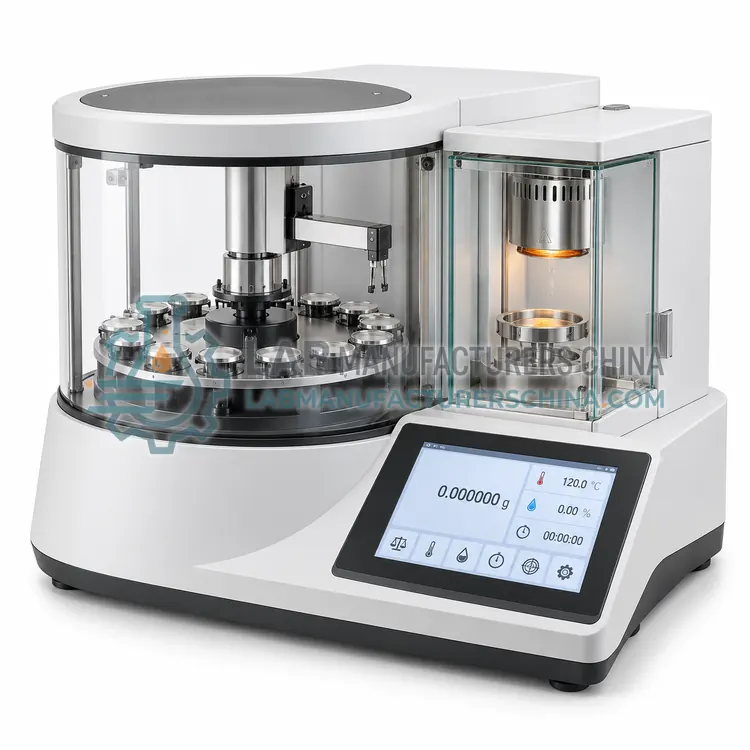
Microbalances use electromagnetic force compensation with a very high-resolution weighing cell, often a monolithic flexure system with optical position sensing. The load on the pan is opposed by a coil current, and the current is digitized by a low-noise converter to resolve 0.1 to 1 microgram. Because such small masses are disturbed by air currents, temperature gradients, static charge and buoyancy, the pan sits in a small enclosed chamber with glass or metal walls, often with side doors closed by motor. The cell is thermally insulated, and an internal reference weight allows automatic adjustment. Electronic filters average readings to suppress vibration noise, and the system usually sits on a heavy stone or anti-vibration table to isolate it from floor movement.
Which Microbalances variants are available?
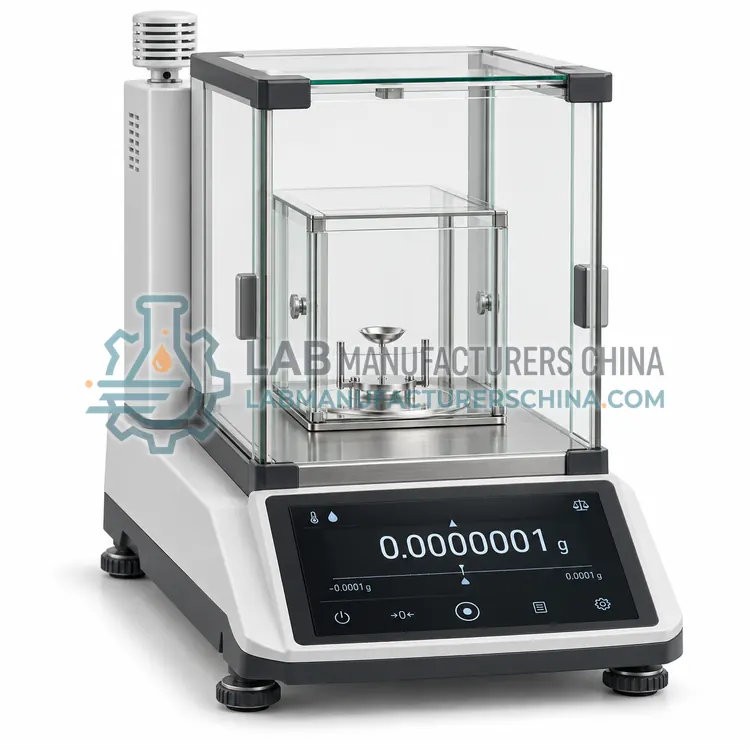
- Ultra-Microbalance (0.1 µg) — An ultra-microbalance reads to 0.1 microgram with capacities of about 2 to 6 g.
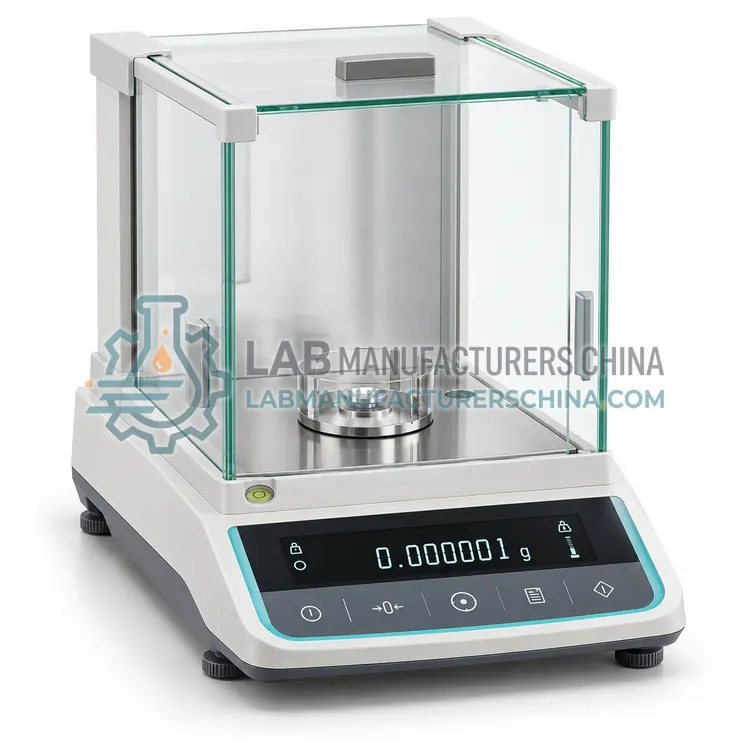
- Standard Microbalance (1 µg) — A standard microbalance reads to 1 microgram with capacities of about 6 to 52 g.
- Microbalance with Integrated Ionizer — A microbalance with an integrated ionizer neutralizes static charge on samples and vessels inside the weighing chamber, automatically or on demand.
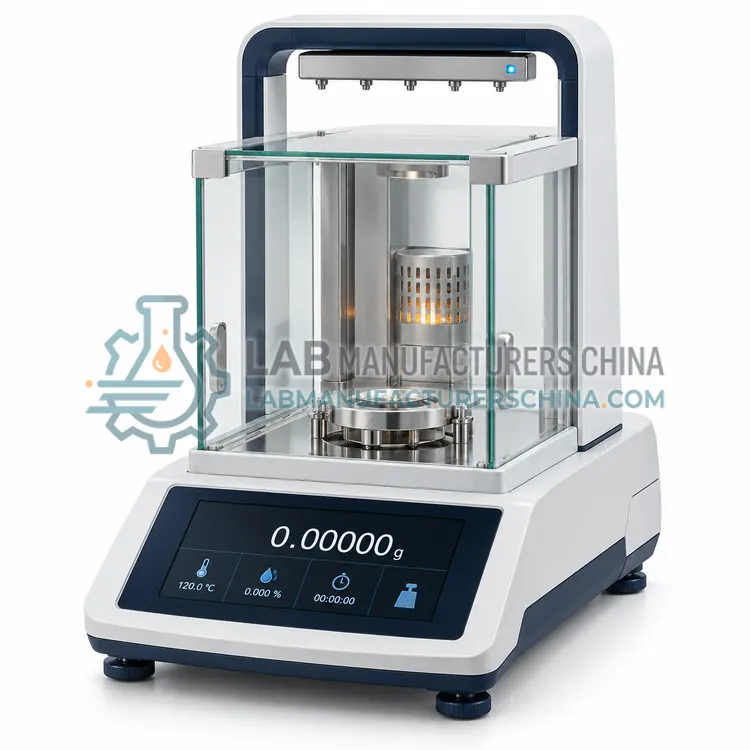
- Filter Weighing Microbalance with Conditioning Chamber — A filter weighing microbalance system combines a 1 microgram balance with a temperature- and humidity-controlled chamber for equilibrating and weighing particulate filters.
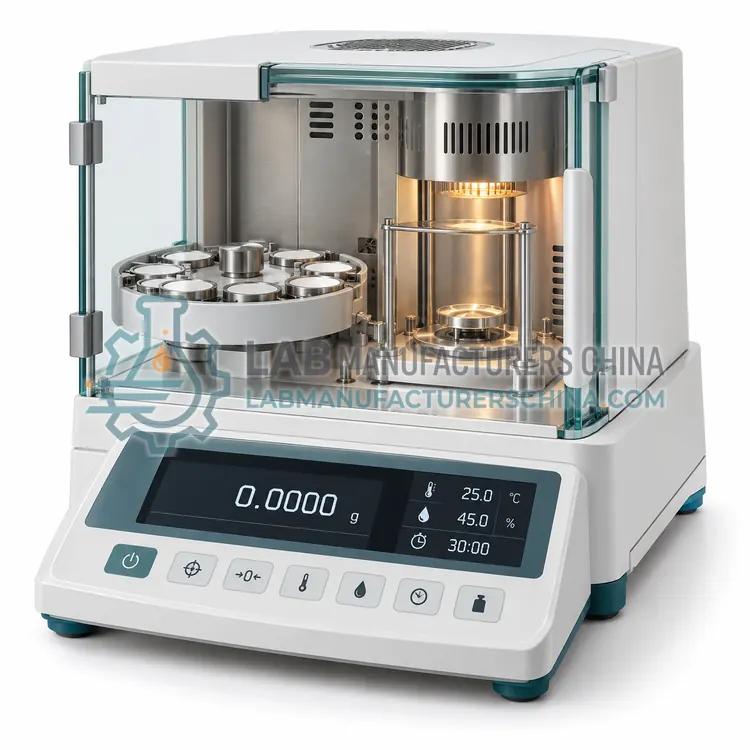
- Microbalance with Automatic Sample Changer — A microbalance with an automatic sample changer loads filters, crucibles or vials onto the weighing pan from a magazine without operator intervention.
How do I choose the right variant?
Start with the smallest sample mass and the tolerance required, then compute the minimum weight from the balance's repeatability. Readability of 1 microgram suits most filter and standard weighing, while 0.1 microgram ultra-micro balances are needed for trace samples or very tight tolerances. Capacity is usually 2 to 6 g for ultra-micro and up to 52 g for micro models, and higher capacity comes at reduced resolution. Consider static control, the need for a conditioned chamber for filters, and automation such as sample changers. The installation site is decisive: low vibration, stable temperature within 0.5 K per hour and controlled humidity. Check also calibration options, data-integrity software and whether pharmacopoeial or EPA method requirements apply.
Where are Microbalances used?
Microbalances are specified in filter weighing for particulate matter, reference standard weighing, thin-film and coating mass determination, catalyst and nanomaterial weighing, content uniformity sample preparation and microsample research.
Which standards and certifications apply?
Work with Microbalances is commonly governed by USP <41>, USP <1251>, OIML R 76-1, OIML R 111-1, Ph. Eur. 2.1.7, 40 CFR Part 50 Appendix L and ISO 9001. Instrument certifications such as CE marking are confirmed per configuration and never assumed.
What are the key considerations before purchase?
Microbalances need a dedicated weighing room or bench with vibration isolation, stable temperature within about 0.5 K per hour, and relative humidity of 40 to 60 percent. Keep the balance away from drafts, radiators and foot traffic. Allow several hours of warm-up after power-up and equilibrate samples and weighing vessels in the room before weighing. Control static charge with ionizers, since it is a dominant error source. Use tweezers or gloves, never bare fingers. Calibrate and adjust internally, verify with micro-weights of class E1 or better, and arrange regular accredited service. Keep records of routine tests, since minimum weight varies with environment.