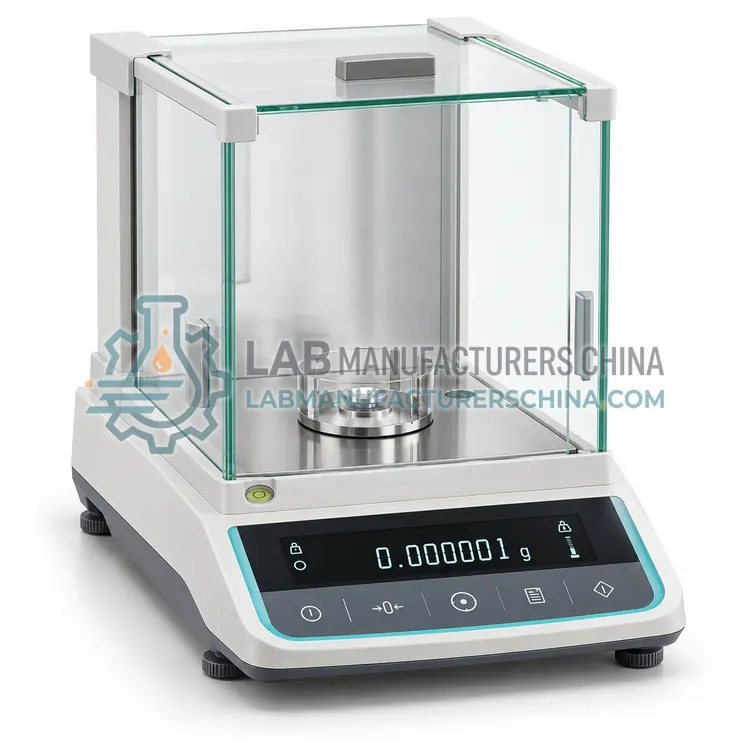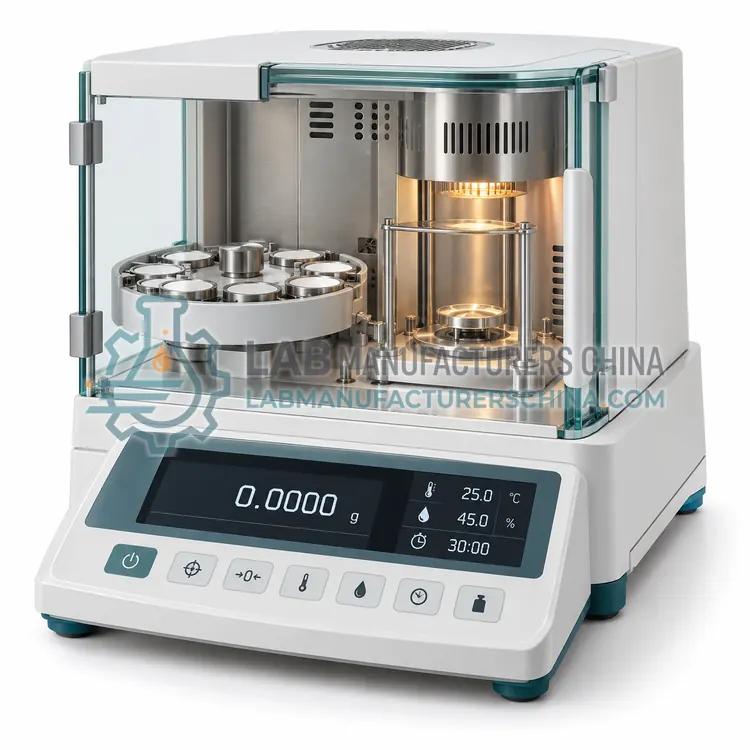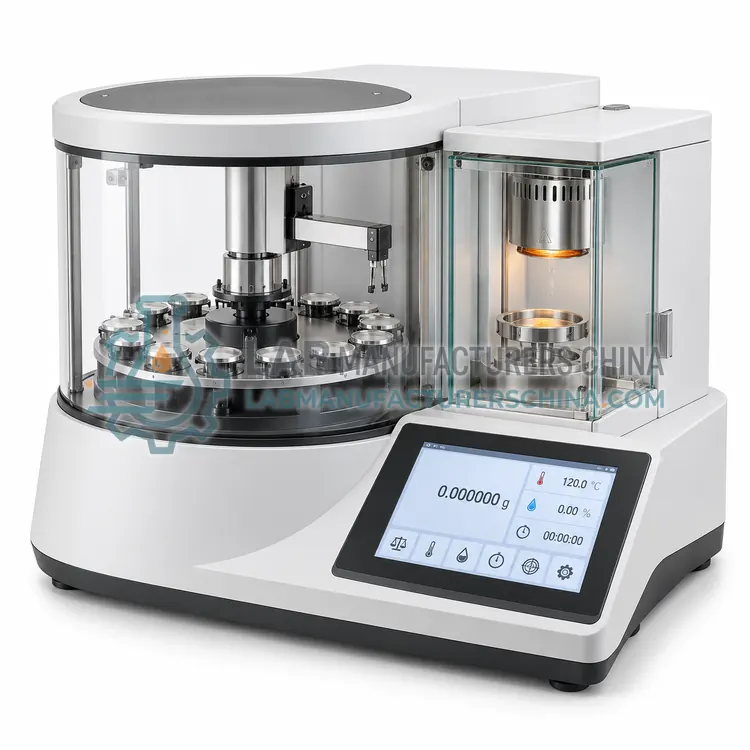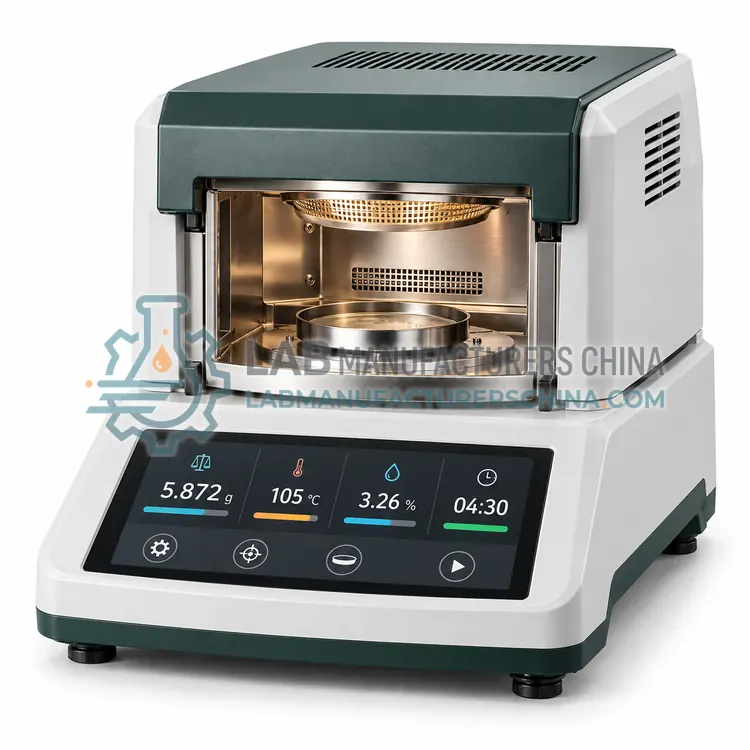

Microbalance with Integrated Ionizer
带集成离子发生器的微量天平
- SKU MCR-0003
- Microbalances
- CE (to be confirmed)
- ISO 9001 manufacturing (to be confirmed)
- RoHS (to be confirmed)
Price on request — FOB / CIF quoted per order
Prices depend on configuration, quantity and destination port.
Key specifications
| Readability | 1 µg (0.1 µg optional) |
|---|---|
| Capacity | 6–52 g |
| Repeatability (SD) | ≈ 0.5–1.5 µg |
| Ionizer type | Corona, balanced AC |
| Ionization modes | Manual, door-triggered, timed |
| Stabilization time | ≈ 5–15 s |
Request a quote Download brochure · to be provided
By Lab Manufacturers China Technical TeamLast reviewed Standards: USP <41>, USP <1251>, OIML R 76-1
What is the Microbalance with Integrated Ionizer?
A microbalance with an integrated ionizer neutralizes static charge on samples and vessels inside the weighing chamber, automatically or on demand. It is selected for dry powders, plastics, filters and glass vessels where static is the main cause of unstable microgram readings.
What is the Microbalance with Integrated Ionizer?
A microbalance with an integrated ionizer neutralizes static charge on samples and vessels inside the weighing chamber, automatically or on demand. It is selected for dry powders, plastics, filters and glass vessels where static is the main cause of unstable microgram readings.
Overview
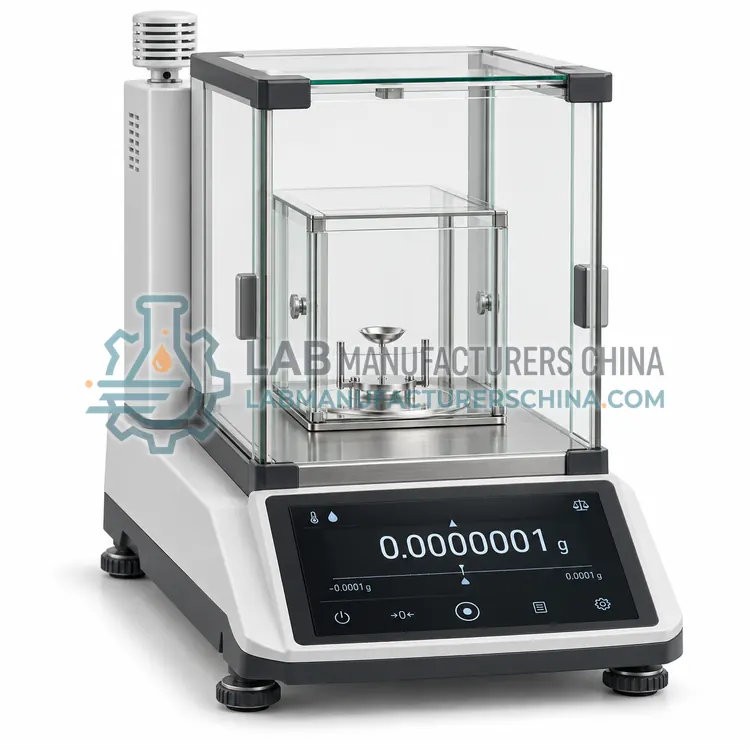
Static charge can cause errors of tens to hundreds of micrograms, so this variant builds an ionizer into the draft shield. A corona or alpha-free ionizing electrode generates a balanced stream of positive and negative ions that neutralize charge on the sample and its container. The ionizer can be triggered manually, automatically when doors open, or as a timed cycle, and many models display a static warning when charge is detected. Readability is 1 microgram, sometimes 0.1 microgram, with capacities of 6 to 52 g. The ionizer does not replace good practice such as humidity control, antistatic weighing vessels and avoiding synthetic clothing. Electrodes need periodic cleaning to maintain neutralization efficiency, typically every few months depending on usage.
How does it work?
Microbalances use electromagnetic force compensation with a very high-resolution weighing cell, often a monolithic flexure system with optical position sensing. The load on the pan is opposed by a coil current, and the current is digitized by a low-noise converter to resolve 0.1 to 1 microgram. Because such small masses are disturbed by air currents, temperature gradients, static charge and buoyancy, the pan sits in a small enclosed chamber with glass or metal walls, often with side doors closed by motor. The cell is thermally insulated, and an internal reference weight allows automatic adjustment. Electronic filters average readings to suppress vibration noise, and the system usually sits on a heavy stone or anti-vibration table to isolate it from floor movement.
What are the key features?
- Integrated corona ionizer with balanced positive and negative ion output
- Manual, door-triggered or timed ionization cycles
- On-screen static warning when charge is detected
- 1 microgram readability with enclosed motorized chamber
- Replaceable, cleanable ionizing electrodes
What are the technical specifications?
A typical microbalance with integrated ionizer configuration offers readability of 1 µg (0.1 µg optional), capacity of 6–52 g, repeatability (SD) of ≈ 0.5–1.5 µg, ionizer type of Corona, balanced AC, ionization modes of Manual, door-triggered, timed and stabilization time of ≈ 5–15 s. Values are indicative of the product class; the exact figures for each configuration are confirmed on the quotation and the calibration documents supplied with the instrument.
Which applications is it used for?
The Microbalance with Integrated Ionizer is used in weighing of dry powders and plastics, filter and membrane weighing, glassware and vial tare weighing and low-humidity laboratory environments. Across the wider Microbalances class, laboratories also deploy it for filter weighing for particulate matter, reference standard weighing and thin-film and coating mass determination.
Which standards and certifications apply?
Relevant standards and methods include USP <41>, USP <1251>, OIML R 76-1, OIML R 111-1, Ph. Eur. 2.1.7, 40 CFR Part 50 Appendix L and ISO 9001. Certification candidates for this model are CE, ISO 9001 manufacturing and RoHS; each is to be confirmed for the specific configuration before shipment, and certificates are supplied only where they have been issued.
Microbalances need a dedicated weighing room or bench with vibration isolation, stable temperature within about 0.5 K per hour, and relative humidity of 40 to 60 percent. Keep the balance away from drafts, radiators and foot traffic. Allow several hours of warm-up after power-up and equilibrate samples and weighing vessels in the room before weighing. Control static charge with ionizers, since it is a dominant error source. Use tweezers or gloves, never bare fingers. Calibrate and adjust internally, verify with micro-weights of class E1 or better, and arrange regular accredited service. Keep records of routine tests, since minimum weight varies with environment.
How do I select the right Microbalance with Integrated Ionizer?
Select the ionizer-equipped model when static causes drift in your routine work or humidity cannot be raised above about 40 percent. It costs more than a standard microbalance. In the RFQ, specify ionizer type, trigger mode, readability, capacity and electrode maintenance.
How does it compare with other Microbalances variants?
Start with the smallest sample mass and the tolerance required, then compute the minimum weight from the balance's repeatability. Readability of 1 microgram suits most filter and standard weighing, while 0.1 microgram ultra-micro balances are needed for trace samples or very tight tolerances. Capacity is usually 2 to 6 g for ultra-micro and up to 52 g for micro models, and higher capacity comes at reduced resolution. Consider static control, the need for a conditioned chamber for filters, and automation such as sample changers. The installation site is decisive: low vibration, stable temperature within 0.5 K per hour and controlled humidity. Check also calibration options, data-integrity software and whether pharmacopoeial or EPA method requirements apply.
Full specifications
| Readability | 1 µg (0.1 µg optional) |
|---|---|
| Capacity | 6–52 g |
| Repeatability (SD) | ≈ 0.5–1.5 µg |
| Ionizer type | Corona, balanced AC |
| Ionization modes | Manual, door-triggered, timed |
| Stabilization time | ≈ 5–15 s |
| Calibration | Internal motorized |
| Pan size | Ø 25–50 mm |
| Electrode service interval | ≈ 3–6 months |
| Interfaces | USB, RS-232 |
Indicative values for this product class. Final specifications are confirmed on the quotation and in the calibration documents supplied with the instrument.
Applications
- Weighing of dry powders and plastics
- Filter and membrane weighing
- Glassware and vial tare weighing
- Low-humidity laboratory environments
Key features
- Integrated corona ionizer with balanced positive and negative ion output
- Manual, door-triggered or timed ionization cycles
- On-screen static warning when charge is detected
- 1 microgram readability with enclosed motorized chamber
- Replaceable, cleanable ionizing electrodes
Frequently asked questions about Microbalance with Integrated Ionizer
It produces equal amounts of positive and negative air ions. Ions with opposite polarity to the surface charge are attracted to the sample and recombine with it, neutralizing the field in seconds and removing the electrostatic force that disturbs the balance.
Corona ionizers generate very low ozone levels and minimal heat at typical settings, but the output should be used in short cycles to avoid thermal disturbance. Check the manufacturer's data and keep the ionizer off during the measurement itself if recommended.
Yes, external ionizing bars or guns can be used, but integrated units are positioned inside the chamber to treat the sample at the pan and often integrate with door control. Positioning matters, so follow the manufacturer's guidelines for distance and orientation.
A microbalance reads to 1 microgram or finer, while an analytical balance reads to 0.1 mg (100 micrograms) or 0.01 mg. Microbalances handle small samples but have lower capacity, demand much more stable installation and need stricter control of static and temperature.
Electrostatic forces between a charged sample or vessel and the balance walls act like additional mass, producing drifting or wrong readings of tens of micrograms. Ionizers, conductive vessels and humidity above 40 percent reduce the effect.
Yes. Air density varies with temperature, pressure and humidity, changing buoyancy on samples of different density. For high-accuracy work, apply buoyancy corrections or weigh samples and reference weights of similar density, particularly for filters.