How do Precision Balances work?
Precision balances typically use electromagnetic force restoration or strain-gauge load cells. In the electromagnetic type, a coil in a permanent magnetic field opposes the load on the pan, and the current needed to hold the pan at its reference position is converted to mass. Strain-gauge types measure elastic deformation of a metal spring element with bonded resistive gauges in a Wheatstone bridge. Signals are digitized, filtered and corrected for temperature. Because capacity is larger and resolution coarser than in analytical balances, the weighing cell is more robust and less sensitive to air currents. A level indicator and adjustable feet set the orientation. Calibration is by external weight or an internal motorized weight, and the firmware provides functions such as percent weighing, counting and animal weighing.
Which Precision Balances variants are available?
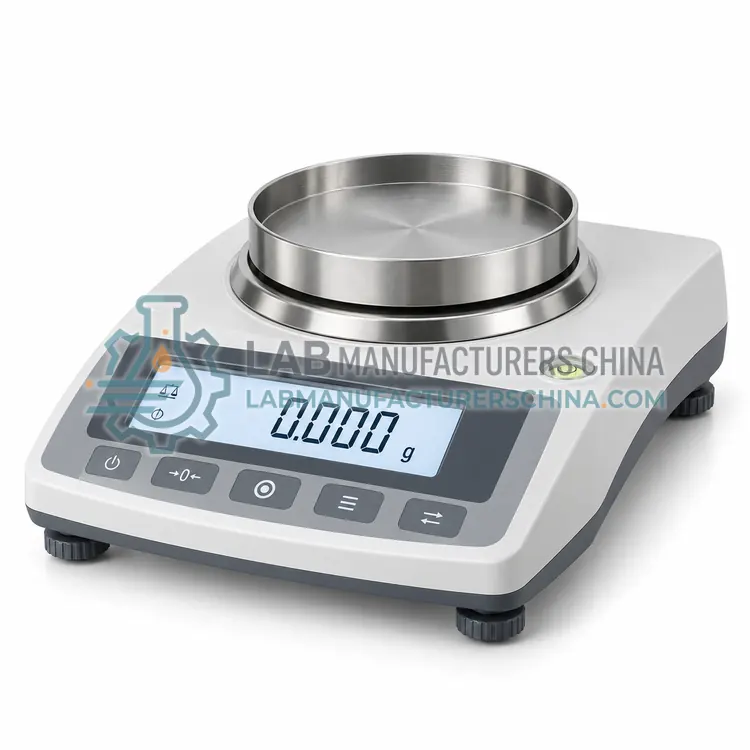
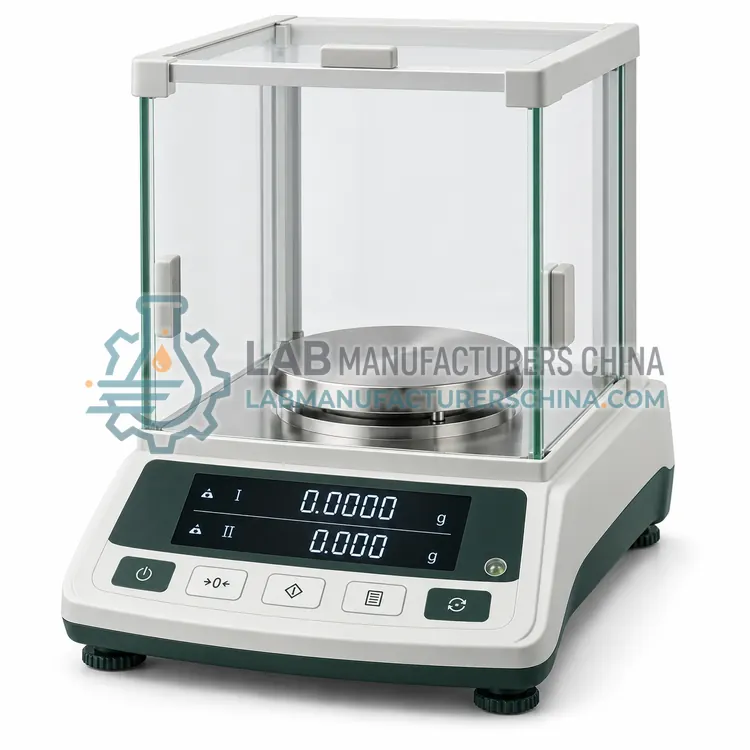
- 1 mg Top-Loading Precision Balance — A 1 mg top-loading precision balance reads to 0.001 g with capacities of roughly 200 to 600 g and a small draft ring.
- 0.01 g General-Purpose Precision Balance — A 0.01 g general-purpose precision balance offers 10 mg readability with capacities from about 600 g to 5 kg.
- High-Capacity Precision Balance — A high-capacity precision balance weighs loads of roughly 6 to 30 kg with readability from 0.01 g to 0.1 g.
- Dual-Range Precision Balance — A dual-range precision balance switches automatically between a fine range with finer readability and a coarse full range, so one instrument can weigh both small additions and heavy loads.
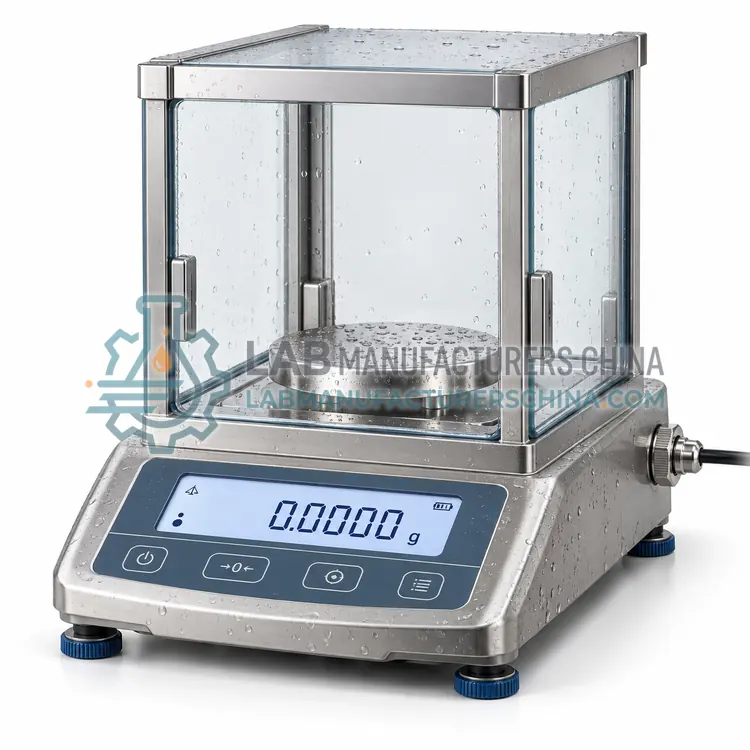
- Waterproof Precision Balance (IP65) — A waterproof precision balance has a sealed housing rated IP65 or higher, stainless steel pan and washable surfaces.
How do I choose the right variant?
Choose readability and capacity together. Readability of 1 mg suits formulation of small batches, 10 mg suits general reagent preparation, and 0.1 g to 0.01 g suits larger loads. Higher capacity with finer readability requires a more costly cell. Check pan size against vessel dimensions and whether a draft ring or shield is needed. Consider whether calibration should be internal, which is useful for shared areas, or external. For damp or dusty environments look for IP-rated housings and stainless steel pans. Legal-for-trade approval may be required for some uses. For regulated work, consider data outputs and printing. Also check stabilization speed, which matters for repeated weighing, and confirm minimum weight at the tolerance required.
Where are Precision Balances used?
Precision Balances are specified in reagent and buffer preparation, formulation and compounding, quality control checks, sample mass determination, education and training laboratories and production-line weighing.
Which standards and certifications apply?
Work with Precision Balances is commonly governed by OIML R 76-1, USP <41>, USP <1251>, ASTM E898, GB/T 26497 and ISO 9001. Instrument certifications such as CE marking are confirmed per configuration and never assumed.
What are the key considerations before purchase?
Place the balance on a stable, level surface away from drafts, vibration and direct heat. Warm-up of 15 to 60 minutes is normal. Calibrate after installation and whenever the location changes, and verify with certified check weights at intervals defined by laboratory procedure. Keep the pan and surrounding area free of spills, and use weighing vessels that avoid overloading the pan. Avoid overloading beyond the rated capacity, since overload can permanently damage the cell. Gravity differences between manufacture and site location may require adjustment. Periodic accredited calibration and records of routine tests support quality audits and, where required, pharmacopoeial compliance.