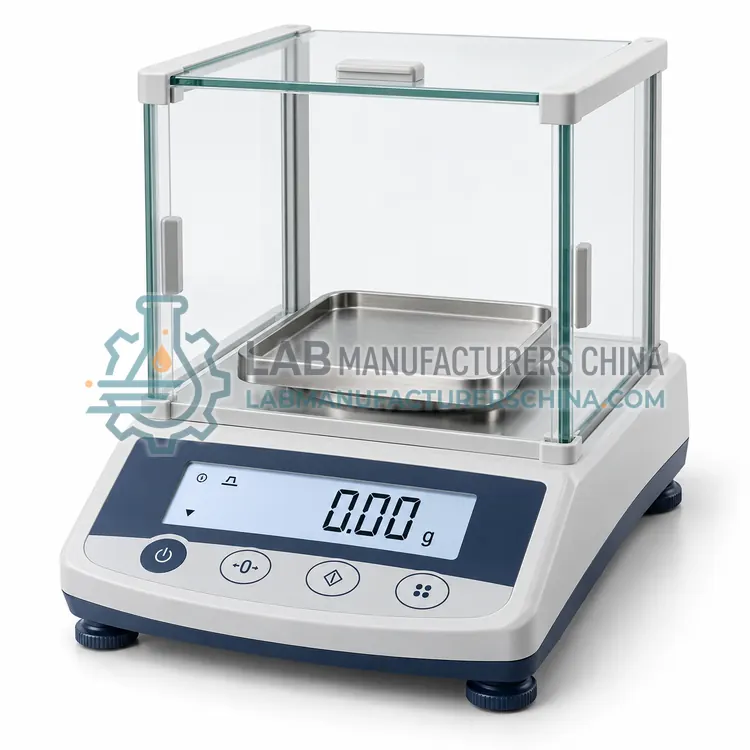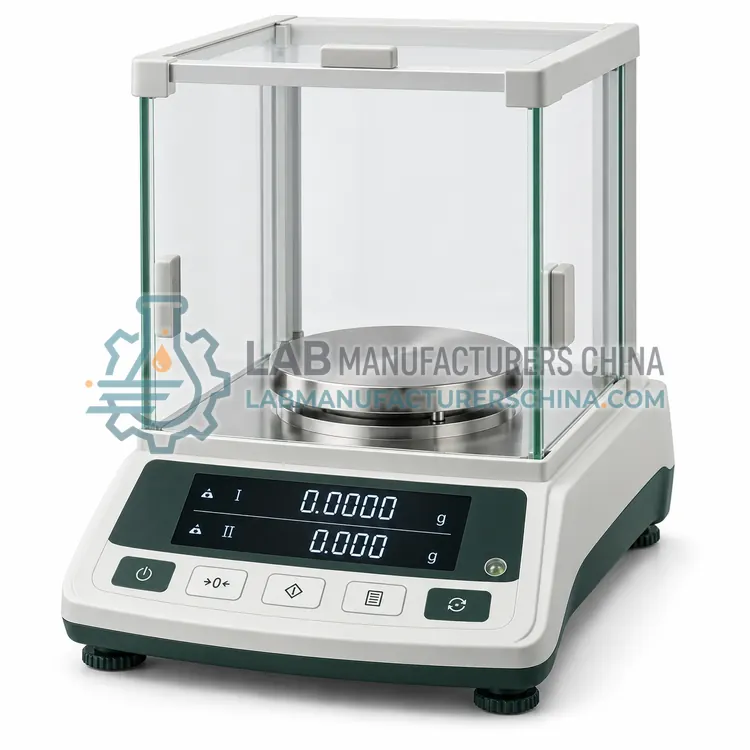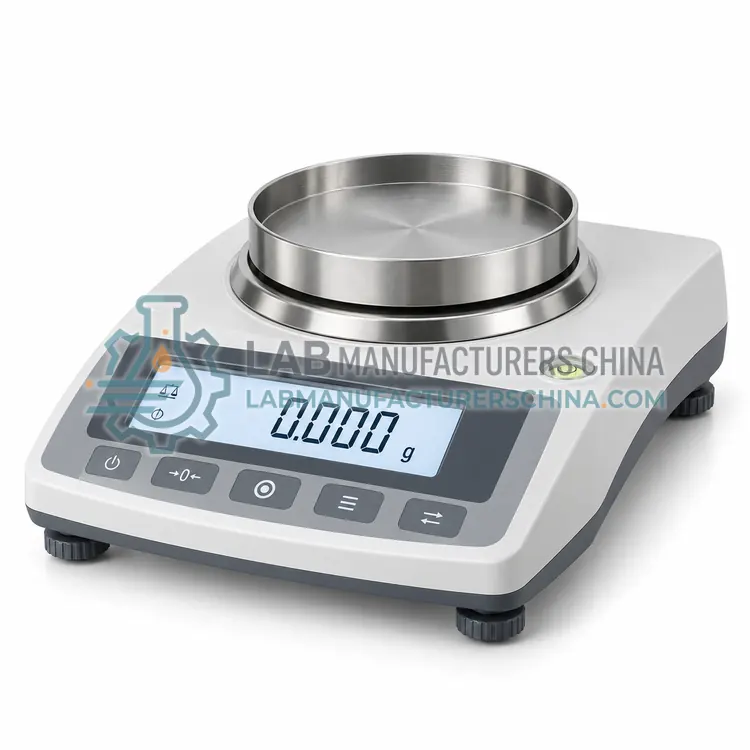
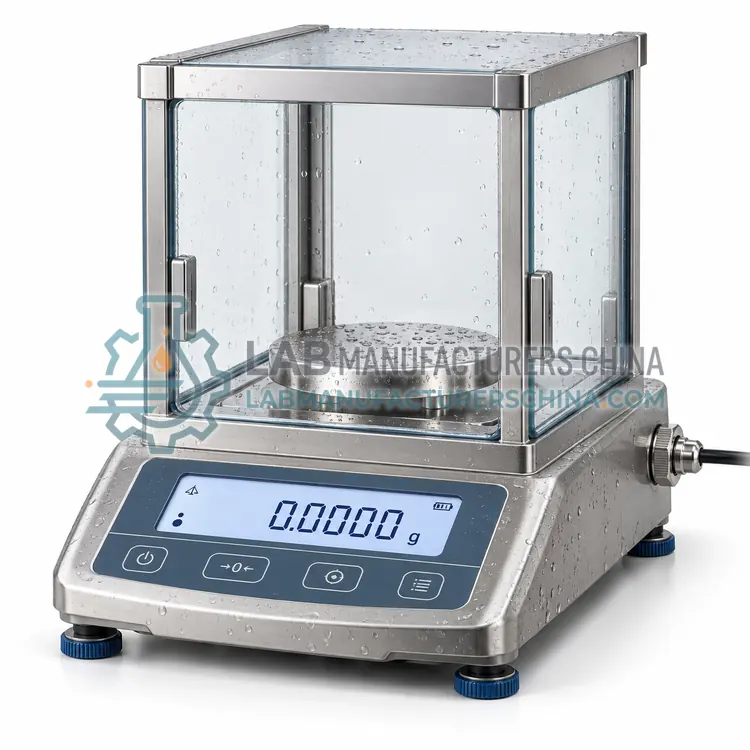
Waterproof Precision Balance (IP65)
防水精密天平(IP65)
- SKU PRB-0005
- Precision Balances
- CE (to be confirmed)
- IP65 test report (to be confirmed)
- ISO 9001 manufacturing (to be confirmed)
Price on request — FOB / CIF quoted per order
Prices depend on configuration, quantity and destination port.
Key specifications
| Readability | 0.01 g–0.1 g |
|---|---|
| Capacity | 600 g–6 kg |
| Repeatability (SD) | 0.01–0.1 g |
| Ingress protection | IP65 (IP67 on some models) |
| Housing material | ABS or stainless steel |
| Pan material | Stainless steel, removable |
Request a quote Download brochure · to be provided
By Lab Manufacturers China Technical TeamLast reviewed Standards: OIML R 76-1, USP <41>, USP <1251>
What is the Waterproof Precision Balance (IP65)?
A waterproof precision balance has a sealed housing rated IP65 or higher, stainless steel pan and washable surfaces. It is used in humid laboratories, food and biological areas and places requiring frequent washdown or disinfection.
What is the Waterproof Precision Balance (IP65)?
A waterproof precision balance has a sealed housing rated IP65 or higher, stainless steel pan and washable surfaces. It is used in humid laboratories, food and biological areas and places requiring frequent washdown or disinfection.
Overview
This balance is engineered for wet and dirty environments. The electronics and display are sealed to IP65, protecting against dust and low-pressure jets, and a few models reach IP67. Housings are made from ABS with seals or stainless steel, and pans are removable for cleaning. Capacities run from 600 g to 6 kg at 0.01 g readability, and larger platforms at 0.1 g. Membrane keypads resist chemical cleaners and ethanol. Weighing cells are the same strain-gauge or electromagnetic types used in standard balances, with added sealing of the cell chamber. Internal battery options allow use near sinks or in cold rooms. It suits food laboratories, biological safety areas and microbiology labs where cleanliness and disinfection are routine.
How does it work?
Precision balances typically use electromagnetic force restoration or strain-gauge load cells. In the electromagnetic type, a coil in a permanent magnetic field opposes the load on the pan, and the current needed to hold the pan at its reference position is converted to mass. Strain-gauge types measure elastic deformation of a metal spring element with bonded resistive gauges in a Wheatstone bridge. Signals are digitized, filtered and corrected for temperature. Because capacity is larger and resolution coarser than in analytical balances, the weighing cell is more robust and less sensitive to air currents. A level indicator and adjustable feet set the orientation. Calibration is by external weight or an internal motorized weight, and the firmware provides functions such as percent weighing, counting and animal weighing.
What are the key features?
- Sealed housing rated IP65 or higher
- Removable stainless steel pan for washing
- Membrane keypad resistant to ethanol and detergents
- Rechargeable battery option for cold rooms and wet areas
- Cell chamber sealed against moisture ingress
What are the technical specifications?
A typical waterproof precision balance (ip65) configuration offers readability of 0.01 g–0.1 g, capacity of 600 g–6 kg, repeatability (SD) of 0.01–0.1 g, ingress protection of IP65 (IP67 on some models), housing material of ABS or stainless steel and pan material of Stainless steel, removable. Values are indicative of the product class; the exact figures for each configuration are confirmed on the quotation and the calibration documents supplied with the instrument.
Which applications is it used for?
The Waterproof Precision Balance (IP65) is used in food and beverage laboratories, microbiology media preparation, washdown areas and cold room weighing. Across the wider Precision Balances class, laboratories also deploy it for reagent and buffer preparation, formulation and compounding and quality control checks.
Which standards and certifications apply?
Relevant standards and methods include OIML R 76-1, USP <41>, USP <1251>, ASTM E898, GB/T 26497 and ISO 9001. Certification candidates for this model are CE, IP65 test report and ISO 9001 manufacturing; each is to be confirmed for the specific configuration before shipment, and certificates are supplied only where they have been issued.
Place the balance on a stable, level surface away from drafts, vibration and direct heat. Warm-up of 15 to 60 minutes is normal. Calibrate after installation and whenever the location changes, and verify with certified check weights at intervals defined by laboratory procedure. Keep the pan and surrounding area free of spills, and use weighing vessels that avoid overloading the pan. Avoid overloading beyond the rated capacity, since overload can permanently damage the cell. Gravity differences between manufacture and site location may require adjustment. Periodic accredited calibration and records of routine tests support quality audits and, where required, pharmacopoeial compliance.
How do I select the right Waterproof Precision Balance (IP65)?
Select a waterproof model when balances face splashes, humidity, frequent cleaning or cold rooms. It costs more than dry-lab models. In the RFQ, specify the IP rating, cleaning agents used, capacity, readability, pan size and power option.
How does it compare with other Precision Balances variants?
Choose readability and capacity together. Readability of 1 mg suits formulation of small batches, 10 mg suits general reagent preparation, and 0.1 g to 0.01 g suits larger loads. Higher capacity with finer readability requires a more costly cell. Check pan size against vessel dimensions and whether a draft ring or shield is needed. Consider whether calibration should be internal, which is useful for shared areas, or external. For damp or dusty environments look for IP-rated housings and stainless steel pans. Legal-for-trade approval may be required for some uses. For regulated work, consider data outputs and printing. Also check stabilization speed, which matters for repeated weighing, and confirm minimum weight at the tolerance required.
Full specifications
| Readability | 0.01 g–0.1 g |
|---|---|
| Capacity | 600 g–6 kg |
| Repeatability (SD) | 0.01–0.1 g |
| Ingress protection | IP65 (IP67 on some models) |
| Housing material | ABS or stainless steel |
| Pan material | Stainless steel, removable |
| Stabilization time | ≈ 1–3 s |
| Operating temperature | −10 to +40 C |
| Power | AC adapter or rechargeable battery |
| Interfaces | RS-232, USB |
Indicative values for this product class. Final specifications are confirmed on the quotation and in the calibration documents supplied with the instrument.
Applications
- Food and beverage laboratories
- Microbiology media preparation
- Washdown areas
- Cold room weighing
Key features
- Sealed housing rated IP65 or higher
- Removable stainless steel pan for washing
- Membrane keypad resistant to ethanol and detergents
- Rechargeable battery option for cold rooms and wet areas
- Cell chamber sealed against moisture ingress
Frequently asked questions about Waterproof Precision Balance (IP65)
No. IP65 protects against dust and water jets, not immersion. For temporary immersion, IP67 is required, and few laboratory balances meet it. Wipe or spray-rinse the balance and do not immerse it unless the manufacturer states it is rated for that.
Ethanol and isopropanol at 70 percent, mild detergents and diluted quaternary ammonium solutions are generally acceptable. Strong acids, bleach at high concentration and solvents such as acetone can damage seals and keypads, so check the manufacturer's chemical compatibility list.
Not inherently. The same weighing cells are used, but sealing can trap heat slightly, and wet surfaces can add mass to the pan. Dry the pan before weighing and allow normal warm-up for best stability.
Precision balances generally read from 1 mg to 0.01 g, with capacities from a few hundred grams to several kilograms. Readabilities finer than 1 mg are classed as analytical or semi-micro balances, while coarser than 0.1 g is typically a platform or industrial scale.
Balances of 1 mg readability benefit from a draft ring or shield, while 0.01 g models are usually less sensitive to air movement and can operate open. Use a shield whenever air currents cause unstable readings.
Base the choice on the smallest sample and the tolerance. If samples are at least a few grams and 0.1 percent tolerance is acceptable, 0.01 g suffices. For samples of hundreds of milligrams, or tighter tolerance, use a 1 mg model with a lower capacity.
Related models