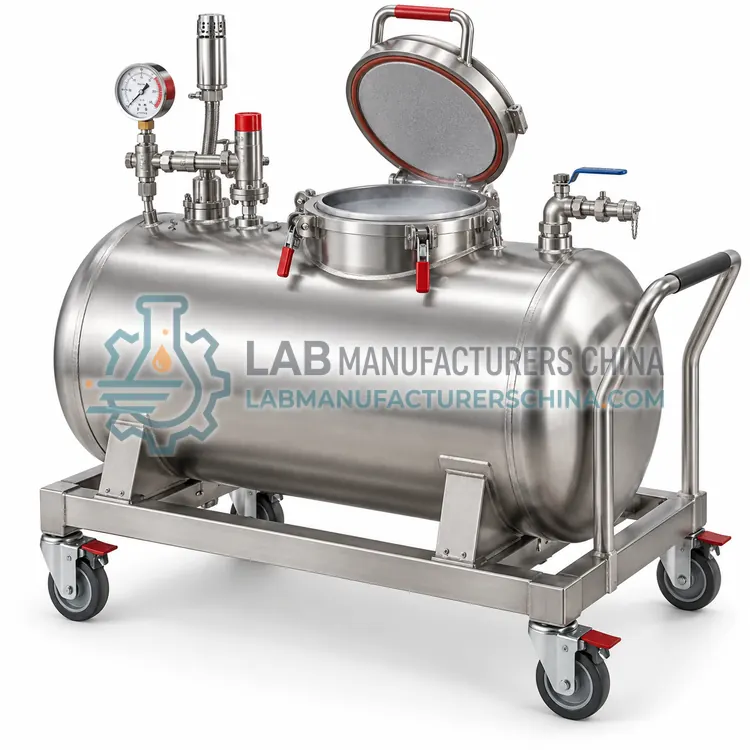
How do Cryogenic Transfer Equipment work?
Cryogenic transfer equipment reduces heat leak while liquid moves from a source vessel to a destination. Liquid is driven either by vessel pressure, by a self-pressurizing circuit that raises headspace pressure to about 0.5–1.5 bar, or by a cryogenic pump with a submerged or extended-shaft impeller. Vacuum-jacketed hoses and pipes suppress heat transfer with an evacuated annulus and multilayer insulation, so less liquid flashes to gas in the line. A phase separator placed at the outlet vents vapor through a float-operated valve so that only liquid flows to the receiving vessel, stabilizing filling. Auto-fill controllers combine level sensors, temperature sensors and solenoid valves that open when liquid is needed and close when level is reached, with timeout and fault alarms.
Which Cryogenic Transfer Equipment variants are available?
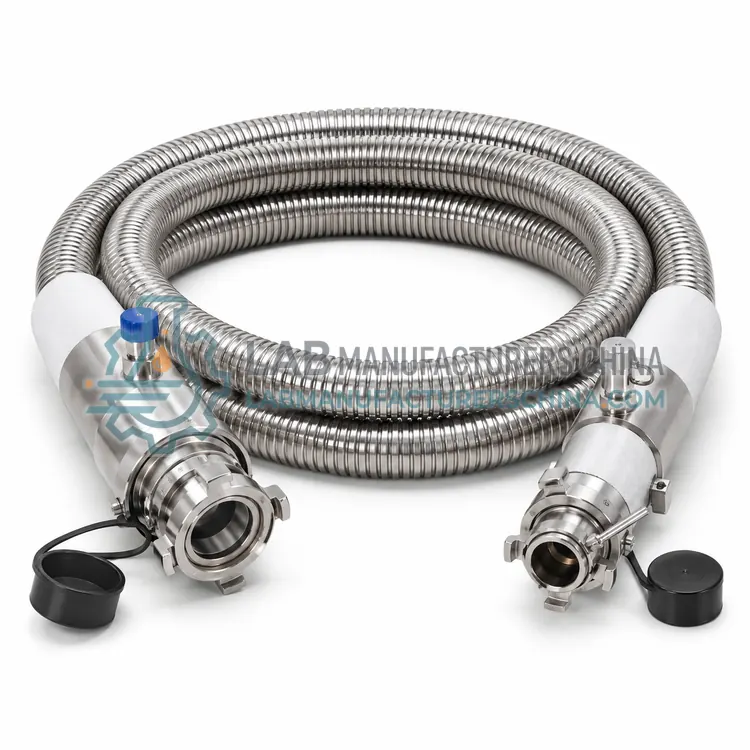
- Vacuum-Jacketed Cryogenic Transfer Hose — A vacuum-jacketed cryogenic transfer hose is a flexible stainless steel hose inside an evacuated outer jacket that carries liquid nitrogen with minimal heat gain.
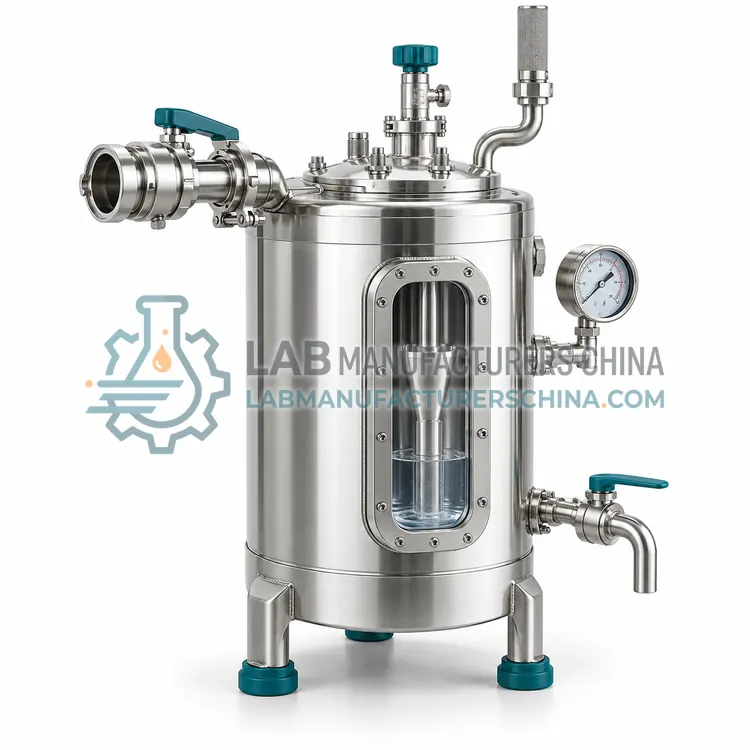
- Cryogenic Phase Separator — A cryogenic phase separator is a small vacuum-insulated vessel with a float-operated vent that separates nitrogen vapor from liquid at the end of a transfer line.
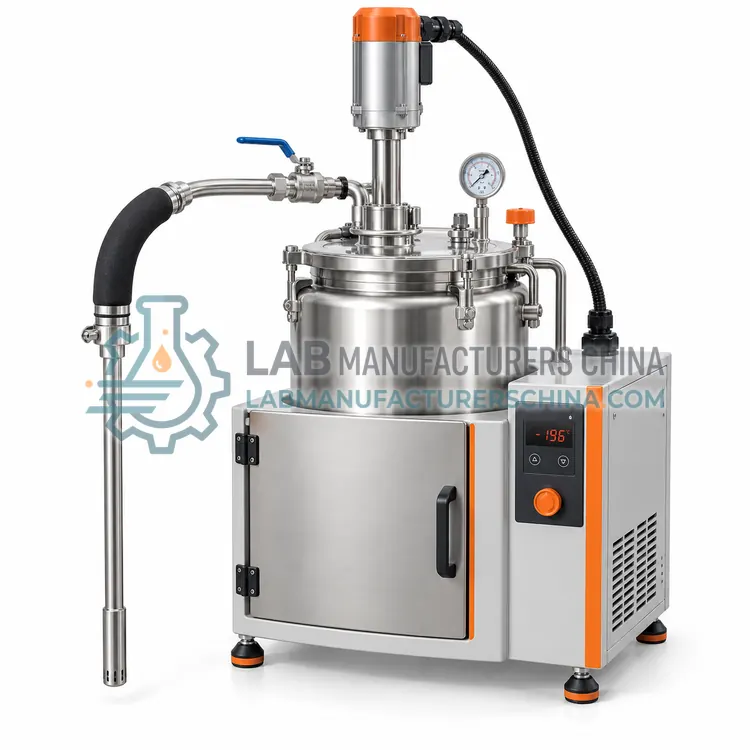
- Cryogenic Liquid Transfer Pump — A cryogenic liquid transfer pump is a submerged-impeller or extended-shaft pump that moves liquid nitrogen at 5–50 L/min independent of source tank pressure.
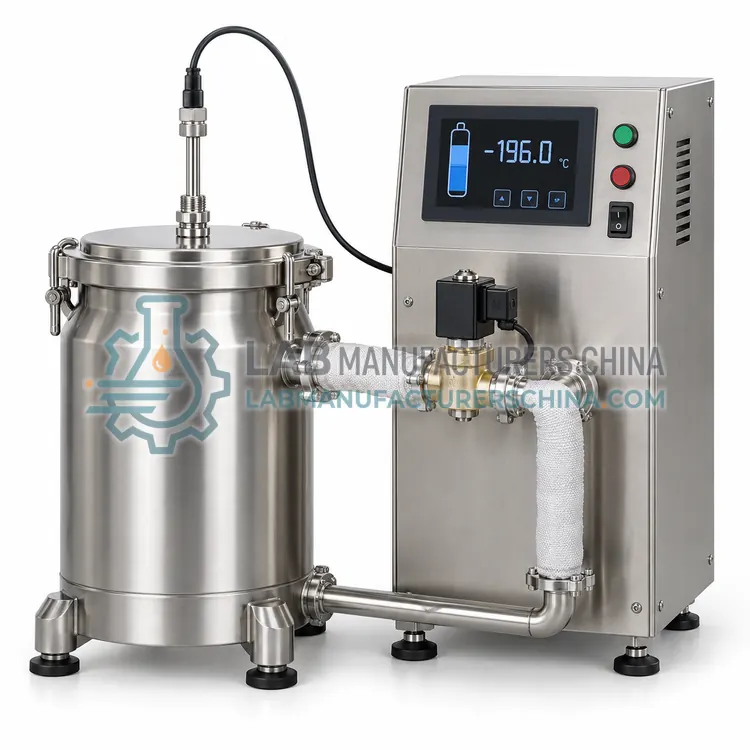
- Liquid Nitrogen Auto-Fill Controller with Solenoid Valve — A liquid nitrogen auto-fill controller monitors level or temperature in a storage vessel and opens a cryogenic solenoid valve to refill from a bulk supply.
- Cryogenic Sample Transfer Cart — A cryogenic sample transfer cart is a wheeled vapor-phase liquid nitrogen container that carries racks or boxes of frozen samples within a facility at about −150°C or below.
How do I choose the right variant?
Match the equipment to the transfer task. For moving liquid from a bulk tank to dewars, choose a vacuum-jacketed hose with compatible fittings, pressure rating and a phase separator. For high-volume or long-distance transfer, consider a cryogenic pump, which works independently of tank pressure. For unattended filling of storage vessels, specify an auto-fill controller with level sensor, solenoid valve and alarms. For moving frozen samples within a facility, choose a transfer cart with vapor-phase capability and suitable dimensions for doors and lifts. Check hose length, bore, connection thread, maximum working pressure and temperature, material compatibility and whether a relief valve is included. Also consider operator safety features such as cold-resistant handles and splash shields.
Where are Cryogenic Transfer Equipment used?
Cryogenic Transfer Equipment are specified in filling dewars from bulk liquid nitrogen tanks, automatic refilling of cryogenic storage vessels, liquid nitrogen supply to cold traps and instruments, transport of frozen samples within facilities and industrial cryogenic cooling lines.
Which standards and certifications apply?
Work with Cryogenic Transfer Equipment is commonly governed by ISO 21010, ISO 21009-1, EN 13458-2, GB/T 18442, EU Pressure Equipment Directive 2014/68/EU and EN 1252-1. Instrument certifications such as CE marking are confirmed per configuration and never assumed.
What are the key considerations before purchase?
Cryogenic hoses and pipes must have pressure relief wherever liquid can be trapped between valves, since trapped liquid expanding on warming can rupture lines. Keep fittings clean and dry and avoid contamination with oil or grease, which is a hazard mostly with oxygen but good practice generally. Inspect hose outer braid and end fittings for damage, and test vacuum integrity of jacketed lines periodically. Operators should wear a face shield, cryogenic gloves and closed footwear, and work in ventilated rooms with oxygen monitors. Cool lines slowly to reduce thermal shock. Replace seals, gaskets and worn couplings on a schedule. Document calibration of level and temperature sensors on auto-fill systems and test alarm function regularly.