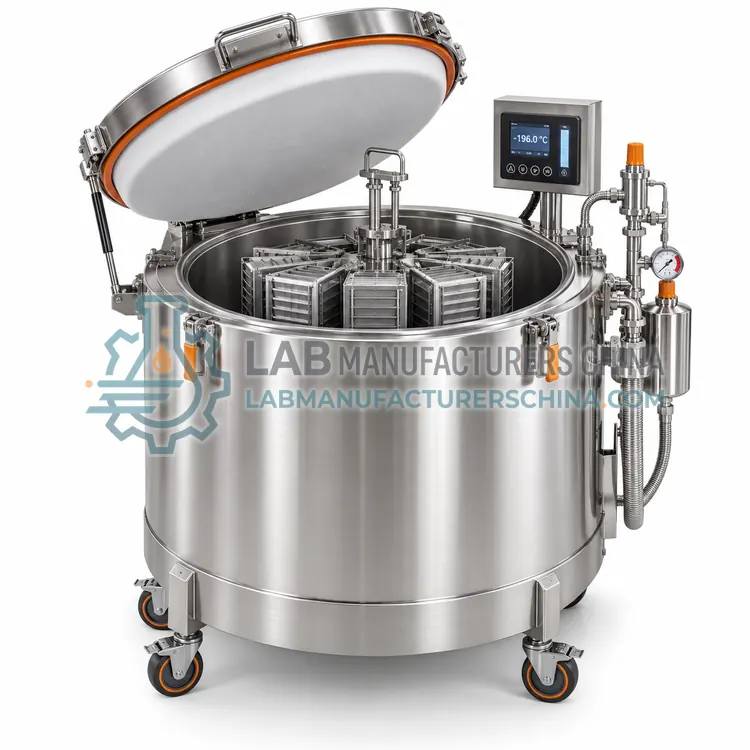
How do Cryogenic Storage Systems work?
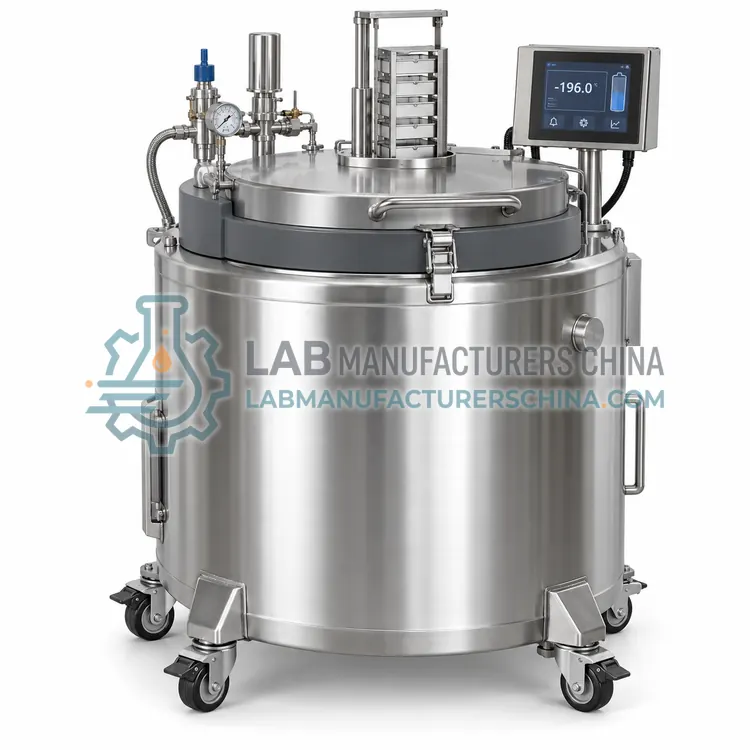
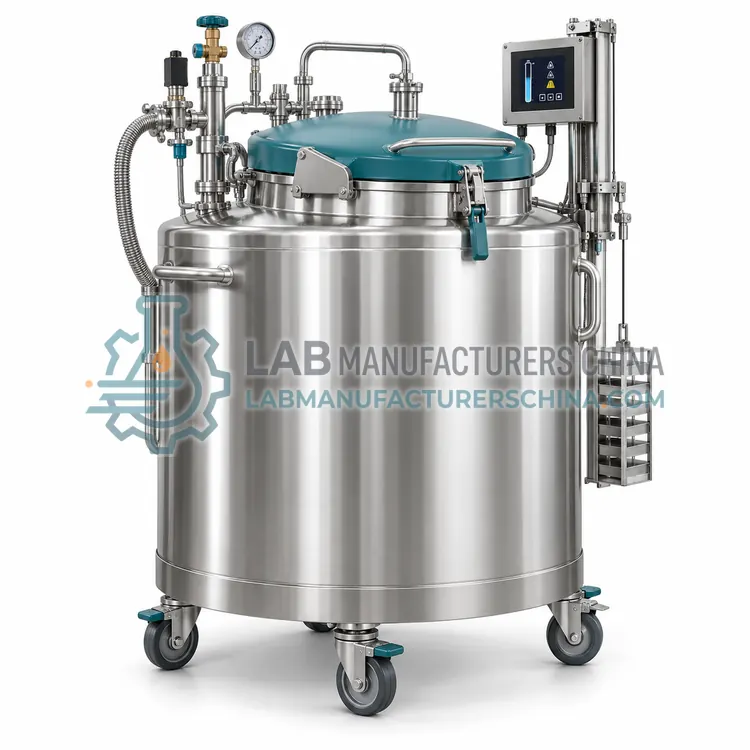
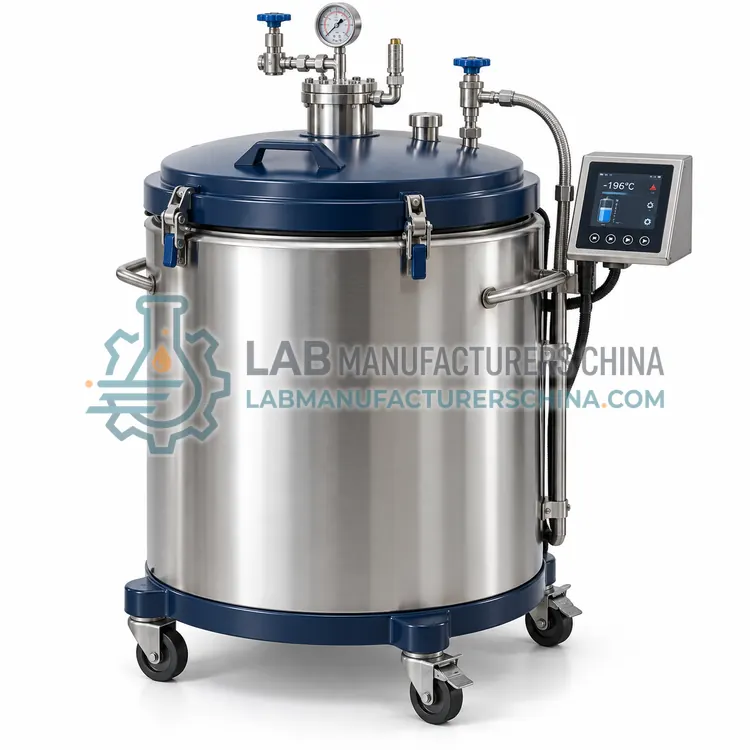
A cryogenic storage system is a large vacuum-insulated liquid nitrogen vessel wrapped in control and safety instrumentation. Heat leaks through the vacuum jacket, lid and neck, and the resulting boil-off keeps the headspace near liquid nitrogen temperature. A level sensor, typically a differential pressure or capacitance probe, triggers a solenoid valve to admit liquid from a bulk supply and hold the level within a set band. In vapor-phase models, a rack holds boxes above the liquid, and temperature probes at several heights verify that the top box stays colder than −150°C. Isothermal designs use a vapor-tight inner liner so that the liquid is separated from the sample space and the vapor stays uniform. A controller logs temperature, level and lid-open events, and sends alarms through local sounders, relays or network connections.
Which Cryogenic Storage Systems variants are available?
- Vapor-Phase Liquid Nitrogen Storage System — A vapor-phase liquid nitrogen storage system keeps samples in cold nitrogen vapor above a controlled liquid pool, at about −150°C to −190°C.
- Liquid-Phase Liquid Nitrogen Storage System — A liquid-phase liquid nitrogen storage system holds samples immersed in or directly above liquid nitrogen at −196°C, with racks that extend into the liquid.
- Isothermal Vapor-Phase Cryogenic Storage System — An isothermal vapor-phase cryogenic storage system surrounds a vapor-filled sample chamber with a sealed liquid nitrogen jacket, holding samples at about −190°C with minimal gradient.
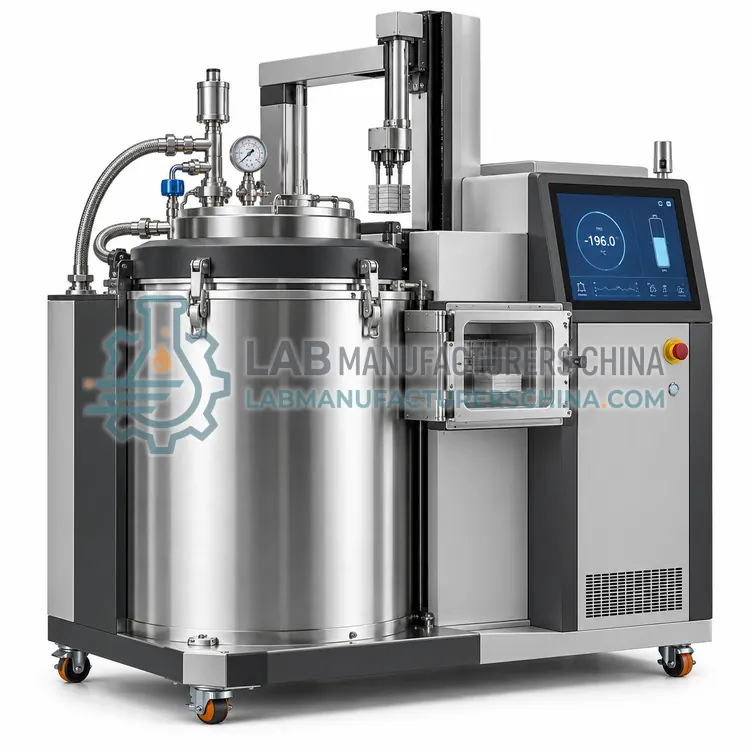
- Automated Cryogenic Sample Storage System with Robotic Retrieval — An automated cryogenic sample storage system uses a robotic arm inside a cold chamber to store and retrieve individual tubes or boxes, typically at −150°C to −190°C.
- Cord Blood Bag Cryogenic Storage System — A cord blood bag cryogenic storage system is a liquid nitrogen vessel with racks or cassettes that hold flat freezing bags, usually 25–100 mL, in the vapor phase at about −150°C or below.
How do I choose the right variant?
Define the required phase first: vapor-phase or isothermal for clinical and cell therapy material, liquid phase where the lowest possible temperature matters and contamination risk is managed. Size storage in vials with spare capacity of 20–30%, and confirm the rack design, because box format drives the real vial count. Compare evaporation rate and nitrogen consumption, then the supply: bulk tank connection, pressure and pipe length. Specify monitoring depth, including temperature probes at several levels, level redundancy, remote alarm, data logging and audit trail for GMP-type work. Consider automated retrieval for very large collections, since it reduces open-lid time and sample warming. Check room size, ceiling height, floor load and ventilation, and plan oxygen sensors and emergency exhaust.
Where are Cryogenic Storage Systems used?
Cryogenic Storage Systems are specified in biobank long-term storage, cell therapy master and working cell banks, cord blood and stem cell banking, fertility center gamete storage and pharmaceutical cell line repositories.
Which standards and certifications apply?
Work with Cryogenic Storage Systems is commonly governed by ISO 21009-1, ISO 20387, IEC 61010-1, GB/T 18442, EU Pressure Equipment Directive 2014/68/EU and ISO 21010. Instrument certifications such as CE marking are confirmed per configuration and never assumed.
What are the key considerations before purchase?
Plan the installation before delivery: floor loading when filled can exceed one tonne, door and lift dimensions must pass the vessel, and a bulk liquid nitrogen line must be insulated and fitted with relief valves. Oxygen sensors should be located at low level and linked to an alarm and forced ventilation. Establish an alarm response plan and a backup vessel with spare capacity so that samples can be moved if a unit fails. Calibrate temperature and level probes at defined intervals, test alarms, and log all events. Minimize lid-open time during access and use inventory software to locate boxes before opening. Plan periodic vessel inspection and safety valve testing in line with local pressure-equipment rules.