Lab Manufacturers China

Cryogenic Freezers

低温冷冻箱

CRF · Cryogenic Equipment · 5 models

By Lab Manufacturers China Technical TeamLast reviewed Standards: IEC 61010-1, IEC 61010-2-011, ISO 20387

Standards referenced

  • IEC 61010-1
  • IEC 61010-2-011
  • ISO 20387
  • ISO 21009-1
  • EN 61326-1
  • GB 4793.1

What are Cryogenic Freezers?

Cryogenic freezers are laboratory freezers that hold or freeze samples at −130°C to −150°C and below, either with mechanical cascade refrigeration or by using liquid nitrogen for controlled freezing. Biobanks, cell therapy laboratories, fertility centers and research institutes use them for cell lines, tissues and other samples needing storage below the glass transition point.

5 models of Cryogenic Freezers

The 5 models below are current configurations; specifications are confirmed on quotation.

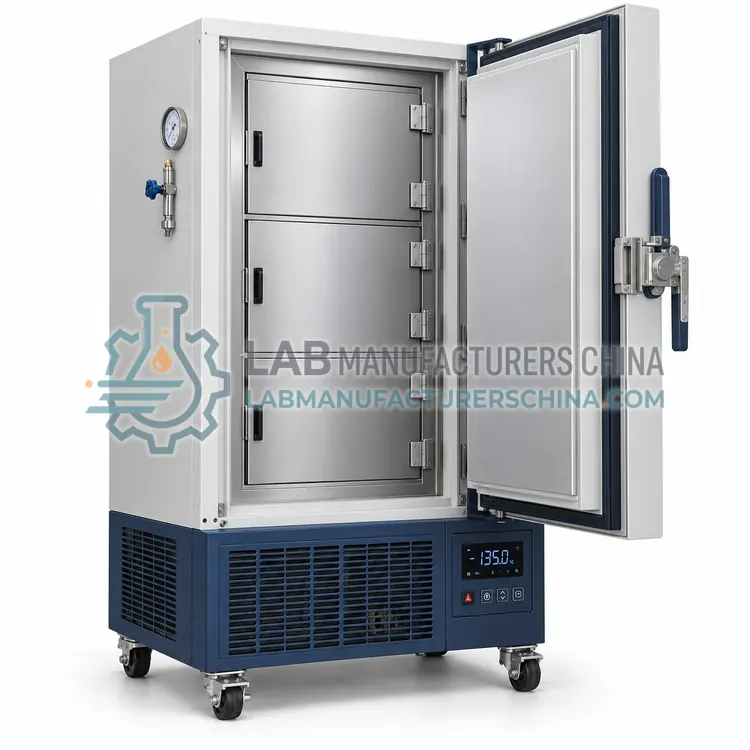
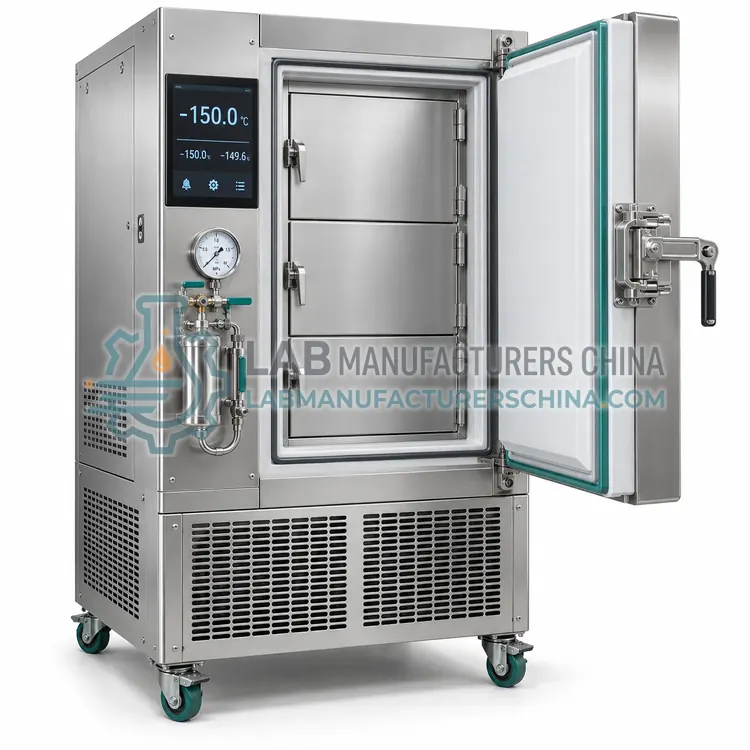
Upright Mechanical Cryogenic Freezer (−150°C)

立式机械式低温冷冻箱(−150°C)

  • CRF-0001
  • Cryogenic Freezers
  • CE (to be confirmed)
  • ISO 9001 manufacturing (to be confirmed)
  • IEC 61010-1 (to be confirmed)
Temperature range:
−100°C to −150°C
Capacity:
300–600 L
Storage (2 mL vials):
20,000–40,000 vials
Temperature uniformity:
±5°C
Pull-down time:
6–10 h from ambient
Refrigeration system:
Cascade or mixed refrigerant

An upright mechanical cryogenic freezer reaches about −150°C with cascade or mixed-refrigerant compression and uses inner doors and shelves for box storage. It is the right choice for biobanks and laboratories that want liquid-nitrogen-free storage at vapor-phase temperatures with convenient access.

Request a quote
View details

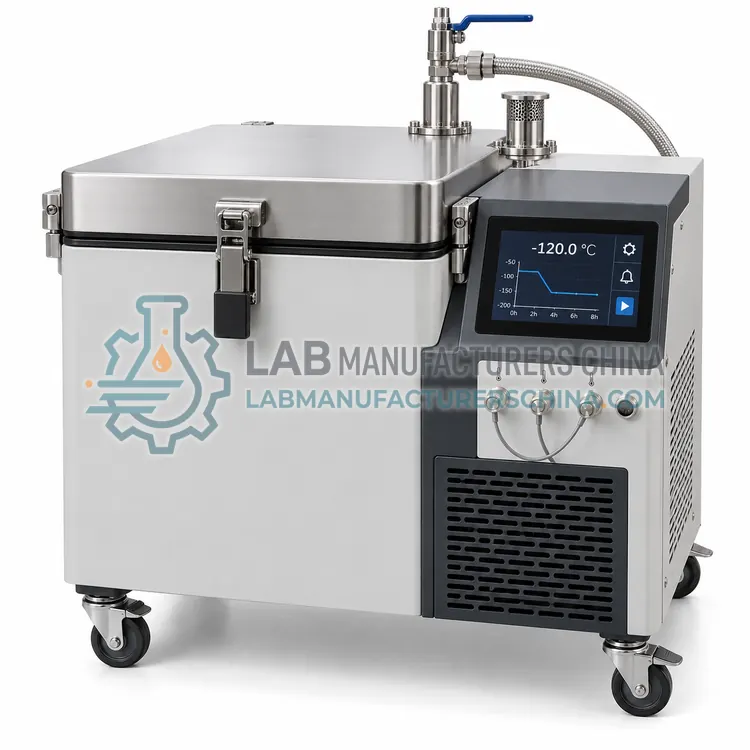
−135°C Mechanical Cryogenic Freezer

−135°C 机械式低温冷冻箱

  • CRF-0002
  • Cryogenic Freezers
  • CE (to be confirmed)
  • ISO 9001 manufacturing (to be confirmed)
  • IEC 61010-1 (to be confirmed)
Temperature range:
−100°C to −135°C
Capacity:
200–500 L
Temperature uniformity:
±5°C
Pull-down time:
4–8 h from ambient
Refrigeration system:
Two-stage cascade or mixed refrigerant
Energy consumption:
8–15 kWh/day

A −135°C mechanical cryogenic freezer is a single-refrigerant-loop or mixed-refrigerant unit reaching about −135°C to −140°C, at the edge of the glass transition region. It is the right choice for laboratories that need deep storage below −86°C without the cost and complexity of a −150°C cascade system.

Request a quote
View details

Liquid Nitrogen Controlled-Rate Freezer

液氮程序降温仪

  • CRF-0003
  • Cryogenic Freezers
  • CE (to be confirmed)
  • ISO 9001 manufacturing (to be confirmed)
  • ISO 13485 manufacturing (to be confirmed)
Chamber volume:
5–50 L
Cooling rate range:
−0.1 to −10°C/min
Final temperature:
Down to −180°C
Temperature accuracy:
±1°C
Sample capacity:
10–500 vials or bags per run
Program steps:
Up to 50

A liquid nitrogen controlled-rate freezer cools samples along a programmed temperature curve, commonly −1°C per minute, by injecting liquid nitrogen into an insulated chamber. It is the right choice when cryopreservation protocols for cells, embryos or tissues require reproducible, validated freezing profiles.

Request a quote
View details

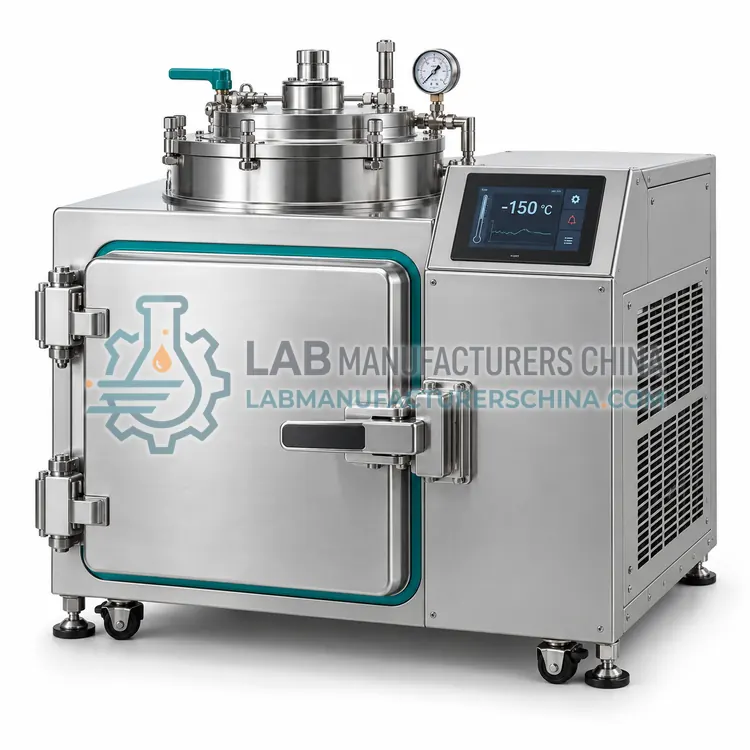
Compact Benchtop Cryogenic Freezer (−150°C)

紧凑型台式低温冷冻箱(−150°C)

  • CRF-0004
  • Cryogenic Freezers
  • CE (to be confirmed)
  • ISO 9001 manufacturing (to be confirmed)
  • IEC 61010-1 (to be confirmed)
Temperature range:
−100°C to −150°C
Chamber volume:
10–50 L
Storage (2 mL vials):
500–3,000 vials
Pull-down time:
3–6 h from ambient
Cooling technology:
Free-piston Stirling or compact cascade
Power consumption:
0.3–1.0 kW

A compact benchtop cryogenic freezer is a small-volume mechanical unit of about 10–50 L that reaches roughly −150°C using a Stirling or small cascade cooler. It is the right choice for small collections, satellite laboratories or backup storage where a full-size unit or liquid nitrogen vessel is impractical.

Request a quote
View details

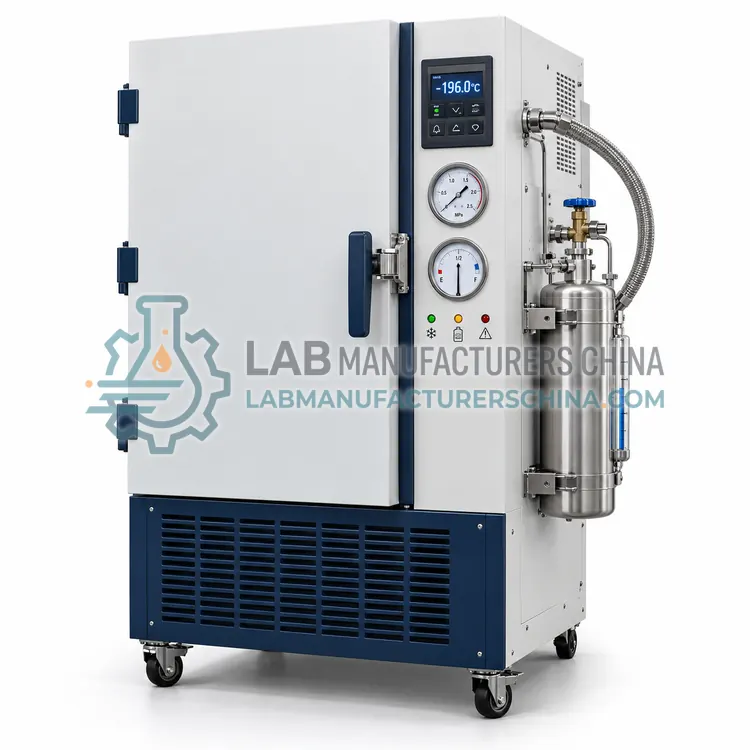
Hybrid Cryogenic Freezer with Liquid Nitrogen Backup

带液氮备份的混合式低温冷冻箱

  • CRF-0005
  • Cryogenic Freezers
  • CE (to be confirmed)
  • ISO 9001 manufacturing (to be confirmed)
  • IEC 61010-1 (to be confirmed)
Temperature range:
−100°C to −150°C
Capacity:
300–600 L
Storage (2 mL vials):
20,000–40,000 vials
Backup trigger:
Temperature threshold or power loss
Backup duration:
2–4 days per 180 L cylinder
LN2 supply pressure:
1–2 bar

A hybrid cryogenic freezer runs as a mechanical −150°C unit in normal operation and automatically injects liquid nitrogen if temperature rises or power fails. It is the right choice for collections that want nitrogen-free daily operation with the safety of a liquid nitrogen fallback.

Request a quote
View details

Compare Cryogenic Freezers models

ModelTemperature rangeCapacityStorage (2 mL vials)Temperature uniformityPull-down time
Upright Mechanical Cryogenic Freezer (−150°C)CRF-0001−100°C to −150°C300–600 L20,000–40,000 vials±5°C6–10 h from ambient
−135°C Mechanical Cryogenic FreezerCRF-0002−100°C to −135°C200–500 L—±5°C4–8 h from ambient
Liquid Nitrogen Controlled-Rate FreezerCRF-0003—————
Compact Benchtop Cryogenic Freezer (−150°C)CRF-0004−100°C to −150°C—500–3,000 vials±5°C3–6 h from ambient
Hybrid Cryogenic Freezer with Liquid Nitrogen BackupCRF-0005−100°C to −150°C300–600 L20,000–40,000 vials——

Indicative values for this product class. Final specifications are confirmed on the quotation and in the calibration documents supplied with the instrument.

How do Cryogenic Freezers work?

Mechanical cryogenic freezers reach −150°C through multi-stage refrigeration. A cascade system links two or three compressor circuits, each with a different refrigerant, so that the evaporator of one stage cools the condenser of the next. Mixed-refrigerant systems use a single compressor with a blend of refrigerants that evaporates across a wide temperature range. Vacuum insulation panels and thick foam limit heat gain, and the chamber uses uniform air circulation or conduction shelves. Controlled-rate freezers follow a different principle, injecting liquid nitrogen or using a cold head to cool the chamber along a programmed ramp, commonly −1°C per minute, with a controller and sensors that follow temperature setpoints. Both types use PT100 sensors, alarms, and backup options such as liquid nitrogen injection or carbon dioxide.

Which Cryogenic Freezers variants are available?

  • Upright Mechanical Cryogenic Freezer (−150°C) — An upright mechanical cryogenic freezer reaches about −150°C with cascade or mixed-refrigerant compression and uses inner doors and shelves for box storage.
  • −135°C Mechanical Cryogenic Freezer — A −135°C mechanical cryogenic freezer is a single-refrigerant-loop or mixed-refrigerant unit reaching about −135°C to −140°C, at the edge of the glass transition region.
  • Liquid Nitrogen Controlled-Rate Freezer — A liquid nitrogen controlled-rate freezer cools samples along a programmed temperature curve, commonly −1°C per minute, by injecting liquid nitrogen into an insulated chamber.
  • Compact Benchtop Cryogenic Freezer (−150°C) — A compact benchtop cryogenic freezer is a small-volume mechanical unit of about 10–50 L that reaches roughly −150°C using a Stirling or small cascade cooler.
  • Hybrid Cryogenic Freezer with Liquid Nitrogen Backup — A hybrid cryogenic freezer runs as a mechanical −150°C unit in normal operation and automatically injects liquid nitrogen if temperature rises or power fails.

How do I choose the right variant?

Decide first between storage and freezing. For storage, compare mechanical freezers at −135°C to −150°C and liquid nitrogen vessels, weighing the benefit of no nitrogen supply against dependence on electricity. Check that the stated temperature is achieved at full load and at your room temperature, not only when empty. Size capacity in boxes or vials and examine the shelf or rack format. Compare power consumption, heat rejection to the room, noise, recovery time after door opening and alarm and backup options. For controlled freezing, confirm rate range, number of programmable steps, sample holding format and whether liquid nitrogen supply is acceptable. For regulated work, add data logging, password control and calibration support.

Where are Cryogenic Freezers used?

Cryogenic Freezers are specified in biobank sample storage without liquid nitrogen, cell line and primary cell storage, controlled-rate freezing of cell therapy products, tissue and organoid cryopreservation and backup storage for liquid nitrogen vessels.

Which standards and certifications apply?

Work with Cryogenic Freezers is commonly governed by IEC 61010-1, IEC 61010-2-011, ISO 20387, ISO 21009-1, EN 61326-1 and GB 4793.1. Instrument certifications such as CE marking are confirmed per configuration and never assumed.

What are the key considerations before purchase?

Mechanical cryogenic freezers release substantial heat, often 1–3 kW, so allow at least 20–30 cm of clearance and adequate room cooling. Use a dedicated circuit with a stable supply and consider a UPS or a backup generator, as well as a liquid nitrogen or carbon dioxide backup injection system. Keep the ambient temperature below about 32°C. Limit door opening time and avoid loading warm samples in bulk. Clean the condenser filter every one to three months. Calibrate temperature sensors at least annually, test the alarms and log temperature continuously. Controlled-rate freezers need a clean liquid nitrogen supply, exhaust ventilation and oxygen monitoring. Plan service access and preventive maintenance contracts.

Frequently asked questions about Cryogenic Freezers

An ultra-low freezer operates at −80°C to −86°C, while a cryogenic freezer operates at −130°C to −150°C or lower. The lower range matters because it is below the glass transition of water near −135°C, where molecular motion effectively stops.

Need help specifying Cryogenic Freezers?

Request a quote