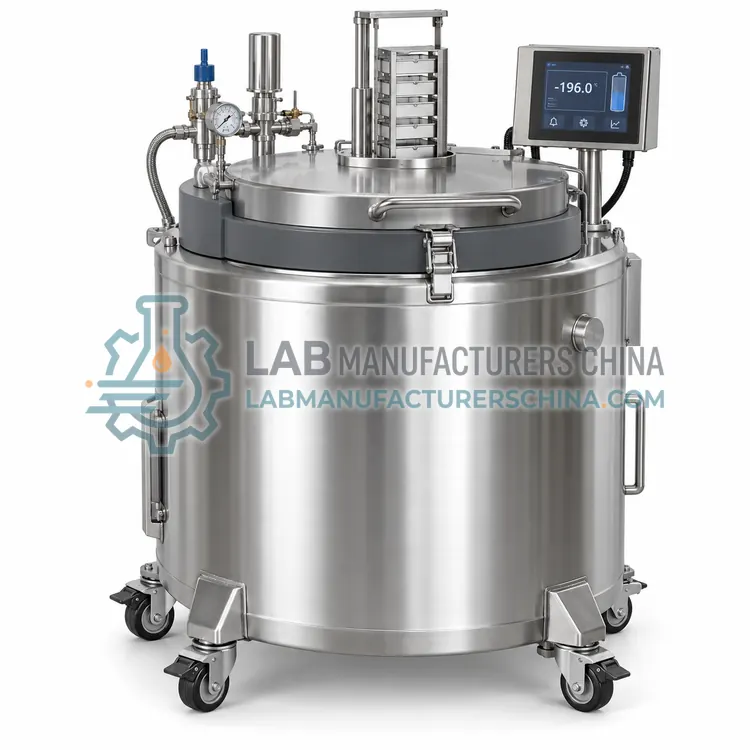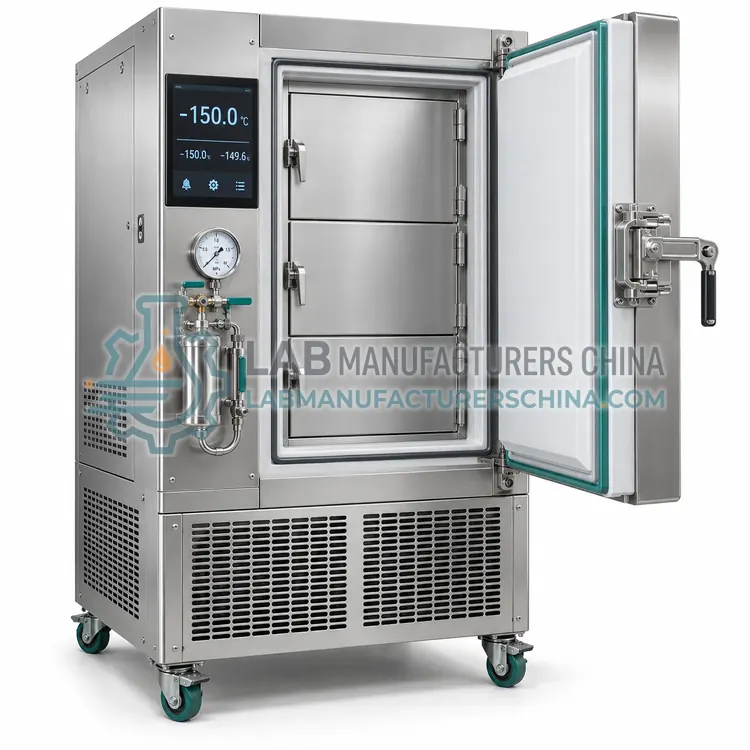
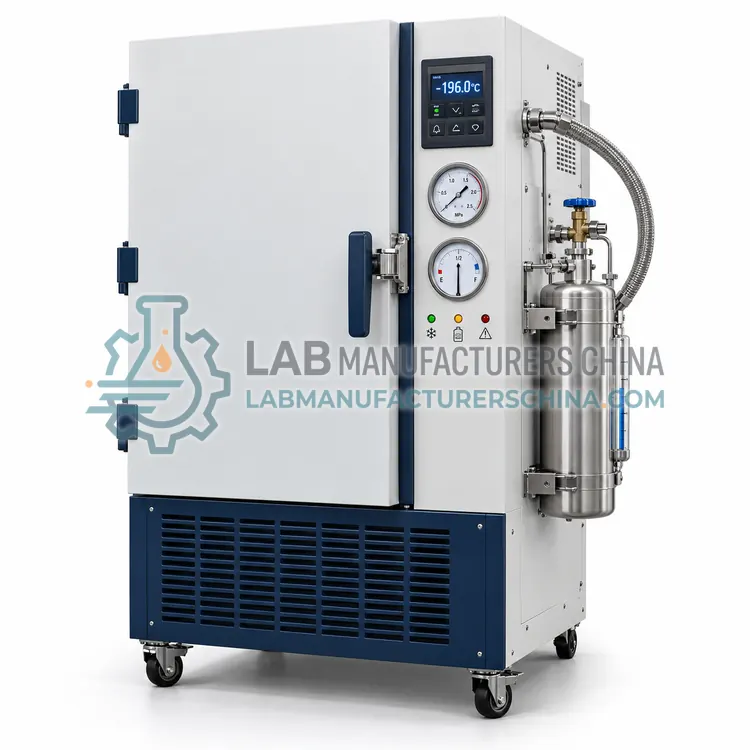
Hybrid Cryogenic Freezer with Liquid Nitrogen Backup
带液氮备份的混合式低温冷冻箱
- SKU CRF-0005
- Cryogenic Freezers
- CE (to be confirmed)
- ISO 9001 manufacturing (to be confirmed)
- IEC 61010-1 (to be confirmed)
- ISO 13485 manufacturing (to be confirmed)
Price on request — FOB / CIF quoted per order
Prices depend on configuration, quantity and destination port.
Key specifications
| Temperature range | −100°C to −150°C |
|---|---|
| Capacity | 300–600 L |
| Storage (2 mL vials) | 20,000–40,000 vials |
| Backup trigger | Temperature threshold or power loss |
| Backup duration | 2–4 days per 180 L cylinder |
| LN2 supply pressure | 1–2 bar |
Request a quote Download brochure · to be provided
By Lab Manufacturers China Technical TeamLast reviewed Standards: IEC 61010-1, IEC 61010-2-011, ISO 20387
What is the Hybrid Cryogenic Freezer with Liquid Nitrogen Backup?
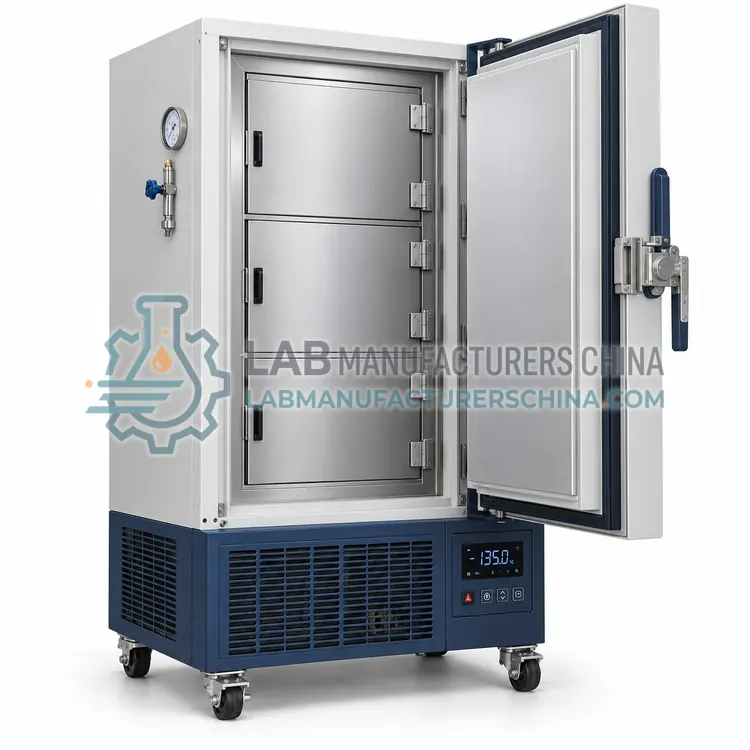
A hybrid cryogenic freezer runs as a mechanical −150°C unit in normal operation and automatically injects liquid nitrogen if temperature rises or power fails. It is the right choice for collections that want nitrogen-free daily operation with the safety of a liquid nitrogen fallback.
What is the Hybrid Cryogenic Freezer with Liquid Nitrogen Backup?
A hybrid cryogenic freezer runs as a mechanical −150°C unit in normal operation and automatically injects liquid nitrogen if temperature rises or power fails. It is the right choice for collections that want nitrogen-free daily operation with the safety of a liquid nitrogen fallback.
Overview
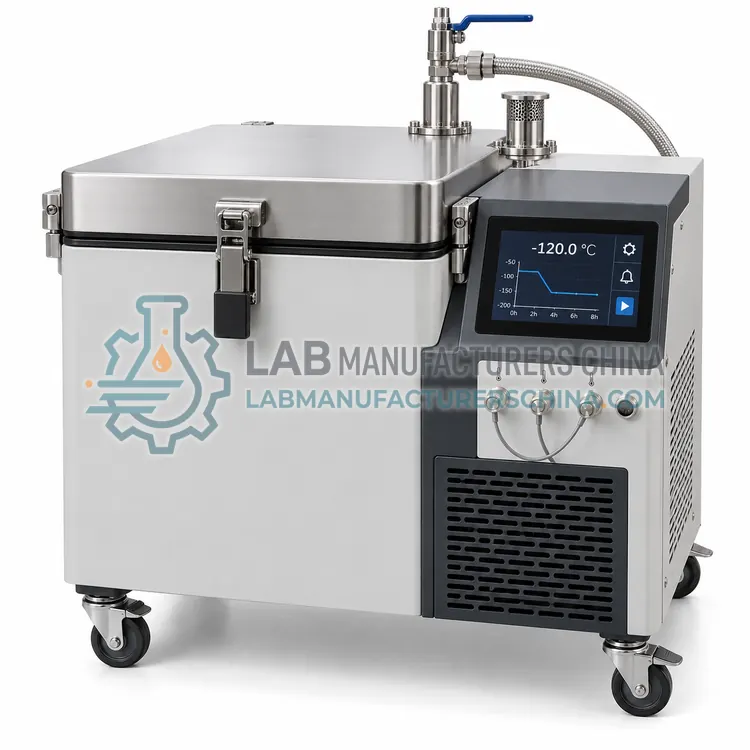
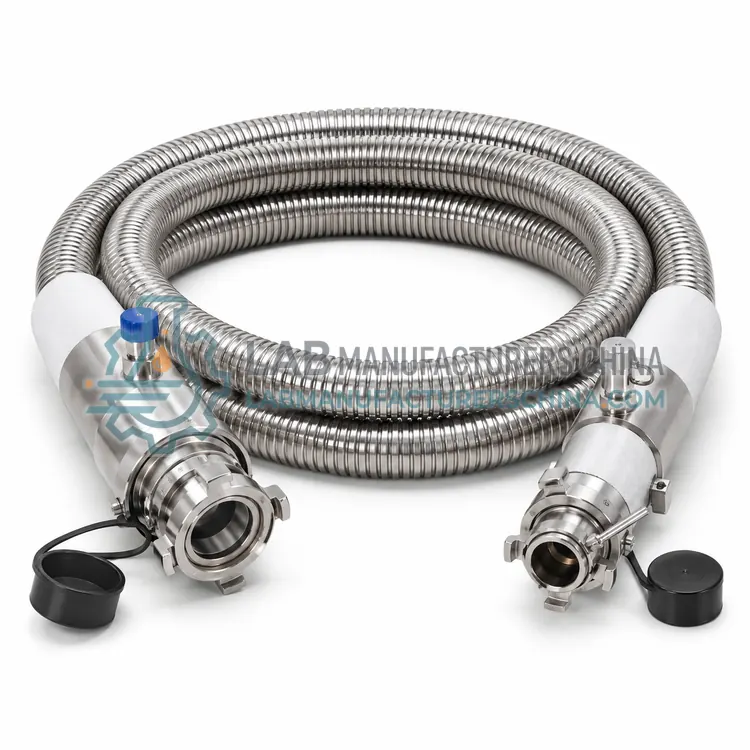
This design pairs a mechanical cascade system with a liquid nitrogen injection circuit and a battery-backed controller. A liquid nitrogen source, either a cylinder or a bulk line, is connected to a solenoid valve that opens when the chamber reaches a set temperature, for example −130°C, or when the compressor stops. Nitrogen vapor flows through the chamber, holding temperature near setpoint for 2 to 4 days per 180 L cylinder, depending on load. During normal operation no nitrogen is consumed, so the running cost is mainly electricity. Capacities are 300 to 600 L in upright format, with shelves or racks holding 20,000 to 40,000 vials. Controllers keep event logs and communicate through remote alarms. Installation requires a safe nitrogen supply location, pressure-rated piping, exhaust considerations and oxygen sensors in the room.
How does it work?
Mechanical cryogenic freezers reach −150°C through multi-stage refrigeration. A cascade system links two or three compressor circuits, each with a different refrigerant, so that the evaporator of one stage cools the condenser of the next. Mixed-refrigerant systems use a single compressor with a blend of refrigerants that evaporates across a wide temperature range. Vacuum insulation panels and thick foam limit heat gain, and the chamber uses uniform air circulation or conduction shelves. Controlled-rate freezers follow a different principle, injecting liquid nitrogen or using a cold head to cool the chamber along a programmed ramp, commonly −1°C per minute, with a controller and sensors that follow temperature setpoints. Both types use PT100 sensors, alarms, and backup options such as liquid nitrogen injection or carbon dioxide.
What are the key features?
- Automatic liquid nitrogen injection on high temperature or compressor failure.
- Normal operation is nitrogen-free, so running cost is mainly electricity.
- Battery-backed controller keeps valves and alarms active during outages.
- Backup supply from a cylinder or bulk line sized for two to four days.
- Event log records injection activity and temperature history.
- Upright format with shelves or racks for standard cryoboxes.
What are the technical specifications?
A typical hybrid cryogenic freezer with liquid nitrogen backup configuration offers temperature range of −100°C to −150°C, capacity of 300–600 L, storage (2 mL vials) of 20,000–40,000 vials, backup trigger of Temperature threshold or power loss, backup duration of 2–4 days per 180 L cylinder and LN2 supply pressure of 1–2 bar. Values are indicative of the product class; the exact figures for each configuration are confirmed on the quotation and the calibration documents supplied with the instrument.
Which applications is it used for?
The Hybrid Cryogenic Freezer with Liquid Nitrogen Backup is used in clinical biobank storage, cell therapy manufacturing storage, critical sample storage with power risks and laboratories without dedicated generators. Across the wider Cryogenic Freezers class, laboratories also deploy it for biobank sample storage without liquid nitrogen, cell line and primary cell storage and controlled-rate freezing of cell therapy products.
Which standards and certifications apply?
Relevant standards and methods include IEC 61010-1, IEC 61010-2-011, ISO 20387, ISO 21009-1, EN 61326-1 and GB 4793.1. Certification candidates for this model are CE, ISO 9001 manufacturing, IEC 61010-1 and ISO 13485 manufacturing; each is to be confirmed for the specific configuration before shipment, and certificates are supplied only where they have been issued.
Mechanical cryogenic freezers release substantial heat, often 1–3 kW, so allow at least 20–30 cm of clearance and adequate room cooling. Use a dedicated circuit with a stable supply and consider a UPS or a backup generator, as well as a liquid nitrogen or carbon dioxide backup injection system. Keep the ambient temperature below about 32°C. Limit door opening time and avoid loading warm samples in bulk. Clean the condenser filter every one to three months. Calibrate temperature sensors at least annually, test the alarms and log temperature continuously. Controlled-rate freezers need a clean liquid nitrogen supply, exhaust ventilation and oxygen monitoring. Plan service access and preventive maintenance contracts.
How do I select the right Hybrid Cryogenic Freezer with Liquid Nitrogen Backup?
Select a hybrid unit when sample value is high and power reliability is uncertain, but daily nitrogen use is unwanted. A standard mechanical unit with a generator suits sites with reliable backup power. In an RFQ, specify nitrogen source, backup duration, battery runtime, alarm integration and room oxygen monitoring.
How does it compare with other Cryogenic Freezers variants?
Decide first between storage and freezing. For storage, compare mechanical freezers at −135°C to −150°C and liquid nitrogen vessels, weighing the benefit of no nitrogen supply against dependence on electricity. Check that the stated temperature is achieved at full load and at your room temperature, not only when empty. Size capacity in boxes or vials and examine the shelf or rack format. Compare power consumption, heat rejection to the room, noise, recovery time after door opening and alarm and backup options. For controlled freezing, confirm rate range, number of programmable steps, sample holding format and whether liquid nitrogen supply is acceptable. For regulated work, add data logging, password control and calibration support.
Full specifications
| Temperature range | −100°C to −150°C |
|---|---|
| Capacity | 300–600 L |
| Storage (2 mL vials) | 20,000–40,000 vials |
| Backup trigger | Temperature threshold or power loss |
| Backup duration | 2–4 days per 180 L cylinder |
| LN2 supply pressure | 1–2 bar |
| Controller backup | Battery, 8–24 h |
| Energy consumption | 10–20 kWh/day |
| Refrigeration system | Cascade or mixed refrigerant |
| Power supply | 220 V AC, 50/60 Hz, 2.5–3.5 kW |
Indicative values for this product class. Final specifications are confirmed on the quotation and in the calibration documents supplied with the instrument.
Applications
- Clinical biobank storage
- Cell therapy manufacturing storage
- Critical sample storage with power risks
- Laboratories without dedicated generators
Key features
- Automatic liquid nitrogen injection on high temperature or compressor failure.
- Normal operation is nitrogen-free, so running cost is mainly electricity.
- Battery-backed controller keeps valves and alarms active during outages.
- Backup supply from a cylinder or bulk line sized for two to four days.
- Event log records injection activity and temperature history.
- Upright format with shelves or racks for standard cryoboxes.
Frequently asked questions about Hybrid Cryogenic Freezer with Liquid Nitrogen Backup
It activates when chamber temperature rises above a preset threshold, commonly −120°C to −130°C, or when the controller detects loss of compressor operation or mains power. The valve then opens and nitrogen vapor cools the chamber until normal operation resumes.
It needs a connected cylinder or bulk line for emergencies, but consumption in normal operation is essentially zero. The supply should be checked regularly so that it is full when needed, and the pressure-relief arrangement must be documented.
Yes, it is strongly recommended. If backup injection occurs in a small room, nitrogen can displace oxygen. Mount a sensor at low level, link it to an audible alarm and ensure ventilation according to workplace safety rules.
An ultra-low freezer operates at −80°C to −86°C, while a cryogenic freezer operates at −130°C to −150°C or lower. The lower range matters because it is below the glass transition of water near −135°C, where molecular motion effectively stops.
It can for many collections, removing nitrogen deliveries and lowering asphyxiation risk, but temperature is typically −135°C to −150°C rather than −196°C and the unit depends on power. Many sites keep duplicate samples in both formats.
Mechanical −150°C freezers typically draw 1.5–4 kWh per day per 100 L under normal use, and release several hundred watts to 2 kW of heat to the room. Always ask for measured energy consumption under defined load and ambient conditions.
Related models