Cryogenic Sample Transfer Cart
低温样品转运车
- SKU CTE-0005
- Cryogenic Transfer Equipment
- CE (to be confirmed)
- ISO 9001 manufacturing (to be confirmed)
- GB/T 18442 conformity (to be confirmed)
Price on request — FOB / CIF quoted per order
Prices depend on configuration, quantity and destination port.
Key specifications
| Vessel volume | 20–70 L |
|---|---|
| Sample capacity | 500–3,000 vials |
| Storage temperature | −150°C to −190°C |
| Holding time | 2–5 days between refills |
| Evaporation rate | 0.5–1.5 L/day |
| Overall width | 550–700 mm |
Request a quote Download brochure · to be provided
By Lab Manufacturers China Technical TeamLast reviewed Standards: ISO 21010, ISO 21009-1, EN 13458-2
What is the Cryogenic Sample Transfer Cart?
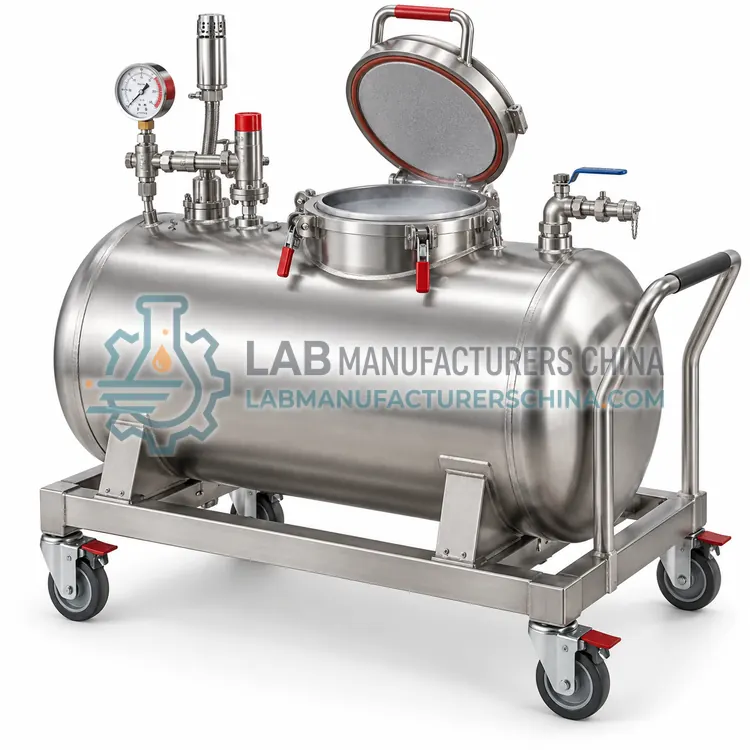
A cryogenic sample transfer cart is a wheeled vapor-phase liquid nitrogen container that carries racks or boxes of frozen samples within a facility at about −150°C or below. It is the right choice for moving samples between storage vessels, processing rooms and other laboratories.
What is the Cryogenic Sample Transfer Cart?
A cryogenic sample transfer cart is a wheeled vapor-phase liquid nitrogen container that carries racks or boxes of frozen samples within a facility at about −150°C or below. It is the right choice for moving samples between storage vessels, processing rooms and other laboratories.
Overview
The cart holds a small insulated liquid nitrogen vessel, typically 20 to 70 L, on a wheeled frame with brakes and a push handle. A rack or canister inside holds sample boxes above a liquid pool, keeping them in the vapor phase at about −150°C to −190°C for several hours with the lid closed. The lid is insulated and has a handle or hinge for one-handed opening, and the cart may include a level indicator, temperature probe and shelf for tools or cryo gloves. Wheels are cushioned, brakes are lockable and the cart is narrow enough for standard doors and lifts. Holding time is typically two to five days between refills depending on opening. Use of a dedicated cart reduces time spent outside storage and prevents dropped or warmed samples. Protective shields and splash guards improve operator safety when loading or unloading.
How does it work?
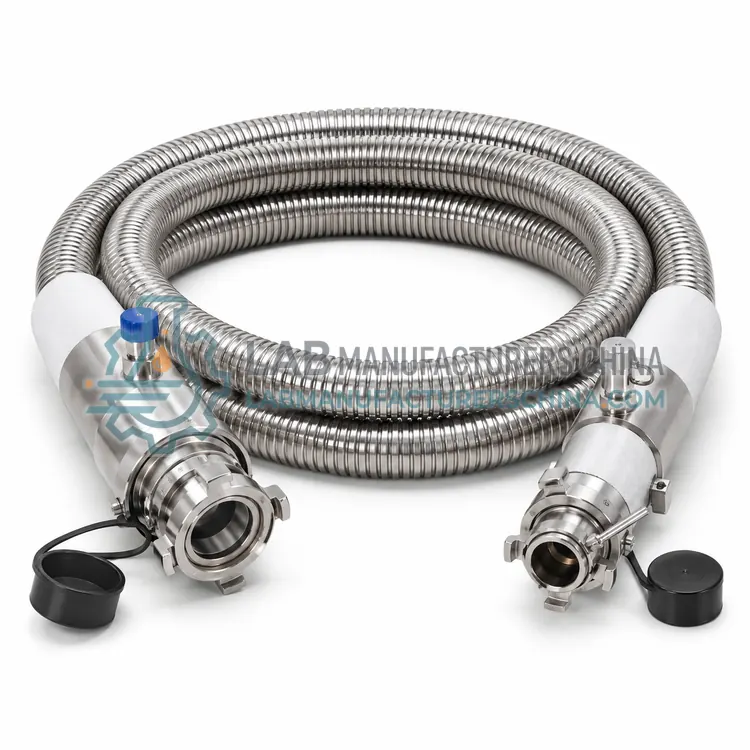
Cryogenic transfer equipment reduces heat leak while liquid moves from a source vessel to a destination. Liquid is driven either by vessel pressure, by a self-pressurizing circuit that raises headspace pressure to about 0.5–1.5 bar, or by a cryogenic pump with a submerged or extended-shaft impeller. Vacuum-jacketed hoses and pipes suppress heat transfer with an evacuated annulus and multilayer insulation, so less liquid flashes to gas in the line. A phase separator placed at the outlet vents vapor through a float-operated valve so that only liquid flows to the receiving vessel, stabilizing filling. Auto-fill controllers combine level sensors, temperature sensors and solenoid valves that open when liquid is needed and close when level is reached, with timeout and fault alarms.
What are the key features?
- Vapor-phase sample carrier holding boxes above a liquid nitrogen pool.
- Insulated lid with one-handed opening and locking handle.
- Lockable cushioned wheels suited to lab floors and lifts.
- Level indicator and temperature probe verify condition before transport.
- Narrow frame passes standard doors and lift entrances.
- Holding time of two to five days between nitrogen refills.
What are the technical specifications?
A typical cryogenic sample transfer cart configuration offers vessel volume of 20–70 L, sample capacity of 500–3,000 vials, storage temperature of −150°C to −190°C, holding time of 2–5 days between refills, evaporation rate of 0.5–1.5 L/day and overall width of 550–700 mm. Values are indicative of the product class; the exact figures for each configuration are confirmed on the quotation and the calibration documents supplied with the instrument.
Which applications is it used for?
The Cryogenic Sample Transfer Cart is used in moving samples between storage vessels, transport to processing or thaw rooms, inventory audits and reorganization and sample transfer between laboratories. Across the wider Cryogenic Transfer Equipment class, laboratories also deploy it for filling dewars from bulk liquid nitrogen tanks, automatic refilling of cryogenic storage vessels and liquid nitrogen supply to cold traps and instruments.
Which standards and certifications apply?
Relevant standards and methods include ISO 21010, ISO 21009-1, EN 13458-2, GB/T 18442, EU Pressure Equipment Directive 2014/68/EU and EN 1252-1. Certification candidates for this model are CE, ISO 9001 manufacturing and GB/T 18442 conformity; each is to be confirmed for the specific configuration before shipment, and certificates are supplied only where they have been issued.
Cryogenic hoses and pipes must have pressure relief wherever liquid can be trapped between valves, since trapped liquid expanding on warming can rupture lines. Keep fittings clean and dry and avoid contamination with oil or grease, which is a hazard mostly with oxygen but good practice generally. Inspect hose outer braid and end fittings for damage, and test vacuum integrity of jacketed lines periodically. Operators should wear a face shield, cryogenic gloves and closed footwear, and work in ventilated rooms with oxygen monitors. Cool lines slowly to reduce thermal shock. Replace seals, gaskets and worn couplings on a schedule. Document calibration of level and temperature sensors on auto-fill systems and test alarm function regularly.
How do I select the right Cryogenic Sample Transfer Cart?
Select a transfer cart when you regularly move racks or boxes within a site. For shipping between sites, a dry shipper is more appropriate. In an RFQ, specify vessel volume, rack format, door and lift dimensions, required holding time, temperature monitoring and accessories.
How does it compare with other Cryogenic Transfer Equipment variants?
Match the equipment to the transfer task. For moving liquid from a bulk tank to dewars, choose a vacuum-jacketed hose with compatible fittings, pressure rating and a phase separator. For high-volume or long-distance transfer, consider a cryogenic pump, which works independently of tank pressure. For unattended filling of storage vessels, specify an auto-fill controller with level sensor, solenoid valve and alarms. For moving frozen samples within a facility, choose a transfer cart with vapor-phase capability and suitable dimensions for doors and lifts. Check hose length, bore, connection thread, maximum working pressure and temperature, material compatibility and whether a relief valve is included. Also consider operator safety features such as cold-resistant handles and splash shields.
Full specifications
| Vessel volume | 20–70 L |
|---|---|
| Sample capacity | 500–3,000 vials |
| Storage temperature | −150°C to −190°C |
| Holding time | 2–5 days between refills |
| Evaporation rate | 0.5–1.5 L/day |
| Overall width | 550–700 mm |
| Wheels | 4 cushioned casters, 2 with brakes |
| Loaded weight | 60–150 kg |
| Materials | Stainless steel vessel and frame |
| Accessories | Level gauge, temperature probe, tool shelf |
Indicative values for this product class. Final specifications are confirmed on the quotation and in the calibration documents supplied with the instrument.
Applications
- Moving samples between storage vessels
- Transport to processing or thaw rooms
- Inventory audits and reorganization
- Sample transfer between laboratories
Key features
- Vapor-phase sample carrier holding boxes above a liquid nitrogen pool.
- Insulated lid with one-handed opening and locking handle.
- Lockable cushioned wheels suited to lab floors and lifts.
- Level indicator and temperature probe verify condition before transport.
- Narrow frame passes standard doors and lift entrances.
- Holding time of two to five days between nitrogen refills.
Frequently asked questions about Cryogenic Sample Transfer Cart
With the lid closed and liquid present, samples typically stay in vapor-phase temperature range for several days, but routine moves last minutes to hours. Always verify temperature with a probe and refill liquid nitrogen before each shift.
Only with precautions. A cart in a closed lift can release nitrogen and lower oxygen, so many sites prohibit riding with a cart or require an oxygen alarm, a warning sign and a separate cart-only lift. Check your safety policy.
No. A cart is for internal moves with liquid nitrogen present in the vessel, whereas a dry shipper holds absorbed nitrogen for courier shipping and is designed not to spill in any orientation.
A phase separator is a small device at the end of a transfer line that vents nitrogen vapor while letting liquid pass. Because the line cools and flashes some liquid to gas, separating the phases gives a steadier flow and reduces splashing and liquid loss.
Liquid trapped between two closed valves warms and expands about 700 times as gas, which can burst pipes or hoses. A relief valve or burst disc between valve pairs prevents dangerous pressure and is required under pressure-equipment rules.
A pump is better when transfer volume is large, distance is long or the source tank has low pressure. It gives constant flow independent of tank pressure and reduces vapor loss, but costs more and needs precool and maintenance.
Related models