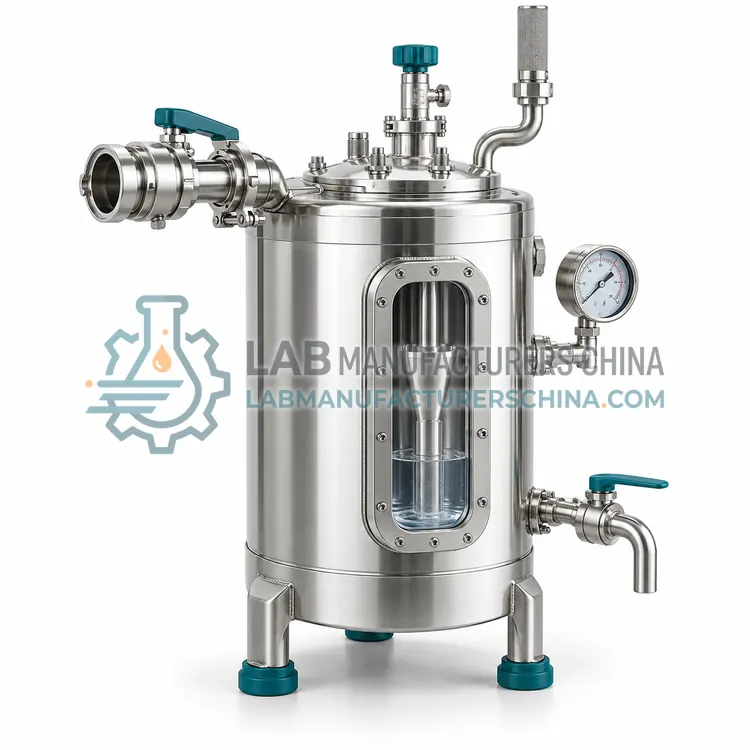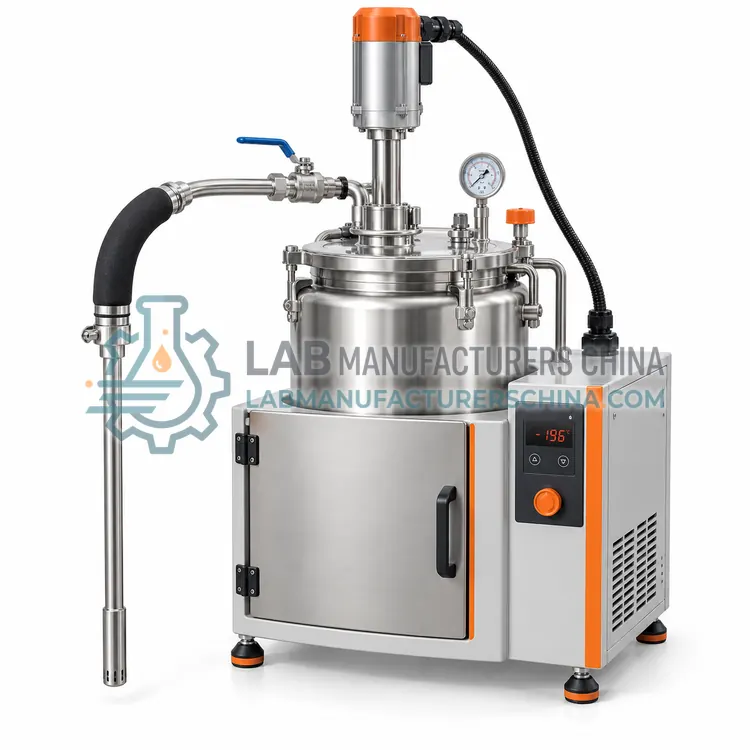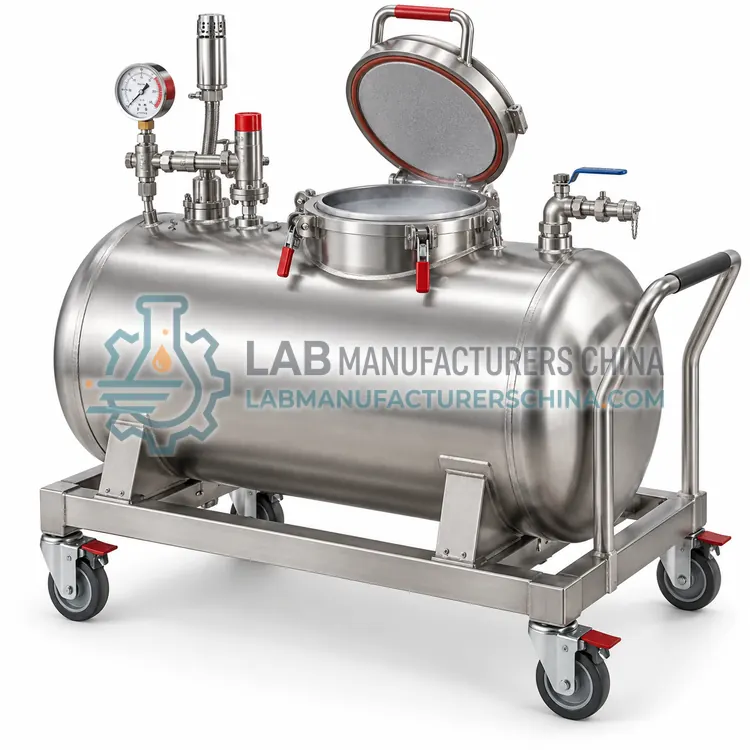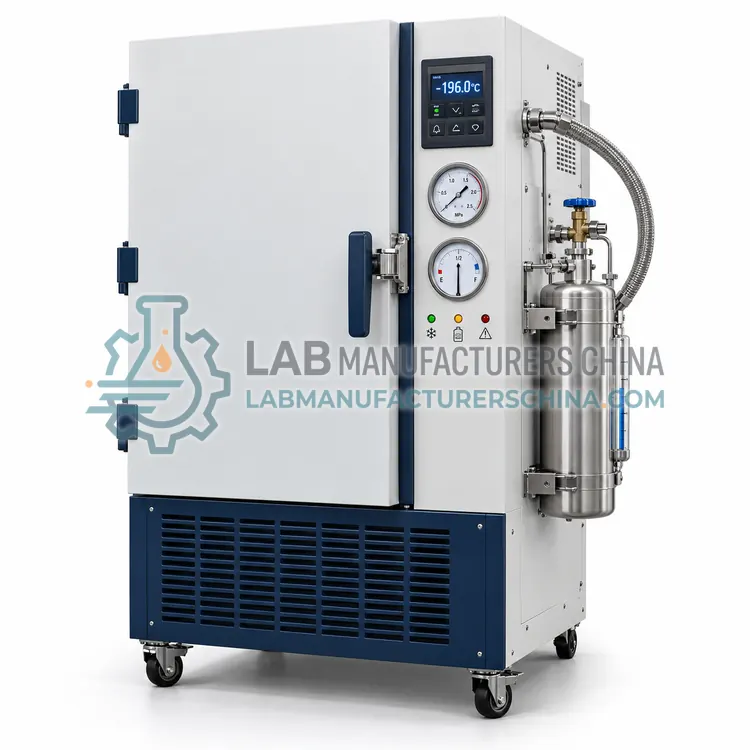
Liquid Nitrogen Auto-Fill Controller with Solenoid Valve
带电磁阀的液氮自动补液控制器
- SKU CTE-0004
- Cryogenic Transfer Equipment
- CE (to be confirmed)
- ISO 9001 manufacturing (to be confirmed)
- IEC 61010-1 (to be confirmed)
- EN 61326-1 EMC (to be confirmed)
Price on request — FOB / CIF quoted per order
Prices depend on configuration, quantity and destination port.
Key specifications
| Controlled vessels | 1–4 |
|---|---|
| Level sensor type | Capacitance or differential pressure |
| Level accuracy | ±1–2% of range |
| Valve size | DN8–DN15 |
| Valve supply pressure | 0.5–3 bar |
| Fill timeout | Adjustable 1–120 min |
Request a quote Download brochure · to be provided
By Lab Manufacturers China Technical TeamLast reviewed Standards: ISO 21010, ISO 21009-1, EN 13458-2
What is the Liquid Nitrogen Auto-Fill Controller with Solenoid Valve?
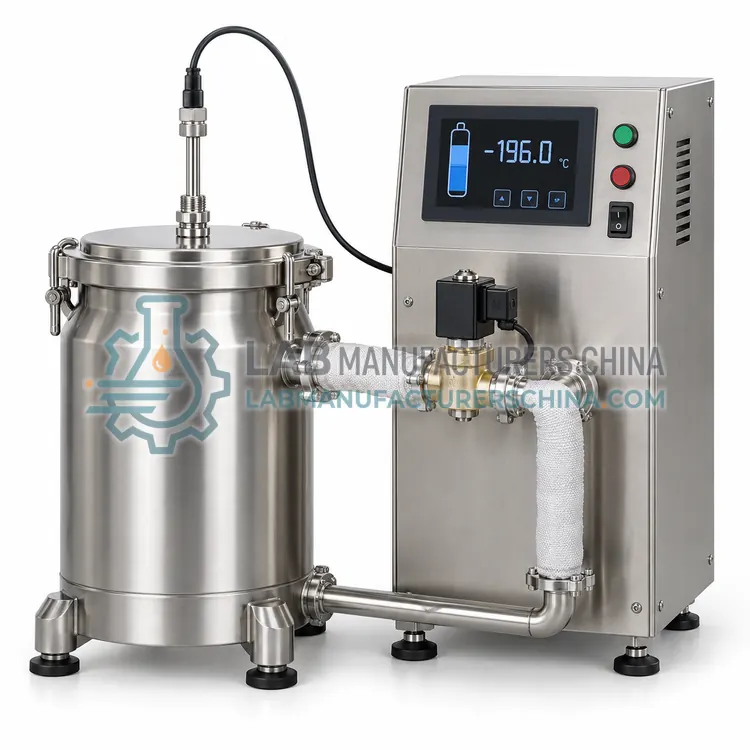
A liquid nitrogen auto-fill controller monitors level or temperature in a storage vessel and opens a cryogenic solenoid valve to refill from a bulk supply. It is the right choice for unattended biobank and cell bank vessels that must maintain level without manual filling.
What is the Liquid Nitrogen Auto-Fill Controller with Solenoid Valve?
A liquid nitrogen auto-fill controller monitors level or temperature in a storage vessel and opens a cryogenic solenoid valve to refill from a bulk supply. It is the right choice for unattended biobank and cell bank vessels that must maintain level without manual filling.
Overview
The system combines a controller, a level sensor such as a capacitance probe, differential pressure transducer or thermocouple-based sensor, and a normally closed cryogenic solenoid valve in a vacuum-insulated or extended-bonnet body. When level falls below a low setpoint, the controller opens the valve until a high setpoint is reached, and a fill-timeout alarm stops the valve if the vessel does not fill within a set time. A low-supply alarm, a high-temperature alarm and lid-open alarm are typical. Displays show level, temperature and fill history, and outputs include relay contacts, 4–20 mA and network interfaces for remote monitoring. One controller can manage one to four vessels. The valve must be rated for liquid nitrogen and supply pressure, typically 0.5–3 bar, and the supply line needs a relief valve and a phase separator for smooth filling.
How does it work?
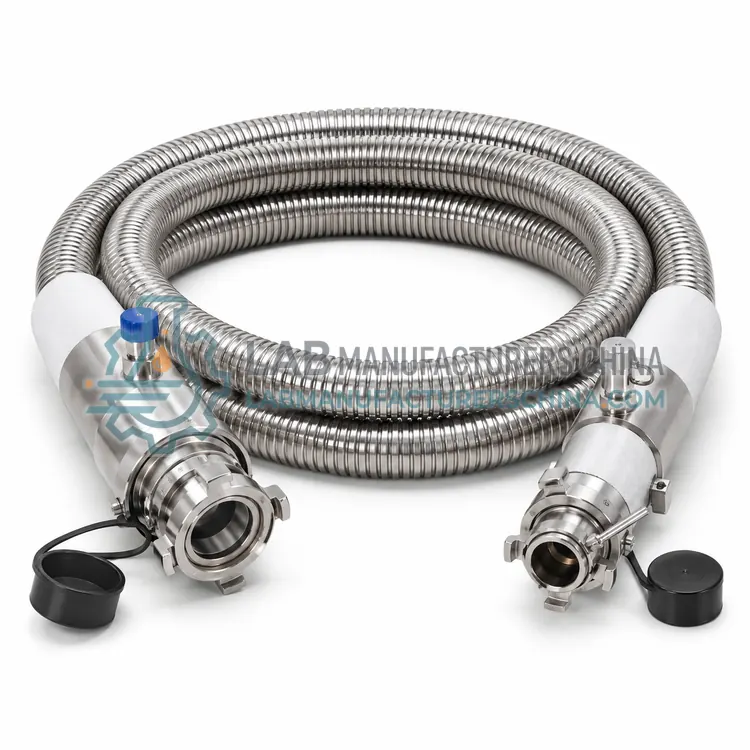
Cryogenic transfer equipment reduces heat leak while liquid moves from a source vessel to a destination. Liquid is driven either by vessel pressure, by a self-pressurizing circuit that raises headspace pressure to about 0.5–1.5 bar, or by a cryogenic pump with a submerged or extended-shaft impeller. Vacuum-jacketed hoses and pipes suppress heat transfer with an evacuated annulus and multilayer insulation, so less liquid flashes to gas in the line. A phase separator placed at the outlet vents vapor through a float-operated valve so that only liquid flows to the receiving vessel, stabilizing filling. Auto-fill controllers combine level sensors, temperature sensors and solenoid valves that open when liquid is needed and close when level is reached, with timeout and fault alarms.
What are the key features?
- Level or temperature based control opens a cryogenic solenoid valve automatically.
- Fill-timeout and low-supply alarms stop unsafe filling and warn operators.
- Relay, 4–20 mA and network outputs support remote monitoring.
- One controller manages up to four vessels.
- Event history records fill times, volumes and alarm activity.
- Valve rated for liquid nitrogen supply pressure with extended bonnet.
What are the technical specifications?
A typical liquid nitrogen auto-fill controller with solenoid valve configuration offers controlled vessels of 1–4, level sensor type of Capacitance or differential pressure, level accuracy of ±1–2% of range, valve size of DN8–DN15, valve supply pressure of 0.5–3 bar and fill timeout of Adjustable 1–120 min. Values are indicative of the product class; the exact figures for each configuration are confirmed on the quotation and the calibration documents supplied with the instrument.
Which applications is it used for?
The Liquid Nitrogen Auto-Fill Controller with Solenoid Valve is used in biobank vessel auto-refill, cell therapy storage automation, multiple vessel filling from a manifold and remote monitored cryogenic rooms. Across the wider Cryogenic Transfer Equipment class, laboratories also deploy it for filling dewars from bulk liquid nitrogen tanks, automatic refilling of cryogenic storage vessels and liquid nitrogen supply to cold traps and instruments.
Which standards and certifications apply?
Relevant standards and methods include ISO 21010, ISO 21009-1, EN 13458-2, GB/T 18442, EU Pressure Equipment Directive 2014/68/EU and EN 1252-1. Certification candidates for this model are CE, ISO 9001 manufacturing, IEC 61010-1 and EN 61326-1 EMC; each is to be confirmed for the specific configuration before shipment, and certificates are supplied only where they have been issued.
Cryogenic hoses and pipes must have pressure relief wherever liquid can be trapped between valves, since trapped liquid expanding on warming can rupture lines. Keep fittings clean and dry and avoid contamination with oil or grease, which is a hazard mostly with oxygen but good practice generally. Inspect hose outer braid and end fittings for damage, and test vacuum integrity of jacketed lines periodically. Operators should wear a face shield, cryogenic gloves and closed footwear, and work in ventilated rooms with oxygen monitors. Cool lines slowly to reduce thermal shock. Replace seals, gaskets and worn couplings on a schedule. Document calibration of level and temperature sensors on auto-fill systems and test alarm function regularly.
How do I select the right Liquid Nitrogen Auto-Fill Controller with Solenoid Valve?
Select an auto-fill controller for vessels that hold valuable samples or are unattended. Small vessels refilled manually need only a level gauge. In an RFQ, specify number of vessels, sensor type, valve size and pressure, alarm outputs, supply connection and any data integrity requirement.
How does it compare with other Cryogenic Transfer Equipment variants?
Match the equipment to the transfer task. For moving liquid from a bulk tank to dewars, choose a vacuum-jacketed hose with compatible fittings, pressure rating and a phase separator. For high-volume or long-distance transfer, consider a cryogenic pump, which works independently of tank pressure. For unattended filling of storage vessels, specify an auto-fill controller with level sensor, solenoid valve and alarms. For moving frozen samples within a facility, choose a transfer cart with vapor-phase capability and suitable dimensions for doors and lifts. Check hose length, bore, connection thread, maximum working pressure and temperature, material compatibility and whether a relief valve is included. Also consider operator safety features such as cold-resistant handles and splash shields.
Full specifications
| Controlled vessels | 1–4 |
|---|---|
| Level sensor type | Capacitance or differential pressure |
| Level accuracy | ±1–2% of range |
| Valve size | DN8–DN15 |
| Valve supply pressure | 0.5–3 bar |
| Fill timeout | Adjustable 1–120 min |
| Outputs | Relay, 4–20 mA, Ethernet |
| Temperature inputs | PT100 or thermocouple, 2–8 channels |
| Data logging | Internal memory, USB export |
| Power supply | 24 V DC or 100–240 V AC |
Indicative values for this product class. Final specifications are confirmed on the quotation and in the calibration documents supplied with the instrument.
Applications
- Biobank vessel auto-refill
- Cell therapy storage automation
- Multiple vessel filling from a manifold
- Remote monitored cryogenic rooms
Key features
- Level or temperature based control opens a cryogenic solenoid valve automatically.
- Fill-timeout and low-supply alarms stop unsafe filling and warn operators.
- Relay, 4–20 mA and network outputs support remote monitoring.
- One controller manages up to four vessels.
- Event history records fill times, volumes and alarm activity.
- Valve rated for liquid nitrogen supply pressure with extended bonnet.
Frequently asked questions about Liquid Nitrogen Auto-Fill Controller with Solenoid Valve
A fill-timeout or low-supply alarm should trigger when the vessel does not reach its high level within the set time. Staff are then alerted to replace the supply while the vessel retains its existing liquid.
Differential pressure sensors are robust and commonly used in large vessels, while capacitance probes give fine resolution in small vessels. Both need calibration, and redundancy with a second sensor is advisable for critical storage.
Yes, most offer relay contacts, 4–20 mA or Ethernet interfaces, with some supporting Modbus TCP. Confirm the protocol and cybersecurity provisions with the supplier before integration.
A phase separator is a small device at the end of a transfer line that vents nitrogen vapor while letting liquid pass. Because the line cools and flashes some liquid to gas, separating the phases gives a steadier flow and reduces splashing and liquid loss.
Liquid trapped between two closed valves warms and expands about 700 times as gas, which can burst pipes or hoses. A relief valve or burst disc between valve pairs prevents dangerous pressure and is required under pressure-equipment rules.
A pump is better when transfer volume is large, distance is long or the source tank has low pressure. It gives constant flow independent of tank pressure and reduces vapor loss, but costs more and needs precool and maintenance.