Lab Manufacturers China

Fluorescence Immunoassay

荧光免疫分析仪

FLI · Immunoassay Analyzers · 5 models

By Lab Manufacturers China Technical TeamLast reviewed Standards: ISO 15189, CLSI EP05, CLSI EP15

Standards referenced

  • ISO 15189
  • CLSI EP05
  • CLSI EP15
  • CLSI EP17
  • CLSI POCT04
  • IEC 61010-1
  • IEC 61010-2-101

What are Fluorescence Immunoassay?

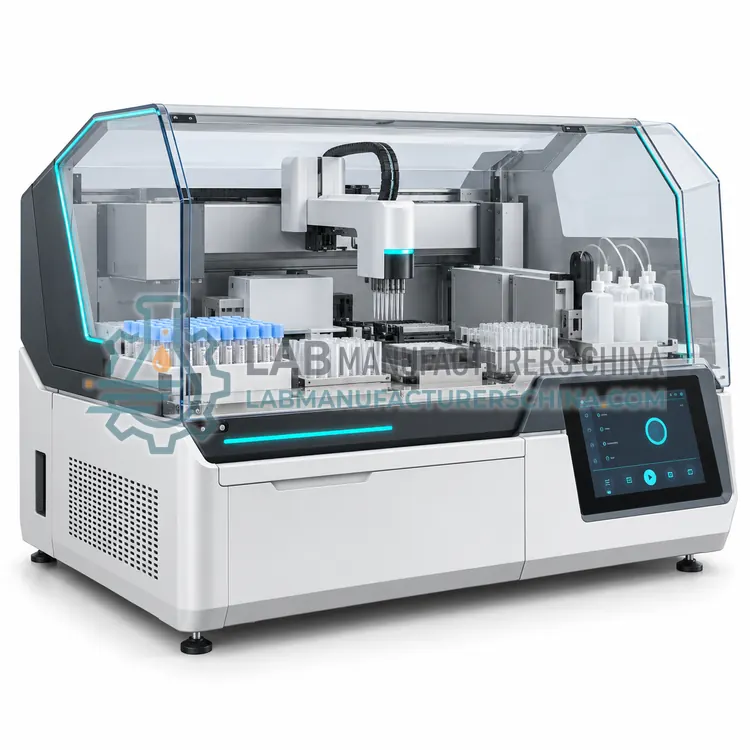
Fluorescence immunoassay analyzers quantify antigens and antibodies using a fluorescent label that is excited at one wavelength and read at a longer emission wavelength. They include strip and cartridge readers, time-resolved and polarization platforms, and serve clinics, emergency departments and hospital laboratories.

5 models of Fluorescence Immunoassay

The 5 models below are current configurations; specifications are confirmed on quotation.

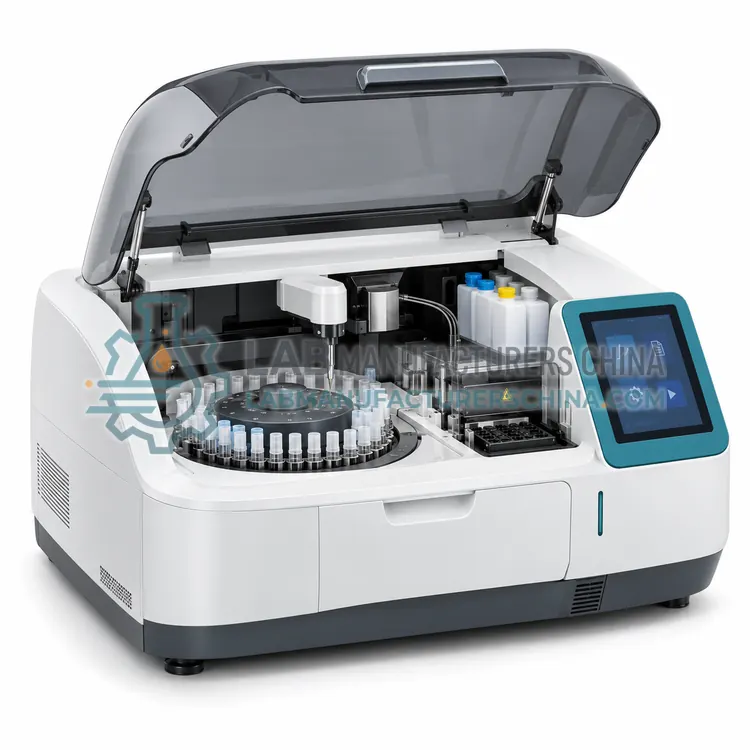
Fluorescence Immunoassay Analyzer

荧光免疫分析仪

  • FLI-0001
  • Fluorescence Immunoassay
  • CE (to be confirmed)
  • ISO 13485 manufacturing (to be confirmed)
  • NMPA class II registration (to be confirmed)
Excitation wavelength:
470–610 nm depending on the label
Emission wavelength:
520–670 nm with bandpass filter
Measuring range:
Assay specific, typically 3 orders of magnitude
Sample volume:
10–100 µL
Time to result:
10–20 min
Throughput:
20–60 tests/h

A fluorescence immunoassay analyzer measures the emission from fluorescently labelled immune complexes to quantify analytes such as cardiac markers, hormones and inflammation proteins. It suits clinics and emergency departments that need quantitative results in about fifteen minutes from a small sample.

Request a quote
View details

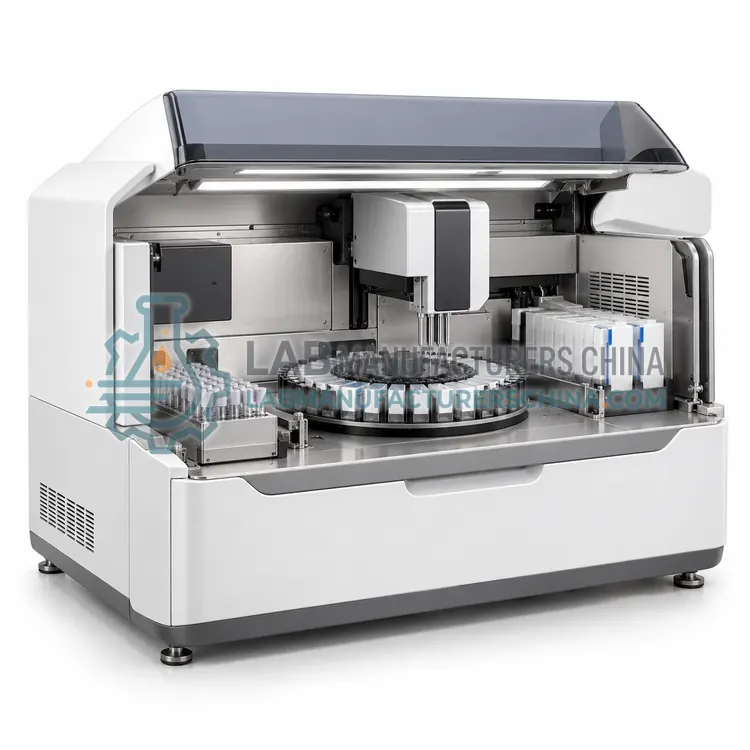
Time-Resolved Fluorescence Immunoassay Analyzer

时间分辨荧光免疫分析仪

  • FLI-0002
  • Fluorescence Immunoassay
  • CE (to be confirmed)
  • ISO 13485 manufacturing (to be confirmed)
  • NMPA class II registration (to be confirmed)
Labels:
Eu3+, Sm3+, Tb3+ chelates
Fluorescence lifetime:
Hundreds of microseconds to milliseconds
Delay time:
200–600 µs programmable
Counting window:
400–1000 µs
Detection limit:
Assay specific, down to picomolar levels
Plate formats:
96-well and 384-well plates or microsphere carriers

A time-resolved fluorescence analyzer uses lanthanide chelate labels with long emission lifetimes and starts measuring after short-lived background fluorescence has decayed. It delivers very low detection limits and suits laboratories measuring hormones, tumour markers and other low-concentration analytes.

Request a quote
View details

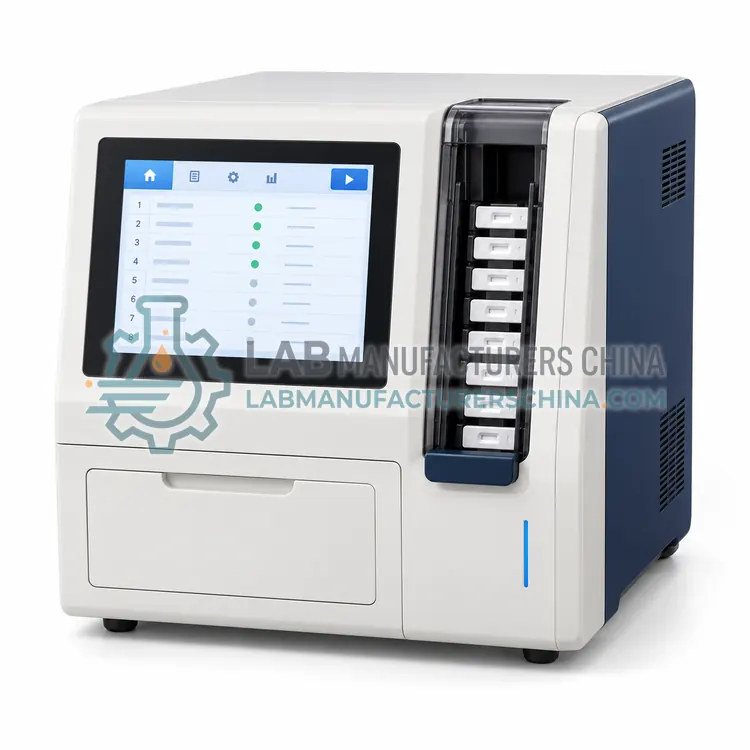
Fluorescence Lateral Flow Reader

荧光侧向层析读数仪

  • FLI-0003
  • Fluorescence Immunoassay
  • CE (to be confirmed)
  • ISO 13485 manufacturing (to be confirmed)
  • NMPA class II registration (to be confirmed)
Reading principle:
Fluorescence scanning of test and control lines
Excitation wavelength:
Typically 470–530 nm
Emission wavelength:
Typically 520–610 nm
Measuring range:
Assay specific, 2 to 3 orders of magnitude
Precision:
CV 5–15 % across the measuring range
Reading time:
10–15 min after sample application

A fluorescence lateral flow reader scans the test and control lines of a fluorescent immunochromatographic strip and converts the signal into a quantitative or semi-quantitative result. It suits point-of-care settings that need quantitative results from a strip format in ten to fifteen minutes.

Request a quote
View details

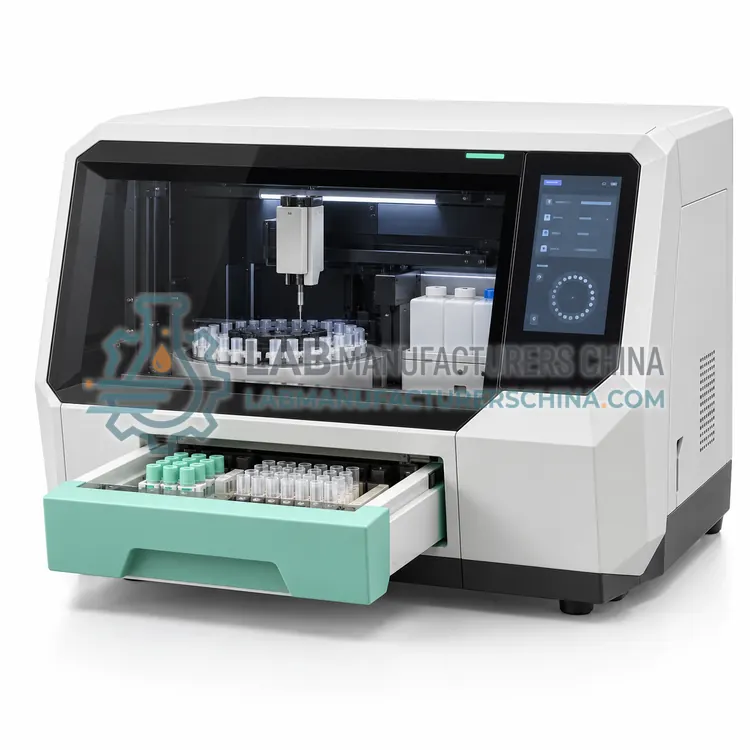
Automated Cartridge-Based Fluorescence Immunoassay Analyzer

卡盒式全自动荧光免疫分析仪

  • FLI-0004
  • Fluorescence Immunoassay
  • CE (to be confirmed)
  • ISO 13485 manufacturing (to be confirmed)
  • NMPA class II registration (to be confirmed)
Throughput:
30–80 tests/h
Time to result:
15–25 min per cartridge
Simultaneous cartridges:
5–20 positions
Sample volume:
20–100 µL per cartridge
Incubation temperature:
37 °C ±0.5 °C
Calibration:
Lot-specific curve from cartridge chip or barcode

This analyzer processes sealed cartridges automatically, performing sample metering, reaction, washing and fluorescent reading inside a closed device. It suits laboratories and clinics that want walkaway operation and reduced biohazard exposure from open liquid handling.

Request a quote
View details

Fluorescence Polarization Immunoassay Analyzer

荧光偏振免疫分析仪

  • FLI-0005
  • Fluorescence Immunoassay
  • CE (to be confirmed)
  • ISO 13485 manufacturing (to be confirmed)
  • NMPA class II registration (to be confirmed)
Measurement principle:
Fluorescence polarization of a labelled tracer
Excitation wavelength:
Typically 480–500 nm
Emission wavelength:
Typically 520–540 nm
Sample volume:
20–100 µL serum or plasma
Time to result:
2–6 min per analyte
Incubation temperature:
30 °C or 37 °C ±0.5 °C

A fluorescence polarization immunoassay analyzer measures the change in polarization of fluorescently labelled small molecules as they bind to antibodies, giving a homogeneous assay with no separation step. It suits therapeutic drug monitoring and measurement of small analytes in serum.

Request a quote
View details

Compare Fluorescence Immunoassay models

ModelExcitation wavelengthEmission wavelengthMeasuring rangeSample volumeTime to result
Fluorescence Immunoassay AnalyzerFLI-0001470–610 nm depending on the label520–670 nm with bandpass filterAssay specific, typically 3 orders of magnitude10–100 µL10–20 min
Time-Resolved Fluorescence Immunoassay AnalyzerFLI-0002—————
Fluorescence Lateral Flow ReaderFLI-0003Typically 470–530 nmTypically 520–610 nmAssay specific, 2 to 3 orders of magnitude5–100 µL by fixed-volume sampler—
Automated Cartridge-Based Fluorescence Immunoassay AnalyzerFLI-0004———20–100 µL per cartridge15–25 min per cartridge
Fluorescence Polarization Immunoassay AnalyzerFLI-0005Typically 480–500 nmTypically 520–540 nmAnalyte specific, typically 2 to 3 orders of magnitude20–100 µL serum or plasma2–6 min per analyte

Indicative values for this product class. Final specifications are confirmed on the quotation and in the calibration documents supplied with the instrument.

How do Fluorescence Immunoassay work?

Fluorescence immunoassay uses an antibody labelled with a fluorophore such as fluorescein, a europium chelate or a quantum dot. After the immune complex forms, the label is excited by light of one wavelength and emits light at a longer wavelength, and a photodetector measures the emission after optical filtering. The difference between excitation and emission wavelengths allows the instrument to separate the signal from the excitation light, and background fluorescence from sample components is reduced by careful filter selection, by washing away unbound label and, in time-resolved systems, by delaying the measurement until short-lived background fluorescence has decayed. Since the fluorescent signal is measured against a low background, sensitivity is generally better than absorbance-based enzyme immunoassay. Quantification relies on a calibration curve stored in the analyzer, and strip-based tests use a reader that scans the test and control lines.

Which Fluorescence Immunoassay variants are available?

  • Fluorescence Immunoassay Analyzer — A fluorescence immunoassay analyzer measures the emission from fluorescently labelled immune complexes to quantify analytes such as cardiac markers, hormones and inflammation proteins.
  • Time-Resolved Fluorescence Immunoassay Analyzer — A time-resolved fluorescence analyzer uses lanthanide chelate labels with long emission lifetimes and starts measuring after short-lived background fluorescence has decayed.
  • Fluorescence Lateral Flow Reader — A fluorescence lateral flow reader scans the test and control lines of a fluorescent immunochromatographic strip and converts the signal into a quantitative or semi-quantitative result.
  • Automated Cartridge-Based Fluorescence Immunoassay Analyzer — This analyzer processes sealed cartridges automatically, performing sample metering, reaction, washing and fluorescent reading inside a closed device.
  • Fluorescence Polarization Immunoassay Analyzer — A fluorescence polarization immunoassay analyzer measures the change in polarization of fluorescently labelled small molecules as they bind to antibodies, giving a homogeneous assay with no separation step.

How do I choose the right variant?

Choose the format from the clinical setting: a strip or cartridge reader suits single tests at the point of care, while a plate or automated platform suits batch testing in a laboratory. Then check the assay menu and its regulatory status, because fluorescence platforms are kit specific and an instrument without the tests you need has no value. Compare sensitivity at the clinical decision point, measuring range, sample volume and time to result, which ranges from ten minutes for lateral flow to several hours for batch formats. For quantitative work, confirm that the analyzer stores calibration curves per lot and applies them automatically by reading a cartridge barcode. Consider whether fluorescence interference from bilirubin, haemoglobin or medication is documented for each assay, and whether controls and calibration material are available locally.

Where are Fluorescence Immunoassay used?

Fluorescence Immunoassay are specified in point-of-care cardiac and inflammation testing, hormone and fertility testing in clinics, infectious disease antigen detection and therapeutic drug monitoring by fluorescence polarization.

Which standards and certifications apply?

Work with Fluorescence Immunoassay is commonly governed by ISO 15189, CLSI EP05, CLSI EP15, CLSI EP17, CLSI POCT04, IEC 61010-1 and IEC 61010-2-101. Instrument certifications such as CE marking are confirmed per configuration and never assumed.

What are the key considerations before purchase?

Keep the instrument away from strong ambient light and place it on a stable bench, because stray light and vibration reduce fluorescence measurement precision. Verify performance at installation with the manufacturer's calibration material and with controls at two or three levels, and check the optical path and detector gain as specified. Daily tasks include control measurement and checking that the correct assay lot and curve are selected. Lateral flow readers require consistent sample application volume, controlled reading time after the reaction and careful handling of cartridges, since a delay of a few minutes can change the result near a cut-off. Store cartridges and reagents within their temperature range, use them before expiry, and treat all used devices as infectious waste.

Frequently asked questions about Fluorescence Immunoassay

Fluorescent labels emit against a low background, so assays can detect lower concentrations than absorbance-based methods and often cover a wider measuring range. The trade-off is greater sensitivity to interference from sample fluorescence and to variations in optical alignment, which is why controls matter.

Need help specifying Fluorescence Immunoassay?

Request a quote