How do CLIA Analyzers work?
In chemiluminescence immunoassay the label is a molecule, often an acridinium ester or a luminol derivative, that emits light when triggered by an oxidant or a catalyst. Capture antibody or antigen is immobilised on magnetic particles, a well or a tube. After sample binding and washing, the labelled detection reagent forms a sandwich or competes with the analyte, and a trigger solution initiates the light-emitting reaction. A photomultiplier tube measures the light flash, which is integrated over a fixed interval, and the signal is converted into concentration using a calibration curve, usually a four-parameter logistic or a master curve with a lot-specific adjustment. Because light emission is measured against a dark background rather than as a difference between two absorbance values, chemiluminescence gives a wider dynamic range and better sensitivity than chromogenic enzyme immunoassay, and magnetic separation simplifies washing and automation.
Which CLIA Analyzers variants are available?
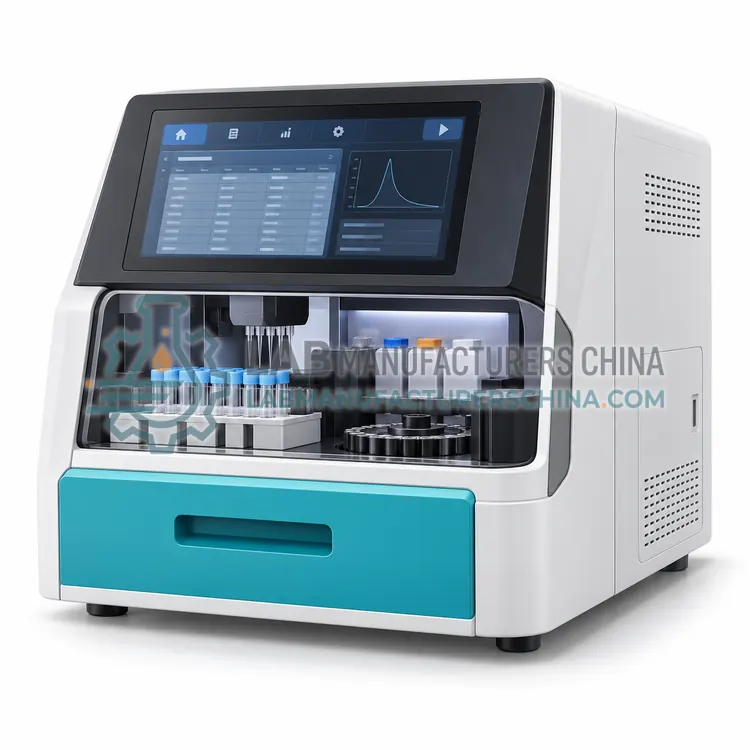
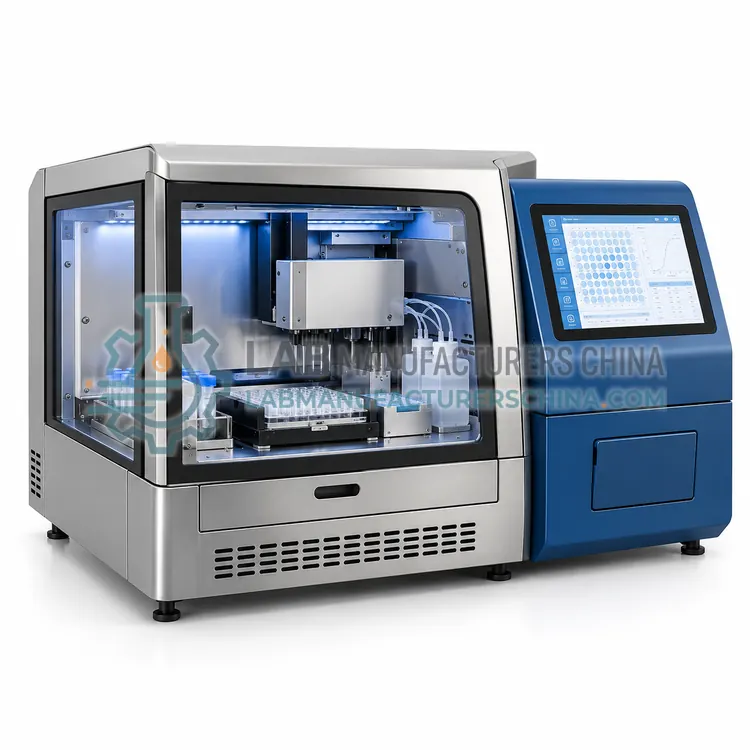
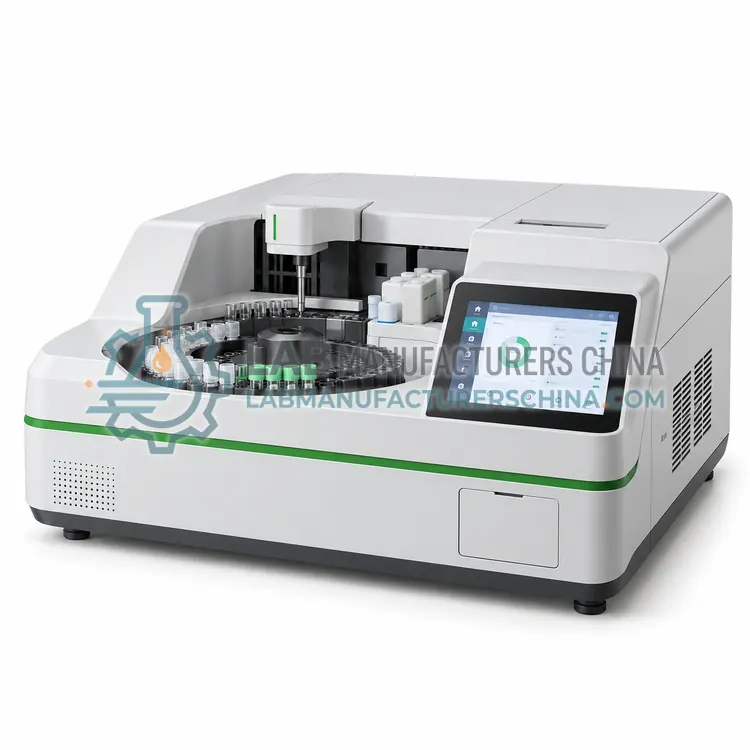
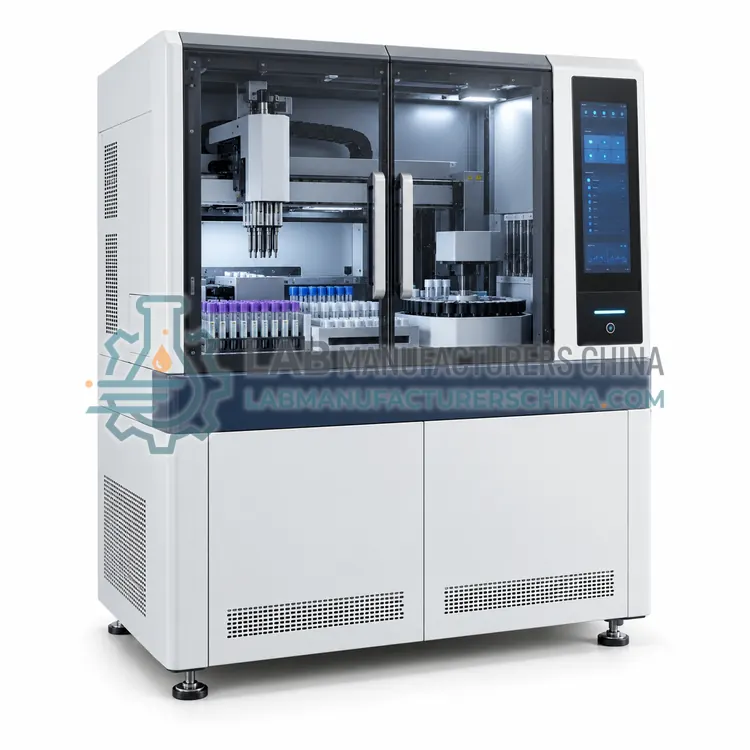
- Automated Chemiluminescence Immunoassay Analyzer — An automated chemiluminescence immunoassay analyzer performs random-access testing with magnetic bead separation, photomultiplier detection and full reagent management.
- Magnetic Particle Chemiluminescence Immunoassay Analyzer — This analyzer uses paramagnetic microparticles as the solid phase so that immune complexes can be captured and washed in a magnetic field, giving fast separation and low background.
- Chemiluminescence Microplate Reader — A chemiluminescence microplate reader measures the light emitted from 96-well or strip plates in which a luminescent reaction has occurred, without needing a light source.
- Compact Benchtop Chemiluminescence Immunoassay Analyzer — This compact analyzer brings chemiluminescence detection to small laboratories, running a limited menu at 20 to 60 tests per hour with the same principle and traceability as larger platforms.
- High-Throughput Chemiluminescence Immunoassay Analyzer — A high-throughput CLIA analyzer processes 300 to 600 tests per hour with multiple reaction lines, bulk reagents and continuous loading.
How do I choose the right variant?
Select a CLIA analyzer from the assay menu first, because registration of each test with the platform is the decisive constraint, then size throughput from daily and peak-hour demand plus about thirty percent headroom. Check the first-result time for emergency markers such as troponin and beta-hCG, since several platforms need twenty to thirty minutes. Compare sensitivity and linear range for the analytes that matter to your clinical service, the sample volume per test, and the calibration stability, which determines how often curves must be rebuilt. Decide between magnetic bead, coated tube and microplate formats according to menu size and acceptable hands-on time. Confirm onboard reagent capacity, refrigeration, STAT access, carryover control, LIS interface, and the availability of calibrators, controls and service support locally.
Where are CLIA Analyzers used?
CLIA Analyzers are specified in hormone and fertility testing, cardiac marker measurement in emergency care, tumour marker monitoring, infectious disease antigen and antibody testing and therapeutic drug monitoring.
Which standards and certifications apply?
Work with CLIA Analyzers is commonly governed by ISO 15189, CLSI EP05, CLSI EP15, CLSI EP17, CLSI I/LA20, IEC 61010-1 and IEC 61010-2-101. Instrument certifications such as CE marking are confirmed per configuration and never assumed.
What are the key considerations before purchase?
Install the analyzer on a stable bench with controlled temperature and humidity, a grounded power supply and space for reagent and waste containers. Verify performance at installation with precision, linearity and method comparison studies for every assay you will report, following CLSI EP05, EP15 and EP17 where detection limits are relevant. Establish calibration and control intervals per assay and document the curve validity period. Daily work includes checking reagent volumes and waste, running controls and reviewing the calibration status; trigger solutions and wash buffers must be prepared or replaced as specified because deteriorated solutions cause erratic light signals. Replace tubing, syringes and photodetector-related parts on schedule, and treat all samples, controls and liquid waste as biohazardous.