Lab Manufacturers China

ELISA Systems

ELISA 系统

ELS · Immunoassay Analyzers · 5 models

By Lab Manufacturers China Technical TeamLast reviewed Standards: ISO 15189, CLSI EP05, CLSI I/LA20

Standards referenced

  • ISO 15189
  • CLSI EP05
  • CLSI I/LA20
  • CLSI M29
  • IEC 61010-1
  • IEC 61010-2-101

What are ELISA Systems?

ELISA systems detect and quantify antigens or antibodies using an enzyme label and a chromogenic substrate read by absorbance on a microplate. They include readers, washers and automated processors, and are used for infectious disease serology, allergy, autoimmune and research testing.

5 models of ELISA Systems

The 5 models below are current configurations; specifications are confirmed on quotation.

Microplate ELISA Reader

酶标仪

  • ELS-0001
  • ELISA Systems
  • CE (to be confirmed)
  • ISO 13485 manufacturing (to be confirmed)
  • NMPA class II registration (to be confirmed)
Wavelength range:
400–750 nm, 4–8 interference filters
Photometric range:
0–4.0 absorbance units
Accuracy:
±1 % or ±0.005 absorbance units at 1.0
Plate formats:
96-well and strip plates, 6 to 384 wells optional
Reading time:
About 6–12 s for a 96-well plate
Shaking:
Linear shaking with adjustable speed and time

A microplate ELISA reader is a photometer that measures absorbance in 96-well or strip plates at selected wavelengths and converts readings into concentrations or index values. It is the core instrument for laboratories performing enzyme immunoassays in microplate format.

Request a quote
View details

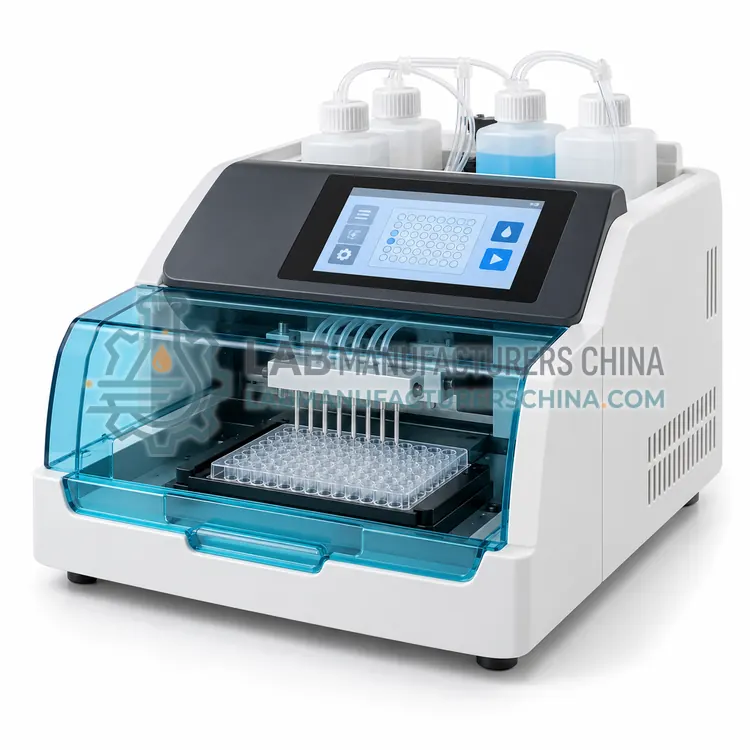
Automated Microplate Washer for ELISA

自动洗板机

  • ELS-0002
  • ELISA Systems
  • CE (to be confirmed)
  • ISO 13485 manufacturing (to be confirmed)
  • NMPA class II registration (to be confirmed)
Manifold channels:
8 or 12 channels, 96-well format
Residual volume:
< 2–3 µL per well
Fill volume:
50–1000 µL programmable
Wash cycles:
1–20 programmable per run
Soak time:
0–60 s per cycle
Cross-contamination:
< 0.1 % between wells

An automated microplate washer dispenses and aspirates wash buffer from the wells of a microplate under programmed control, removing unbound material between assay steps. It is essential for reproducible ELISA results and can also rinse plates for cell-based assays with the correct manifold.

Request a quote
View details

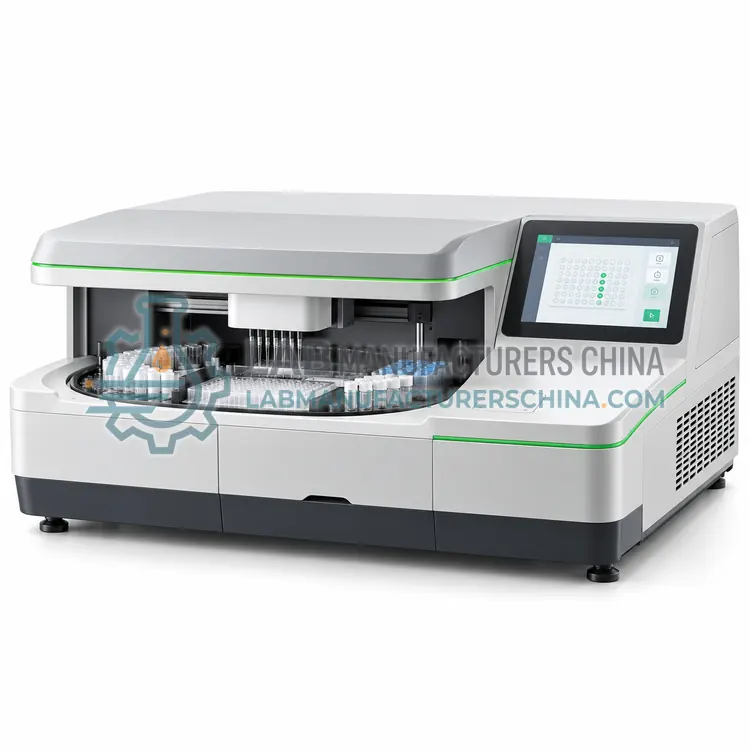
Integrated ELISA Reader and Washer System

酶标仪洗板机一体机

  • ELS-0003
  • ELISA Systems
  • CE (to be confirmed)
  • ISO 13485 manufacturing (to be confirmed)
  • NMPA class II registration (to be confirmed)
Wavelength range:
400–750 nm, 4–6 filters
Photometric range:
0–3.5 absorbance units
Wash channels:
8 or 12 channel manifold for 96-well plates
Residual volume:
< 3 µL per well
Plate capacity:
1–2 plates per run
Incubation:
Ambient to 45 °C with timer

This system combines the reader and washer in one instrument with shared software, so plate washing and reading are performed in a single sequence with one protocol. It suits laboratories that want consistent ELISA processing without the footprint and alignment issues of two separate devices.

Request a quote
View details

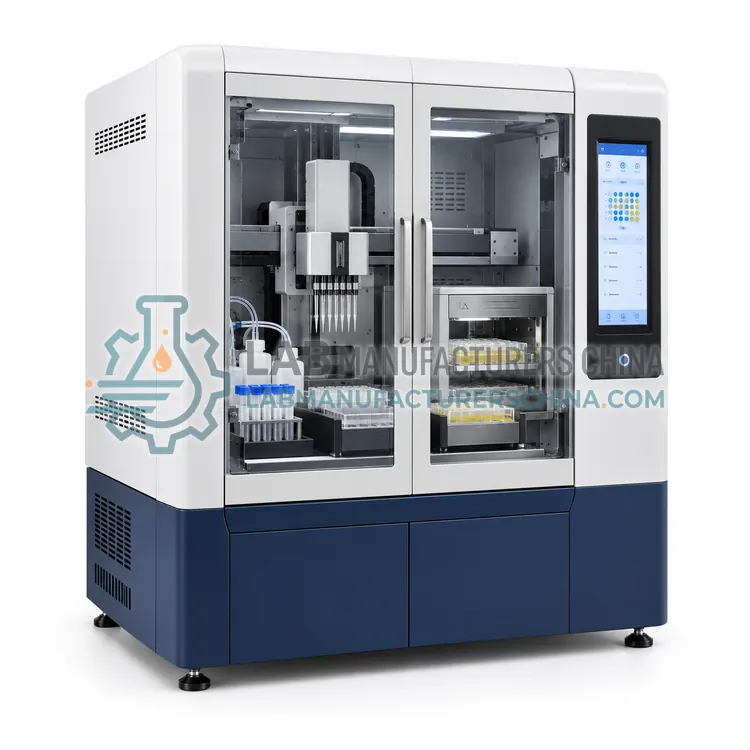
Automated ELISA Processing System

全自动酶免分析系统

  • ELS-0004
  • ELISA Systems
  • CE (to be confirmed)
  • ISO 13485 manufacturing (to be confirmed)
  • NMPA class II registration (to be confirmed)
Throughput:
Up to 400–1200 wells/h depending on protocol
Incubation chambers:
2–4 chambers, 25–50 °C ±0.5 °C
Sample volume:
10–50 µL per well
Sample positions:
60–180 tube positions with barcode
Reagent positions:
Up to 40 cooled positions at 4–10 °C
Plate capacity:
10–40 plates onboard

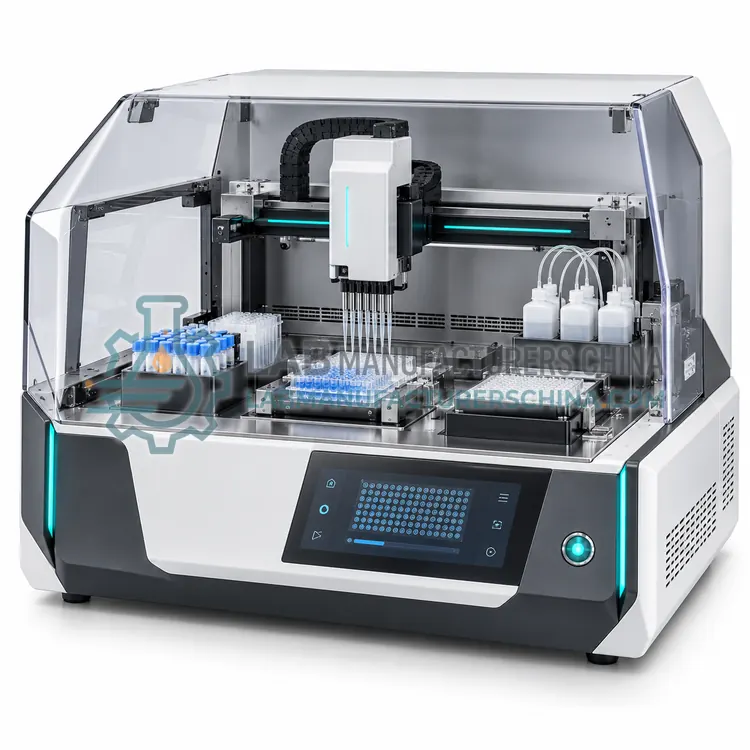
An automated ELISA processing system performs sample and reagent pipetting, incubation, washing, substrate addition and reading without operator intervention. It suits hospital and reference laboratories processing several hundred to several thousand wells per day with many different kit protocols.

Request a quote
View details

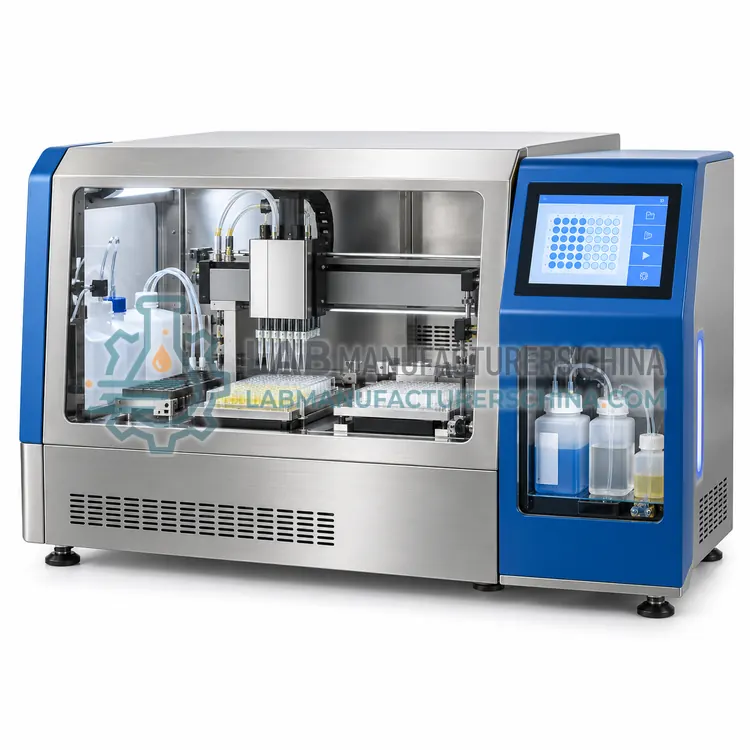
ELISA Workstation with Incubation and Shaking

带温育与振荡的酶免工作站

  • ELS-0005
  • ELISA Systems
  • CE (to be confirmed)
  • ISO 13485 manufacturing (to be confirmed)
  • NMPA class II registration (to be confirmed)
Temperature range:
Ambient to 50 °C ±0.5 °C
Shaking:
Orbital or linear, 100–900 rpm
Wavelength range:
400–750 nm with 4–6 filters
Plate capacity:
1–4 plates
Reading modes:
End-point, kinetic and multi-point
Kinetic interval:
From 30 s programmable

This workstation combines a microplate incubator with shaking and a reader in a single instrument, so temperature-dependent steps and reading occur under controlled conditions. It suits laboratories that run kinetic or temperature-sensitive assays and want to reduce manual handling between steps.

Request a quote
View details

Compare ELISA Systems models

ModelWavelength rangePhotometric rangePlate formatsShakingIncubation
Microplate ELISA ReaderELS-0001400–750 nm, 4–8 interference filters0–4.0 absorbance units96-well and strip plates, 6 to 384 wells optionalLinear shaking with adjustable speed and timeAmbient to 45 °C in some models
Automated Microplate Washer for ELISAELS-0002——96-well, 12-well strips, 384-well optional——
Integrated ELISA Reader and Washer SystemELS-0003400–750 nm, 4–6 filters0–3.5 absorbance units——Ambient to 45 °C with timer
Automated ELISA Processing SystemELS-0004—————
ELISA Workstation with Incubation and ShakingELS-0005400–750 nm with 4–6 filters——Orbital or linear, 100–900 rpm—

Indicative values for this product class. Final specifications are confirmed on the quotation and in the calibration documents supplied with the instrument.

How do ELISA Systems work?

Enzyme-linked immunosorbent assay uses a plastic microplate whose wells carry a bound capture antibody or antigen. Sample is added, and any target present binds to the solid phase during incubation. After washing, a detection antibody conjugated to an enzyme such as horseradish peroxidase or alkaline phosphatase is added and binds to the captured target. A further wash removes unbound conjugate, then a substrate is added and the enzyme converts it into a coloured product. The reaction is stopped with acid or base and the absorbance is read at a defined wavelength, usually 450 nanometers with a reference wavelength between 600 and 650 nanometers. Absorbance is proportional to the amount of bound analyte, and a calibration curve, often four-parameter logistic, converts readings into concentrations or index values. Strict washing, incubation timing and temperature control determine the reliability of the result.

Which ELISA Systems variants are available?

  • Microplate ELISA Reader — A microplate ELISA reader is a photometer that measures absorbance in 96-well or strip plates at selected wavelengths and converts readings into concentrations or index values.
  • Automated Microplate Washer for ELISA — An automated microplate washer dispenses and aspirates wash buffer from the wells of a microplate under programmed control, removing unbound material between assay steps.
  • Integrated ELISA Reader and Washer System — This system combines the reader and washer in one instrument with shared software, so plate washing and reading are performed in a single sequence with one protocol.
  • Automated ELISA Processing System — An automated ELISA processing system performs sample and reagent pipetting, incubation, washing, substrate addition and reading without operator intervention.
  • ELISA Workstation with Incubation and Shaking — This workstation combines a microplate incubator with shaking and a reader in a single instrument, so temperature-dependent steps and reading occur under controlled conditions.

How do I choose the right variant?

Define the assays first, then decide how much automation is appropriate. Laboratories running fewer than one hundred wells per day can work with a reader and washer plus manual pipetting, while larger volumes justify an automated processor with plate handling, incubation and reporting. Compare readers by wavelength range, filter set, linearity, and whether they support kinetic and dual-wavelength measurement. For washers, check residual volume, the number of wash cycles programmable, and the manifolds for 96-well and strip formats. For automated systems, check plate capacity, walkaway time, whether the software handles assay protocols centrally, and the traceability of each step with lot numbers and operator identification. Confirm the assay registration status in your market, since ELISA kits are regulated separately from the instruments.

Where are ELISA Systems used?

ELISA Systems are specified in infectious disease serology, allergy specific IgE testing, autoimmune antibody screening and research and clinical trial assays.

Which standards and certifications apply?

Work with ELISA Systems is commonly governed by ISO 15189, CLSI EP05, CLSI I/LA20, CLSI M29, IEC 61010-1 and IEC 61010-2-101. Instrument certifications such as CE marking are confirmed per configuration and never assumed.

What are the key considerations before purchase?

Place the reader and washer on a level bench away from vibration and direct light, and keep the plate carrier and optical window free of dust. Verify performance at installation with a reference dye plate for optical accuracy and with controls for each assay. Daily tasks include checking the washer manifold for blockage, priming the wash lines and running controls at two or three levels. Plates should be read immediately after stopping the reaction, since colour continues to develop and delays bias results, and consistent timing across the plate matters more than absolute speed. Replace tubing and manifold pins when flow becomes uneven, and dispose of wash waste and plates as biohazardous material.

Frequently asked questions about ELISA Systems

A reader only measures absorbance after the assay has been performed manually, while an automated system also handles sample and reagent pipetting, incubation, washing, substrate addition and timing. Readers suit low volumes and flexible menus; automated systems reduce variability and labour at higher volumes.

Need help specifying ELISA Systems?

Request a quote