Lab Manufacturers China

Zeta Potential Analyzers

Zeta 电位分析仪

ZPA · Particle Analysis Instruments · 5 models

By Lab Manufacturers China Technical TeamLast reviewed Standards: ISO 13099-1, ISO 13099-2, ISO 13099-3

Standards referenced

  • ISO 13099-1
  • ISO 13099-2
  • ISO 13099-3
  • ASTM D4187
  • GB/T 32671
  • ISO 13320

What are Zeta Potential Analyzers?

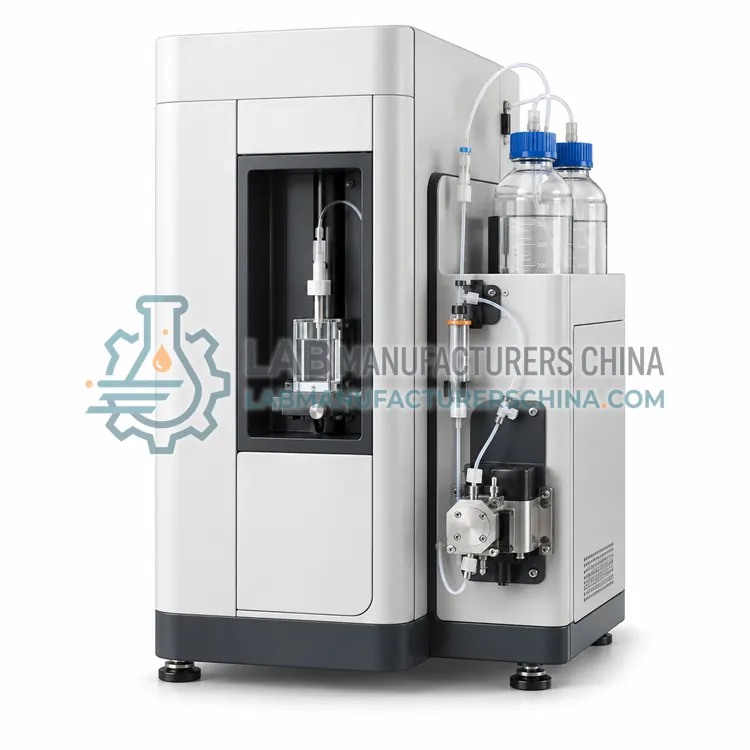
Zeta potential analyzers measure the electrokinetic potential at the slipping plane of charged particles, surfaces or droplets in a liquid. The value predicts colloidal stability and surface charge behavior. Formulation scientists, water treatment engineers, ceramics, battery and pharmaceutical laboratories use them for dispersion control and isoelectric point determination.

5 models of Zeta Potential Analyzers

The 5 models below are current configurations; specifications are confirmed on quotation.

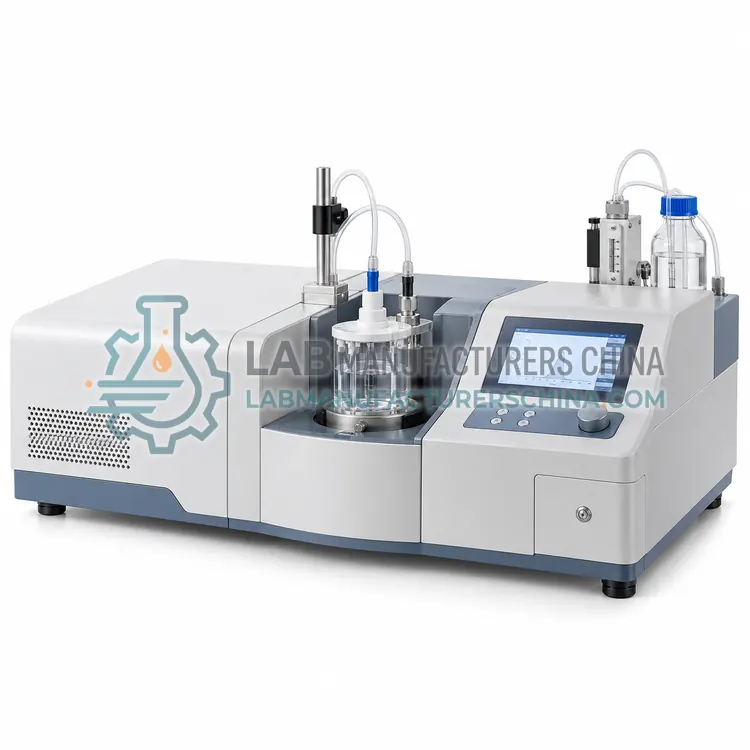
Electrophoretic Light Scattering Zeta Potential Analyzer

电泳光散射 Zeta 电位分析仪

  • ZPA-0001
  • Zeta Potential Analyzers
  • CE (to be confirmed)
  • ISO 9001 manufacturing (to be confirmed)
Size range:
3 nm–100 µm
Zeta potential range:
−500 to +500 mV
Mobility range:
±20 µm·cm/V·s
Laser:
633 nm, ≥ 4 mW
Electric field:
Up to 150 V/cm, alternating
Conductivity range:
0–200 mS/cm

A laser Doppler electrophoresis instrument that measures particle mobility in an applied field and converts it to zeta potential. It serves dilute aqueous and organic dispersions from about 3 nm to 100 µm and is the standard general-purpose choice for colloid stability work.

Request a quote
View details

Phase Analysis Light Scattering Zeta Potential Analyzer

相位分析光散射 Zeta 电位分析仪

  • ZPA-0002
  • Zeta Potential Analyzers
  • CE (to be confirmed)
  • ISO 9001 manufacturing (to be confirmed)
Mobility range:
±20 µm·cm/V·s
Mobility sensitivity:
≤ 0.005 µm·cm/V·s
Zeta potential range:
−500 to +500 mV
Measurement principle:
PALS with field reversal
Laser:
633 nm or 660 nm, ≥ 10 mW
Applied field:
Low-field, 5–20 V/cm

A zeta potential analyzer using phase analysis light scattering (PALS) to measure very small electrophoretic mobilities. It gives reliable results in high-conductivity or near-isoelectric samples, non-aqueous media and low electric fields, where classical Doppler methods lose signal quality.

Request a quote
View details

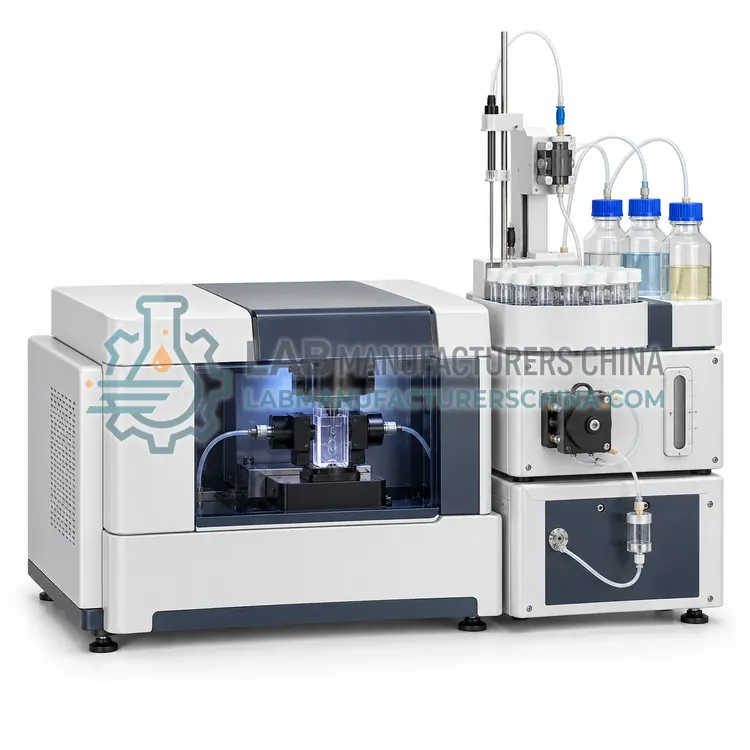
Zeta Potential Analyzer with Autotitrator

配自动滴定仪的 Zeta 电位分析仪

  • ZPA-0003
  • Zeta Potential Analyzers
  • CE (to be confirmed)
  • ISO 9001 manufacturing (to be confirmed)
Titrant channels:
1–3
pH range:
2–12 (probe dependent)
pH accuracy:
± 0.02 after calibration
Sample volume:
10–50 mL
Dispensing resolution:
≥ 1 µL step
Titrant concentration:
0.01–0.25 M

A zeta potential system integrated with a multi-purpose autotitrator that adjusts pH, conductivity or additive concentration between measurements. It automates isoelectric point, stability window and surfactant or polymer dosing studies, replacing manual pH series that are slow and prone to error.

Request a quote
View details

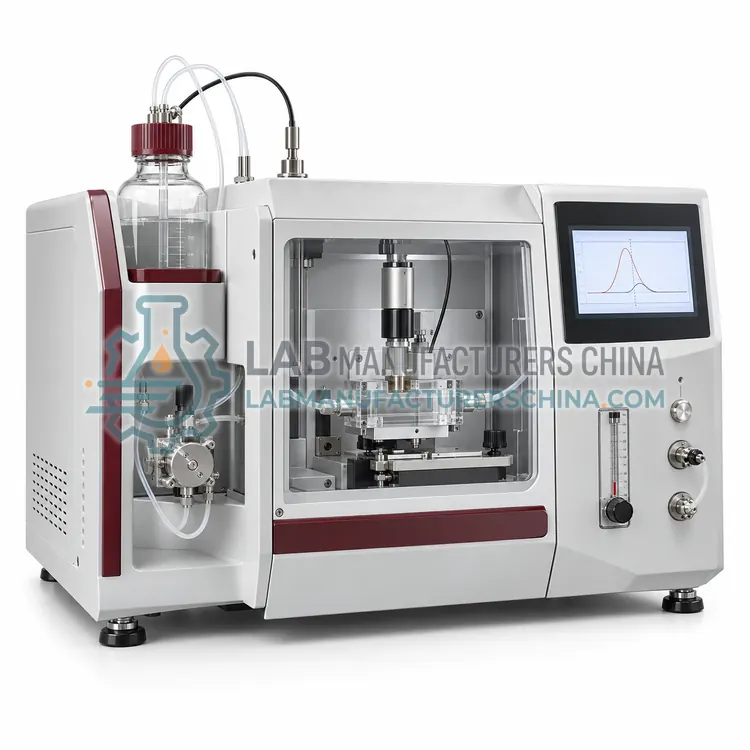
Streaming Potential Zeta Analyzer for Solid Surfaces

固体表面流动电位 Zeta 分析仪

  • ZPA-0004
  • Zeta Potential Analyzers
  • CE (to be confirmed)
  • ISO 9001 manufacturing (to be confirmed)
Measurement principle:
Streaming potential / streaming current
Zeta potential range:
−200 to +200 mV
Pressure range:
0–600 mbar
Flat sample size:
10 × 20 mm up to 20 × 50 mm
Gap height:
≈ 100 µm (adjustable)
pH range:
2–12

An analyzer that measures streaming potential or streaming current as electrolyte flows across a solid surface, giving surface zeta potential of films, membranes, fibres and powders. It is used where surface charge, not bulk dispersion, determines performance, for example in membrane fouling and coating adhesion studies.

Request a quote
View details

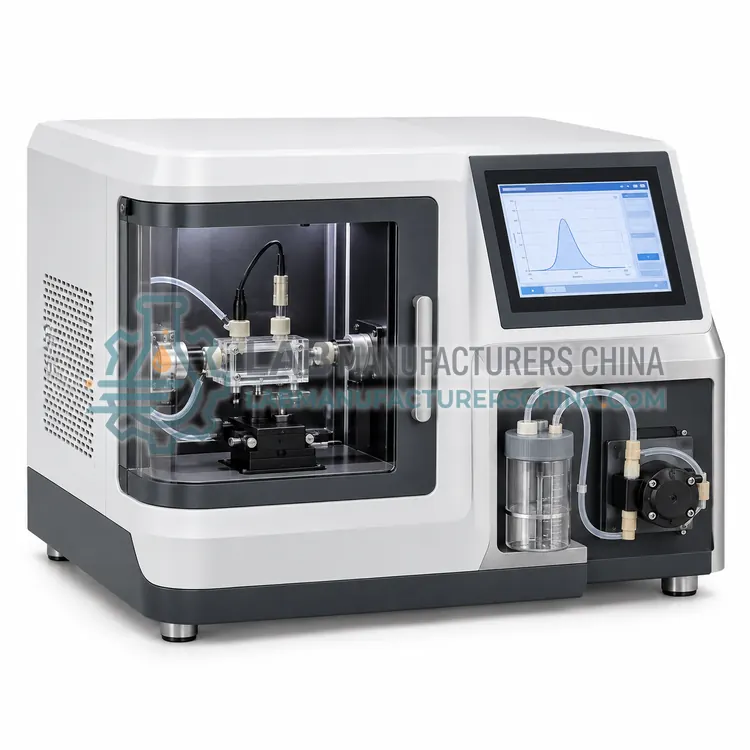
Electroacoustic Zeta Potential Analyzer for Concentrated Suspensions

浓悬浮液电声法 Zeta 电位分析仪

  • ZPA-0005
  • Zeta Potential Analyzers
  • CE (to be confirmed)
  • ISO 9001 manufacturing (to be confirmed)
Concentration range:
0.1–40 vol%
Zeta potential range:
−200 to +200 mV
Particle size range (acoustic):
≈ 5 nm–100 µm
Frequency range:
1–100 MHz (attenuation)
Sample volume:
20–200 mL
pH range:
2–12

An electroacoustic analyzer that measures zeta potential and particle size in concentrated, opaque suspensions and emulsions without dilution, using colloid vibration current or ultrasonic attenuation. It fits process-relevant slurries in ceramics, battery, mineral and coating production where dilution would change the sample.

Request a quote
View details

Compare Zeta Potential Analyzers models

ModelZeta potential rangeMobility rangeLaserConductivity rangeTemperature range
Electrophoretic Light Scattering Zeta Potential AnalyzerZPA-0001−500 to +500 mV±20 µm·cm/V·s633 nm, ≥ 4 mW0–200 mS/cm0–90 °C
Phase Analysis Light Scattering Zeta Potential AnalyzerZPA-0002−500 to +500 mV±20 µm·cm/V·s633 nm or 660 nm, ≥ 10 mW0–200 mS/cm0–90 °C, ±0.1 °C
Zeta Potential Analyzer with AutotitratorZPA-0003−500 to +500 mV———5–60 °C
Streaming Potential Zeta Analyzer for Solid SurfacesZPA-0004−200 to +200 mV————
Electroacoustic Zeta Potential Analyzer for Concentrated SuspensionsZPA-0005−200 to +200 mV———10–50 °C

Indicative values for this product class. Final specifications are confirmed on the quotation and in the calibration documents supplied with the instrument.

How do Zeta Potential Analyzers work?

Charged particles in a liquid are surrounded by an electrical double layer. The zeta potential is the potential at the slipping plane of this layer, and cannot be measured directly. Electrophoretic light scattering applies an electric field and measures particle velocity from the Doppler shift of scattered laser light; electrophoretic mobility is then converted to zeta potential by the Smoluchowski or Hückel approximation, or the Henry function for intermediate cases. Phase analysis light scattering improves sensitivity by measuring phase rather than frequency shift. Streaming potential instruments force electrolyte through a capillary or plug and measure the generated potential difference for solids. Electroacoustic methods detect sound waves generated by an applied alternating field in concentrated suspensions. Key components include the laser, electrodes and cell, temperature control and often a titrator.

Which Zeta Potential Analyzers variants are available?

  • Electrophoretic Light Scattering Zeta Potential Analyzer — A laser Doppler electrophoresis instrument that measures particle mobility in an applied field and converts it to zeta potential.
  • Phase Analysis Light Scattering Zeta Potential Analyzer — A zeta potential analyzer using phase analysis light scattering (PALS) to measure very small electrophoretic mobilities.
  • Zeta Potential Analyzer with Autotitrator — A zeta potential system integrated with a multi-purpose autotitrator that adjusts pH, conductivity or additive concentration between measurements.
  • Streaming Potential Zeta Analyzer for Solid Surfaces — An analyzer that measures streaming potential or streaming current as electrolyte flows across a solid surface, giving surface zeta potential of films, membranes, fibres and powders.
  • Electroacoustic Zeta Potential Analyzer for Concentrated Suspensions — An electroacoustic analyzer that measures zeta potential and particle size in concentrated, opaque suspensions and emulsions without dilution, using colloid vibration current or ultrasonic attenuation.

How do I choose the right variant?

Begin with the sample type. Dilute colloids and macromolecules suit electrophoretic light scattering; very low-mobility or high-conductivity samples benefit from phase analysis light scattering. Concentrated opaque suspensions, such as slurries, need electroacoustic methods, and flat or fibrous solids need streaming potential. If isoelectric point or pH dependence is required, choose a system with an automatic titrator. Check the required size range, conductivity limits, minimum sample volume and whether non-aqueous solvents are used, since the dielectric constant must be known. Decide if zeta potential alone is enough or whether combined size measurement is needed. Also weigh software validation support, cell durability and cost of disposable cells, and whether ISO 13099 conformity is expected in your methods.

Where are Zeta Potential Analyzers used?

Zeta Potential Analyzers are specified in colloidal stability of emulsions and suspensions, protein and biologic formulation screening, water and wastewater coagulation control, battery slurry and ceramic dispersion, pigment and ink stabilisation and membrane and fibre surface charge.

Which standards and certifications apply?

Work with Zeta Potential Analyzers is commonly governed by ISO 13099-1, ISO 13099-2, ISO 13099-3, ASTM D4187, GB/T 32671 and ISO 13320. Instrument certifications such as CE marking are confirmed per configuration and never assumed.

What are the key considerations before purchase?

Zeta potential depends on pH, ionic strength, temperature and sample history, so each report should state dispersant, pH, conductivity and temperature. Use low-conductivity, filtered dispersants and avoid bubbles at the electrodes; high salt can cause electrode polarisation and sample heating. Verify performance periodically using a zeta potential transfer standard, typically around −42 mV, and follow the supplier's interval. Clean cells thoroughly, since contamination and electrode degradation alter results. Gold or palladium electrodes and disposable capillary cells simplify maintenance. For regulated use, carry out IQ/OQ/PQ and maintain audit trails. Report the model used to convert mobility to zeta potential.

Frequently asked questions about Zeta Potential Analyzers

A large absolute zeta potential, commonly beyond ±30 mV, indicates strong electrostatic repulsion and usually good colloidal stability. Values near zero suggest particles can approach and aggregate. The guideline depends on whether steric stabilisers also contribute.

Need help specifying Zeta Potential Analyzers?

Request a quote