Lab Manufacturers China

Particle Size Analyzers

粒度分析仪

PSA · Particle Analysis Instruments · 5 models

By Lab Manufacturers China Technical TeamLast reviewed Standards: ISO 13320, USP <429>, ISO 13322-1

Standards referenced

  • ISO 13320
  • USP <429>
  • ISO 13322-1
  • ISO 13322-2
  • ISO 22412
  • GB/T 19077
  • Ph. Eur. 2.9.31

What are Particle Size Analyzers?

Particle size analyzers measure the size distribution of powders, suspensions and emulsions, reporting values such as D10, D50 and D90. Techniques include laser diffraction, dynamic light scattering, dynamic image analysis and centrifugal sedimentation. They are used in pharmaceutical, ceramics, battery, pigment, food and mining laboratories for formulation control and quality release.

5 models of Particle Size Analyzers

The 5 models below are current configurations; specifications are confirmed on quotation.

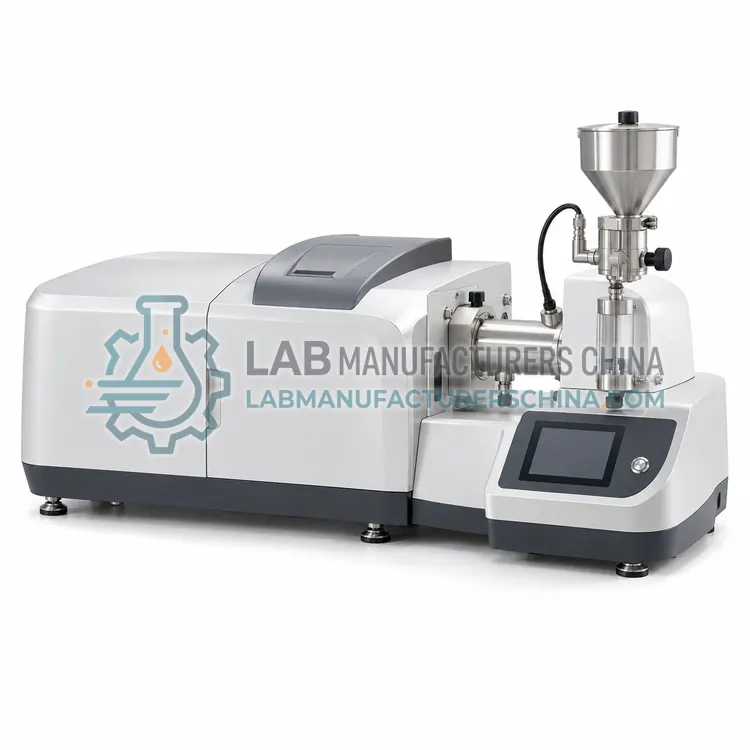
Wet-Dispersion Laser Diffraction Particle Size Analyzer

湿法分散激光粒度分析仪

  • PSA-0001
  • Particle Size Analyzers
  • CE (to be confirmed)
  • ISO 9001 manufacturing (to be confirmed)
Measuring range:
0.1–1000 µm
Measurement principle:
Laser diffraction (Mie/Fraunhofer)
Light sources:
Red laser 633 nm, blue LED 470 nm
Detector channels:
≥ 60 elements
Dispersion unit:
Recirculating wet, 100–1000 mL tank
Ultrasound:
0–50 W adjustable

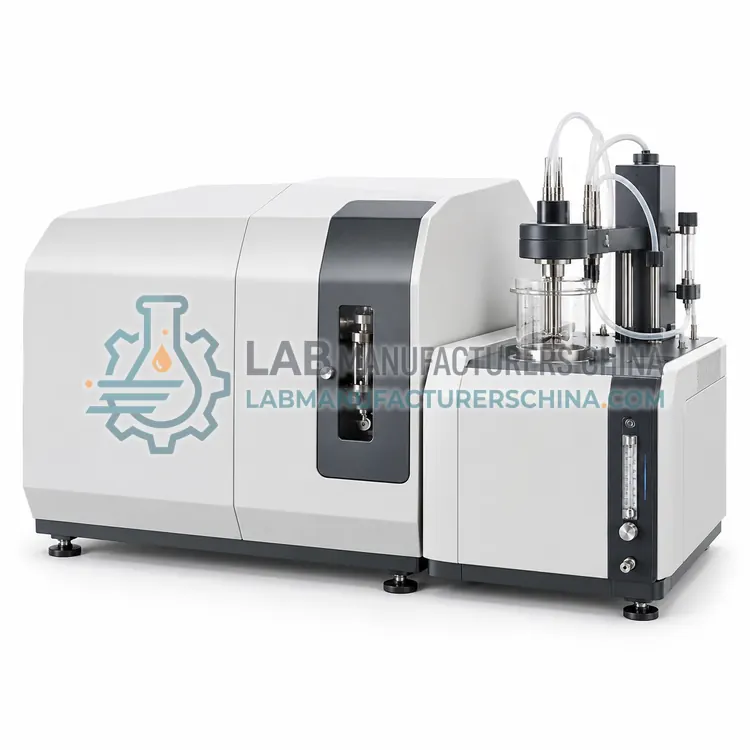
A laser diffraction analyzer with a recirculating wet dispersion unit, stirring and ultrasonic deagglomeration. It measures suspensions and cohesive powders from sub-micron to millimetre sizes and is the usual general-purpose choice for QC laboratories needing repeatable volume-based distributions.

Request a quote
View details

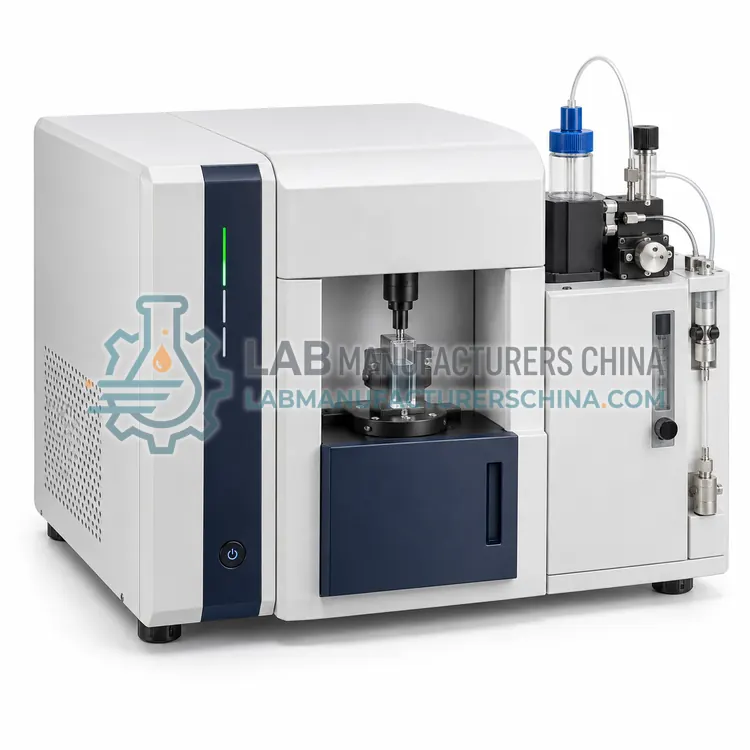
Dry-Powder Laser Diffraction Particle Size Analyzer

干法激光粒度分析仪

  • PSA-0002
  • Particle Size Analyzers
  • CE (to be confirmed)
  • ISO 9001 manufacturing (to be confirmed)
Measuring range:
0.5–3500 µm
Measurement principle:
Laser diffraction, dry aerosol
Dispersion pressure:
0.5–4 bar (compressed air)
Air consumption:
≈ 20–60 L/min at 2 bar
Sample quantity:
1–50 g
Feed system:
Vibrating chute with feedback

A laser diffraction analyzer that disperses powders in a compressed-air stream without liquid. It suits free-flowing, solvent-sensitive or water-reactive materials and gives fast measurements in routine production control. It is best matched to particles from a few micrometres upward and to laboratories handling large sample volumes.

Request a quote
View details

Dynamic Light Scattering Particle Size Analyzer

动态光散射粒度分析仪

  • PSA-0003
  • Particle Size Analyzers
  • CE (to be confirmed)
  • ISO 9001 manufacturing (to be confirmed)
Size range:
0.3 nm–10 µm
Measurement principle:
Dynamic light scattering (photon correlation)
Laser:
He-Ne 633 nm or 532 nm solid state
Detection angle:
90° and 173° backscatter
Temperature range:
0–90 °C, ±0.1 °C
Minimum sample volume:
≥ 2 µL (microcuvette)

A dynamic light scattering analyzer that determines hydrodynamic diameter of sub-micron particles and macromolecules from Brownian-motion fluctuations. It fits dilute colloids, proteins, liposomes and emulsions in the roughly 1 nm to 10 µm range where laser diffraction loses resolution.

Request a quote
View details

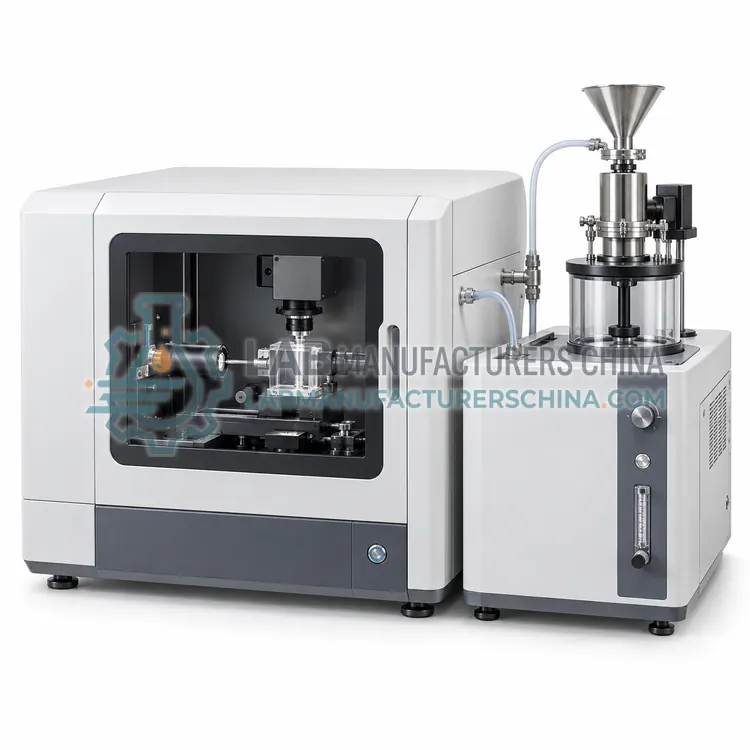
Dynamic Image Particle Size and Shape Analyzer

动态图像粒度粒形分析仪

  • PSA-0004
  • Particle Size Analyzers
  • CE (to be confirmed)
  • ISO 9001 manufacturing (to be confirmed)
Measuring range:
1 µm–30 mm (optics dependent)
Measurement principle:
Dynamic image analysis (ISO 13322-2)
Cameras:
Two, up to 300 fps
Light source:
Pulsed LED backlight
Dispersion modes:
Free fall, air, wet cell
Size parameters:
xc min, xFe max, area equivalent

An image-based analyzer that films particles in free fall or flow with high-speed cameras and reports size together with shape parameters such as aspect ratio and circularity. It is chosen when particle morphology matters or when rare oversize particles must be detected.

Request a quote
View details

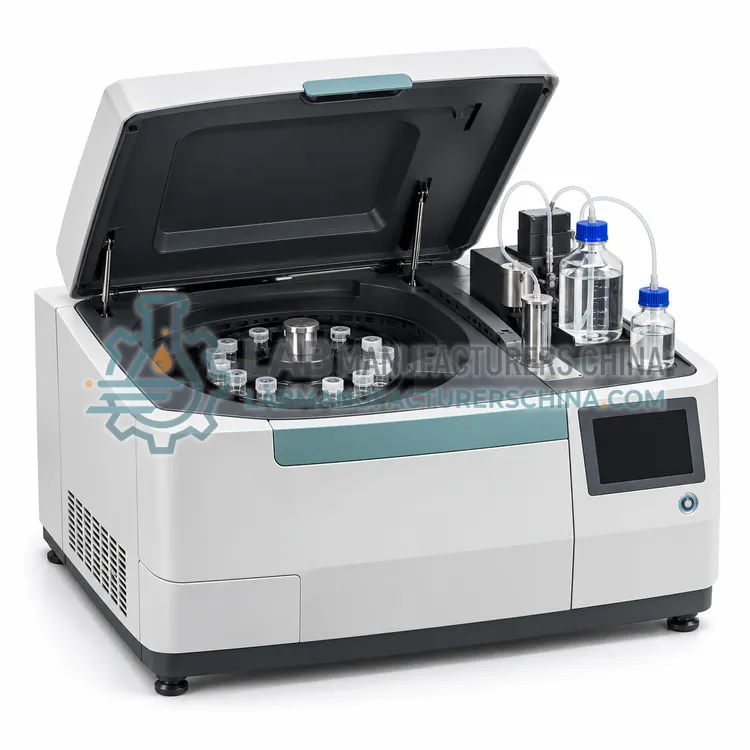
Centrifugal Sedimentation Particle Size Analyzer

离心沉降粒度分析仪

  • PSA-0005
  • Particle Size Analyzers
  • CE (to be confirmed)
  • ISO 9001 manufacturing (to be confirmed)
Size range:
10 nm–100 µm (density dependent)
Measurement principle:
Centrifugal sedimentation, Stokes' law
Maximum speed:
24000 rpm (disc)
Detection:
Optical turbidity or X-ray absorbance
Sample volume:
≈ 0.1 mL per injection
Resolution:
Separates peaks with ≤ 5% size difference

A sedimentation analyzer that applies Stokes' law under centrifugal force, detecting particles by light or X-ray attenuation as they settle. It provides high-resolution separation of narrow and multimodal distributions from about 10 nm to 100 µm, particularly for latex, pigments and fine ceramics.

Request a quote
View details

Compare Particle Size Analyzers models

ModelMeasuring rangeMeasurement principleRepeatability (D50)Measurement timeSample quantity
Wet-Dispersion Laser Diffraction Particle Size AnalyzerPSA-00010.1–1000 µmLaser diffraction (Mie/Fraunhofer)≤ 1% RSD with reference material< 1 min per measurement—
Dry-Powder Laser Diffraction Particle Size AnalyzerPSA-00020.5–3500 µmLaser diffraction, dry aerosol≤ 1% RSD for free-flowing powder≈ 30–60 s per sample1–50 g
Dynamic Light Scattering Particle Size AnalyzerPSA-0003—Dynamic light scattering (photon correlation)—≈ 2–5 min—
Dynamic Image Particle Size and Shape AnalyzerPSA-00041 µm–30 mm (optics dependent)Dynamic image analysis (ISO 13322-2)—2–10 min0.1–100 g
Centrifugal Sedimentation Particle Size AnalyzerPSA-0005—Centrifugal sedimentation, Stokes' law———

Indicative values for this product class. Final specifications are confirmed on the quotation and in the calibration documents supplied with the instrument.

How do Particle Size Analyzers work?

Laser diffraction analyzers pass a laser beam through a dispersed sample; particles scatter light at angles inversely related to their size, and a detector array records the angular intensity pattern. The Mie or Fraunhofer model converts this pattern into a volume-based size distribution. Dynamic light scattering instead measures intensity fluctuations caused by Brownian motion, and the Stokes–Einstein equation converts the diffusion coefficient into a hydrodynamic diameter. Dynamic image analysis captures particle silhouettes with a high-speed camera and reports size and shape descriptors directly. Sedimentation methods apply Stokes' law to settling velocity under gravity or centrifugal force. Key components include the light source, sample dispersion unit (wet or dry), detector array or correlator, and software with optical-property databases.

Which Particle Size Analyzers variants are available?

  • Wet-Dispersion Laser Diffraction Particle Size Analyzer — A laser diffraction analyzer with a recirculating wet dispersion unit, stirring and ultrasonic deagglomeration.
  • Dry-Powder Laser Diffraction Particle Size Analyzer — A laser diffraction analyzer that disperses powders in a compressed-air stream without liquid.
  • Dynamic Light Scattering Particle Size Analyzer — A dynamic light scattering analyzer that determines hydrodynamic diameter of sub-micron particles and macromolecules from Brownian-motion fluctuations.
  • Dynamic Image Particle Size and Shape Analyzer — An image-based analyzer that films particles in free fall or flow with high-speed cameras and reports size together with shape parameters such as aspect ratio and circularity.
  • Centrifugal Sedimentation Particle Size Analyzer — A sedimentation analyzer that applies Stokes' law under centrifugal force, detecting particles by light or X-ray attenuation as they settle.

How do I choose the right variant?

Start from the expected size range and sample state. Laser diffraction covers roughly 0.1 to 3500 µm and suits most powders and suspensions; dynamic light scattering is preferred below about 1 µm; dynamic image analysis is chosen when shape matters or when a few oversize particles must be detected; centrifugal sedimentation resolves narrow multimodal distributions of fine particles. Next decide between wet and dry dispersion: dry dispersion avoids solvents and suits free-flowing powders, while wet dispersion gives better deagglomeration of cohesive or fine materials. Check whether the method must follow ISO 13320 or USP <429>, and whether 21 CFR Part 11 audit trails are needed. Also consider sample volume, automation, cleaning time between samples and the availability of validated SOP templates.

Where are Particle Size Analyzers used?

Particle Size Analyzers are specified in pharmaceutical powder and inhaler development, battery cathode and anode materials, ceramics and cement, pigments, paints and coatings, food and dairy emulsions and mining and mineral processing.

Which standards and certifications apply?

Work with Particle Size Analyzers is commonly governed by ISO 13320, USP <429>, ISO 13322-1, ISO 13322-2, ISO 22412, GB/T 19077 and Ph. Eur. 2.9.31. Instrument certifications such as CE marking are confirmed per configuration and never assumed.

What are the key considerations before purchase?

Particle size results depend heavily on sampling and dispersion, so representative sub-sampling, a documented dispersion protocol and sonication or pressure settings must be validated for each material. Install the instrument on a vibration-free bench away from direct sunlight, and keep the optical bench clean; check background and alignment before each session. Verify performance periodically with certified reference materials such as polystyrene latex or glass beads, following ISO 13320 acceptance criteria. Replace dispersant and clean the cell to avoid carry-over. Enter refractive index and absorption values correctly, because they strongly influence Mie results. Regulated laboratories should perform IQ/OQ/PQ and use audit-trail-enabled software.

Frequently asked questions about Particle Size Analyzers

Laser diffraction measures the angular pattern of light scattered by many particles and suits roughly 0.1 to 3500 µm. Dynamic light scattering analyzes Brownian-motion-induced intensity fluctuations and suits particles from about 1 nm to a few micrometres in dilute suspension.

Need help specifying Particle Size Analyzers?

Request a quote