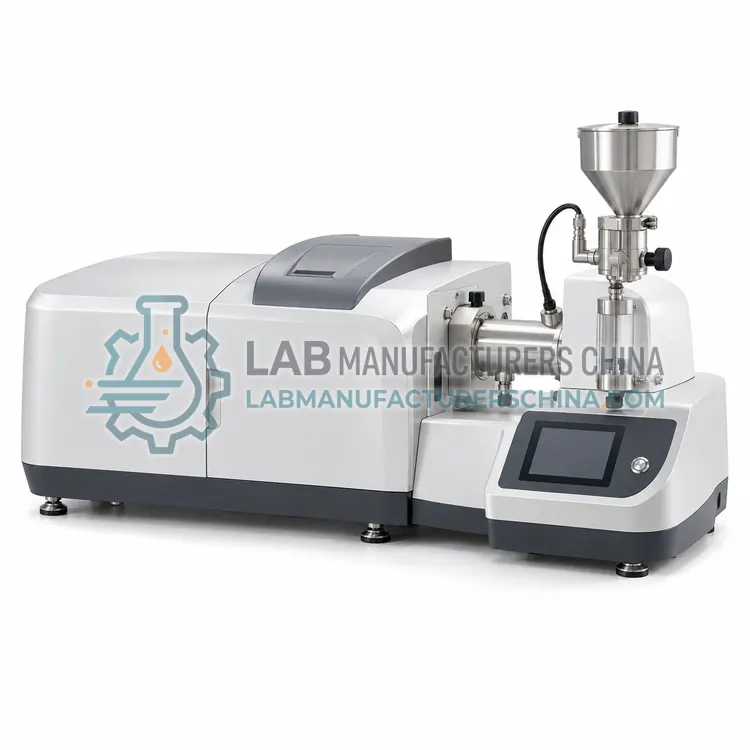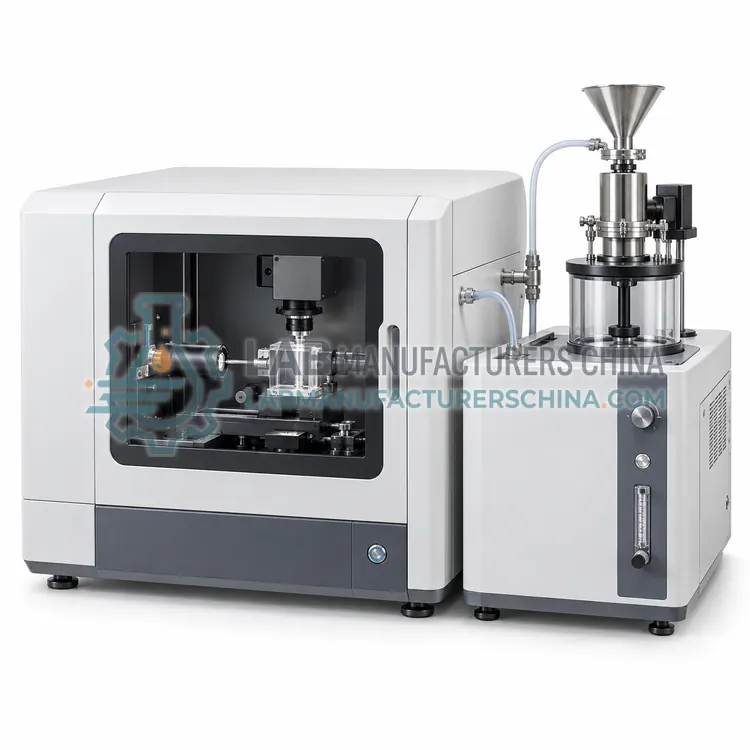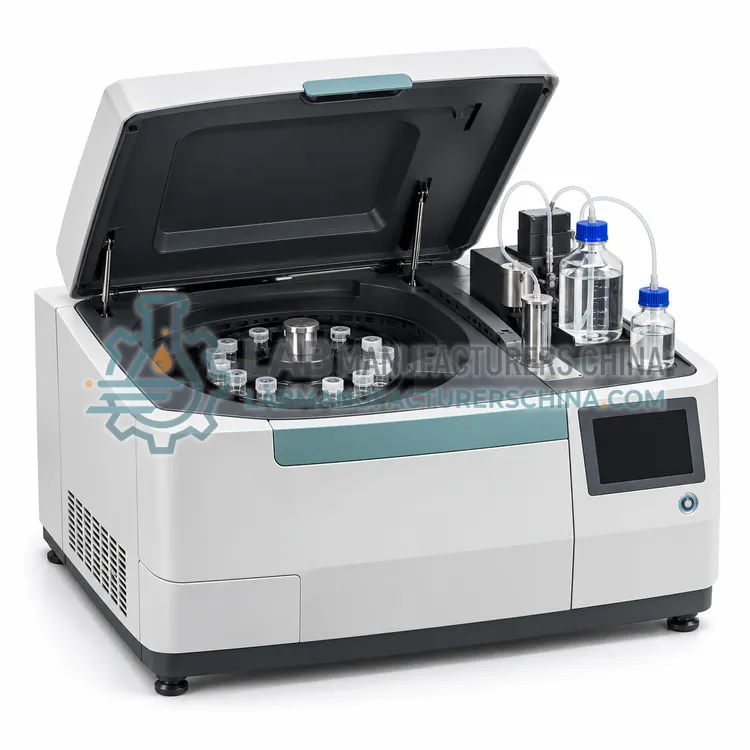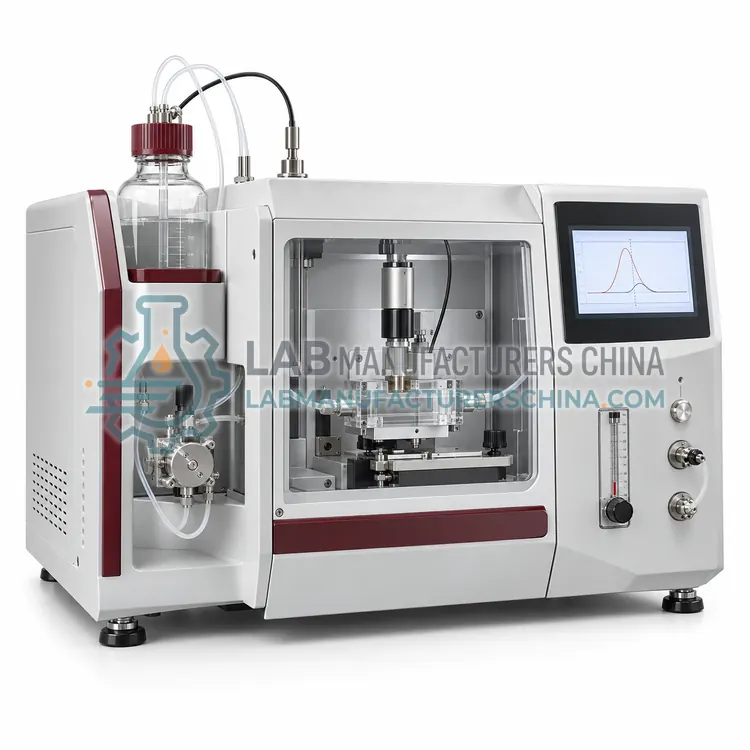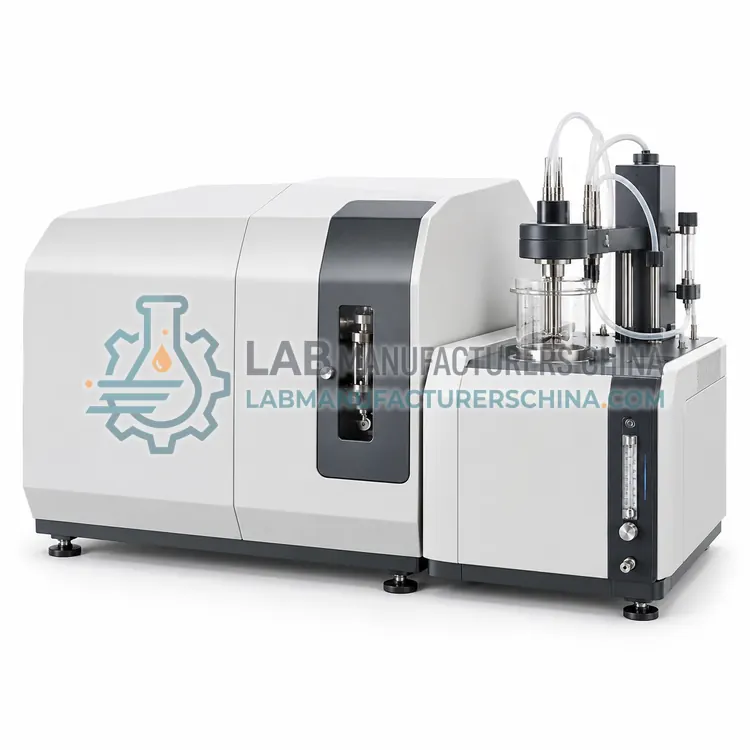
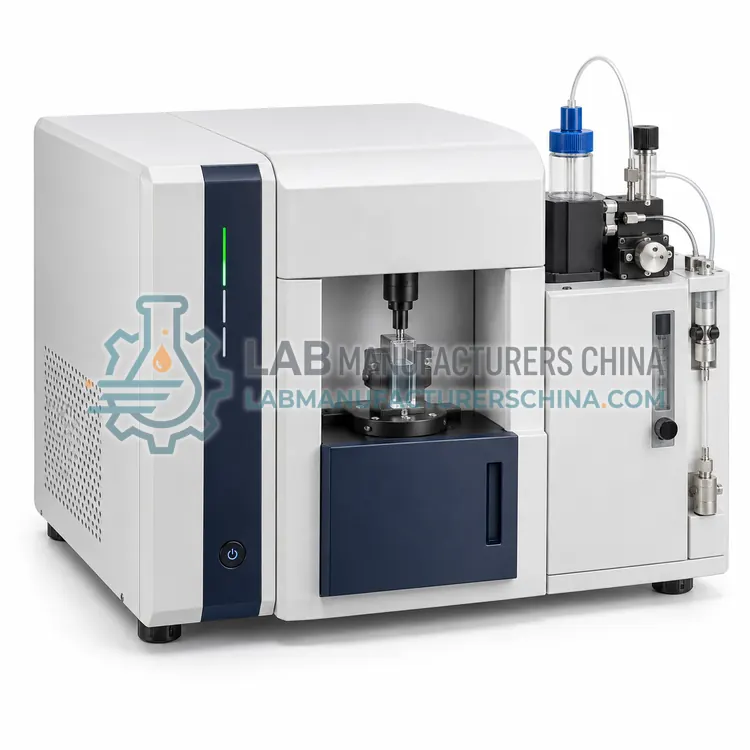
Dynamic Light Scattering Particle Size Analyzer
动态光散射粒度分析仪
- SKU PSA-0003
- Particle Size Analyzers
- CE (to be confirmed)
- ISO 9001 manufacturing (to be confirmed)
Price on request — FOB / CIF quoted per order
Prices depend on configuration, quantity and destination port.
Key specifications
| Size range | 0.3 nm–10 µm |
|---|---|
| Measurement principle | Dynamic light scattering (photon correlation) |
| Laser | He-Ne 633 nm or 532 nm solid state |
| Detection angle | 90° and 173° backscatter |
| Temperature range | 0–90 °C, ±0.1 °C |
| Minimum sample volume | ≥ 2 µL (microcuvette) |
Request a quote Download brochure · to be provided
By Lab Manufacturers China Technical TeamLast reviewed Standards: ISO 13320, USP <429>, ISO 13322-1
What is the Dynamic Light Scattering Particle Size Analyzer?
A dynamic light scattering analyzer that determines hydrodynamic diameter of sub-micron particles and macromolecules from Brownian-motion fluctuations. It fits dilute colloids, proteins, liposomes and emulsions in the roughly 1 nm to 10 µm range where laser diffraction loses resolution.
What is the Dynamic Light Scattering Particle Size Analyzer?
A dynamic light scattering analyzer that determines hydrodynamic diameter of sub-micron particles and macromolecules from Brownian-motion fluctuations. It fits dilute colloids, proteins, liposomes and emulsions in the roughly 1 nm to 10 µm range where laser diffraction loses resolution.
Overview
A dynamic light scattering analyzer illuminates a dilute suspension with a coherent laser, usually 633 nm, and records scattered intensity at 90°, 173° backscatter or both using an avalanche photodiode. A digital correlator builds the autocorrelation function, and cumulant or regularisation algorithms derive the diffusion coefficient, which the Stokes–Einstein equation converts to a z-average hydrodynamic diameter and polydispersity index. Temperature control of the cuvette holder, typically 0 to 90 °C, is essential because viscosity and diffusion depend on it. Backscatter detection tolerates higher concentrations and reduces dust sensitivity. Results are intensity-weighted, so a few large aggregates can dominate; volume and number conversions are model-dependent. Sample volumes can be as low as 2 to 12 µL in microcuvettes, which suits scarce biologics.
How does it work?
Laser diffraction analyzers pass a laser beam through a dispersed sample; particles scatter light at angles inversely related to their size, and a detector array records the angular intensity pattern. The Mie or Fraunhofer model converts this pattern into a volume-based size distribution. Dynamic light scattering instead measures intensity fluctuations caused by Brownian motion, and the Stokes–Einstein equation converts the diffusion coefficient into a hydrodynamic diameter. Dynamic image analysis captures particle silhouettes with a high-speed camera and reports size and shape descriptors directly. Sedimentation methods apply Stokes' law to settling velocity under gravity or centrifugal force. Key components include the light source, sample dispersion unit (wet or dry), detector array or correlator, and software with optical-property databases.
What are the key features?
- Hardware correlator with cumulant and multi-exponential analysis
- Backscatter 173° detection for concentrated and turbid samples
- Peltier temperature control of cuvette holder from 0 to 90 °C
- Microcuvette option requiring only a few microlitres of sample
- Polydispersity index and size quality indicators in the report
- Optional zeta potential and titration accessories
What are the technical specifications?
A typical dynamic light scattering particle size analyzer configuration offers size range of 0.3 nm–10 µm, measurement principle of Dynamic light scattering (photon correlation), laser of He-Ne 633 nm or 532 nm solid state, detection angle of 90° and 173° backscatter, temperature range of 0–90 °C, ±0.1 °C and minimum sample volume of ≥ 2 µL (microcuvette). Values are indicative of the product class; the exact figures for each configuration are confirmed on the quotation and the calibration documents supplied with the instrument.
Which applications is it used for?
The Dynamic Light Scattering Particle Size Analyzer is used in protein aggregation screening, liposome and lipid nanoparticle sizing, latex and polymer dispersions, nanoemulsion stability studies and quantum dot and metal colloid characterisation. Across the wider Particle Size Analyzers class, laboratories also deploy it for pharmaceutical powder and inhaler development, battery cathode and anode materials and ceramics and cement.
Which standards and certifications apply?
Relevant standards and methods include ISO 13320, USP <429>, ISO 13322-1, ISO 13322-2, ISO 22412, GB/T 19077 and Ph. Eur. 2.9.31. Certification candidates for this model are CE and ISO 9001 manufacturing; each is to be confirmed for the specific configuration before shipment, and certificates are supplied only where they have been issued.
Particle size results depend heavily on sampling and dispersion, so representative sub-sampling, a documented dispersion protocol and sonication or pressure settings must be validated for each material. Install the instrument on a vibration-free bench away from direct sunlight, and keep the optical bench clean; check background and alignment before each session. Verify performance periodically with certified reference materials such as polystyrene latex or glass beads, following ISO 13320 acceptance criteria. Replace dispersant and clean the cell to avoid carry-over. Enter refractive index and absorption values correctly, because they strongly influence Mie results. Regulated laboratories should perform IQ/OQ/PQ and use audit-trail-enabled software.
How do I select the right Dynamic Light Scattering Particle Size Analyzer?
Choose dynamic light scattering when the sample is a dilute, stable suspension below about 1 µm, when sample volume is limited, or when you need hydrodynamic size and polydispersity. Specify the concentration range, temperature control, cuvette type, need for zeta potential or titration, and any 21 CFR Part 11 requirement. For broad distributions extending into tens of micrometres, laser diffraction is more appropriate.
How does it compare with other Particle Size Analyzers variants?
Start from the expected size range and sample state. Laser diffraction covers roughly 0.1 to 3500 µm and suits most powders and suspensions; dynamic light scattering is preferred below about 1 µm; dynamic image analysis is chosen when shape matters or when a few oversize particles must be detected; centrifugal sedimentation resolves narrow multimodal distributions of fine particles. Next decide between wet and dry dispersion: dry dispersion avoids solvents and suits free-flowing powders, while wet dispersion gives better deagglomeration of cohesive or fine materials. Check whether the method must follow ISO 13320 or USP <429>, and whether 21 CFR Part 11 audit trails are needed. Also consider sample volume, automation, cleaning time between samples and the availability of validated SOP templates.
Full specifications
| Size range | 0.3 nm–10 µm |
|---|---|
| Measurement principle | Dynamic light scattering (photon correlation) |
| Laser | He-Ne 633 nm or 532 nm solid state |
| Detection angle | 90° and 173° backscatter |
| Temperature range | 0–90 °C, ±0.1 °C |
| Minimum sample volume | ≥ 2 µL (microcuvette) |
| Concentration range | 0.1 ppm–40% w/v (sample dependent) |
| Accuracy | ± 2% on latex standard |
| Correlator | Digital, ≥ 1000 channels |
| Measurement time | ≈ 2–5 min |
Indicative values for this product class. Final specifications are confirmed on the quotation and in the calibration documents supplied with the instrument.
Applications
- Protein aggregation screening
- Liposome and lipid nanoparticle sizing
- Latex and polymer dispersions
- Nanoemulsion stability studies
- Quantum dot and metal colloid characterisation
Key features
- Hardware correlator with cumulant and multi-exponential analysis
- Backscatter 173° detection for concentrated and turbid samples
- Peltier temperature control of cuvette holder from 0 to 90 °C
- Microcuvette option requiring only a few microlitres of sample
- Polydispersity index and size quality indicators in the report
- Optional zeta potential and titration accessories
Frequently asked questions about Dynamic Light Scattering Particle Size Analyzer
DLS measures hydrodynamic diameter, which includes the solvation layer and adsorbed species, and weights results by scattered intensity. Electron microscopy measures dry core size in number terms, so DLS values are commonly larger, particularly for polydisperse samples.
The polydispersity index (PdI) is a dimensionless measure of distribution breadth derived from the cumulant fit. Values below about 0.1 indicate near-monodisperse samples, while values above about 0.5 suggest a broad distribution where the z-average is unreliable.
Dilute to a concentration giving a stable count rate, filter the dispersant through 0.1 or 0.2 µm filters, and avoid dust and bubbles. Equilibrate the temperature for several minutes and check that dilution does not alter the particle state.
Laser diffraction measures the angular pattern of light scattered by many particles and suits roughly 0.1 to 3500 µm. Dynamic light scattering analyzes Brownian-motion-induced intensity fluctuations and suits particles from about 1 nm to a few micrometres in dilute suspension.
They are cumulative percentile diameters. D50 is the median size, where half of the sample volume is finer; D10 and D90 mark the sizes below which 10 percent and 90 percent of the volume lie. Together they describe distribution width, often summarized as span.
Dry dispersion is faster, solvent-free and suits free-flowing, non-cohesive powders. Wet dispersion with sonication or stirring deagglomerates fine, cohesive or soluble-in-air-sensitive materials more reliably and usually gives better repeatability below about 10 µm. Method development should compare both against a reference.