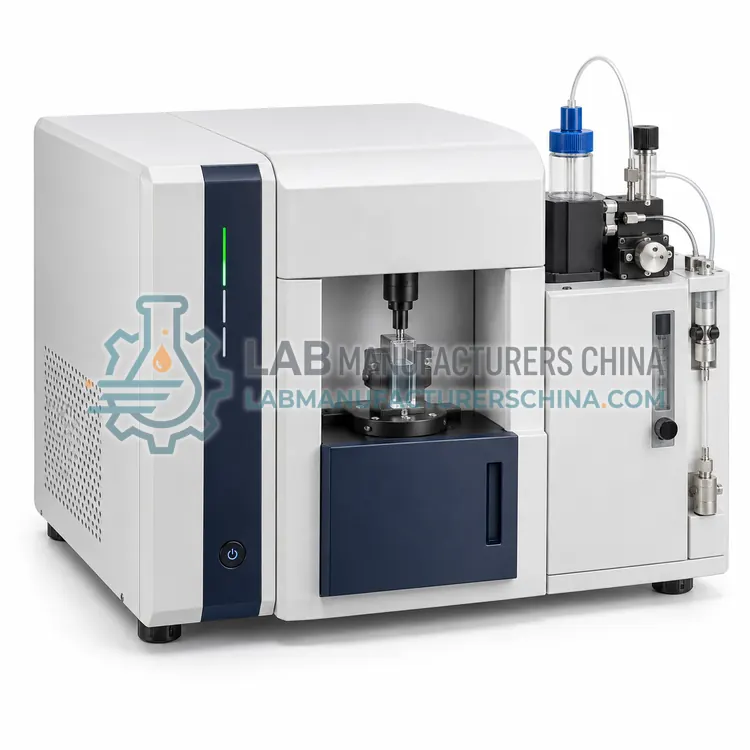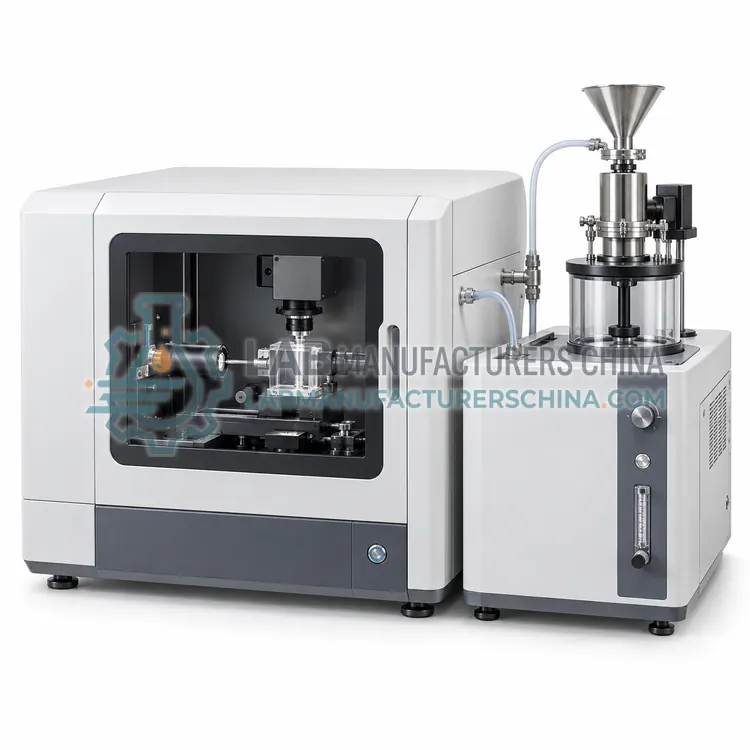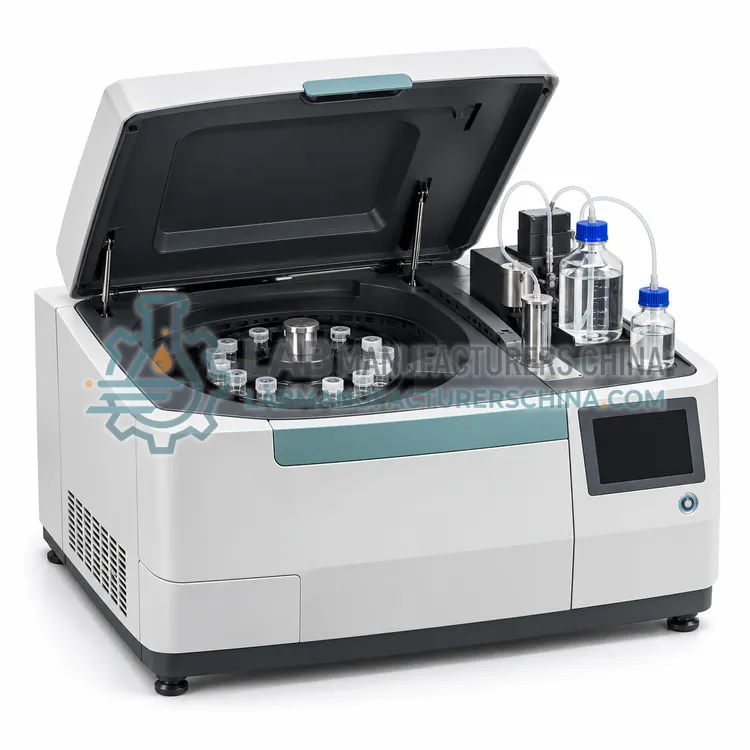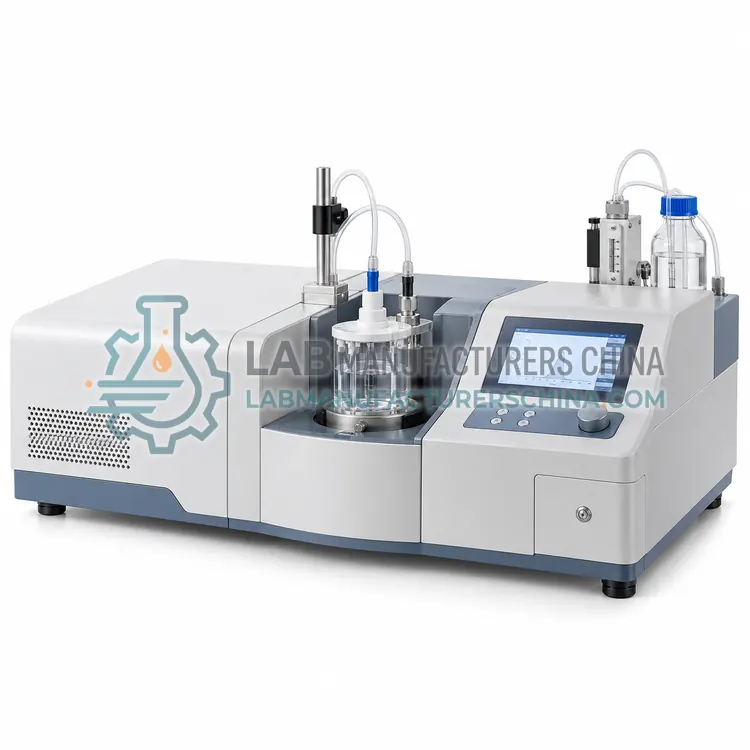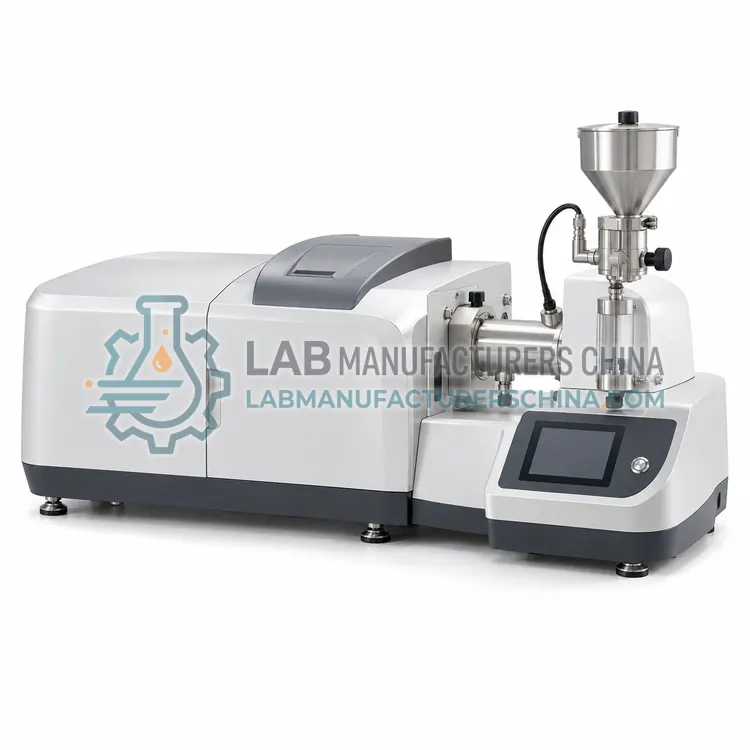
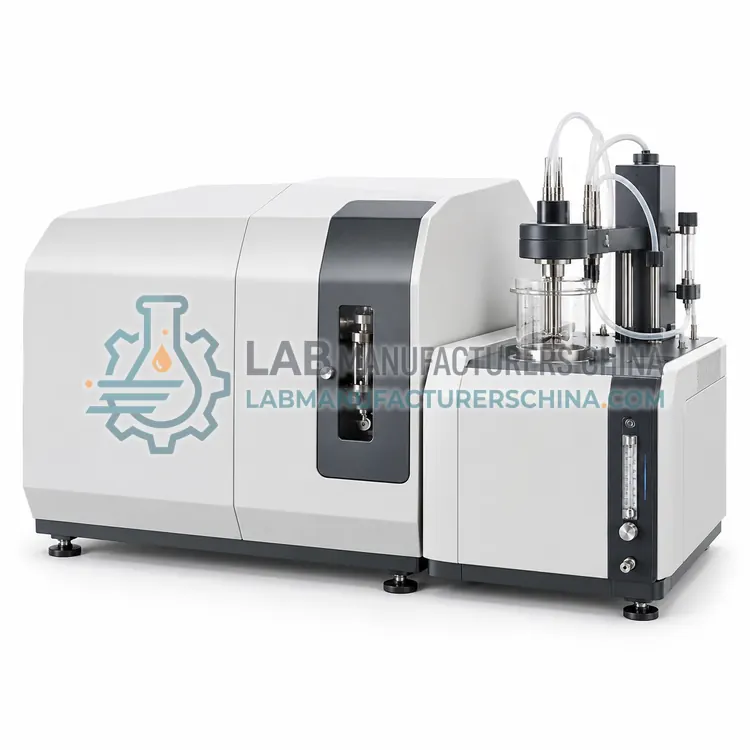
Wet-Dispersion Laser Diffraction Particle Size Analyzer
湿法分散激光粒度分析仪
- SKU PSA-0001
- Particle Size Analyzers
- CE (to be confirmed)
- ISO 9001 manufacturing (to be confirmed)
Price on request — FOB / CIF quoted per order
Prices depend on configuration, quantity and destination port.
Key specifications
| Measuring range | 0.1–1000 µm |
|---|---|
| Measurement principle | Laser diffraction (Mie/Fraunhofer) |
| Light sources | Red laser 633 nm, blue LED 470 nm |
| Detector channels | ≥ 60 elements |
| Dispersion unit | Recirculating wet, 100–1000 mL tank |
| Ultrasound | 0–50 W adjustable |
Request a quote Download brochure · to be provided
By Lab Manufacturers China Technical TeamLast reviewed Standards: ISO 13320, USP <429>, ISO 13322-1
What is the Wet-Dispersion Laser Diffraction Particle Size Analyzer?
A laser diffraction analyzer with a recirculating wet dispersion unit, stirring and ultrasonic deagglomeration. It measures suspensions and cohesive powders from sub-micron to millimetre sizes and is the usual general-purpose choice for QC laboratories needing repeatable volume-based distributions.
What is the Wet-Dispersion Laser Diffraction Particle Size Analyzer?
A laser diffraction analyzer with a recirculating wet dispersion unit, stirring and ultrasonic deagglomeration. It measures suspensions and cohesive powders from sub-micron to millimetre sizes and is the usual general-purpose choice for QC laboratories needing repeatable volume-based distributions.
Overview
This variant pumps the sample through a flow cell from a stirred dispersion tank fitted with an ultrasonic probe. Laser diffraction with a red laser and a blue or secondary source, read by a multi-element detector array including wide-angle and backscatter elements, resolves particles from about 0.1 µm upward. Wet dispersion gives good deagglomeration of fine, cohesive pigments, ceramics and active pharmaceutical ingredients, and allows adjustable pump and stirrer speeds plus surfactant use. Typical sample consumption is tens of milligrams to a few grams. Automated fill, measure, drain and rinse cycles reduce operator influence, and software supports Mie theory with user-defined refractive index libraries and SOP-driven reporting. Dispersant volume of 100 to 1000 mL is typical, so solvent compatibility of the wetted parts must be checked.
How does it work?
Laser diffraction analyzers pass a laser beam through a dispersed sample; particles scatter light at angles inversely related to their size, and a detector array records the angular intensity pattern. The Mie or Fraunhofer model converts this pattern into a volume-based size distribution. Dynamic light scattering instead measures intensity fluctuations caused by Brownian motion, and the Stokes–Einstein equation converts the diffusion coefficient into a hydrodynamic diameter. Dynamic image analysis captures particle silhouettes with a high-speed camera and reports size and shape descriptors directly. Sedimentation methods apply Stokes' law to settling velocity under gravity or centrifugal force. Key components include the light source, sample dispersion unit (wet or dry), detector array or correlator, and software with optical-property databases.
What are the key features?
- Recirculating dispersion tank with adjustable pump and stirrer speed
- Integrated ultrasonic probe with programmable power and duration
- Red and blue light sources with wide-angle and backscatter detectors
- Automated fill, measure, drain and rinse sequences
- Mie theory with editable refractive index and absorption database
- SOP-driven reports with D10, D50, D90 and span
What are the technical specifications?
A typical wet-dispersion laser diffraction particle size analyzer configuration offers measuring range of 0.1–1000 µm, measurement principle of Laser diffraction (Mie/Fraunhofer), light sources of Red laser 633 nm, blue LED 470 nm, detector channels of ≥ 60 elements, dispersion unit of Recirculating wet, 100–1000 mL tank and ultrasound of 0–50 W adjustable. Values are indicative of the product class; the exact figures for each configuration are confirmed on the quotation and the calibration documents supplied with the instrument.
Which applications is it used for?
The Wet-Dispersion Laser Diffraction Particle Size Analyzer is used in pharmaceutical API and excipient release testing, battery electrode slurry and powder control, ceramic and pigment production, cement and mineral fillers and emulsion and suspension development. Across the wider Particle Size Analyzers class, laboratories also deploy it for pharmaceutical powder and inhaler development, battery cathode and anode materials and ceramics and cement.
Which standards and certifications apply?
Relevant standards and methods include ISO 13320, USP <429>, ISO 13322-1, ISO 13322-2, ISO 22412, GB/T 19077 and Ph. Eur. 2.9.31. Certification candidates for this model are CE and ISO 9001 manufacturing; each is to be confirmed for the specific configuration before shipment, and certificates are supplied only where they have been issued.
Particle size results depend heavily on sampling and dispersion, so representative sub-sampling, a documented dispersion protocol and sonication or pressure settings must be validated for each material. Install the instrument on a vibration-free bench away from direct sunlight, and keep the optical bench clean; check background and alignment before each session. Verify performance periodically with certified reference materials such as polystyrene latex or glass beads, following ISO 13320 acceptance criteria. Replace dispersant and clean the cell to avoid carry-over. Enter refractive index and absorption values correctly, because they strongly influence Mie results. Regulated laboratories should perform IQ/OQ/PQ and use audit-trail-enabled software.
How do I select the right Wet-Dispersion Laser Diffraction Particle Size Analyzer?
Choose this variant for fine, cohesive or solvent-compatible materials where repeatable deagglomeration matters, typically below about 50 µm. Specify the size range, available dispersants, sample quantity, refractive index data needed, whether an autosampler is required, and compliance needs such as ISO 13320 or 21 CFR Part 11 software. For free-flowing, solvent-sensitive powders, the dry variant is a better match.
How does it compare with other Particle Size Analyzers variants?
Start from the expected size range and sample state. Laser diffraction covers roughly 0.1 to 3500 µm and suits most powders and suspensions; dynamic light scattering is preferred below about 1 µm; dynamic image analysis is chosen when shape matters or when a few oversize particles must be detected; centrifugal sedimentation resolves narrow multimodal distributions of fine particles. Next decide between wet and dry dispersion: dry dispersion avoids solvents and suits free-flowing powders, while wet dispersion gives better deagglomeration of cohesive or fine materials. Check whether the method must follow ISO 13320 or USP <429>, and whether 21 CFR Part 11 audit trails are needed. Also consider sample volume, automation, cleaning time between samples and the availability of validated SOP templates.
Full specifications
| Measuring range | 0.1–1000 µm |
|---|---|
| Measurement principle | Laser diffraction (Mie/Fraunhofer) |
| Light sources | Red laser 633 nm, blue LED 470 nm |
| Detector channels | ≥ 60 elements |
| Dispersion unit | Recirculating wet, 100–1000 mL tank |
| Ultrasound | 0–50 W adjustable |
| Pump speed | 500–3500 rpm |
| Repeatability (D50) | ≤ 1% RSD with reference material |
| Measurement time | < 1 min per measurement |
| Power supply | AC 100–240 V, 50/60 Hz |
Indicative values for this product class. Final specifications are confirmed on the quotation and in the calibration documents supplied with the instrument.
Applications
- Pharmaceutical API and excipient release testing
- Battery electrode slurry and powder control
- Ceramic and pigment production
- Cement and mineral fillers
- Emulsion and suspension development
Key features
- Recirculating dispersion tank with adjustable pump and stirrer speed
- Integrated ultrasonic probe with programmable power and duration
- Red and blue light sources with wide-angle and backscatter detectors
- Automated fill, measure, drain and rinse sequences
- Mie theory with editable refractive index and absorption database
- SOP-driven reports with D10, D50, D90 and span
Frequently asked questions about Wet-Dispersion Laser Diffraction Particle Size Analyzer
Typically 10 mg to a few grams, dosed until the obscuration reaches the recommended 5 to 20 percent window. Finer, more strongly scattering materials need less. Representative sub-sampling with a rotary or spinning riffler remains more important than the exact mass.
Yes. Ultrasound can break agglomerates, which is usually intended, but it can also fracture fragile crystals or heat the dispersant. Method development should track size versus sonication time until results plateau, then fix the power and duration in the SOP.
Water with surfactant, ethanol, isopropanol and many hydrocarbons are commonly used, provided the wetted materials, seals and tubing are compatible. Confirm chemical resistance with the supplier before using aggressive solvents, and record the dispersant refractive index in the method.
Laser diffraction measures the angular pattern of light scattered by many particles and suits roughly 0.1 to 3500 µm. Dynamic light scattering analyzes Brownian-motion-induced intensity fluctuations and suits particles from about 1 nm to a few micrometres in dilute suspension.
They are cumulative percentile diameters. D50 is the median size, where half of the sample volume is finer; D10 and D90 mark the sizes below which 10 percent and 90 percent of the volume lie. Together they describe distribution width, often summarized as span.
Dry dispersion is faster, solvent-free and suits free-flowing, non-cohesive powders. Wet dispersion with sonication or stirring deagglomerates fine, cohesive or soluble-in-air-sensitive materials more reliably and usually gives better repeatability below about 10 µm. Method development should compare both against a reference.