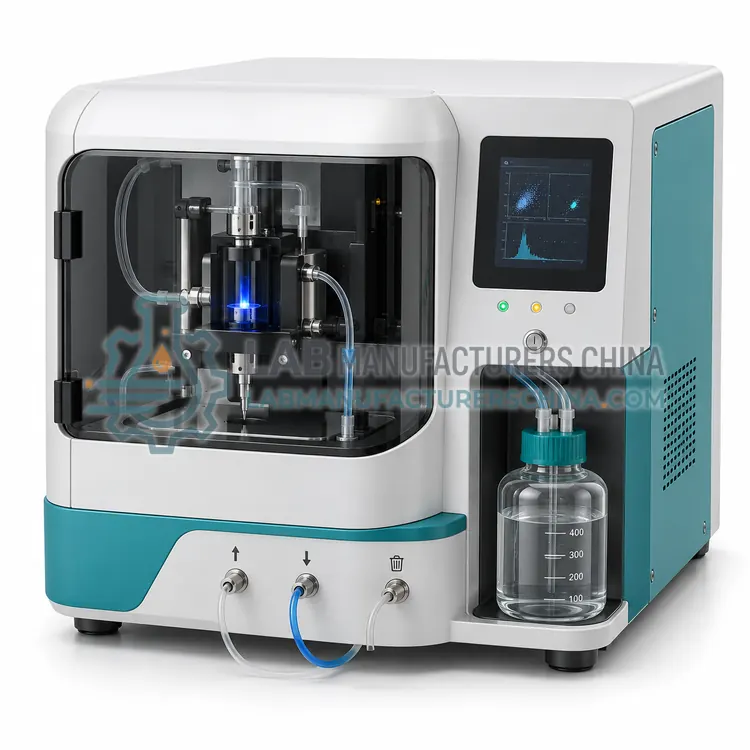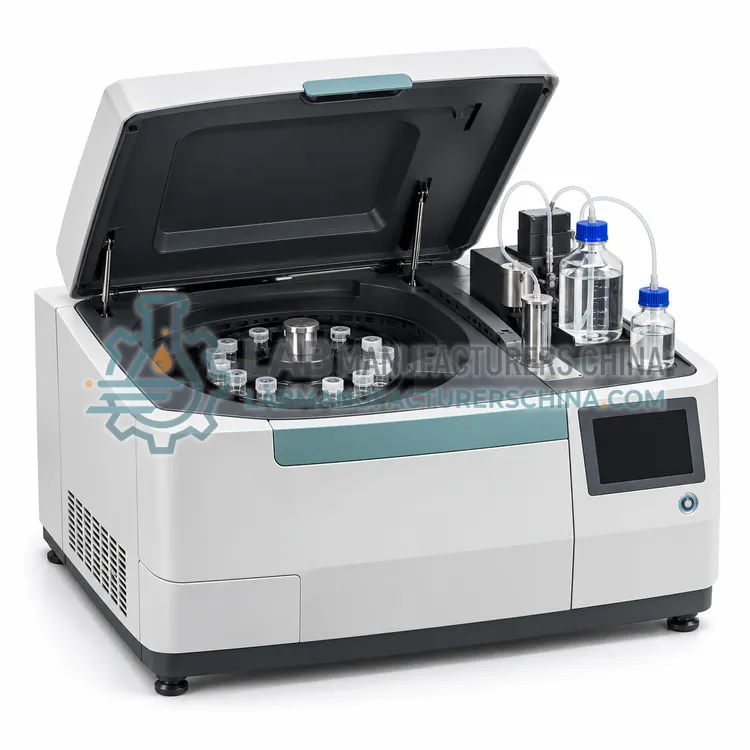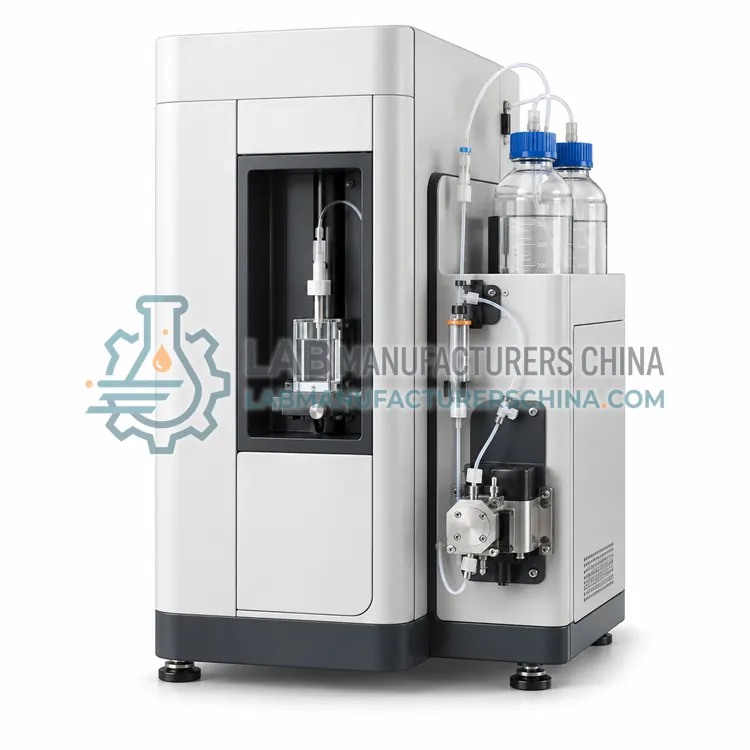
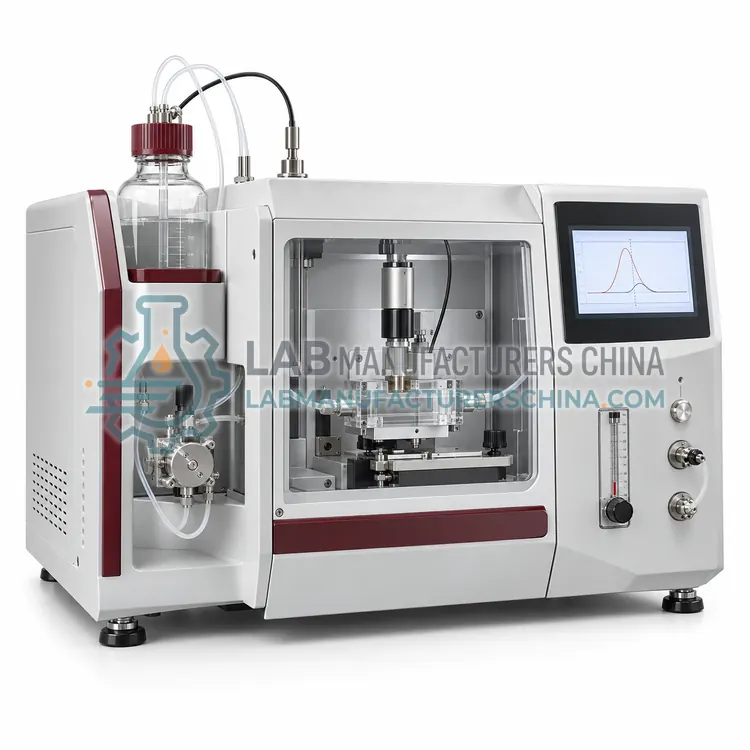
Streaming Potential Zeta Analyzer for Solid Surfaces
固体表面流动电位 Zeta 分析仪
- SKU ZPA-0004
- Zeta Potential Analyzers
- CE (to be confirmed)
- ISO 9001 manufacturing (to be confirmed)
Price on request — FOB / CIF quoted per order
Prices depend on configuration, quantity and destination port.
Key specifications
| Measurement principle | Streaming potential / streaming current |
|---|---|
| Zeta potential range | −200 to +200 mV |
| Pressure range | 0–600 mbar |
| Flat sample size | 10 × 20 mm up to 20 × 50 mm |
| Gap height | ≈ 100 µm (adjustable) |
| pH range | 2–12 |
Request a quote Download brochure · to be provided
By Lab Manufacturers China Technical TeamLast reviewed Standards: ISO 13099-1, ISO 13099-2, ISO 13099-3
What is the Streaming Potential Zeta Analyzer for Solid Surfaces?
An analyzer that measures streaming potential or streaming current as electrolyte flows across a solid surface, giving surface zeta potential of films, membranes, fibres and powders. It is used where surface charge, not bulk dispersion, determines performance, for example in membrane fouling and coating adhesion studies.
What is the Streaming Potential Zeta Analyzer for Solid Surfaces?
An analyzer that measures streaming potential or streaming current as electrolyte flows across a solid surface, giving surface zeta potential of films, membranes, fibres and powders. It is used where surface charge, not bulk dispersion, determines performance, for example in membrane fouling and coating adhesion studies.
Overview
In a streaming potential analyzer, electrolyte is forced by pressure through a narrow channel formed between two sample surfaces or through a packed plug of fibres or powder. The flow displaces the mobile part of the electrical double layer and generates a potential difference measured by Ag/AgCl electrodes. The Helmholtz–Smoluchowski relation converts the slope of streaming potential versus pressure into zeta potential; the streaming current method is preferred for porous samples to reduce conductivity errors. Automated titration gives zeta potential versus pH, including isoelectric point and adsorption behaviour of surfactants. Flat samples as small as 10 × 20 mm, fibres, hollow fibres and membranes can be fitted. Pressure ranges of 0 to 600 mbar are typical, and sample cells must be kept clean and preconditioned with electrolyte.
How does it work?
Charged particles in a liquid are surrounded by an electrical double layer. The zeta potential is the potential at the slipping plane of this layer, and cannot be measured directly. Electrophoretic light scattering applies an electric field and measures particle velocity from the Doppler shift of scattered laser light; electrophoretic mobility is then converted to zeta potential by the Smoluchowski or Hückel approximation, or the Henry function for intermediate cases. Phase analysis light scattering improves sensitivity by measuring phase rather than frequency shift. Streaming potential instruments force electrolyte through a capillary or plug and measure the generated potential difference for solids. Electroacoustic methods detect sound waves generated by an applied alternating field in concentrated suspensions. Key components include the laser, electrodes and cell, temperature control and often a titrator.
What are the key features?
- Adjustable gap cell for flat films, membranes and plates
- Cylindrical cell for fibres, powders and granules
- Streaming potential and streaming current measurement modes
- Ag/AgCl electrode pair with automatic drift correction
- Automatic pH titration for isoelectric point curves
- Pressure control up to 600 mbar with flow monitoring
What are the technical specifications?
A typical streaming potential zeta analyzer for solid surfaces configuration offers measurement principle of Streaming potential / streaming current, zeta potential range of −200 to +200 mV, pressure range of 0–600 mbar, flat sample size of 10 × 20 mm up to 20 × 50 mm, gap height of ≈ 100 µm (adjustable) and pH range of 2–12. Values are indicative of the product class; the exact figures for each configuration are confirmed on the quotation and the calibration documents supplied with the instrument.
Which applications is it used for?
The Streaming Potential Zeta Analyzer for Solid Surfaces is used in reverse osmosis and ultrafiltration membrane charge, textile and natural fibre surfaces, biomaterial and implant coatings, glass and polymer films and powder catalysts and minerals. Across the wider Zeta Potential Analyzers class, laboratories also deploy it for colloidal stability of emulsions and suspensions, protein and biologic formulation screening and water and wastewater coagulation control.
Which standards and certifications apply?
Relevant standards and methods include ISO 13099-1, ISO 13099-2, ISO 13099-3, ASTM D4187, GB/T 32671 and ISO 13320. Certification candidates for this model are CE and ISO 9001 manufacturing; each is to be confirmed for the specific configuration before shipment, and certificates are supplied only where they have been issued.
Zeta potential depends on pH, ionic strength, temperature and sample history, so each report should state dispersant, pH, conductivity and temperature. Use low-conductivity, filtered dispersants and avoid bubbles at the electrodes; high salt can cause electrode polarisation and sample heating. Verify performance periodically using a zeta potential transfer standard, typically around −42 mV, and follow the supplier's interval. Clean cells thoroughly, since contamination and electrode degradation alter results. Gold or palladium electrodes and disposable capillary cells simplify maintenance. For regulated use, carry out IQ/OQ/PQ and maintain audit trails. Report the model used to convert mobility to zeta potential.
How do I select the right Streaming Potential Zeta Analyzer for Solid Surfaces?
Select a streaming potential analyzer when the object of interest is a solid surface, membrane or fibre rather than a dispersed particle. Specify the sample geometry and size, required pH range, electrolyte, need for streaming current mode for porous samples, and temperature. Dispersed colloids are better handled by electrophoretic light scattering.
How does it compare with other Zeta Potential Analyzers variants?
Begin with the sample type. Dilute colloids and macromolecules suit electrophoretic light scattering; very low-mobility or high-conductivity samples benefit from phase analysis light scattering. Concentrated opaque suspensions, such as slurries, need electroacoustic methods, and flat or fibrous solids need streaming potential. If isoelectric point or pH dependence is required, choose a system with an automatic titrator. Check the required size range, conductivity limits, minimum sample volume and whether non-aqueous solvents are used, since the dielectric constant must be known. Decide if zeta potential alone is enough or whether combined size measurement is needed. Also weigh software validation support, cell durability and cost of disposable cells, and whether ISO 13099 conformity is expected in your methods.
Full specifications
| Measurement principle | Streaming potential / streaming current |
|---|---|
| Zeta potential range | −200 to +200 mV |
| Pressure range | 0–600 mbar |
| Flat sample size | 10 × 20 mm up to 20 × 50 mm |
| Gap height | ≈ 100 µm (adjustable) |
| pH range | 2–12 |
| Electrolyte conductivity | 0.1–100 mS/cm |
| Electrodes | Ag/AgCl |
| Temperature | 10–50 °C |
| Electrolyte volume | ≈ 100–500 mL |
Indicative values for this product class. Final specifications are confirmed on the quotation and in the calibration documents supplied with the instrument.
Applications
- Reverse osmosis and ultrafiltration membrane charge
- Textile and natural fibre surfaces
- Biomaterial and implant coatings
- Glass and polymer films
- Powder catalysts and minerals
Key features
- Adjustable gap cell for flat films, membranes and plates
- Cylindrical cell for fibres, powders and granules
- Streaming potential and streaming current measurement modes
- Ag/AgCl electrode pair with automatic drift correction
- Automatic pH titration for isoelectric point curves
- Pressure control up to 600 mbar with flow monitoring
Frequently asked questions about Streaming Potential Zeta Analyzer for Solid Surfaces
In porous plugs, the electrolyte conducts current through the pores and partly short-circuits the streaming potential. Measuring the streaming current directly avoids that conductivity dependence and gives more reliable results.
Flush with the measuring electrolyte, often 1 mM KCl, until streaming potential is stable, which may take tens of minutes to hours. Insufficient wetting and conditioning causes drifting values and poor reproducibility.
Rough or curved surfaces distort the flow channel and reduce accuracy. Cylindrical cells suit fibres and powders, and flat cells need planar samples with a well-defined gap, so sample geometry should be discussed before purchase.
A large absolute zeta potential, commonly beyond ±30 mV, indicates strong electrostatic repulsion and usually good colloidal stability. Values near zero suggest particles can approach and aggregate. The guideline depends on whether steric stabilisers also contribute.
The isoelectric point is the pH at which zeta potential is zero and colloids are least stable. It is found by titrating the sample across a pH range with acid or base and recording zeta potential at each step, usually with an automatic titrator.
Zeta potential changes with pH, ionic strength and composition of the medium. A number without these conditions cannot be reproduced or compared, so method records must include dispersant, pH, conductivity and temperature.
Related models
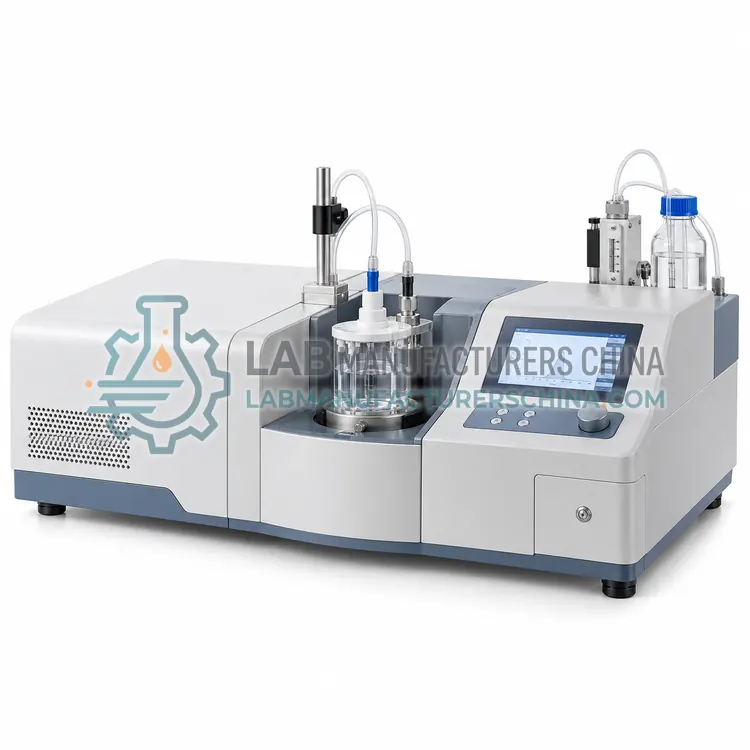
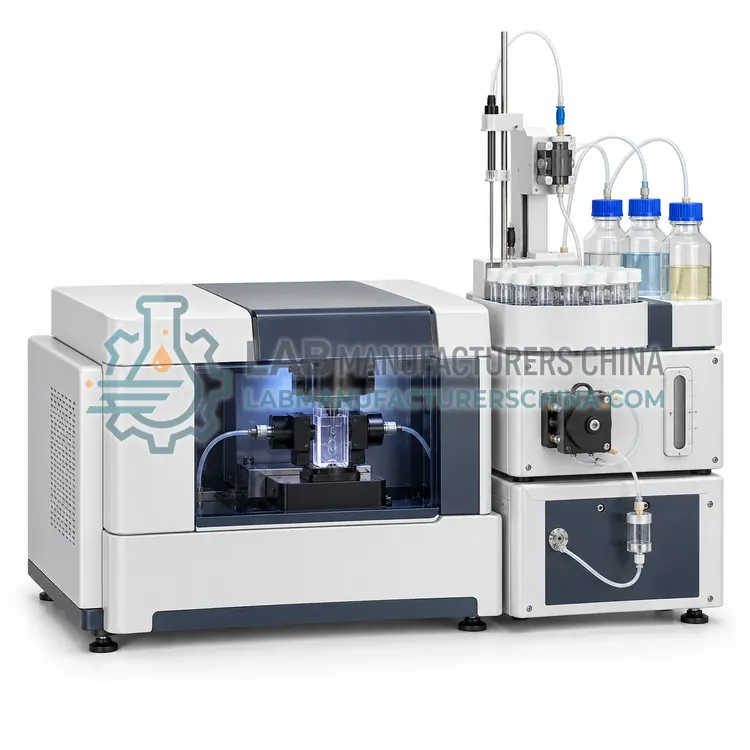
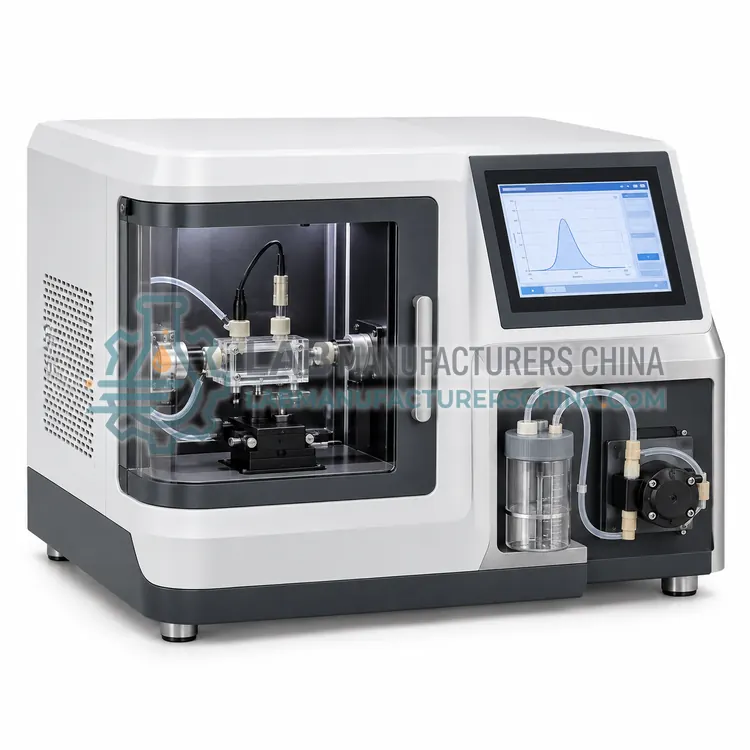
Electroacoustic Zeta Potential Analyzer for Concentrated Suspensions
浓悬浮液电声法 Zeta 电位分析仪
- CE (to be confirmed)
- +1