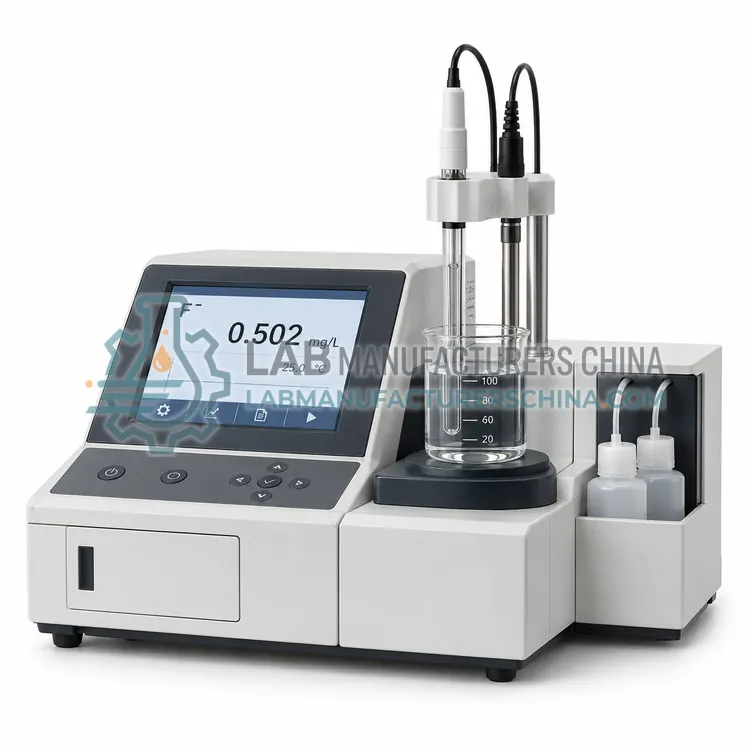
How do Ion Meters work?
The measurement is potentiometric. An ion-selective electrode develops a potential that follows the Nernst equation, changing by about 59.16 mV per decade of activity at 25 degrees Celsius for a monovalent ion and 29.58 mV for a divalent ion. A stable reference electrode with a liquid junction completes the cell, and a high-impedance millivoltmeter reads the potential difference without drawing significant current. Because the electrode responds to activity rather than concentration, an ionic strength adjustment buffer is added to fix the activity coefficient; some buffers also adjust pH and release ions bound by complexing agents. The meter converts potential to concentration with a calibration curve from two to five standards, and temperature compensation corrects the slope using a built-in sensor. Below about 1 micromolar, results are less stable, so lower limits are set by the electrode and by the sample matrix.
Which Ion Meters variants are available?
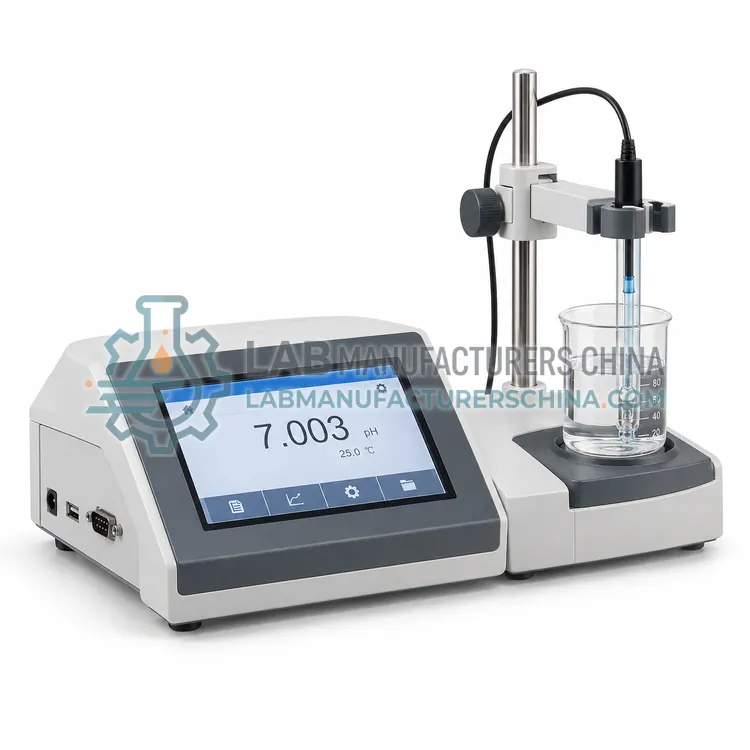
- Benchtop Ion Meter — A benchtop ion meter is a mains-powered potentiometric instrument with millivolt resolution of 0.1 mV, automatic temperature compensation and storage for several calibration curves.
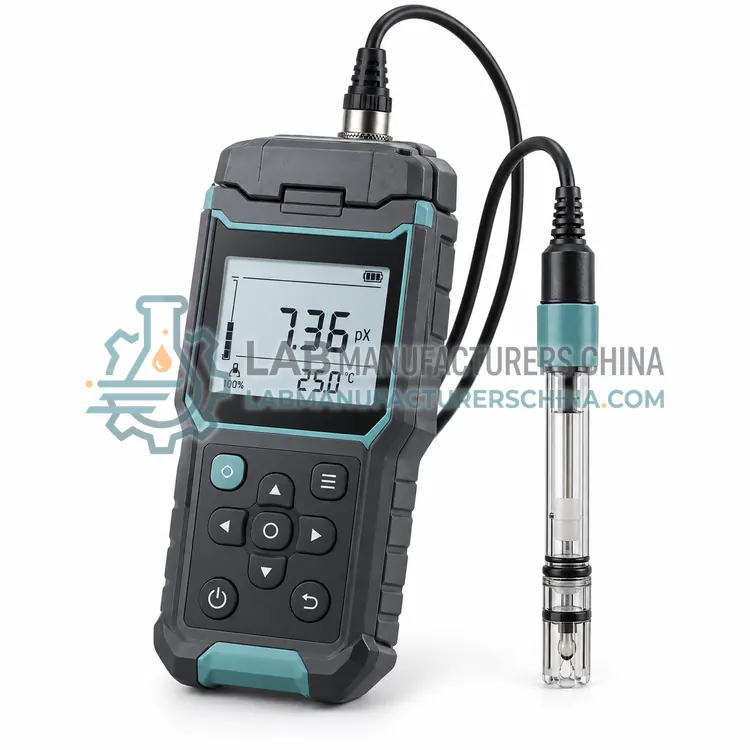
- Portable Ion Meter — A portable ion meter is a battery-powered handheld instrument with an IP-rated housing for field measurement of fluoride, nitrate, ammonia or other ions.
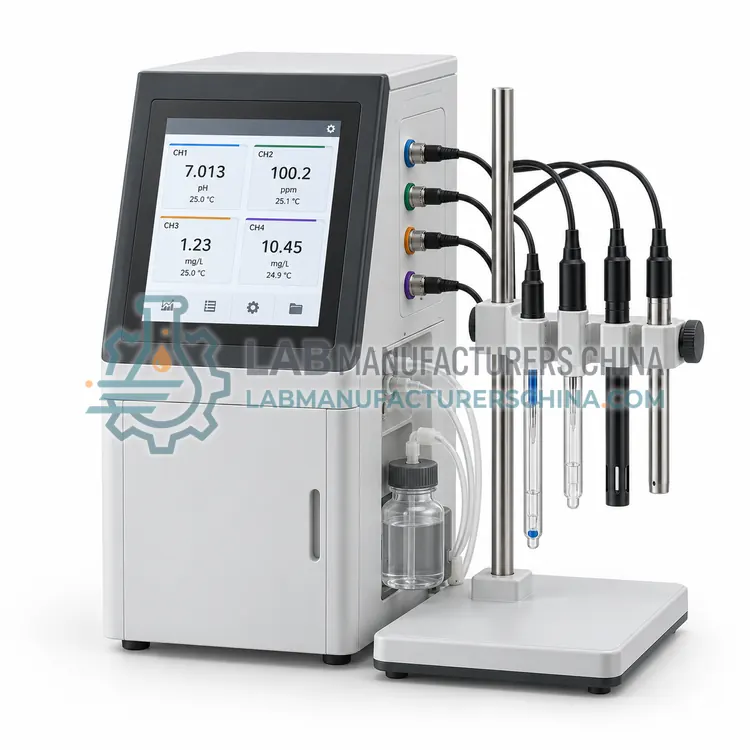
- Multi-Channel Ion Meter — A multi-channel ion meter measures several ion-selective electrodes at the same time, with two to six independent input channels, isolated electronics and separate calibration per channel.
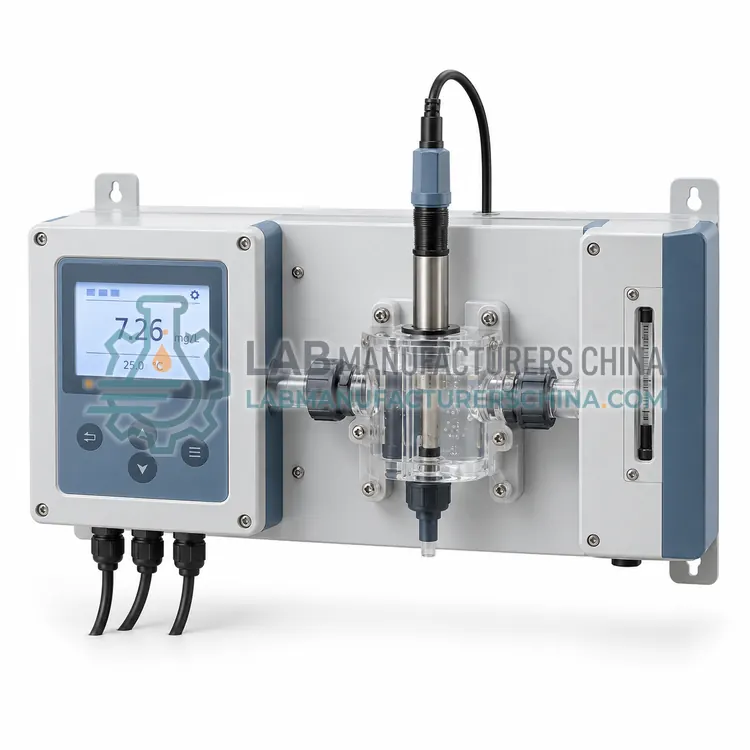
- Online Ion Analyzer — An online ion analyzer continuously measures a selected ion in a flowing stream with an ion-selective electrode or colorimetric cell and sends 4-20 mA and relay signals to a control system.
- Fluoride Ion Meter — A fluoride ion meter is a dedicated instrument supplied with a lanthanum fluoride crystal electrode, ionic strength adjustment buffer and calibration standards for fluoride.
How do I choose the right variant?
Choose a benchtop meter when accuracy, documentation and multi-ion work matter, and a portable meter for field checks in surface water, aquaculture or plant streams. Multi-channel models suit laboratories running several electrodes or several ions in parallel, while online analyzers serve continuous monitoring of drinking water, wastewater or process streams with alarm and 4-20 mA outputs. If you measure fluoride every day in a defined matrix, a dedicated fluoride meter with matched electrode and buffer simplifies training and calibration. Compare the electrode range first, then meter resolution and accuracy in millivolts, temperature compensation, calibration points, electrode compatibility, GLP memory and data interfaces. Specify the ions, expected concentration range, sample matrix, required detection limit and any standards the method must follow.
Where are Ion Meters used?
Ion Meters are specified in drinking water fluoride monitoring, wastewater ammonia and nitrate testing, food and beverage sodium analysis, fertilizer and soil extract analysis and pharmaceutical process control.
Which standards and certifications apply?
Work with Ion Meters is commonly governed by ASTM D1179, ISO 10359-1, EPA Method 9214, APHA 4500-F− Standard Methods, GB/T 7484 and ASTM D3867. Instrument certifications such as CE marking are confirmed per configuration and never assumed.
What are the key considerations before purchase?
Condition new electrodes as the manufacturer instructs, often by soaking in a dilute standard solution for several hours, and calibrate daily with standards that bracket the sample range. Add ionic strength adjustment buffer to samples and standards in the same proportion, and measure at a stable temperature because electrode slopes change with temperature. Do not let electrodes dry out; store fluoride and pH-sensitive membranes according to their specific instructions and keep reference junctions clean and filled. Verify performance with a check standard and monitor the slope in millivolts per decade, since slopes outside about 50 to 60 millivolts per decade for monovalent ions indicate ageing or contamination. Records of calibration, slope, verification and sample matrix should be retained for regulated work, and waste containing buffer and fluoride must be handled as chemical waste.