How do Dissolved Oxygen Meters work?
Electrochemical sensors are either galvanic or polarographic. Oxygen diffuses through a gas-permeable membrane into an electrolyte, where it is reduced at a cathode; the resulting current is proportional to the oxygen partial pressure. Polarographic cells need an applied voltage of about 0.7 V and a warm-up period, while galvanic cells generate their own current. Optical sensors use a luminescent dye immobilized in a film: blue light excites the dye, the emitted red light is quenched by oxygen, and the phase shift of the signal gives the oxygen concentration. Optical sensors need no electrolyte, flow, or polishing and hold calibration for months. Both types measure partial pressure, so salinity and barometric pressure corrections are applied to report concentration in mg/L, and a temperature sensor compensates the membrane permeability or dye response. Stirring or flow across the membrane is required for electrochemical sensors to avoid oxygen depletion at the surface.
Which Dissolved Oxygen Meters variants are available?
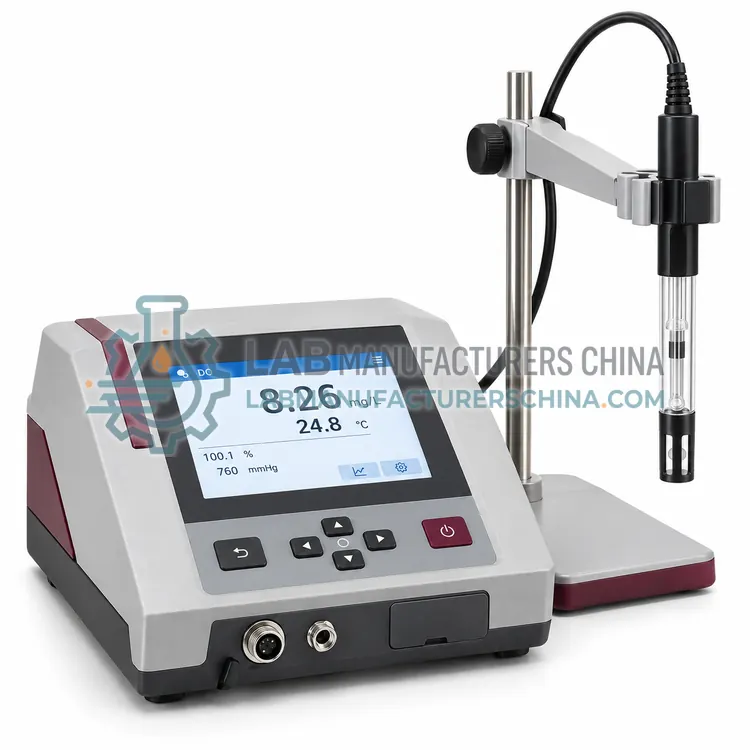
- Benchtop Dissolved Oxygen Meter — A benchtop dissolved oxygen meter is a mains-powered instrument for laboratory measurement of oxygen in water and culture media, with temperature, salinity and pressure corrections built in.
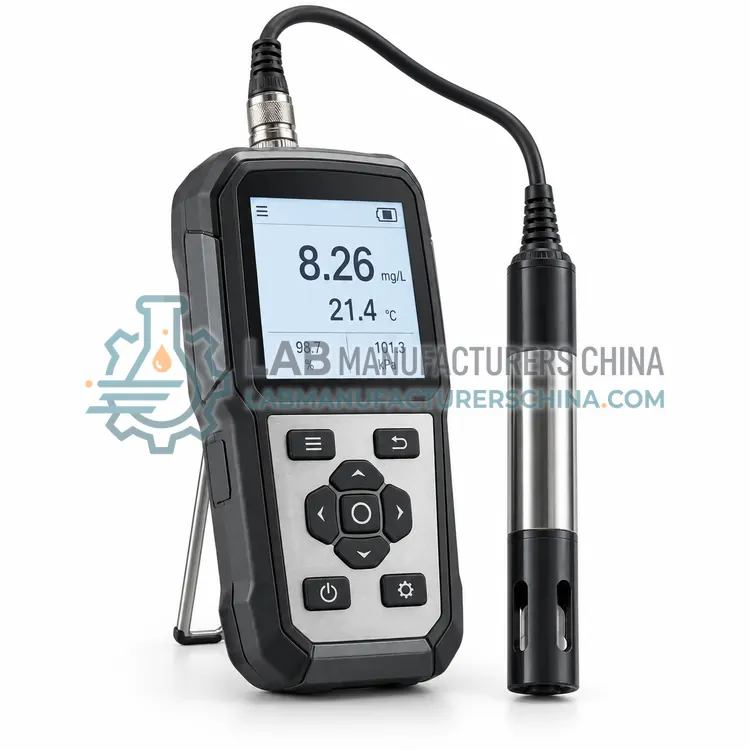
- Portable Dissolved Oxygen Meter — A portable dissolved oxygen meter is a battery-powered handheld instrument with an IP-rated housing and a cable-mounted probe for field measurement in rivers, lakes, tanks and treatment works.
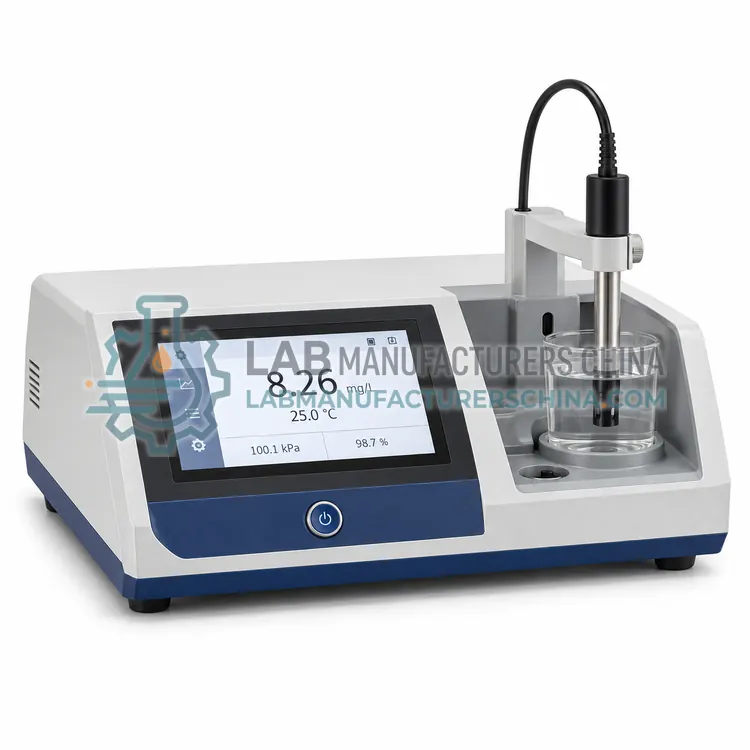
- Optical Dissolved Oxygen Meter — An optical dissolved oxygen meter uses a luminescent sensing cap instead of an electrochemical cell, so it needs no electrolyte, flow or polishing and holds calibration for months.
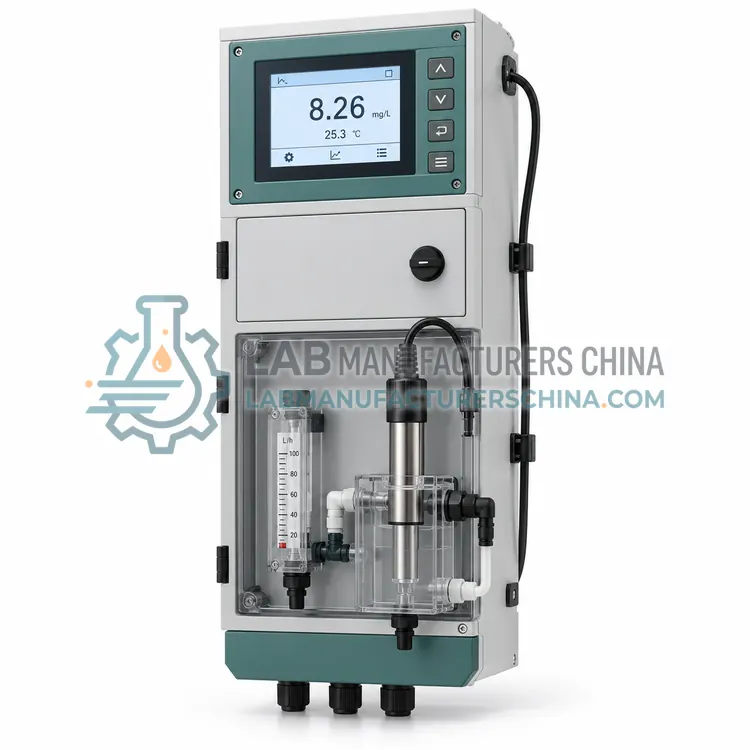
- Online Dissolved Oxygen Analyzer — An online dissolved oxygen analyzer continuously measures oxygen in a process stream or tank and outputs 4-20 mA and alarm signals for aeration blower or valve control.
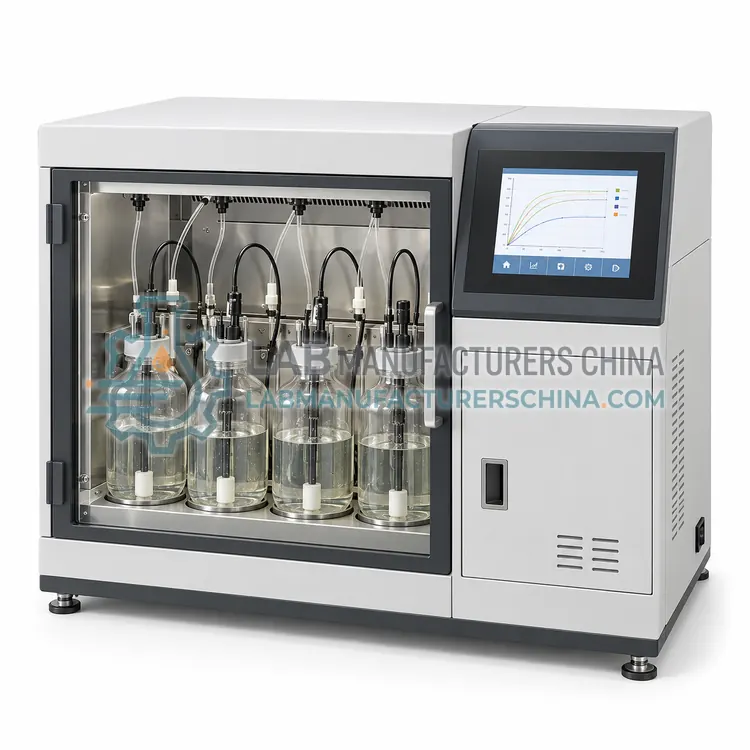
- BOD Measurement System — A BOD measurement system determines biochemical oxygen demand by measuring the oxygen consumed by microorganisms in a sealed sample over five days.
How do I choose the right variant?
Choose between electrochemical and optical sensing first. Optical sensors suit long-term unattended monitoring and low-maintenance field work, while electrochemical sensors have lower initial cost and are well established in wastewater aeration control. Then match the format: benchtop meters for laboratory BOD, fermentation and validation work, portable meters with long cables for rivers, lakes and tanks, online analyzers with 4-20 mA outputs for aeration control, and BOD systems that measure depletion over five days. Check the measuring range, accuracy, temperature and salinity compensation, response time, minimum flow or stirring requirement, calibration method and logging capacity. Specify whether readings must be in mg/L, percent saturation or both, and which standards the laboratory follows.
Where are Dissolved Oxygen Meters used?
Dissolved Oxygen Meters are specified in municipal wastewater aeration control, fermentation and bioprocess monitoring, aquaculture pond and tank control, drinking water treatment and storage and environmental surface water surveys.
Which standards and certifications apply?
Work with Dissolved Oxygen Meters is commonly governed by ISO 5814, ASTM D888, APHA 4500-O Standard Methods, EN 25814, GB/T 11913 and USP <1231>. Instrument certifications such as CE marking are confirmed per configuration and never assumed.
What are the key considerations before purchase?
Calibrate electrochemical sensors in water-saturated air or against a reference method such as Winkler titration, and replace the membrane, electrolyte and O-ring at the interval the manufacturer specifies, commonly every one to three months. Keep the membrane free of deposits: biological growth in wastewater reduces response and must be cleaned without scratching the surface. Optical sensors need only periodic recalibration, but the sensing cap has a finite life of roughly one to two years and must be replaced. Zero-point checks with sodium sulfite solution confirm that the instrument reads low oxygen correctly. Record temperature, salinity and barometric pressure corrections with the data, and verify performance with a check standard or comparison measurement. For compliance work, follow the method required by the permit or pharmacopoeia and retain calibration and maintenance records.