BOD Measurement System
BOD 测定系统
- SKU DOM-0005
- Dissolved Oxygen Meters
- CE (to be confirmed)
- RoHS (to be confirmed)
- ISO 9001 manufacturing (to be confirmed)
Price on request — FOB / CIF quoted per order
Prices depend on configuration, quantity and destination port.
Key specifications
| Measuring range | 0–4000 mg/L (with dilution) |
|---|---|
| Resolution | 1 mg/L or 0.1% pressure |
| Sample positions | 6–12 |
| Incubation temperature | 20 ± 1 °C |
| Test duration | 5 days (BOD5) |
| Stirring speed | continuous, fixed or adjustable |
Request a quote Download brochure · to be provided
By Lab Manufacturers China Technical TeamLast reviewed Standards: ISO 5814, ASTM D888, APHA 4500-O Standard Methods
What is the BOD Measurement System?
A BOD measurement system determines biochemical oxygen demand by measuring the oxygen consumed by microorganisms in a sealed sample over five days. Respirometric versions track pressure or oxygen directly, while sensor-based versions pair automatic dissolved oxygen probes with incubation.
What is the BOD Measurement System?
A BOD measurement system determines biochemical oxygen demand by measuring the oxygen consumed by microorganisms in a sealed sample over five days. Respirometric versions track pressure or oxygen directly, while sensor-based versions pair automatic dissolved oxygen probes with incubation.
Overview
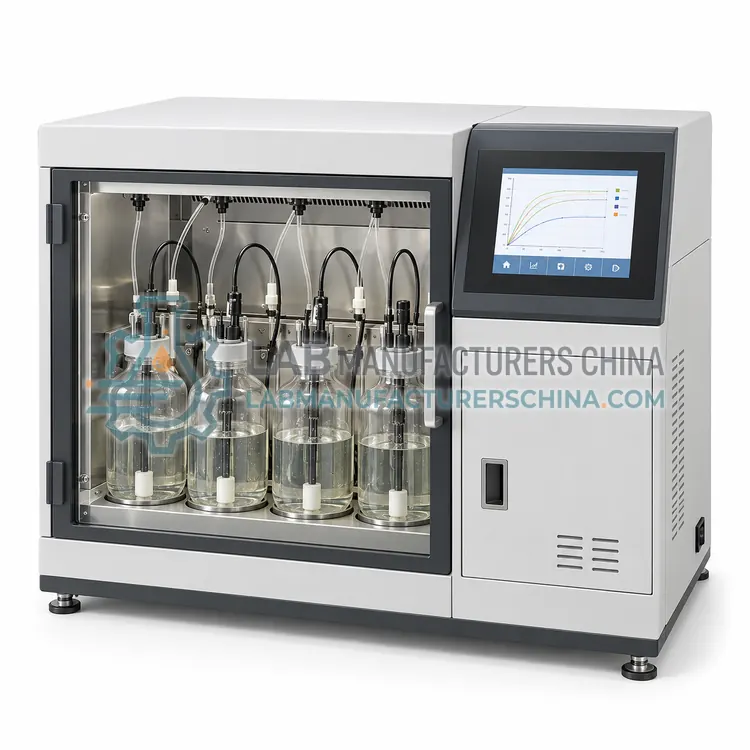
Two approaches are common. Respirometric BOD systems seal the sample in a bottle with a carbon dioxide absorbent and record the pressure drop, or an oxygen headspace change, caused by microbial respiration over five days at 20 degrees Celsius; results are shown directly in mg/L after entering the sample volume. Alternative systems use automated dissolved oxygen probes plus stirring in standard BOD bottles, reading each bottle with a robotic arm or a multisensor rack and computing depletion from the initial and final values. Respirometric units handle six to twelve bottles in one incubator cabinet and log data automatically, reducing labour and operator error. Both approaches require dilution or seeding for high-strength samples, nitrification inhibition when only carbonaceous demand is wanted, and a controlled 20 degree incubator. Accuracy depends mainly on seeding, dilution technique and incubation control, not on the instrument alone.
How does it work?
Electrochemical sensors are either galvanic or polarographic. Oxygen diffuses through a gas-permeable membrane into an electrolyte, where it is reduced at a cathode; the resulting current is proportional to the oxygen partial pressure. Polarographic cells need an applied voltage of about 0.7 V and a warm-up period, while galvanic cells generate their own current. Optical sensors use a luminescent dye immobilized in a film: blue light excites the dye, the emitted red light is quenched by oxygen, and the phase shift of the signal gives the oxygen concentration. Optical sensors need no electrolyte, flow, or polishing and hold calibration for months. Both types measure partial pressure, so salinity and barometric pressure corrections are applied to report concentration in mg/L, and a temperature sensor compensates the membrane permeability or dye response. Stirring or flow across the membrane is required for electrochemical sensors to avoid oxygen depletion at the surface.
What are the key features?
- Direct mg/L result without manual titration of dissolved oxygen
- Six to twelve sample positions in one temperature-controlled cabinet
- Automatic data logging of pressure or oxygen over five days
- Integrated stirring and 20 °C incubation control
- Optional nitrification inhibitor protocols for carbonaceous BOD
- Software for dilution calculation and report generation
What are the technical specifications?
A typical bod measurement system configuration offers measuring range of 0–4000 mg/L (with dilution), resolution of 1 mg/L or 0.1% pressure, sample positions of 6–12, incubation temperature of 20 ± 1 °C, test duration of 5 days (BOD5) and stirring speed of continuous, fixed or adjustable. Values are indicative of the product class; the exact figures for each configuration are confirmed on the quotation and the calibration documents supplied with the instrument.
Which applications is it used for?
The BOD Measurement System is used in municipal wastewater treatment control, industrial effluent compliance testing, river and receiving water assessment, food and beverage plant effluent and environmental laboratory BOD5 programmes. Across the wider Dissolved Oxygen Meters class, laboratories also deploy it for municipal wastewater aeration control, fermentation and bioprocess monitoring and aquaculture pond and tank control.
Which standards and certifications apply?
Relevant standards and methods include ISO 5814, ASTM D888, APHA 4500-O Standard Methods, EN 25814, GB/T 11913 and USP <1231>. Certification candidates for this model are CE, RoHS and ISO 9001 manufacturing; each is to be confirmed for the specific configuration before shipment, and certificates are supplied only where they have been issued.
Calibrate electrochemical sensors in water-saturated air or against a reference method such as Winkler titration, and replace the membrane, electrolyte and O-ring at the interval the manufacturer specifies, commonly every one to three months. Keep the membrane free of deposits: biological growth in wastewater reduces response and must be cleaned without scratching the surface. Optical sensors need only periodic recalibration, but the sensing cap has a finite life of roughly one to two years and must be replaced. Zero-point checks with sodium sulfite solution confirm that the instrument reads low oxygen correctly. Record temperature, salinity and barometric pressure corrections with the data, and verify performance with a check standard or comparison measurement. For compliance work, follow the method required by the permit or pharmacopoeia and retain calibration and maintenance records.
How do I select the right BOD Measurement System?
Choose a BOD system when five-day demand is a routine, high-volume test. For occasional samples, a benchtop dissolved oxygen meter with BOD bottles is adequate. In an RFQ, specify the number of sample positions, expected range and sample strength, incubation temperature control, data handling and whether the method must follow APHA 5210.
How does it compare with other Dissolved Oxygen Meters variants?
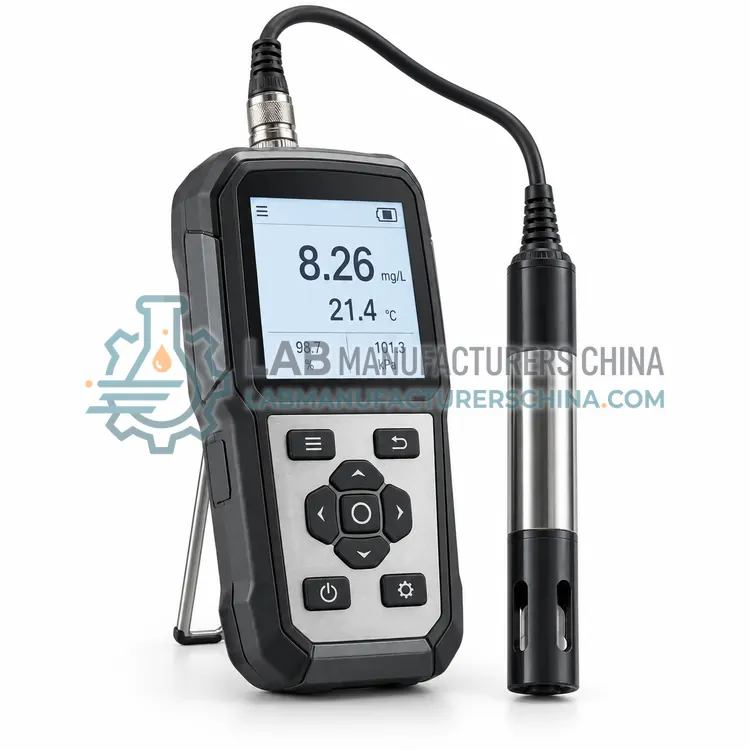
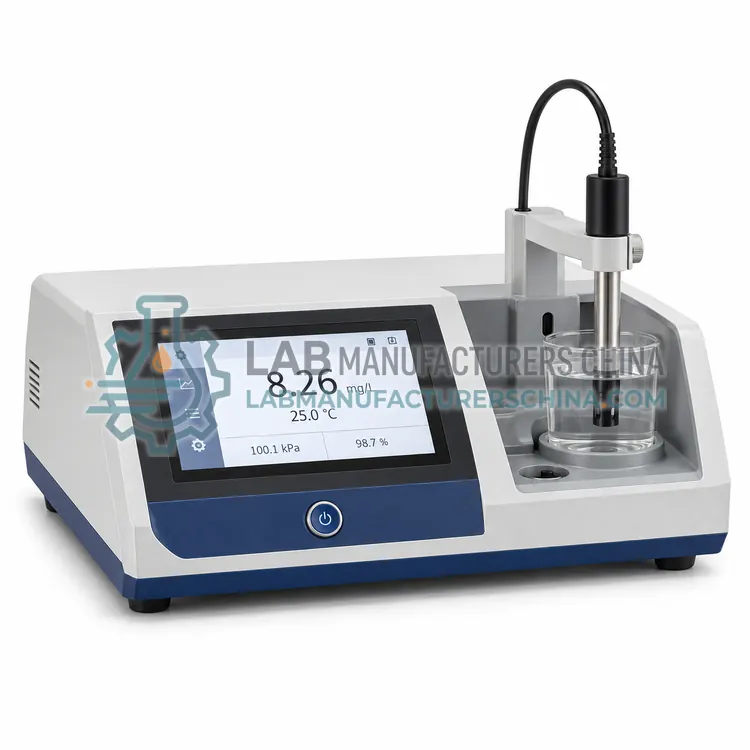
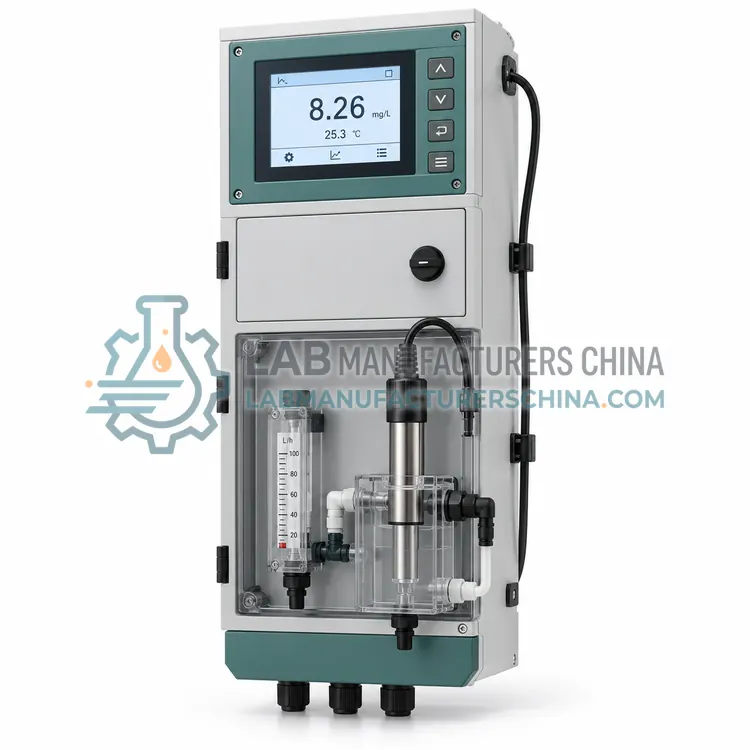
Choose between electrochemical and optical sensing first. Optical sensors suit long-term unattended monitoring and low-maintenance field work, while electrochemical sensors have lower initial cost and are well established in wastewater aeration control. Then match the format: benchtop meters for laboratory BOD, fermentation and validation work, portable meters with long cables for rivers, lakes and tanks, online analyzers with 4-20 mA outputs for aeration control, and BOD systems that measure depletion over five days. Check the measuring range, accuracy, temperature and salinity compensation, response time, minimum flow or stirring requirement, calibration method and logging capacity. Specify whether readings must be in mg/L, percent saturation or both, and which standards the laboratory follows.
Full specifications
| Measuring range | 0–4000 mg/L (with dilution) |
|---|---|
| Resolution | 1 mg/L or 0.1% pressure |
| Sample positions | 6–12 |
| Incubation temperature | 20 ± 1 °C |
| Test duration | 5 days (BOD5) |
| Stirring speed | continuous, fixed or adjustable |
| Data logging | Automatic, hourly interval |
| Bottle volume | 250–500 mL |
| Interface | USB or RS-232 to PC software |
| Power supply | 100–240 V AC, 50/60 Hz |
Indicative values for this product class. Final specifications are confirmed on the quotation and in the calibration documents supplied with the instrument.
Applications
- Municipal wastewater treatment control
- Industrial effluent compliance testing
- River and receiving water assessment
- Food and beverage plant effluent
- Environmental laboratory BOD5 programmes
Key features
- Direct mg/L result without manual titration of dissolved oxygen
- Six to twelve sample positions in one temperature-controlled cabinet
- Automatic data logging of pressure or oxygen over five days
- Integrated stirring and 20 °C incubation control
- Optional nitrification inhibitor protocols for carbonaceous BOD
- Software for dilution calculation and report generation
Frequently asked questions about BOD Measurement System
Yes for high-strength samples. Respirometric systems accept a wide range but still require dilution so that oxygen demand falls inside the measurable window and remains roughly proportional to the sample volume added, which is how the result is calculated.
Add a nitrification inhibitor when only carbonaceous demand is required, or seed with nitrifying organisms and add a nutrient when total demand including nitrogenous oxidation is wanted. Report which option was used because the two numbers are not interchangeable.
Variability comes from seed quality, dilution ratio, dissolved oxygen measurement at the start and end, incubation temperature control and sample handling. Duplicate samples and a glucose-glutamic acid check standard help quantify the bias in each laboratory's procedure.
It measures the oxygen dissolved in water, reported in mg/L, ppm or percent of saturation. Temperature, salinity and barometric pressure affect the result, so meters apply corrections to give the concentration an operator or process controller actually needs.
Optical sensors need no electrolyte or flow, drift less and hold calibration for months, which suits unattended monitoring. Electrochemical sensors cost less, respond quickly and are widely used in aeration control, but need membrane and electrolyte service every one to three months.
Electrochemical sensors consume oxygen at the cathode, so a stagnant film of water next to the membrane becomes depleted and the reading falls. A flow of at least 0.3 m per second across the membrane, or gentle stirring in a beaker, keeps the measurement representative.
Related models