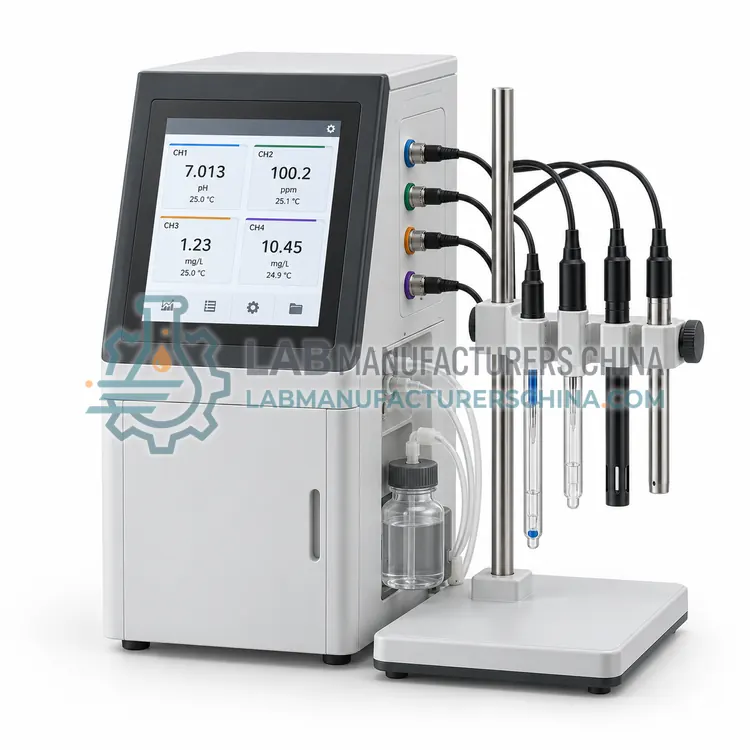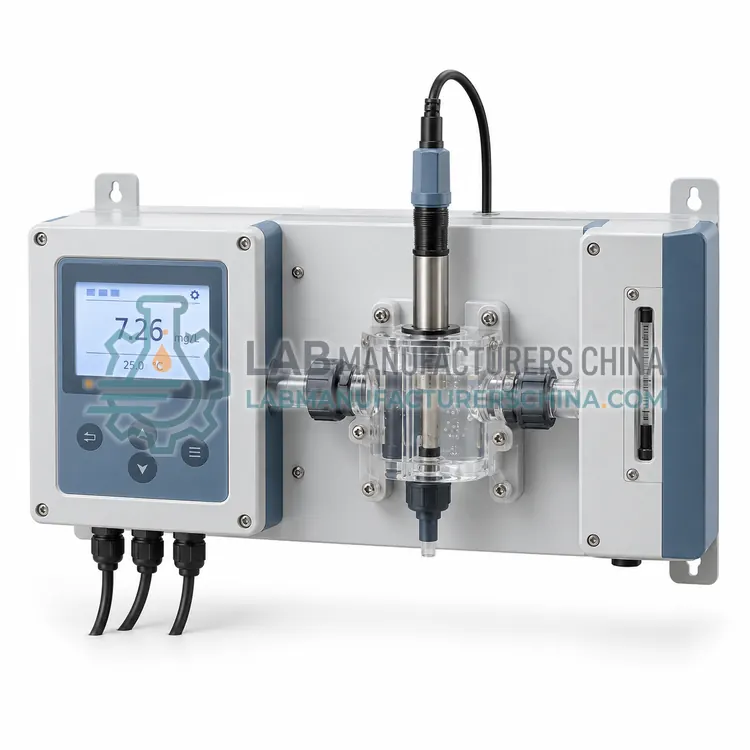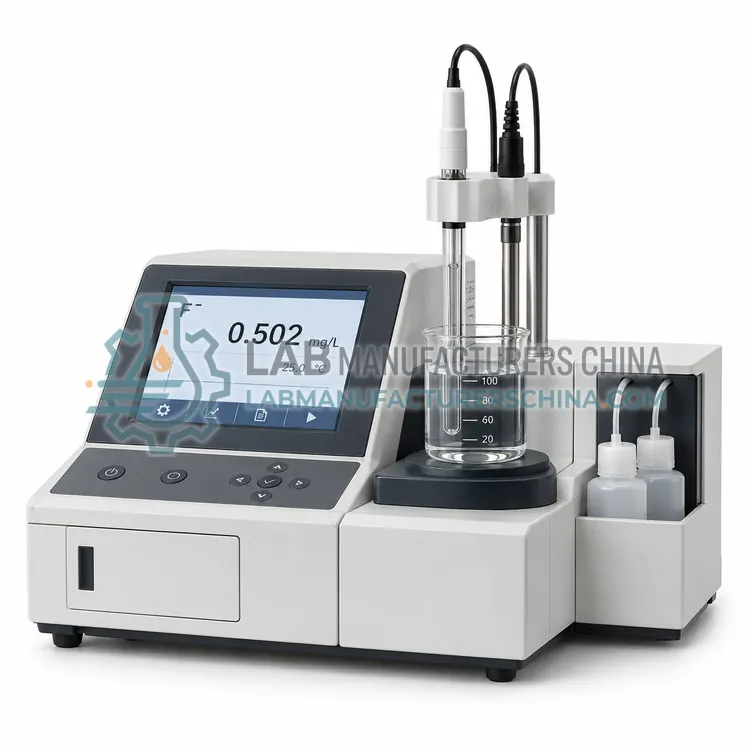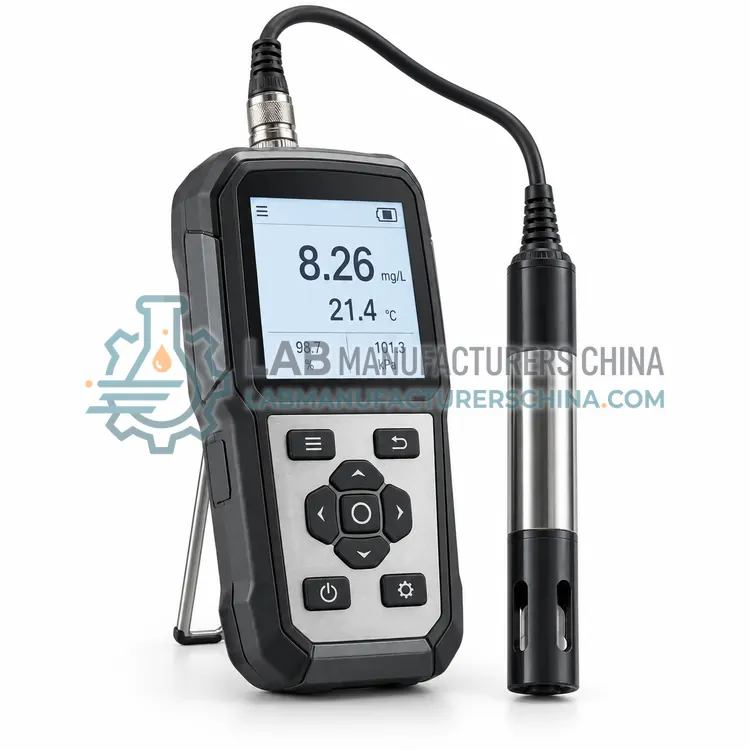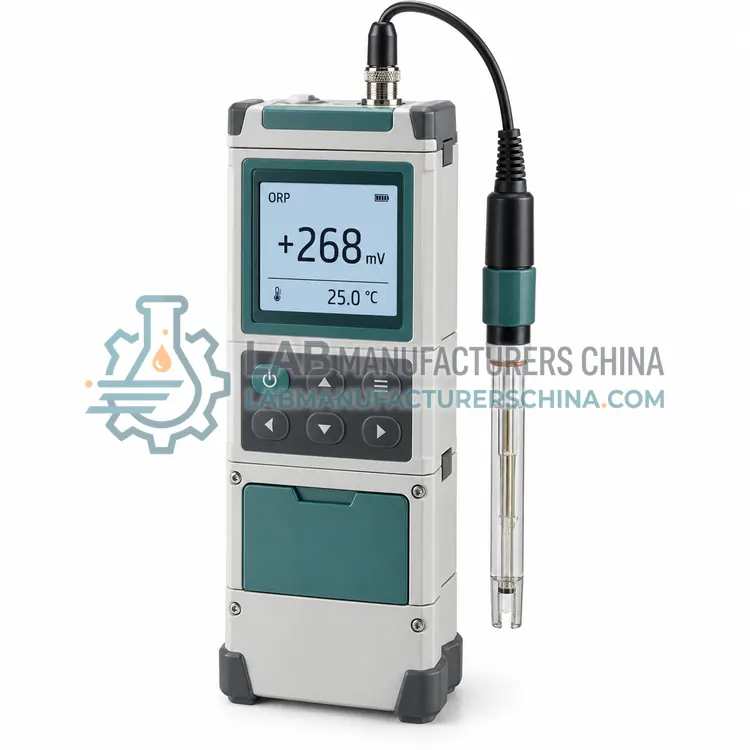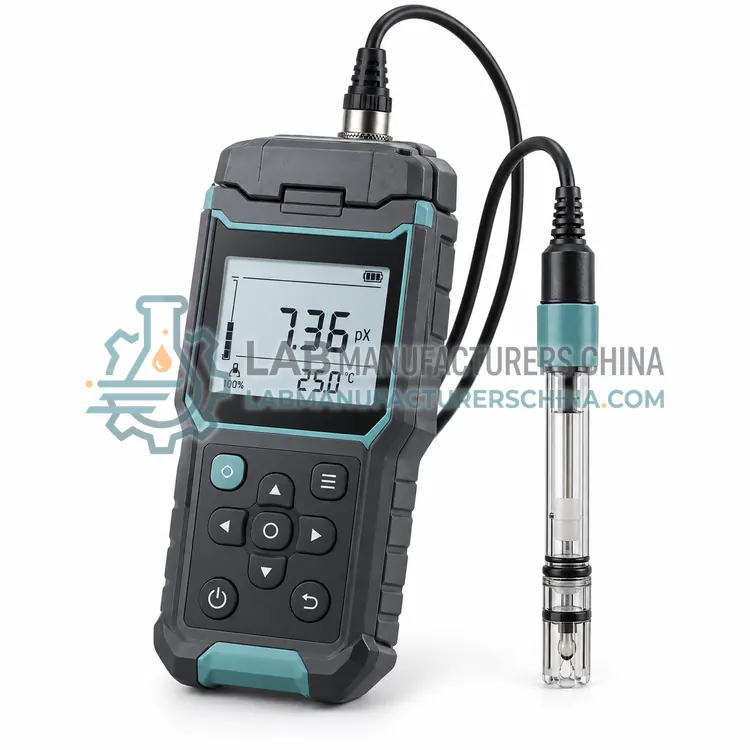
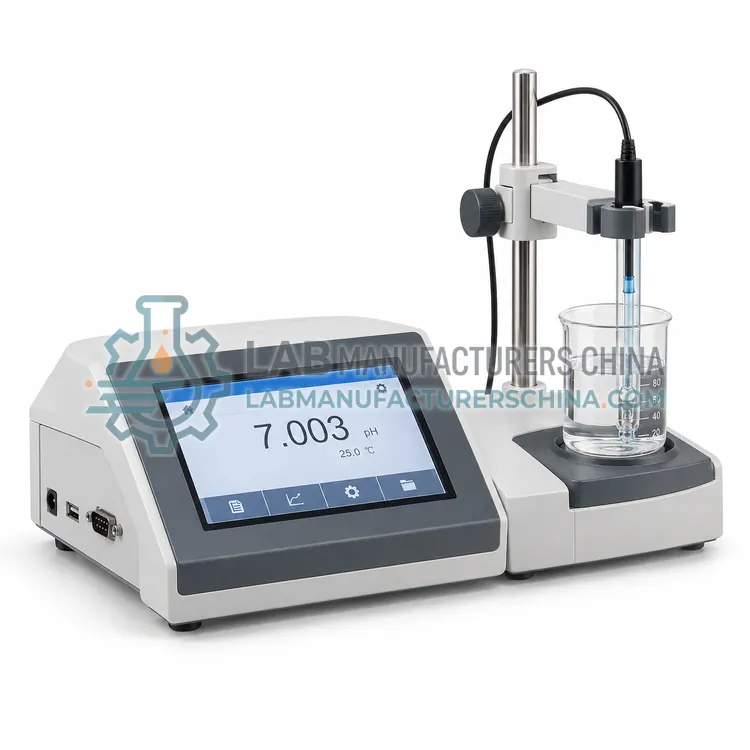
Benchtop Ion Meter
台式离子计
- SKU IOM-0001
- Ion Meters
- CE (to be confirmed)
- RoHS (to be confirmed)
- ISO 9001 manufacturing (to be confirmed)
Price on request — FOB / CIF quoted per order
Prices depend on configuration, quantity and destination port.
Key specifications
| Concentration range | 1×10⁻⁶–1 mol/L (electrode dependent) |
|---|---|
| Millivolt range | ±2000.0 mV |
| Millivolt resolution | 0.1 mV |
| Millivolt accuracy | ±0.2 mV ±1 digit |
| pH range with pH electrode | −2.00–20.00 pH |
| Temperature range | −5–105 °C |
Request a quote Download brochure · to be provided
By Lab Manufacturers China Technical TeamLast reviewed Standards: ASTM D1179, ISO 10359-1, EPA Method 9214
What is the Benchtop Ion Meter?
A benchtop ion meter is a mains-powered potentiometric instrument with millivolt resolution of 0.1 mV, automatic temperature compensation and storage for several calibration curves. It is the standard choice for laboratories measuring fluoride, nitrate, ammonia or chloride with ion-selective electrodes where documented, repeatable results are required.
What is the Benchtop Ion Meter?
A benchtop ion meter is a mains-powered potentiometric instrument with millivolt resolution of 0.1 mV, automatic temperature compensation and storage for several calibration curves. It is the standard choice for laboratories measuring fluoride, nitrate, ammonia or chloride with ion-selective electrodes where documented, repeatable results are required.
Overview
The benchtop ion meter provides direct concentration and millivolt readout for one or two electrodes. Concentration ranges depend on the electrode and typically span 1×10⁻⁶ to 1 mol/L, which is roughly 0.02 mg/L to 100 g/L for fluoride. Resolution is commonly three or four significant digits, with millivolt resolution of 0.1 mV and accuracy near 0.2 mV. Calibration uses two to five standards, and standard addition or subtraction methods help with difficult matrices. Automatic temperature compensation from a PT1000 sensor keeps the electrode slope consistent between calibration and measurement. With the right electrode the meter also displays pH, ORP or temperature. GLP memory records calibration data, slope, operator and sample identification, and results are exported over USB or RS-232 to a computer or LIMS. A magnetic stirrer, electrode holder and ATC probe are standard accessories, and a dust cover protects the connectors in busy laboratories.
How does it work?
The measurement is potentiometric. An ion-selective electrode develops a potential that follows the Nernst equation, changing by about 59.16 mV per decade of activity at 25 degrees Celsius for a monovalent ion and 29.58 mV for a divalent ion. A stable reference electrode with a liquid junction completes the cell, and a high-impedance millivoltmeter reads the potential difference without drawing significant current. Because the electrode responds to activity rather than concentration, an ionic strength adjustment buffer is added to fix the activity coefficient; some buffers also adjust pH and release ions bound by complexing agents. The meter converts potential to concentration with a calibration curve from two to five standards, and temperature compensation corrects the slope using a built-in sensor. Below about 1 micromolar, results are less stable, so lower limits are set by the electrode and by the sample matrix.
What are the key features?
- Direct concentration and millivolt readout with 0.1 mV resolution
- Two to five point calibration curves stored for several ion types
- Automatic temperature compensation with a PT1000 probe from 0 to 100 °C
- Standard addition, standard subtraction and blank correction routines
- GLP memory for calibration, slope, operator and sample identification
- USB and RS-232 output for computer or LIMS data transfer
What are the technical specifications?
A typical benchtop ion meter configuration offers concentration range of 1×10⁻⁶–1 mol/L (electrode dependent), millivolt range of ±2000.0 mV, millivolt resolution of 0.1 mV, millivolt accuracy of ±0.2 mV ±1 digit, pH range with pH electrode of −2.00–20.00 pH and temperature range of −5–105 °C. Values are indicative of the product class; the exact figures for each configuration are confirmed on the quotation and the calibration documents supplied with the instrument.
Which applications is it used for?
The Benchtop Ion Meter is used in drinking water fluoride monitoring, wastewater ammonia and nitrate testing, food and beverage sodium analysis, fertilizer and soil extract analysis and pharmaceutical process control. Across the wider Ion Meters class, laboratories also deploy it for drinking water fluoride monitoring, wastewater ammonia and nitrate testing and food and beverage sodium analysis.
Which standards and certifications apply?
Relevant standards and methods include ASTM D1179, ISO 10359-1, EPA Method 9214, APHA 4500-F− Standard Methods, GB/T 7484 and ASTM D3867. Certification candidates for this model are CE, RoHS and ISO 9001 manufacturing; each is to be confirmed for the specific configuration before shipment, and certificates are supplied only where they have been issued.
Condition new electrodes as the manufacturer instructs, often by soaking in a dilute standard solution for several hours, and calibrate daily with standards that bracket the sample range. Add ionic strength adjustment buffer to samples and standards in the same proportion, and measure at a stable temperature because electrode slopes change with temperature. Do not let electrodes dry out; store fluoride and pH-sensitive membranes according to their specific instructions and keep reference junctions clean and filled. Verify performance with a check standard and monitor the slope in millivolts per decade, since slopes outside about 50 to 60 millivolts per decade for monovalent ions indicate ageing or contamination. Records of calibration, slope, verification and sample matrix should be retained for regulated work, and waste containing buffer and fluoride must be handled as chemical waste.
How do I select the right Benchtop Ion Meter?
Select the benchtop meter when you need documented accuracy, several stored ion methods or standard addition routines. It suits daily laboratory workloads rather than field sampling or continuous monitoring. In an RFQ, state the ions, concentration range, sample matrix, electrode type and reference, calibration standards, required resolution, temperature compensation, data output and any method standard the laboratory must follow.
How does it compare with other Ion Meters variants?
Choose a benchtop meter when accuracy, documentation and multi-ion work matter, and a portable meter for field checks in surface water, aquaculture or plant streams. Multi-channel models suit laboratories running several electrodes or several ions in parallel, while online analyzers serve continuous monitoring of drinking water, wastewater or process streams with alarm and 4-20 mA outputs. If you measure fluoride every day in a defined matrix, a dedicated fluoride meter with matched electrode and buffer simplifies training and calibration. Compare the electrode range first, then meter resolution and accuracy in millivolts, temperature compensation, calibration points, electrode compatibility, GLP memory and data interfaces. Specify the ions, expected concentration range, sample matrix, required detection limit and any standards the method must follow.
Full specifications
| Concentration range | 1×10⁻⁶–1 mol/L (electrode dependent) |
|---|---|
| Millivolt range | ±2000.0 mV |
| Millivolt resolution | 0.1 mV |
| Millivolt accuracy | ±0.2 mV ±1 digit |
| pH range with pH electrode | −2.00–20.00 pH |
| Temperature range | −5–105 °C |
| Temperature compensation | Automatic, 0–100 °C |
| Calibration points | 2–5 plus blank |
| Data storage | 1000 GLP records |
| Interfaces | USB, RS-232 |
| Stirrer speed | 0–1500 rpm |
| Power supply | 100–240 V AC, 50/60 Hz |
Indicative values for this product class. Final specifications are confirmed on the quotation and in the calibration documents supplied with the instrument.
Applications
- Drinking water fluoride monitoring
- Wastewater ammonia and nitrate testing
- Food and beverage sodium analysis
- Fertilizer and soil extract analysis
- Pharmaceutical process control
Key features
- Direct concentration and millivolt readout with 0.1 mV resolution
- Two to five point calibration curves stored for several ion types
- Automatic temperature compensation with a PT1000 probe from 0 to 100 °C
- Standard addition, standard subtraction and blank correction routines
- GLP memory for calibration, slope, operator and sample identification
- USB and RS-232 output for computer or LIMS data transfer
Frequently asked questions about Benchtop Ion Meter
Yes. Ion-selective electrodes develop a potential against a stable reference, so a separate reference electrode with a liquid junction is normally required. Some combination ion electrodes include the reference in one body, and the reference must be filled and kept clean to avoid drifting readings.
In standard addition, a known amount of the target ion is added to the sample and the potential change is used to calculate the original concentration. It is used when the sample matrix is complex or unknown, for example in wastewaters, because matrix effects largely cancel out.
Typical service life is six to eighteen months depending on the ion, sample load and care. Replace when the calibration slope falls well below the expected value, response becomes slow or readings drift, since membranes cannot be restored once the active layer is exhausted.
An ion meter measures the activity or concentration of a specific ion in solution with an ion-selective electrode. Typical uses include fluoride in drinking water, ammonia and nitrate in wastewater, sodium in food, and chloride or calcium in process streams, reported in mol/L, mg/L or ppm.
Calibrate at the start of each working day, or before each batch when accuracy is critical. Use two or more standards that bracket the expected range, verify with an independent check standard, and recalibrate after any electrode change, membrane cleaning or large temperature shift.
Both are potentiometric instruments, but a pH meter converts glass electrode potential into pH units, while an ion meter offers selectable calibration curves and units for specific ions such as fluoride or nitrate. Many benchtop meters support both functions when fitted with the matching electrode.
Related models