Lab Manufacturers China

Sample Preparation

工业质控样品前处理设备

SAT · Industrial Quality Control Equipment · 6 models

By Lab Manufacturers China Technical TeamLast reviewed Standards: ISO 3082, ASTM D2013, ASTM E877

Standards referenced

  • ISO 3082
  • ASTM D2013
  • ASTM E877
  • ISO 3310-1
  • ISO 2758
  • IEC 61010-1

What are Sample Preparation?

Industrial QC sample preparation covers the equipment that converts bulk industrial materials such as ores, metals, cement, coal and polymers into homogeneous, representative test portions for elemental, chemical and physical analysis. It includes crushing, grinding, splitting, pressing, fusion and digestion steps carried out under documented, repeatable conditions.

6 models of Sample Preparation

The 6 models below are current configurations; specifications are confirmed on quotation.

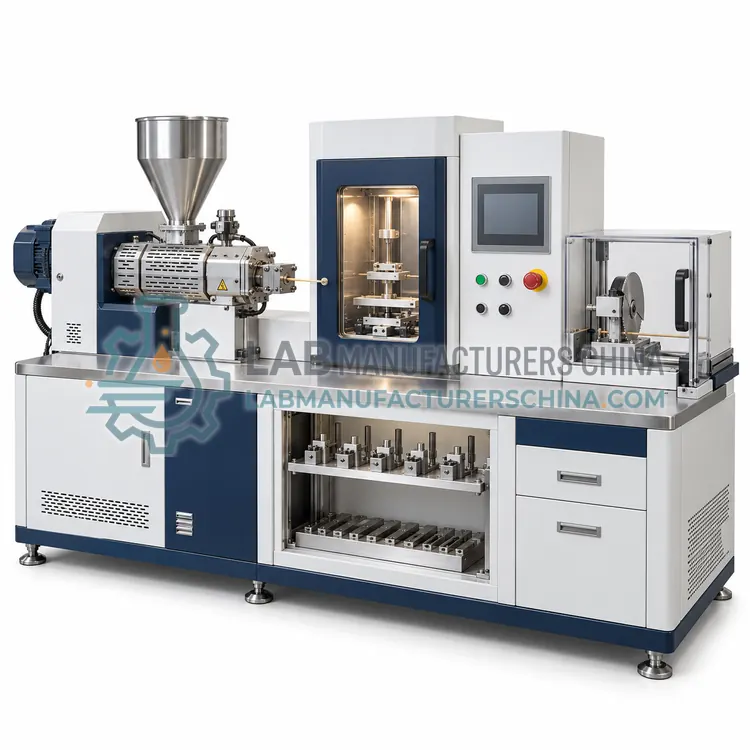
Jaw Crusher for Industrial Sample Preparation

工业制样用颚式破碎机

  • SAT-0001
  • Sample Preparation
  • CE (to be confirmed)
  • ISO 9001 manufacturing (to be confirmed)
Max feed size:
90–100 mm
Final fineness:
1–30 mm, adjustable
Throughput:
50–300 kg/h
Jaw plate material:
Manganese steel or tungsten carbide
Motor power:
1.5–7.5 kW
Power supply:
380 V, 50 Hz, three-phase

A jaw crusher is the primary reduction stage in industrial laboratories, breaking lumps of ore, clinker, ferroalloy or slag down to a few millimetres. It is the right choice when the incoming material is too coarse for a mill and must be reduced quickly and without excessive fines.

Request a quote
View details

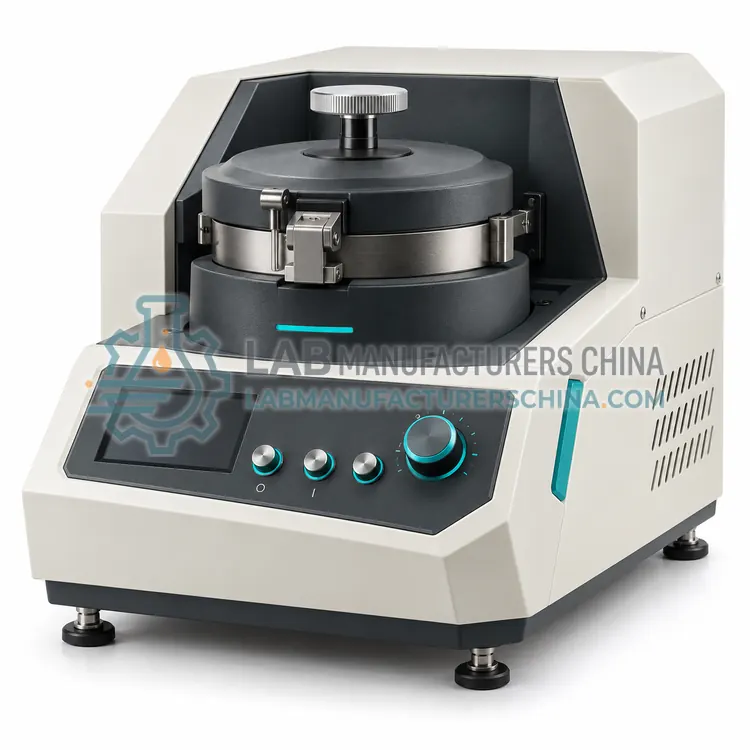
Vibratory Disc Mill for Sample Homogenization

制样均质用振动盘式研磨仪

  • SAT-0002
  • Sample Preparation
  • CE (to be confirmed)
  • ISO 9001 manufacturing (to be confirmed)
Max feed size:
≤ 10 mm
Final fineness:
20–75 µm, material dependent
Grinding set volume:
50 / 100 / 250 mL
Grinding set material:
Hardened steel, tungsten carbide, zirconia, agate
Vibration frequency:
Approx. 700–1500 rpm equivalent
Typical grinding time:
1–3 min

A vibratory disc mill grinds brittle materials to analytical fineness in one to three minutes by vibrating a ring and puck inside a closed grinding set. It is the standard choice when a laboratory needs fast, reproducible powder below 75 µm for XRF, ICP or wet chemical analysis.

Request a quote
View details

Rotary Sample Divider for Industrial Laboratories

工业实验室旋转分样仪

  • SAT-0003
  • Sample Preparation
  • CE (to be confirmed)
  • ISO 9001 manufacturing (to be confirmed)
Max feed size:
≤ 10 mm
Number of divisions:
8–16 vessels
Vessel volume:
100–500 mL each
Feed rate:
Adjustable, 20–100 g/s
Rotational speed:
30–100 rpm
Contact materials:
Stainless steel 304/316

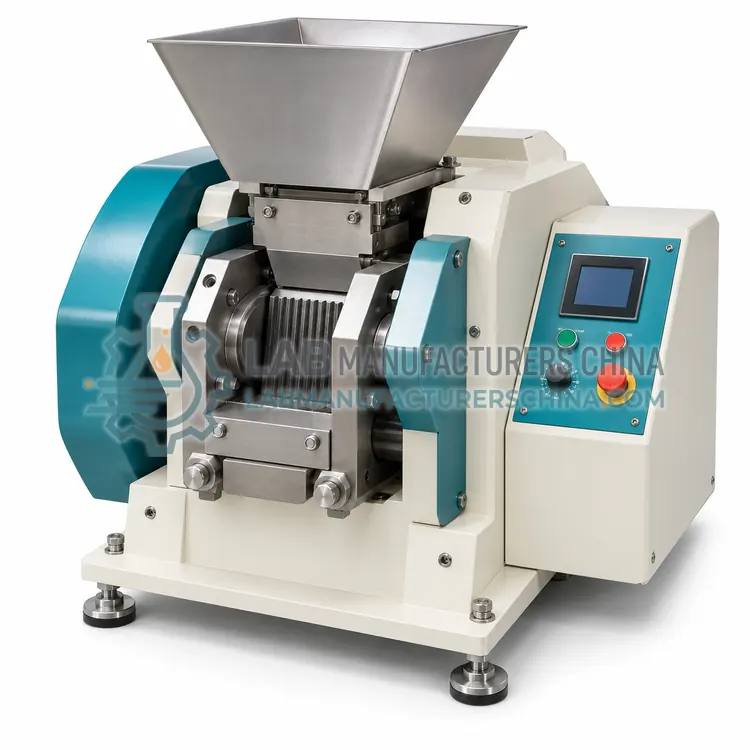
A rotary sample divider splits crushed or milled material into representative sub-samples by dropping it through a rotating set of collection vessels. It is used when the laboratory must reduce sample mass while keeping composition unchanged, for example before assay or to retain a referee portion.

Request a quote
View details

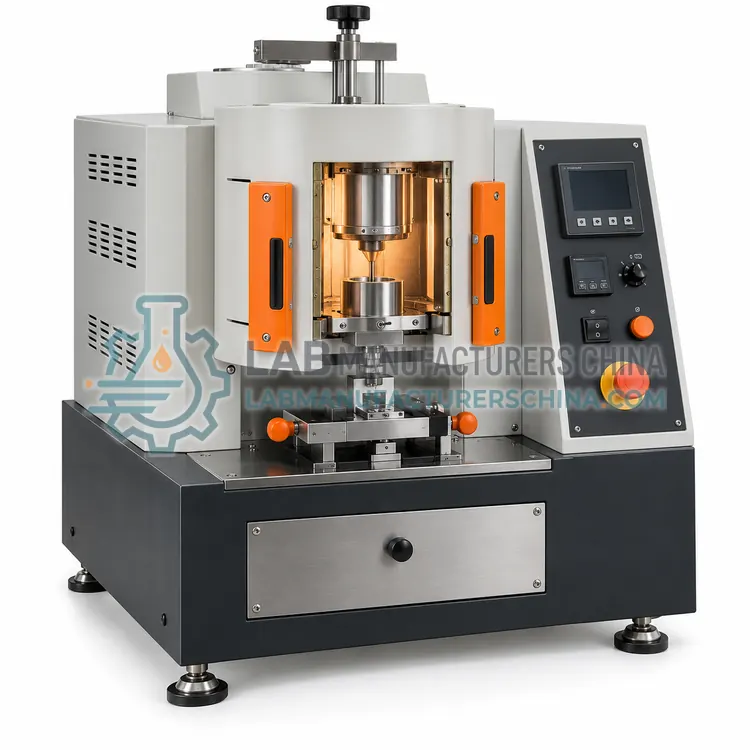
Automatic Fusion Bead Preparation System

自动熔片制样系统

  • SAT-0004
  • Sample Preparation
  • CE (to be confirmed)
  • ISO 9001 manufacturing (to be confirmed)
  • IEC 61010-1 safety compliance (to be confirmed)
Fusion temperature:
Up to 1200 °C
Typical cycle time:
8–15 min per batch
Crucible positions:
4–8
Flux types:
Lithium tetraborate, metaborate or mixtures
Flux to sample ratio:
5:1 to 20:1
Bead diameter:
32–40 mm

An automatic fusion system melts powdered samples with a borate flux at over 1000 °C, then casts homogeneous glass beads for XRF analysis. It is the right choice for ores, cement, slags and ceramics that are hard to dissolve and where pressed pellets would show particle-size and mineralogy effects.

Request a quote
View details

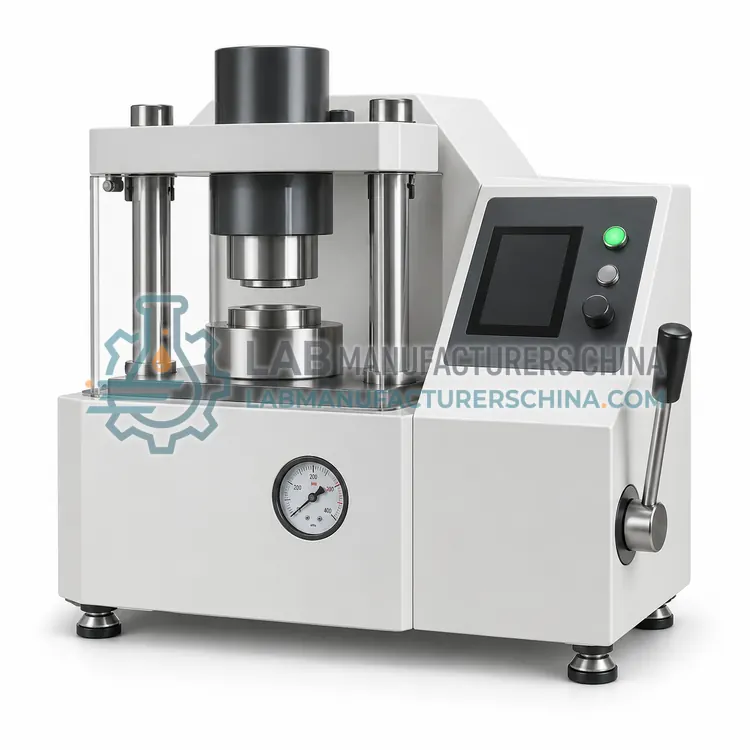
Hydraulic Pellet Press for XRF Sample Preparation

XRF 制样用液压压片机

  • SAT-0005
  • Sample Preparation
  • CE (to be confirmed)
  • ISO 9001 manufacturing (to be confirmed)
Max pressing force:
300–400 kN (about 30–40 t)
Pellet diameter:
32 mm or 40 mm
Holding time:
0–999 s, programmable
Pressure display:
Digital, kN or MPa
Die material:
Hardened steel or tungsten carbide
Pump type:
Manual or motorised

A hydraulic pellet press compacts milled powder into a flat disc under controlled force, usually with a binding aid, so that an X-ray spectrometer can measure it reproducibly. It is the fastest and most economical preparation route when particle-size and mineralogy effects have already been controlled by fine grinding.

Request a quote
View details

Microwave Digestion System for Industrial Samples

工业样品微波消解系统

  • SAT-0006
  • Sample Preparation
  • CE (to be confirmed)
  • ISO 9001 manufacturing (to be confirmed)
  • IEC 61010-1 safety compliance (to be confirmed)
Vessel volume:
55–100 mL
Max temperature:
Up to 240 °C
Max pressure:
Up to 80 bar
Batch size:
8–40 vessels
Microwave power:
1000–1600 W
Temperature control:
Infrared sensor or fibre-optic probe

A microwave digestion system dissolves industrial samples in acid inside sealed vessels at elevated temperature and pressure, producing a clear solution for ICP-OES, ICP-MS or atomic absorption. It is the best choice when trace metals are required at low detection limits and fusion dilution would lose sensitivity.

Request a quote
View details

Compare Sample Preparation models

ModelMax feed sizeFinal finenessMotor powerPower supplyWeight
Jaw Crusher for Industrial Sample PreparationSAT-000190–100 mm1–30 mm, adjustable1.5–7.5 kW380 V, 50 Hz, three-phase150–350 kg
Vibratory Disc Mill for Sample HomogenizationSAT-0002≤ 10 mm20–75 µm, material dependent0.75–1.5 kW220 V, 50/60 Hz80–120 kg
Rotary Sample Divider for Industrial LaboratoriesSAT-0003≤ 10 mm—0.1–0.5 kW220 V, 50/60 Hz30–60 kg
Automatic Fusion Bead Preparation SystemSAT-0004———380 V, 50 Hz, three-phase—
Hydraulic Pellet Press for XRF Sample PreparationSAT-0005——0.75–1.5 kW380 V or 220 V, 50/60 Hz120–300 kg
Microwave Digestion System for Industrial SamplesSAT-0006—————

Indicative values for this product class. Final specifications are confirmed on the quotation and in the calibration documents supplied with the instrument.

How do Sample Preparation work?

Industrial sample preparation reduces a bulk lot to a small test portion without changing its composition. Crushing and milling lower particle size by compressive, impact or shear forces, and representative splitting follows each size-reduction step so the sub-sample still reflects the original lot. Disc mills and ring mills grind to below 75 µm for pressed pellets or fusion, where the sample is melted with a borate flux to dissolve refractory minerals into a homogeneous glass bead. Microwave digestion dissolves samples in acid at elevated temperature and pressure in closed vessels for ICP or atomic absorption measurement. Throughout, materials that touch the sample are chosen to avoid contamination: tungsten carbide for hard ores, zirconia for trace-element work, agate for soft or brittle materials.

Which Sample Preparation variants are available?

  • Jaw Crusher for Industrial Sample Preparation — A jaw crusher is the primary reduction stage in industrial laboratories, breaking lumps of ore, clinker, ferroalloy or slag down to a few millimetres.
  • Vibratory Disc Mill for Sample Homogenization — A vibratory disc mill grinds brittle materials to analytical fineness in one to three minutes by vibrating a ring and puck inside a closed grinding set.
  • Rotary Sample Divider for Industrial Laboratories — A rotary sample divider splits crushed or milled material into representative sub-samples by dropping it through a rotating set of collection vessels.
  • Automatic Fusion Bead Preparation System — An automatic fusion system melts powdered samples with a borate flux at over 1000 °C, then casts homogeneous glass beads for XRF analysis.
  • Hydraulic Pellet Press for XRF Sample Preparation — A hydraulic pellet press compacts milled powder into a flat disc under controlled force, usually with a binding aid, so that an X-ray spectrometer can measure it reproducibly.
  • Microwave Digestion System for Industrial Samples — A microwave digestion system dissolves industrial samples in acid inside sealed vessels at elevated temperature and pressure, producing a clear solution for ICP-OES, ICP-MS or atomic absorption.

How do I choose the right variant?

Choose by the physical form of the material and the analytical technique that follows. Hard, brittle ores, clinker and ferroalloys need a jaw crusher for primary reduction, then a disc or ring mill for fine grinding; soft polymers and coal may need only a cutting mill. Fusion bead preparation is required when the sample is measured by XRF or ICP and total dissolution is difficult, while pressed pellets are faster and cheaper when only major oxides are sought. Microwave digestion is the quickest route to a clear solution for trace-metal measurement. Specify final particle size, contamination limits for the elements of interest, batch size per shift, cleaning between samples, and whether a method standard demands a defined splitting scheme.

Where are Sample Preparation used?

Sample Preparation are specified in ore and concentrate assay laboratories, cement, clinker and raw meal quality control, coal and coke sample preparation for ash and sulfur analysis, ferroalloy and steelworks process control, XRF and ICP sample preparation in industrial QC and trace-metal digestion for environmental compliance testing.

Which standards and certifications apply?

Work with Sample Preparation is commonly governed by ISO 3082, ASTM D2013, ASTM E877, ISO 3310-1, ISO 2758 and IEC 61010-1. Instrument certifications such as CE marking are confirmed per configuration and never assumed.

What are the key considerations before purchase?

Install crushing and milling equipment on a rigid floor with dust extraction and hearing protection, because noise commonly exceeds 80 dB(A). Sieve checks and, for trace analysis, blank grinds with quartz sand keep cross-contamination low; grinding sets wear and should be inspected for cracks. Verify press force and die condition at intervals, and re-check pellet quality after any change of powder supplier. Crucibles, dies and digestion vessels are consumables that must meet the method's contamination specification. Balance calibration, temperature records and traceable reference materials support method validation and laboratory accreditation.

Frequently asked questions about Sample Preparation

A test portion of a few grams must represent a lot of many tonnes, so any inhomogeneity, particle-size effect or contamination introduced during crushing, splitting or grinding is carried into the result. Sampling and preparation errors are added to, not averaged out by, the measurement, which makes a documented, repeatable procedure essential.

Need help specifying Sample Preparation?

Request a quote