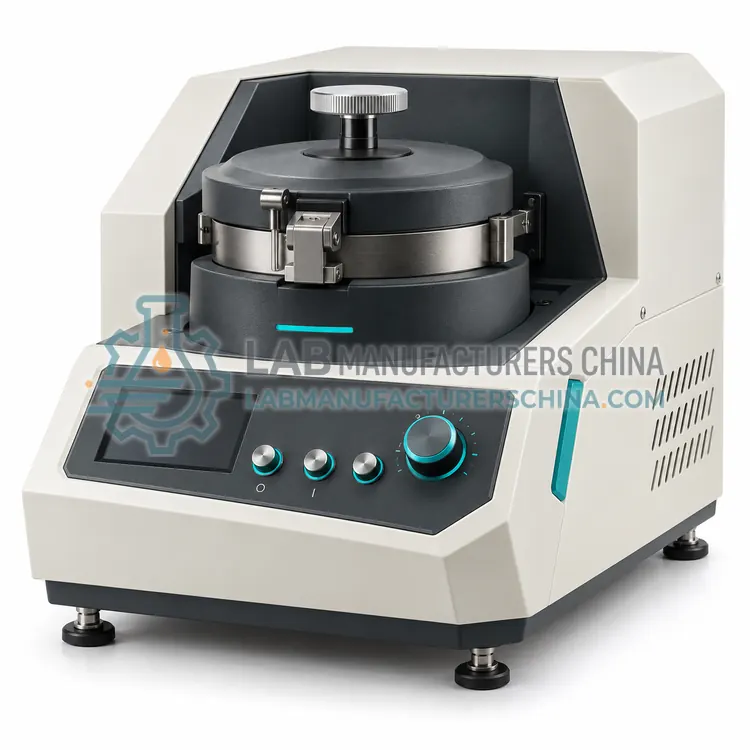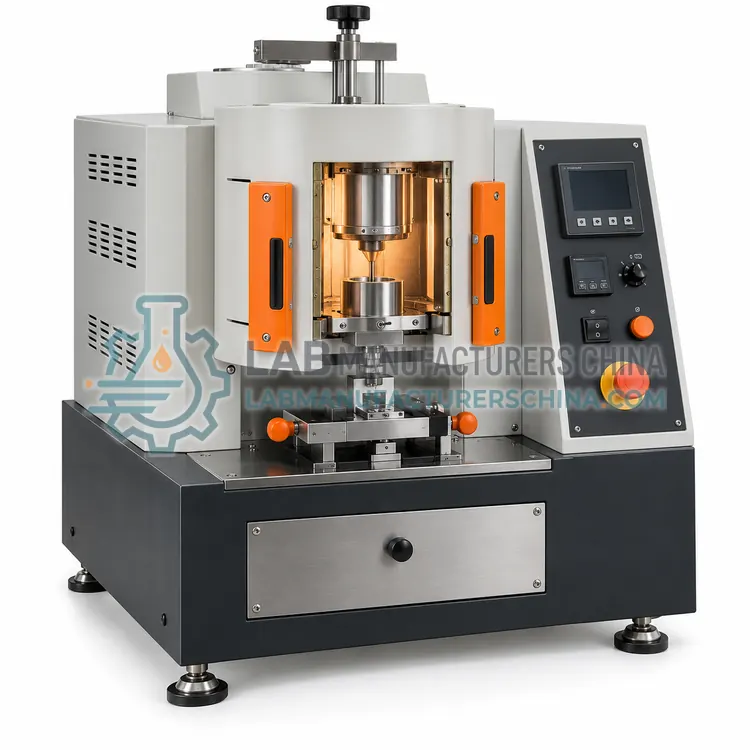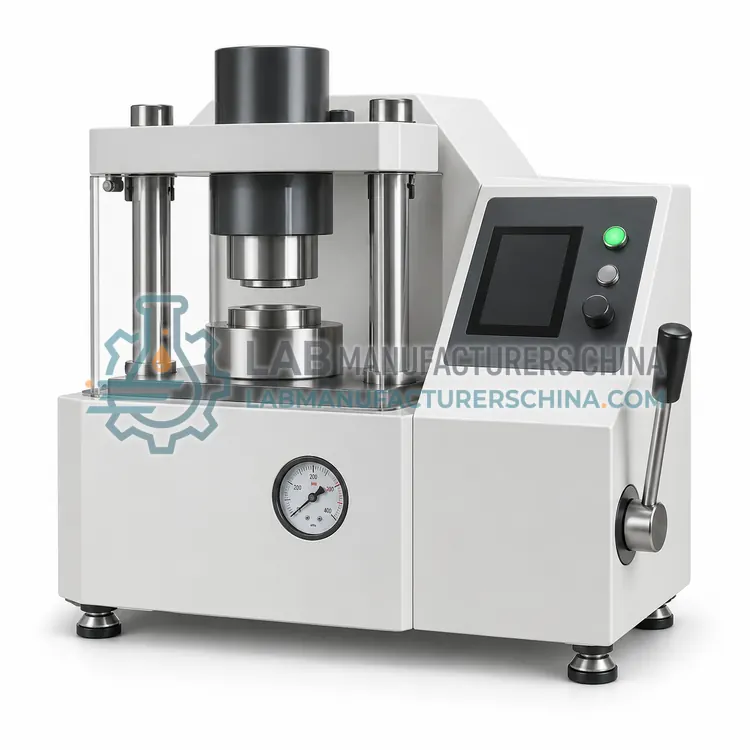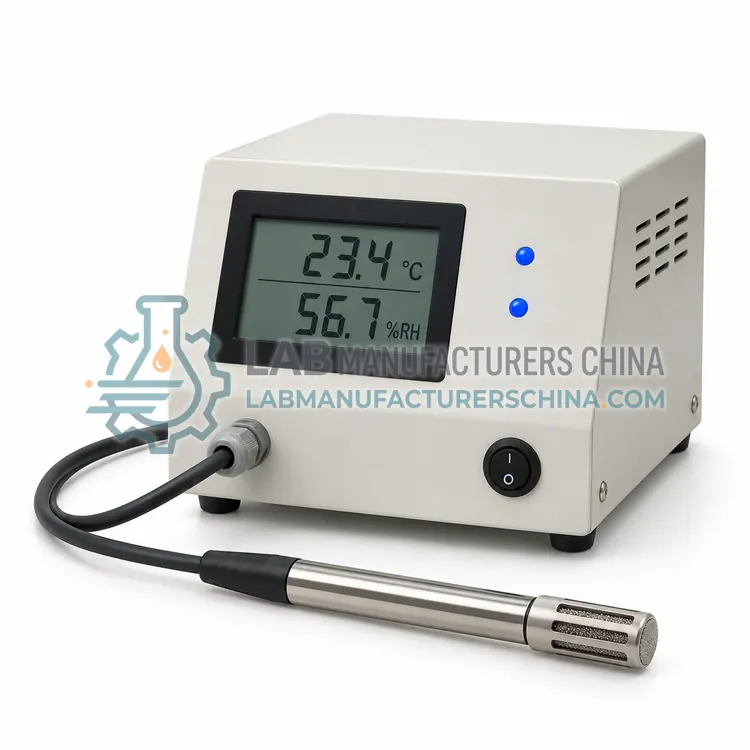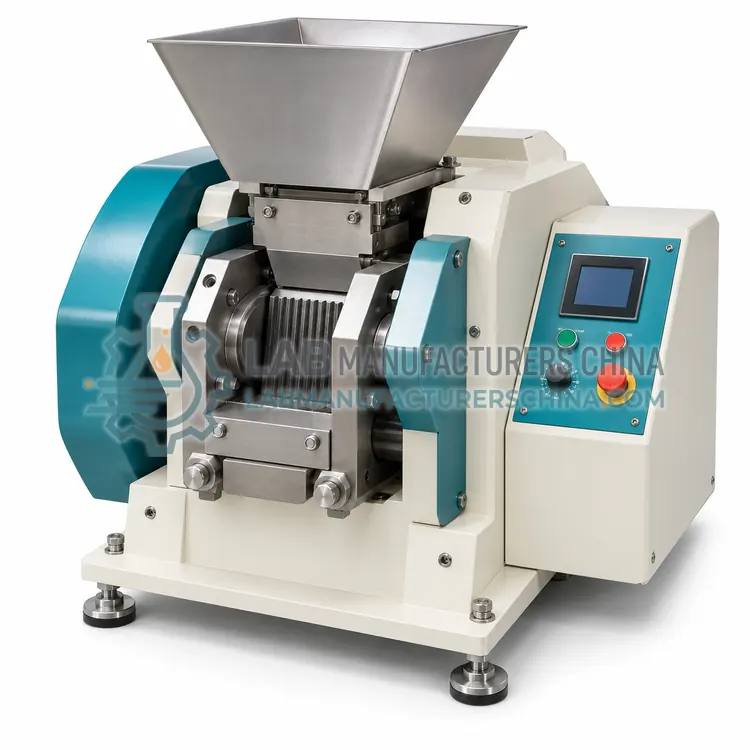
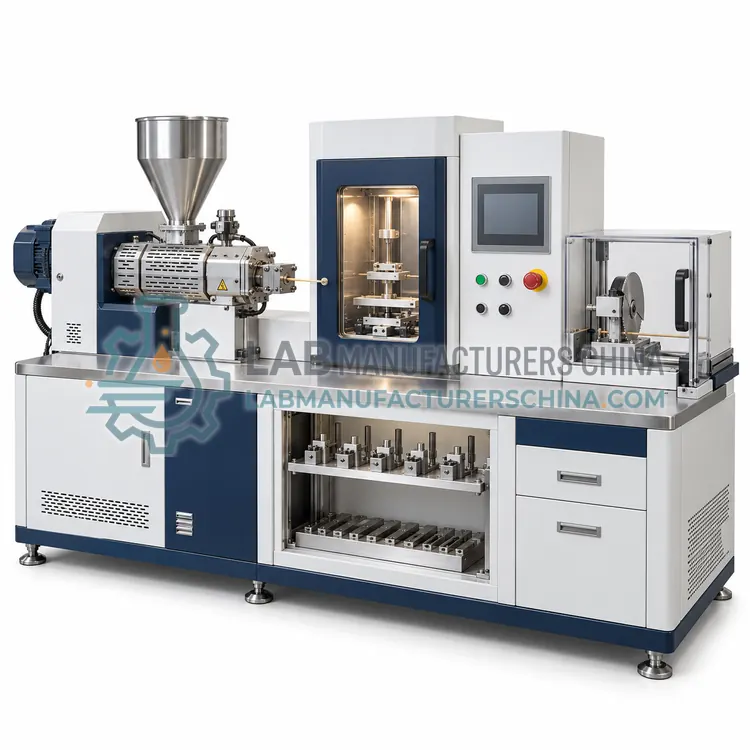
Automatic Fusion Bead Preparation System
自动熔片制样系统
- SKU SAT-0004
- Sample Preparation
- CE (to be confirmed)
- ISO 9001 manufacturing (to be confirmed)
- IEC 61010-1 safety compliance (to be confirmed)
Price on request — FOB / CIF quoted per order
Prices depend on configuration, quantity and destination port.
Key specifications
| Fusion temperature | Up to 1200 °C |
|---|---|
| Typical cycle time | 8–15 min per batch |
| Crucible positions | 4–8 |
| Flux types | Lithium tetraborate, metaborate or mixtures |
| Flux to sample ratio | 5:1 to 20:1 |
| Bead diameter | 32–40 mm |
Request a quote Download brochure · to be provided
By Lab Manufacturers China Technical TeamLast reviewed Standards: ISO 3082, ASTM D2013, ASTM E877
What is the Automatic Fusion Bead Preparation System?
An automatic fusion system melts powdered samples with a borate flux at over 1000 °C, then casts homogeneous glass beads for XRF analysis. It is the right choice for ores, cement, slags and ceramics that are hard to dissolve and where pressed pellets would show particle-size and mineralogy effects.
What is the Automatic Fusion Bead Preparation System?
An automatic fusion system melts powdered samples with a borate flux at over 1000 °C, then casts homogeneous glass beads for XRF analysis. It is the right choice for ores, cement, slags and ceramics that are hard to dissolve and where pressed pellets would show particle-size and mineralogy effects.
Overview
Fusion preparation mixes a weighed sample with lithium tetraborate, lithium metaborate or a mixture of the two, heats the crucible to 1000–1200 °C and holds it with rocking or swirling until the sample dissolves, then pours the melt into a mould to cool into a glass disc. Fully automatic systems dose flux, mix, fuse, cast and cool in one programmed cycle, often handling several crucibles in parallel, which removes operator variation in bead thickness and mixing. Flux-to-sample ratio is normally 5:1 to 10:1 for major oxides and up to 20:1 for traces, and oxidising agents such as lithium nitrate are added for sulfides, carbides and metals. Fusion beads are stable and can be re-measured, which is valuable for reference and calibration work.
How does it work?
Industrial sample preparation reduces a bulk lot to a small test portion without changing its composition. Crushing and milling lower particle size by compressive, impact or shear forces, and representative splitting follows each size-reduction step so the sub-sample still reflects the original lot. Disc mills and ring mills grind to below 75 µm for pressed pellets or fusion, where the sample is melted with a borate flux to dissolve refractory minerals into a homogeneous glass bead. Microwave digestion dissolves samples in acid at elevated temperature and pressure in closed vessels for ICP or atomic absorption measurement. Throughout, materials that touch the sample are chosen to avoid contamination: tungsten carbide for hard ores, zirconia for trace-element work, agate for soft or brittle materials.
What are the key features?
- Programmable fusion, mixing and casting cycles
- Parallel processing of four to eight crucibles
- Automatic flux dosing with gravimetric control
- 95% platinum and 5% gold crucibles and moulds
- Forced-air or controlled cooling for bead release
- Method storage for different material and flux recipes
What are the technical specifications?
A typical automatic fusion bead preparation system configuration offers fusion temperature of Up to 1200 °C, typical cycle time of 8–15 min per batch, crucible positions of 4–8, flux types of Lithium tetraborate, metaborate or mixtures, flux to sample ratio of 5:1 to 20:1 and bead diameter of 32–40 mm. Values are indicative of the product class; the exact figures for each configuration are confirmed on the quotation and the calibration documents supplied with the instrument.
Which applications is it used for?
The Automatic Fusion Bead Preparation System is used in XRF analysis of ores and concentrates, cement, clinker and limestone analysis, slag, refractory and ceramic analysis, ferroalloy and metal powder sample preparation and certified reference material preparation. Across the wider Sample Preparation class, laboratories also deploy it for ore and concentrate assay laboratories, cement, clinker and raw meal quality control and coal and coke sample preparation for ash and sulfur analysis.
Which standards and certifications apply?
Relevant standards and methods include ISO 3082, ASTM D2013, ASTM E877, ISO 3310-1, ISO 2758 and IEC 61010-1. Certification candidates for this model are CE, ISO 9001 manufacturing and IEC 61010-1 safety compliance; each is to be confirmed for the specific configuration before shipment, and certificates are supplied only where they have been issued.
Install crushing and milling equipment on a rigid floor with dust extraction and hearing protection, because noise commonly exceeds 80 dB(A). Sieve checks and, for trace analysis, blank grinds with quartz sand keep cross-contamination low; grinding sets wear and should be inspected for cracks. Verify press force and die condition at intervals, and re-check pellet quality after any change of powder supplier. Crucibles, dies and digestion vessels are consumables that must meet the method's contamination specification. Balance calibration, temperature records and traceable reference materials support method validation and laboratory accreditation.
How do I select the right Automatic Fusion Bead Preparation System?
Choose fusion when the analytical scope includes refractory phases, when pressed pellets fail calibration due to matrix or particle-size effects, or when the same bead must be retained and re-measured. Specify the crucible count per cycle from daily sample load, the flux recipe from the sample chemistry, and the cooling system from the ambient humidity, since humid labs need controlled cooling to release beads cleanly. Confirm the platinum hardware specification and the service interval in an RFQ.
How does it compare with other Sample Preparation variants?
Choose by the physical form of the material and the analytical technique that follows. Hard, brittle ores, clinker and ferroalloys need a jaw crusher for primary reduction, then a disc or ring mill for fine grinding; soft polymers and coal may need only a cutting mill. Fusion bead preparation is required when the sample is measured by XRF or ICP and total dissolution is difficult, while pressed pellets are faster and cheaper when only major oxides are sought. Microwave digestion is the quickest route to a clear solution for trace-metal measurement. Specify final particle size, contamination limits for the elements of interest, batch size per shift, cleaning between samples, and whether a method standard demands a defined splitting scheme.
Full specifications
| Fusion temperature | Up to 1200 °C |
|---|---|
| Typical cycle time | 8–15 min per batch |
| Crucible positions | 4–8 |
| Flux types | Lithium tetraborate, metaborate or mixtures |
| Flux to sample ratio | 5:1 to 20:1 |
| Bead diameter | 32–40 mm |
| Crucible material | 95% Pt / 5% Au |
| Heater power | 3–6 kW |
| Compressed air supply | 0.4–0.6 MPa |
| Power supply | 380 V, 50 Hz, three-phase |
Indicative values for this product class. Final specifications are confirmed on the quotation and in the calibration documents supplied with the instrument.
Applications
- XRF analysis of ores and concentrates
- Cement, clinker and limestone analysis
- Slag, refractory and ceramic analysis
- Ferroalloy and metal powder sample preparation
- Certified reference material preparation
Key features
- Programmable fusion, mixing and casting cycles
- Parallel processing of four to eight crucibles
- Automatic flux dosing with gravimetric control
- 95% platinum and 5% gold crucibles and moulds
- Forced-air or controlled cooling for bead release
- Method storage for different material and flux recipes
Frequently asked questions about Automatic Fusion Bead Preparation System
Sulfides and some metals can attack platinum crucibles and can reduce the melt, which produces beads that stick to the mould or corrode the platinum. Adding lithium nitrate as an oxidising agent converts sulfides to sulfates and prevents reduction, protecting the crucibles and giving a homogeneous glass.
Most laboratories use 5:1 to 10:1 flux to sample for major and minor oxides, and ratios up to 20:1 for trace elements, where dilution reduces matrix effects and improves detection limits relative to the bead mass. The chosen ratio is fixed in the method, because calibration must match the preparation exactly.
Borate glass beads are stable for long periods if stored dry, dust-free and free of mechanical damage, and many laboratories re-measure beads months or years after preparation. Surface contamination, moisture films and scratches change the measured intensity, so beads should be handled by the edges and stored in a desiccator or closed tray.
A test portion of a few grams must represent a lot of many tonnes, so any inhomogeneity, particle-size effect or contamination introduced during crushing, splitting or grinding is carried into the result. Sampling and preparation errors are added to, not averaged out by, the measurement, which makes a documented, repeatable procedure essential.
Fusion beads suit refractory or mineralogically complex materials such as ores, cement and ceramic powders, because the borate flux dissolves the sample and removes particle-size and mineralogy effects. Pressed pellets are adequate for routine major-oxide screening, are much faster, and avoid the platinum crucibles, flux and high-temperature furnace that fusion requires.
Between samples, grind a quartz sand or pure material blank and discard it, then brush and if permitted wipe the grinding set. Match the grinding material to the elements of interest: tungsten carbide adds cobalt and tungsten, steel adds iron and chromium, and agate or zirconia is preferred for trace analysis. Sieving the ground powder checks that the target fineness was reached.