How do DNA Sequencers work?
Most high-throughput sequencers use sequencing by synthesis. A library of adapter-tagged fragments is loaded onto a flow cell or bead surface, where clonal clusters are formed so that each local signal comes from many identical copies. Fluorescently labelled nucleotides with reversible terminators are incorporated one base at a time by a polymerase; after each cycle the instrument images the surface, records the base colour for every cluster, and cleaves the terminator so the next base can be added. Base calls are assembled into reads and aligned to a reference. Nanopore instruments instead pull a single strand through a protein pore and read characteristic current changes for each base. Sanger instruments label fragments with chain-terminating dideoxy nucleotides and separate them by capillary electrophoresis with laser-induced fluorescence detection.
Which DNA Sequencers variants are available?
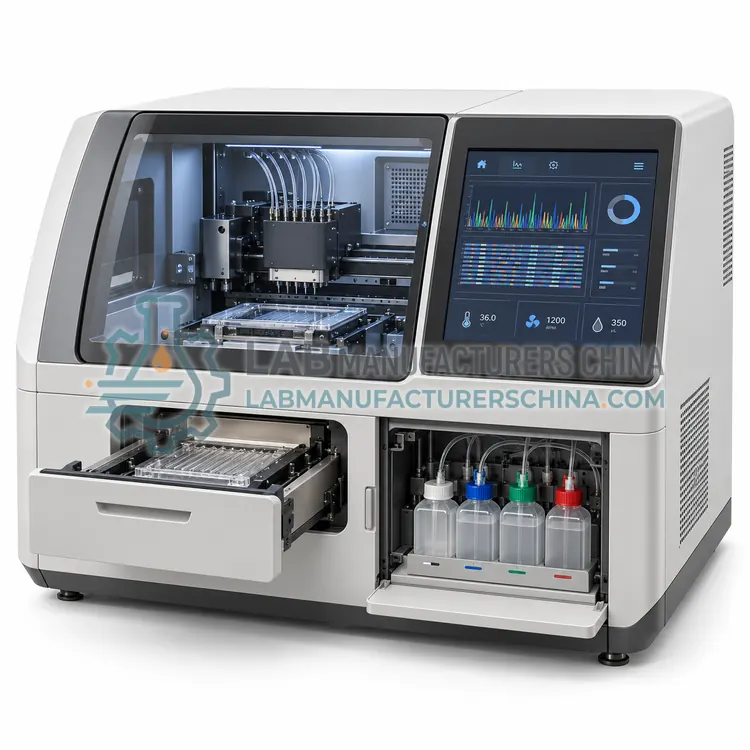
- Benchtop Short-Read Sequencer — A benchtop short-read sequencer reads 75–300 base fragments with very high accuracy and 15–150 Gb of output per run, covering exomes, RNA sequencing and large panels in a single day.
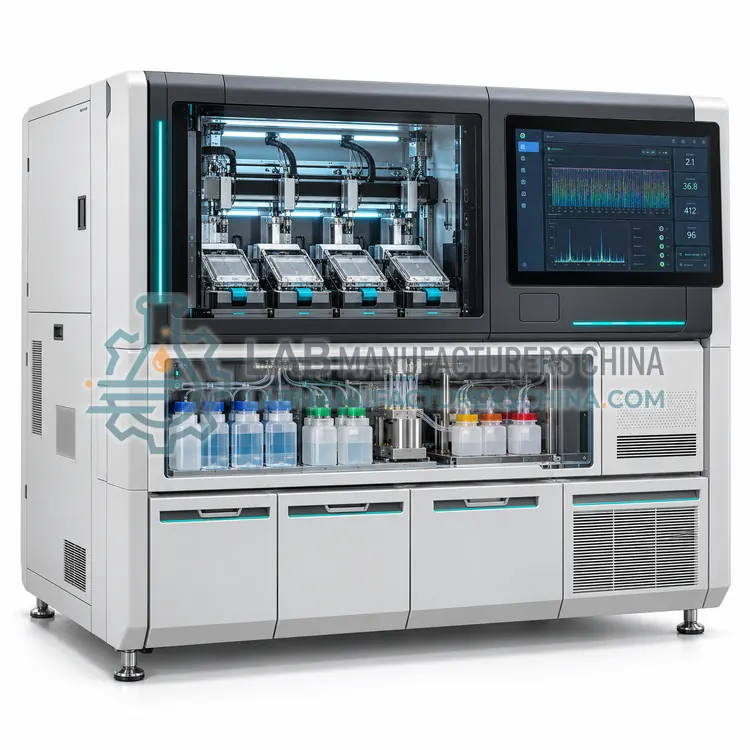
- High-Throughput Production Sequencer — A high-throughput production sequencer delivers 1–6 Tb of short-read data per run across multiple flow cells, serving population genomics, large clinical cohorts and service laboratories that process hundreds of samples every week and need the lowest cost per gigabase.
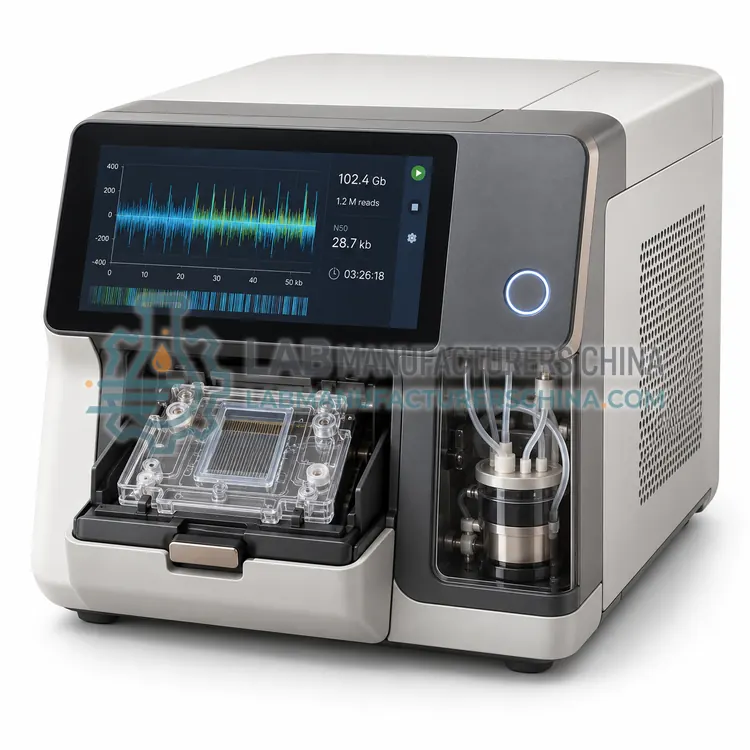
- Long-Read Nanopore Sequencer — A long-read nanopore sequencer threads native DNA or RNA through protein pores and reads current changes, producing reads of tens to hundreds of kilobases.
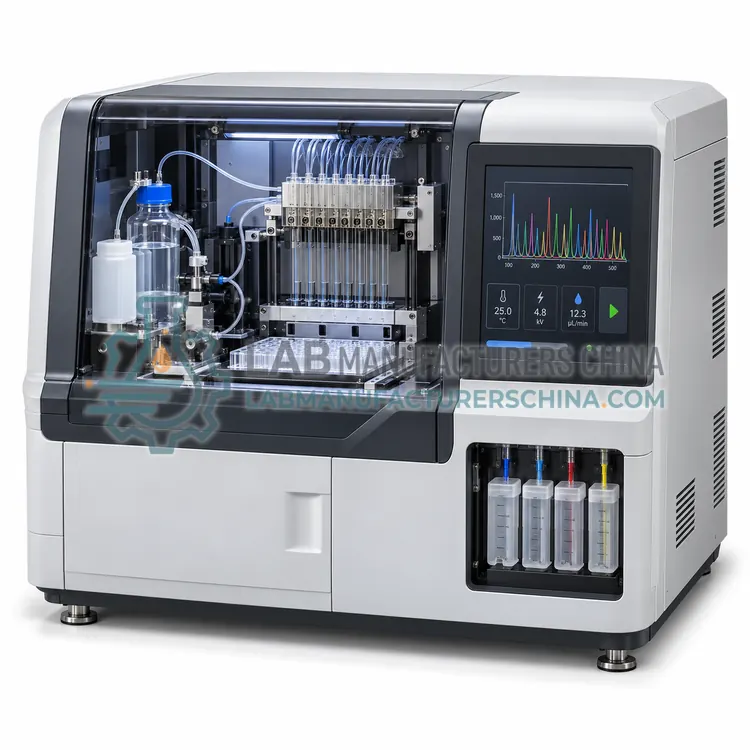
- Sanger Capillary DNA Analyzer — A Sanger capillary analyzer performs dideoxy chain-termination sequencing and fragment analysis by capillary electrophoresis with laser-induced fluorescence, confirming variants, verifying plasmids and clones, and sizing amplicons.
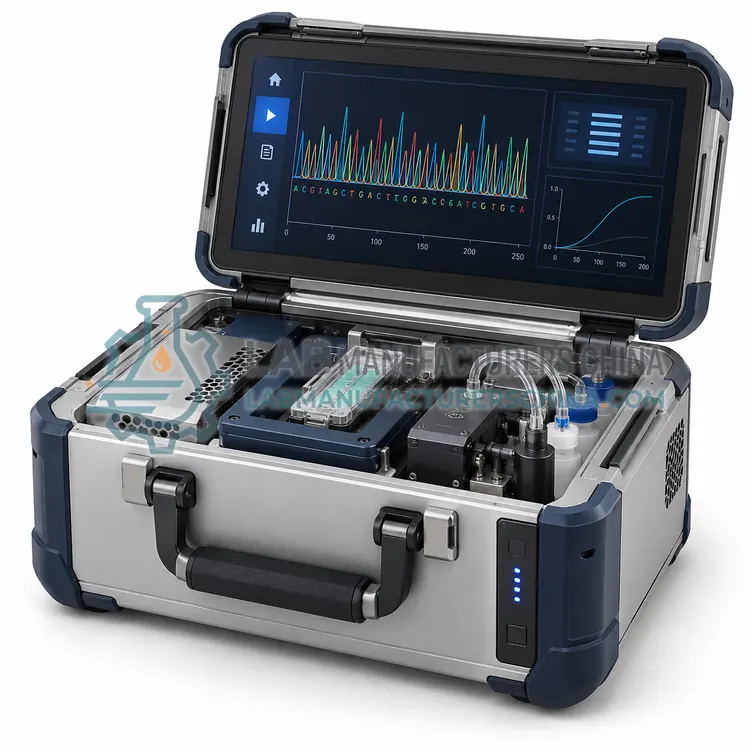
- Portable Field Sequencer — A portable field sequencer is a battery-capable, sub-kilogram device that generates sequence data outside the laboratory, supporting outbreak investigation, environmental surveillance and species identification.
How do I choose the right variant?
Choose a sequencer by read length, output and accuracy rather than by headline specifications. For whole-genome resequencing, exomes, RNA sequencing and large amplicon panels, a benchtop short-read instrument with 15–150 Gb of output per run usually gives the lowest cost per sample and the simplest workflow. Production laboratories with many samples per week should compare cost per gigabase, run time and automated loading, and confirm whether indexes and flow cells are open or proprietary. Long-read platforms are decisive when repeats, structural variants, full-length transcripts or native DNA modifications matter. Keep a capillary sequencer for single-target confirmation, plasmid and amplicon checks where turnaround time dominates. Confirm the supported library kits, on-board or server analysis software, data storage and bioinformatics support before ordering.
Where are DNA Sequencers used?
DNA Sequencers are specified in whole-genome and exome resequencing, RNA sequencing and gene expression profiling, pathogen whole-genome surveillance, cancer somatic variant profiling and agrigenomics and breeding selection.
Which standards and certifications apply?
Work with DNA Sequencers is commonly governed by ISO 20395, ISO 22174, ISO 15189, CLSI MM09, IEC 61010-1 and ISO 17025. Instrument certifications such as CE marking are confirmed per configuration and never assumed.
What are the key considerations before purchase?
Sequencing instruments need a stable bench, clean power and a room with controlled temperature and low dust, because optics and flow-cell surfaces are sensitive. Illumina-style platforms are typically installed with their own compute server and require a defined data path, backup policy and firewall rules. Budget for consumables per run, flow-cell shelf life and the storage of large sequence files, which often exceeds instrument cost within a few years. Decontaminate the instrument area and use separate pre-PCR and post-PCR rooms to avoid amplicon carry-over. Validate accuracy and reproducibility with a reference genome or control library at installation and after major service. Sequence data from human samples must be handled under local privacy rules and, in clinical use, under ISO 15189 accreditation.