How do Pass Boxes work?
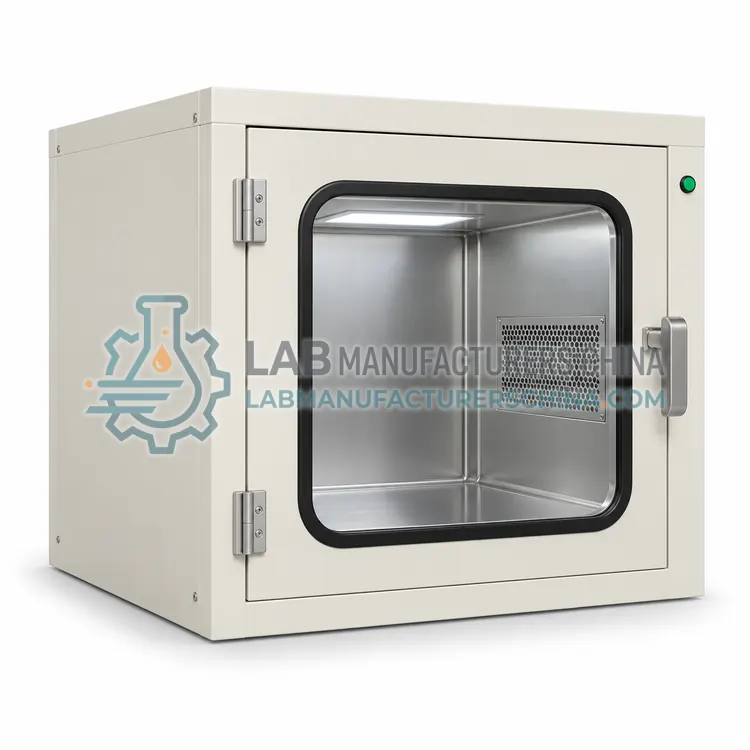
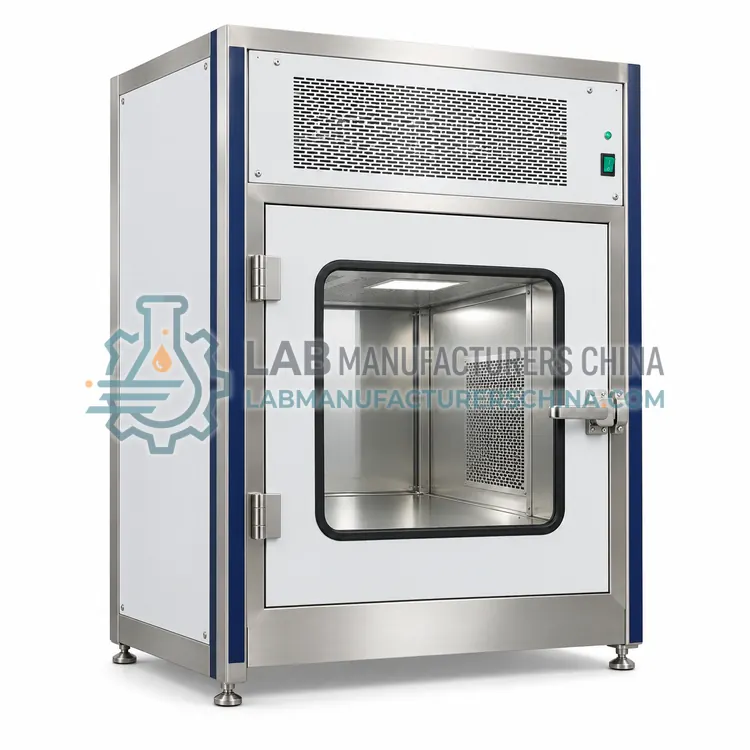
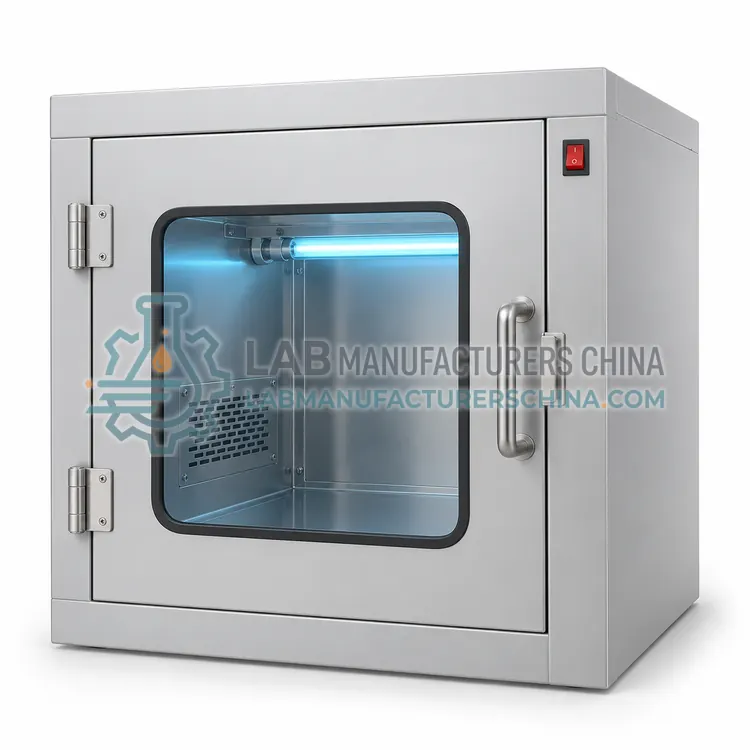
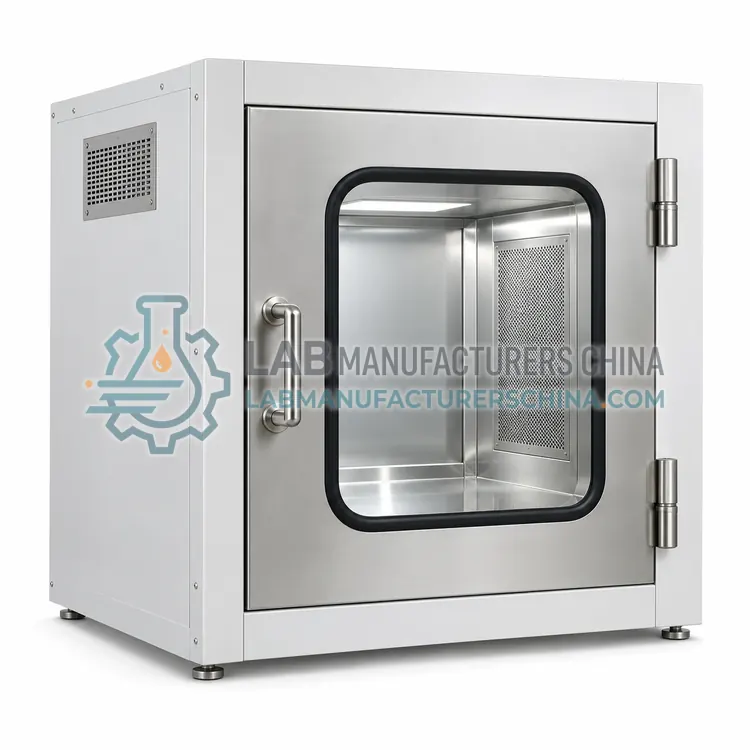
A pass box is a stainless steel or powder-coated steel chamber with two doors, one facing each side of the wall. Mechanical, electromagnetic or electronic interlocks ensure that only one door can open at a time, so the two areas are never directly connected. Static versions rely on this interlock alone, with smooth surfaces and coved corners that can be wiped down. Dynamic versions add a fan, prefilter and HEPA filter that flush the chamber with clean air, typically at 0.3–0.5 m/s. Some versions include UV-C lamps at 254 nm to reduce surface microbes, or VHP-compatible seals for decontamination. Viewing windows of tempered glass, indicator lamps and door-status controls help operators. Wall-mounting frames must be sealed to the partition to maintain room pressure cascades.
Which Pass Boxes variants are available?
- Static Pass Box — A static pass box is an interlocked two-door chamber without a fan or filter.
- Dynamic Pass Box with HEPA Filtration — A dynamic pass box adds a fan, prefilter and HEPA filter that circulate clean air through the chamber.
- UV Sterilization Pass Box — A UV sterilization pass box adds 254 nm UV-C lamps to an interlocked chamber so that item surfaces receive a timed irradiation dose during transfer.
- VHP-Compatible Pass Box — A VHP-compatible pass box has sealed construction and ports for hydrogen peroxide vapour decontamination of the chamber.
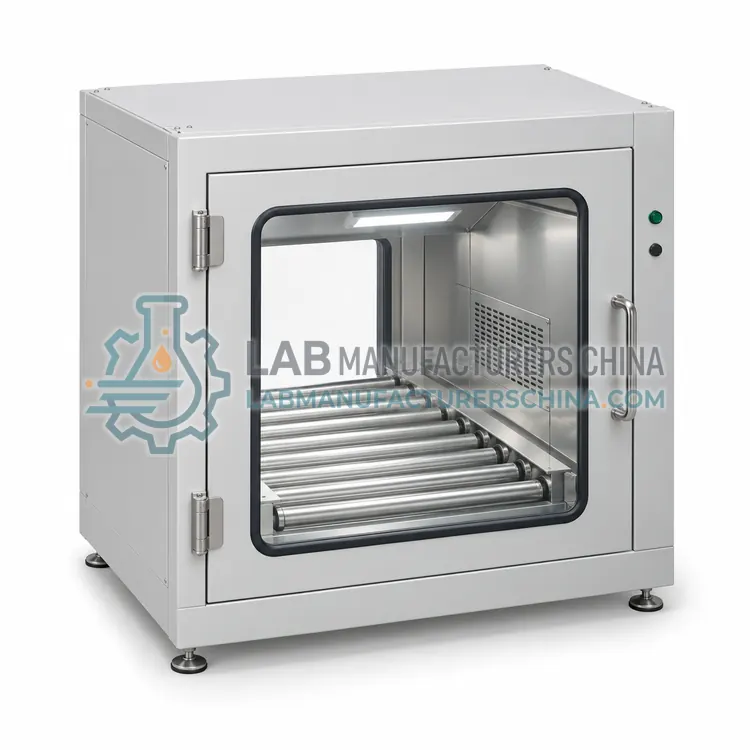
- Pass Box with Roller Conveyor — A roller-conveyor pass box has a floor fitted with rollers so carts, trays or heavy boxes can slide through the wall.
How do I choose the right variant?
Decide first whether a static, dynamic or decontamination-capable box is needed. Static boxes suit transfers between rooms of similar class, while dynamic boxes suit a step of at least one ISO class, for example ISO 8 to ISO 7. Check chamber size against the largest item, with common clear sizes from 400 × 400 × 400 mm to 800 × 800 × 800 mm, and the wall thickness, which is 50–100 mm for panels. Select the interlock type, mechanical for cost, electromagnetic or electronic for control and alarms. Consider UV, VHP or bio-decontamination requirements, housing material, and whether the chamber needs a floor-standing roller conveyor. Confirm the electrical and control interface.
Where are Pass Boxes used?
Pass Boxes are specified in pharmaceutical material transfer, sterile manufacturing, hospital pharmacies, electronics cleanrooms and biotechnology laboratories.
Which standards and certifications apply?
Work with Pass Boxes is commonly governed by ISO 14644-1 (cleanroom classification), ISO 14644-4 (design and construction), EU GMP Annex 1 (sterile manufacturing), GB 50073 (cleanroom design code), JG/T 382 and EN 1822 (HEPA and ULPA filters). Instrument certifications such as CE marking are confirmed per configuration and never assumed.
What are the key considerations before purchase?
Install the pass box during wall construction or in a prepared opening, sealing the flange with silicone or gaskets so pressure differentials are maintained. Interlock function and emergency release should be tested at commissioning. Clean chambers before and after each use with compatible disinfectants, avoiding chlorides on stainless steel. UV lamps lose output after about 8000 hours and should be replaced and measured with a UV meter. Dynamic boxes require prefilter replacement every 3–6 months and HEPA integrity testing annually. Define SOPs for which items may be transferred and how long doors may remain open, and document cleaning for GMP audits.