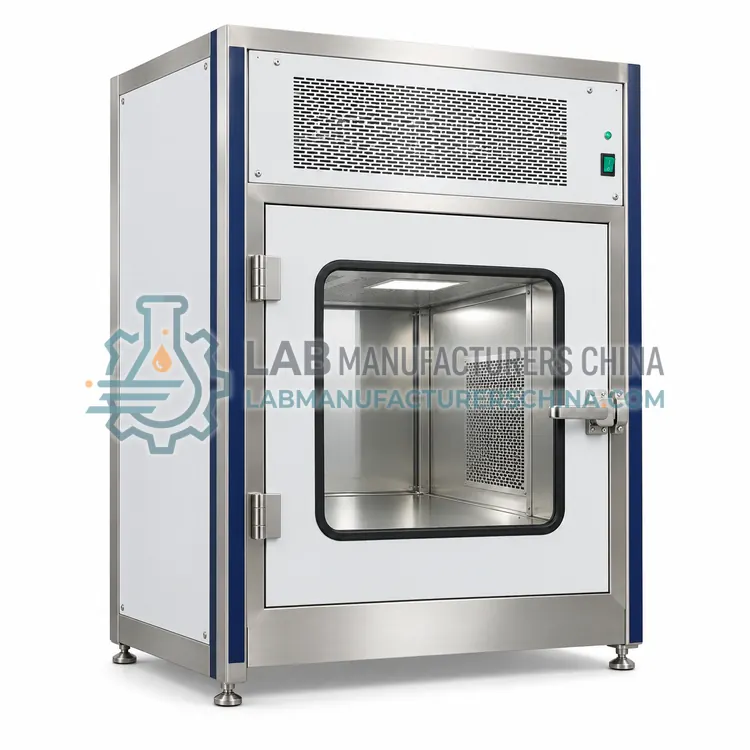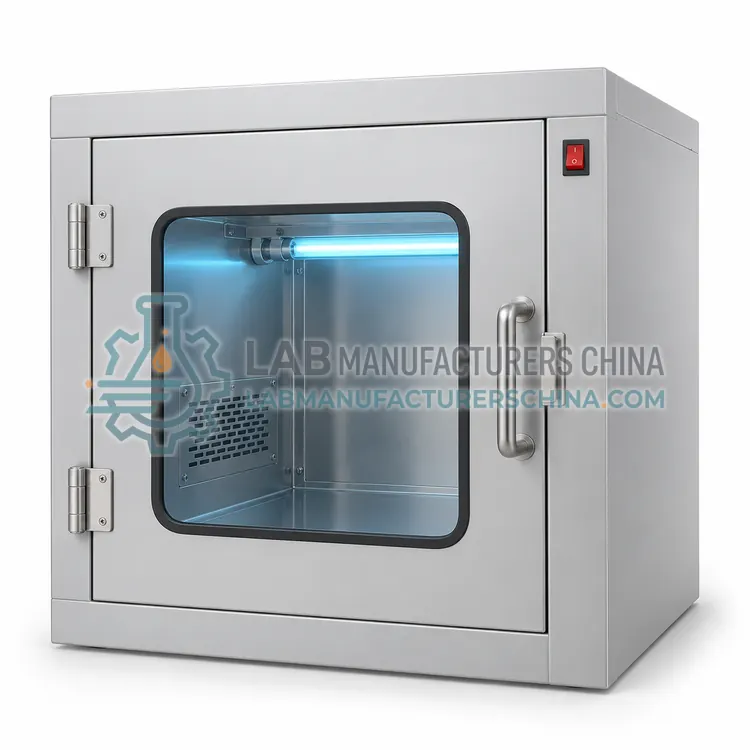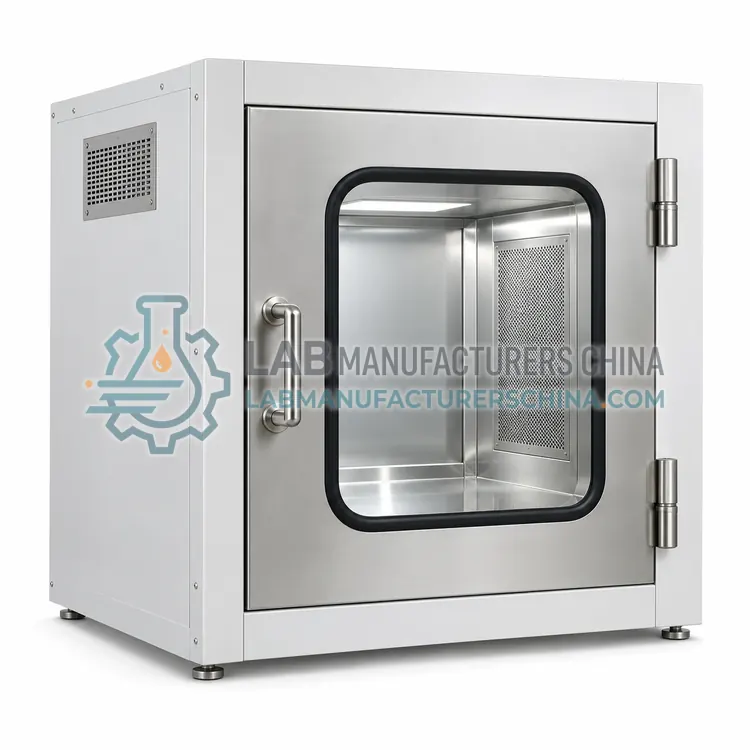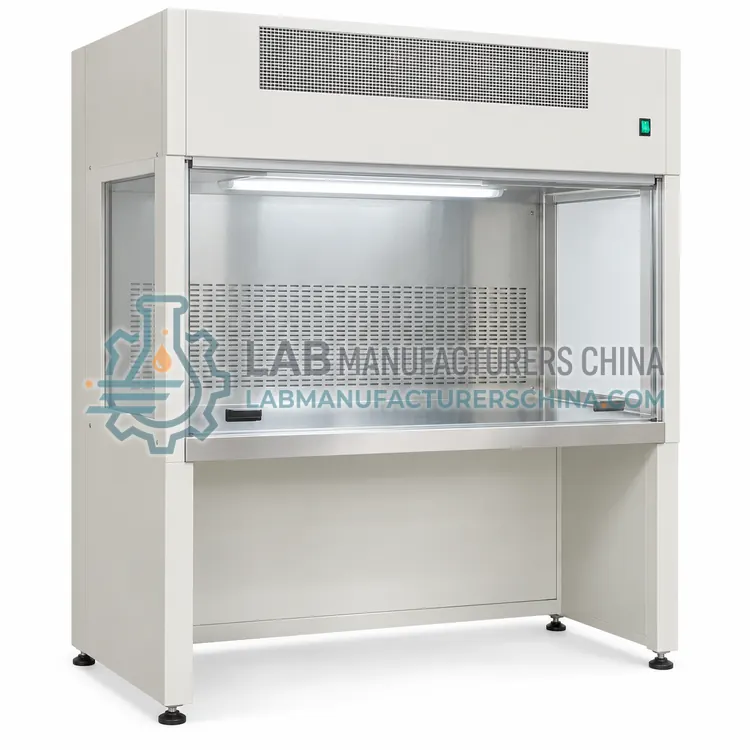
Pass Box with Roller Conveyor
带滚筒输送的传递窗
- SKU PBO-0005
- Pass Boxes
- CE (to be confirmed)
- ISO 9001 manufacturing (to be confirmed)
Price on request — FOB / CIF quoted per order
Prices depend on configuration, quantity and destination port.
Key specifications
| Internal size | 800 × 800 × 800 to 1200 × 1000 × 1000 mm |
|---|---|
| Roller load capacity | 50–150 kg |
| Roller material | Stainless steel or engineering plastic |
| Door type | Hinged or vertical sliding |
| Interlock | Electromagnetic |
| Airflow (dynamic) | 0.3–0.5 m/s |
Request a quote Download brochure · to be provided
By Lab Manufacturers China Technical TeamLast reviewed Standards: ISO 14644-1 (cleanroom classification), ISO 14644-4 (design and construction), EU GMP Annex 1 (sterile manufacturing)
What is the Pass Box with Roller Conveyor?
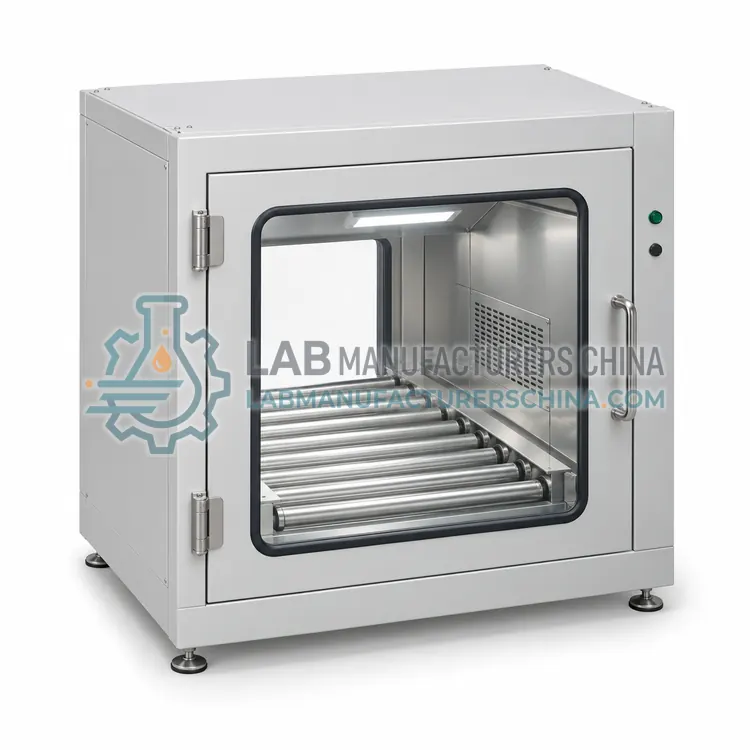
A roller-conveyor pass box has a floor fitted with rollers so carts, trays or heavy boxes can slide through the wall. It is used when material flow is frequent and loads are too heavy or bulky to lift.
What is the Pass Box with Roller Conveyor?
A roller-conveyor pass box has a floor fitted with rollers so carts, trays or heavy boxes can slide through the wall. It is used when material flow is frequent and loads are too heavy or bulky to lift.
Overview
The chamber is larger than standard boxes, commonly 800 × 800 × 800 mm to 1200 × 1000 × 1000 mm, with a stainless steel roller floor rated for 50–150 kg. Doors can be hinged or vertical sliding for clearance, and interlocks are electromagnetic. Extension roller tables outside both sides make loading ergonomic. A dynamic version adds a fan filter unit; a static version is interlock-only. Rollers are stainless steel or engineering plastic, and can be removed for cleaning. Frame construction uses 304 stainless steel with welded seams. The system integrates with production lines where carts carry product or components from a less clean to a cleaner zone.
How does it work?
A pass box is a stainless steel or powder-coated steel chamber with two doors, one facing each side of the wall. Mechanical, electromagnetic or electronic interlocks ensure that only one door can open at a time, so the two areas are never directly connected. Static versions rely on this interlock alone, with smooth surfaces and coved corners that can be wiped down. Dynamic versions add a fan, prefilter and HEPA filter that flush the chamber with clean air, typically at 0.3–0.5 m/s. Some versions include UV-C lamps at 254 nm to reduce surface microbes, or VHP-compatible seals for decontamination. Viewing windows of tempered glass, indicator lamps and door-status controls help operators. Wall-mounting frames must be sealed to the partition to maintain room pressure cascades.
What are the key features?
- Stainless steel roller floor rated to 50–150 kg
- Larger chamber for trays and boxes
- Hinged or vertical sliding interlocked doors
- Available as static or dynamic with HEPA
- Removable rollers for cleaning
- Extension roller tables for ergonomic loading
What are the technical specifications?
A typical pass box with roller conveyor configuration offers internal size of 800 × 800 × 800 to 1200 × 1000 × 1000 mm, roller load capacity of 50–150 kg, roller material of Stainless steel or engineering plastic, door type of Hinged or vertical sliding, interlock of Electromagnetic and airflow (dynamic) of 0.3–0.5 m/s. Values are indicative of the product class; the exact figures for each configuration are confirmed on the quotation and the calibration documents supplied with the instrument.
Which applications is it used for?
The Pass Box with Roller Conveyor is used in production line material flow, pharmaceutical packaging, electronics component transfer and food cleanroom logistics. Across the wider Pass Boxes class, laboratories also deploy it for pharmaceutical material transfer, sterile manufacturing and hospital pharmacies.
Which standards and certifications apply?
Relevant standards and methods include ISO 14644-1 (cleanroom classification), ISO 14644-4 (design and construction), EU GMP Annex 1 (sterile manufacturing), GB 50073 (cleanroom design code), JG/T 382 and EN 1822 (HEPA and ULPA filters). Certification candidates for this model are CE and ISO 9001 manufacturing; each is to be confirmed for the specific configuration before shipment, and certificates are supplied only where they have been issued.
Install the pass box during wall construction or in a prepared opening, sealing the flange with silicone or gaskets so pressure differentials are maintained. Interlock function and emergency release should be tested at commissioning. Clean chambers before and after each use with compatible disinfectants, avoiding chlorides on stainless steel. UV lamps lose output after about 8000 hours and should be replaced and measured with a UV meter. Dynamic boxes require prefilter replacement every 3–6 months and HEPA integrity testing annually. Define SOPs for which items may be transferred and how long doors may remain open, and document cleaning for GMP audits.
How do I select the right Pass Box with Roller Conveyor?
Choose the roller type when transfers involve trays or boxes above about 10 kg and frequent use. For small items, a standard static or dynamic box is simpler. RFQ: load weight, tray size, door type, dynamic or static and conveyor extensions.
How does it compare with other Pass Boxes variants?
Decide first whether a static, dynamic or decontamination-capable box is needed. Static boxes suit transfers between rooms of similar class, while dynamic boxes suit a step of at least one ISO class, for example ISO 8 to ISO 7. Check chamber size against the largest item, with common clear sizes from 400 × 400 × 400 mm to 800 × 800 × 800 mm, and the wall thickness, which is 50–100 mm for panels. Select the interlock type, mechanical for cost, electromagnetic or electronic for control and alarms. Consider UV, VHP or bio-decontamination requirements, housing material, and whether the chamber needs a floor-standing roller conveyor. Confirm the electrical and control interface.
Full specifications
| Internal size | 800 × 800 × 800 to 1200 × 1000 × 1000 mm |
|---|---|
| Roller load capacity | 50–150 kg |
| Roller material | Stainless steel or engineering plastic |
| Door type | Hinged or vertical sliding |
| Interlock | Electromagnetic |
| Airflow (dynamic) | 0.3–0.5 m/s |
| Filter grade (dynamic) | H13 HEPA |
| Chamber material | 304 stainless steel |
| Power supply | 220 V, 100–300 W |
| Extension tables | Optional, 500–800 mm |
Indicative values for this product class. Final specifications are confirmed on the quotation and in the calibration documents supplied with the instrument.
Applications
- Production line material flow
- Pharmaceutical packaging
- Electronics component transfer
- Food cleanroom logistics
Key features
- Stainless steel roller floor rated to 50–150 kg
- Larger chamber for trays and boxes
- Hinged or vertical sliding interlocked doors
- Available as static or dynamic with HEPA
- Removable rollers for cleaning
- Extension roller tables for ergonomic loading
Frequently asked questions about Pass Box with Roller Conveyor
Standard roller floors are rated for 50–150 kg, with reinforced versions up to 300 kg. Confirm the maximum distributed load and whether the rated figure is per chamber or per roller.
Yes. Stainless steel rollers can be wiped down with disinfectants, and many designs allow removal for deep cleaning. Avoid chloride-based cleaners that cause pitting.
Yes. A fan filter unit can be added to the top, but the larger chamber volume needs a higher airflow, typically 300–800 m3/h, so the unit consumes more power than small dynamic boxes.
A pass box is a two-door chamber mounted in a cleanroom wall so that materials move between areas without opening both sides at once. Interlocked doors prevent a direct opening between areas of different cleanliness.
A static box relies on the door interlock and smooth surfaces. A dynamic box adds a fan and HEPA filter that flush the chamber with clean air at typically 0.3–0.5 m/s, and suits transfers across a cleanliness step.
UV-C at 254 nm can reduce surface microbes on exposed surfaces but does not penetrate shadows or packaging. It supports but does not replace wipe-down or VHP decontamination, and lamp output must be checked regularly.